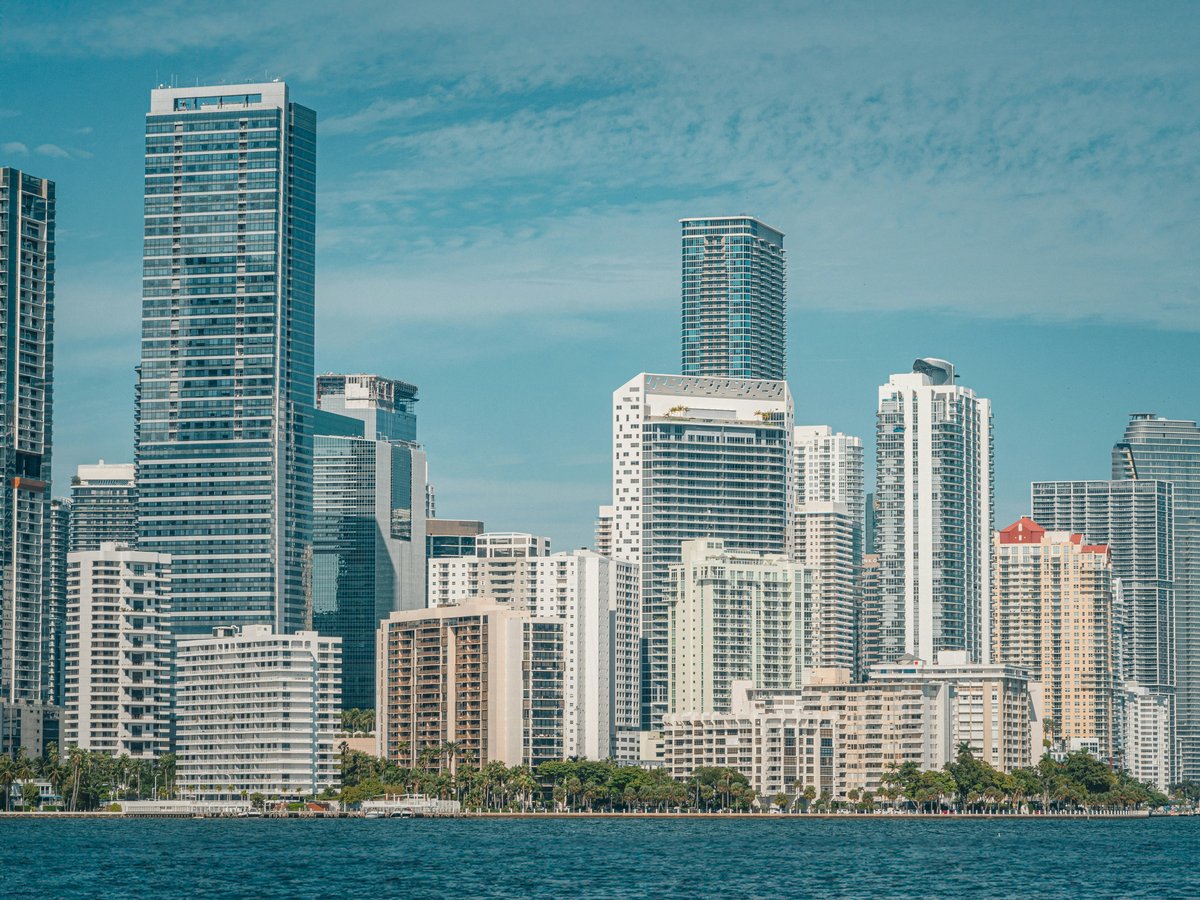
Miami sprawls along Biscayne Bay in a loose grid that bends around waterways and causeways. The city reads north to south, with Downtown and Brickell anchoring the center, Wynwood and the Design District sitting a few miles north, and Coconut Grove and Coral Gables stretching south toward the Everglades. The beach communities on Miami Beach sit across the MacArthur, Julia Tuttle, and Venetian Causeways on a barrier island. Most visitors underestimate distances here. Little Havana to South Beach is only about 8 miles, but Friday traffic on the MacArthur Causeway can stretch that to 45 minutes. The Metromover is free and covers Downtown and Brickell well, though beyond that you'll likely need a car or rideshare. Each neighborhood has a genuinely different feel, from the 1920s Mediterranean Revival homes in Coral Gables to the raw concrete of Wynwood's warehouse blocks. Where you base yourself matters more in Miami than in most American cities, because the mood shifts block by block.
Neighborhoods
-
South Beach
The Art Deco Historic District runs roughly from 5th Street to 23rd Street along Ocean Drive and Collins Avenue, with about 800 pastel-colored buildings from the 1930s and 1940s packed into less than a square mile. South of 5th Street, known locally as SoFi, is quieter and more residential, with higher-end condos and restaurants like Joe's Stone Crab on Washington Avenue. The northern blocks above 15th Street tend to feel less performative. At night, Ocean Drive fills with bass-heavy music from open-air bars and the smell of tanning oil lingers well past sunset.
- Best for
- First-time visitors who want beach access, nightlife, and walkability without needing a car for 3 to 4 days
- Key streets
- Ocean Drive between 5th and 14th for the Deco postcard views. Espanola Way, a narrow pedestrian block near 15th Street, still has its original 1925 Spanish Village architecture and a few tapas spots. Lincoln Road Mall is an open-air pedestrian stretch between Alton Road and Washington Avenue with about 8 blocks of shops and restaurants.
-
Wynwood
Twenty years ago this was a warehouse district full of garment factories and produce distributors. The Wynwood Walls project launched in 2009 with about 50 murals across roughly 80,000 square feet, and the area has been turning over ever since. Now it's a grid of single-story converted warehouses between NW 20th and NW 36th Streets, many of them repainted every year during Art Basel week in December. The streets smell like spray paint and roasting coffee on weekday mornings. By Saturday afternoon, the foot traffic thickens and the noise from breweries and outdoor bars picks up considerably. It still feels industrial at its edges, especially west of NW 5th Avenue.
- Best for
- Couples or friend groups in their 20s to 40s interested in galleries, street art, and craft beer without the beach-party intensity of South Beach
- Key streets
- NW 2nd Avenue is the main commercial spine, lined with galleries, restaurants like KYU at NW 25th Street, and bars. The Wynwood Walls complex sits between NW 25th and 26th Streets. NW 3rd Avenue has newer openings, and the blocks around NW 29th Street feel a bit less polished.
-
Little Havana
Calle Ocho, SW 8th Street, runs east-west through the heart of what has been Miami's Cuban-American cultural center since the 1960s. The blocks between SW 12th and SW 17th Avenues have the densest concentration of cafeterias, cigar shops, and fruit stands. The smell of pressed Cuban sandwiches and strong colada coffee hangs in the air most of the day. Domino Park at SW 15th Avenue fills with older men playing from mid-morning until dark. The architecture is modest, mostly low-rise commercial storefronts from the 1950s and 1960s. The neighborhood has been shifting in recent years as Central American and Nicaraguan communities have grown alongside the original Cuban population.
- Best for
- Travelers who want to understand Miami's Latin roots and eat well for under $15 a meal, particularly those comfortable in a neighborhood that still functions for residents rather than tourists
- Key streets
- Calle Ocho between SW 12th and SW 17th Avenues for the classic stretch. Azucar Ice Cream at SW 15th Avenue makes a guava-and-cheese flavor that captures the Cuban pastelito in frozen form. Los Pinareños Fruteria on SW 12th Avenue sells fresh tropical fruit and sugarcane juice from a walk-up counter.
-
Brickell
Miami's financial district sits south of the Miami River along Brickell Avenue, packed with glass condo towers that went up mostly between 2005 and 2020. The sidewalks are wide and clean, the ground floors filled with bank branches, coffee chains, and a growing number of restaurants. Brickell City Centre, a $1.05 billion open-air mall that opened in 2016, anchors the retail around SE 8th Street. The area empties out on weekday mornings when the finance crowd heads to offices, then refills at night when the rooftop bars on top of towers like the SLS Brickell get going. It feels more like a new Asian financial district than a traditional American downtown.
- Best for
- Business travelers and visitors who prefer a polished, walkable urban environment with good restaurants, close to Downtown without the grit
- Key streets
- Brickell Avenue itself between SE 5th and SE 15th Streets. Mary Brickell Village, an outdoor dining and shopping complex on South Miami Avenue near SW 10th Street. The Underline, a 10-mile linear park built under the Metrorail, currently has its Brickell section open with a decent path for running or biking.
-
Coconut Grove
The Grove is the oldest continuously inhabited neighborhood in Miami, settled in the 1820s, and it still has a leafy, slightly overgrown quality that the rest of the city has paved over. Banyan trees with 40-foot canopies shade sidewalks along Main Highway and McFarlane Road. The Barnacle Historic State Park preserves an 1891 house on its original 5-acre waterfront lot, and the air inside smells like old wood and salt. The pace is slower here. The dining scene runs toward outdoor patios and brunch spots rather than bottle-service clubs. Vizcaya Museum and Gardens, the 1916 Italian Renaissance estate with 34 decorated rooms and 10 acres of formal gardens, sits at the neighborhood's northern edge on South Miami Avenue.
- Best for
- Families, couples seeking a quieter base, and anyone who wants waterfront access without the beach-resort atmosphere
- Key streets
- CocoWalk, the open-air retail center at the intersection of Grand Avenue and Virginia Street, was renovated in 2021. Main Highway south toward Charles Avenue passes some of the oldest residential architecture in Miami. Peacock Park on McFarlane Road has a bay view and enough green space for kids to run.
-
Coral Gables
George Merrick planned this city-within-a-city in the 1920s with Mediterranean Revival architecture mandated by zoning code, and that code still holds. The result is a neighborhood of barrel-tile roofs, coral rock walls, and arched entryways that covers about 13 square miles. Miracle Mile, the 4-block commercial strip on Coral Way between Douglas and LeJeune Roads, has been through several reinventions and currently holds a mix of bridal shops, restaurants, and a renovated art cinema. The Venetian Pool, carved from a coral rock quarry in 1924, fills with 820,000 gallons of spring water and feels like swimming in a Roman ruin. The streets smell like frangipani from the landscaping that the city maintains aggressively.
- Best for
- Visitors looking for a residential feel with good restaurants, architectural coherence, and proximity to the University of Miami campus about 2 miles south
- Key streets
- Miracle Mile for dining and window shopping. Ponce de Leon Boulevard runs parallel and has slightly less foot traffic. Biltmore Way leads to the 1926 Biltmore Hotel, a 315-room National Historic Landmark with a 23,000-square-foot pool. Granada Boulevard is a quiet residential stretch with some of the best-preserved 1920s homes.
-
Design District
This 18-block area north of Midtown, roughly between NE 38th and NE 42nd Streets, was rezoned and rebuilt starting around 2010 by developer Craig Robins. The result is an open-air luxury shopping district with flagship stores from Louis Vuitton, Dior, and Prada housed in architect-designed buildings. The Institute of Contemporary Art Miami, which moved here in 2017, is free to enter. The streets are wide and clean, the buildings angular and deliberate. It feels curated to a degree that can tip into sterile on a slow Tuesday. The food options tend toward high-end, with places like Michael's Genuine Food and Drink on NE 40th Street anchoring the scene since before the luxury build-out.
- Best for
- Architecture and design enthusiasts, luxury shoppers, and art collectors, particularly during Art Basel week when galleries mount their strongest shows
- Key streets
- NE 2nd Avenue between 38th and 41st Streets is the main corridor. Palm Court, the central plaza at NE 40th Street, has a Buckminster Fuller Fly's Eye Dome and rotating public art installations. NE 41st Street between NE 1st and 2nd Avenues has several gallery spaces.
-
Downtown Miami
Downtown has been in transition for the better part of 20 years, and it still feels unfinished. The Adrienne Arsht Center for the Performing Arts, a $446 million complex that opened in 2006, anchors the northern edge near NE 15th Street. Bayfront Park stretches along Biscayne Boulevard with a view across to Fisher Island. The blocks west of the boulevard toward the government buildings can feel empty after 6 PM on weekdays. That said, new residential towers along NE 2nd Avenue have brought more street-level life, and the area around Flagler Street, Miami's original commercial strip, has seen restaurant openings that cater to the growing population of remote workers and new residents.
- Best for
- Budget-conscious visitors who want a central location near the free Metromover, with easy access to Brickell, Wynwood, and the causeways to the beach
- Key streets
- Flagler Street between SE 1st and SE 3rd Avenues for the original Downtown commercial district. Biscayne Boulevard from Bayfront Park north to the Arsht Center. The Metromover has 3 loops covering Downtown and Brickell with 21 stations, all free.
-
Mid-Beach and North Beach
North of South Beach's Deco district, the barrier island settles into a quieter rhythm. Mid-Beach runs roughly from 23rd to 44th Streets, with the Faena District around 32nd to 36th Streets bringing a cluster of high-end hotels including the Faena Hotel, designed with Baz Luhrmann's theatrical flair in a converted 1950s resort. The Fontainebleau and Eden Roc, both from the 1950s, still dominate the skyline around 44th Street with their original Morris Lapidus curves. North Beach, from about 63rd Street to 87th Terrace, feels more like a residential neighborhood. The beach itself tends to be wider and less crowded up here. The sound shifts from South Beach's bass to something closer to waves and wind.
- Best for
- Visitors who want beach access with more breathing room, families with children who prefer calmer sand, and architecture fans interested in mid-century resort design
- Key streets
- Collins Avenue between 32nd and 44th Streets for the grand hotel architecture. North Shore Open Space Park between 79th and 87th Streets has a long stretch of dune-backed beach with almost no commercial development behind it. Indian Creek Drive, one block west of Collins, is a quiet residential street with water views.
-
Little Haiti
Centered around NE 2nd Avenue between 54th and 82nd Streets, Little Haiti is one of Miami's most culturally specific neighborhoods. The Caribbean Marketplace at NE 59th Street, modeled after the Iron Market in Port-au-Prince, hosts weekend vendors selling Haitian art, spices, and fabric. Botanicas with hand-painted signs line the avenue. The area has been under significant development pressure since Wynwood's real estate prices pushed investors north, and you can feel the tension between the new mixed-use projects and the older Haitian-owned businesses. Chef Creole on NE 54th Street serves lambi griot, fried conch, with pikliz relish that clears your sinuses.
- Best for
- Culturally curious travelers comfortable in a neighborhood that is changing fast, with genuine interest in Haitian food, art, and music rather than a curated gallery experience
- Key streets
- NE 2nd Avenue is the commercial backbone. NE 54th Street eastward toward the Little Haiti Cultural Complex, which hosts Haitian film screenings and art shows. The area around NW 79th Street and NW 2nd Avenue has several Haitian bakeries selling patties and pain patate, a sweet potato bread.
FAQ
Which Miami neighborhood is best for first-time visitors?
South Beach between 5th and 23rd Streets likely makes the most sense for a first visit. The Art Deco district, the beach, and a dense concentration of restaurants and bars are all within walking distance, which is unusual for Miami. You won't need a car for 3 to 4 days if you stay here, and the MacArthur Causeway connects you to Downtown in about 15 minutes by rideshare. That said, if nightlife isn't a priority, Coconut Grove or Mid-Beach might suit you better. They're quieter and hotel rates tend to run 20% to 30% lower than South Beach for comparable quality.
Do I need a car to get around Miami?
For anything beyond South Beach and the Downtown-Brickell corridor, yes, you'll likely need a car or plan on frequent rideshares. The free Metromover covers Downtown and Brickell well, and the Metrorail runs north-south to Coral Gables and the airport. But getting from, say, Wynwood to Coconut Grove by transit involves transfers and takes close to an hour for what would be a 20-minute drive. Rideshare costs between neighborhoods typically run $12 to $25, which adds up over a week. If you're staying in South Beach and plan to visit Little Havana or Wynwood, consider renting a car for those day trips.
Which neighborhoods have the best food scenes in Miami?
Little Havana gives you the most distinctive eating for the least money. A full meal at a Calle Ocho cafeteria runs $8 to $14. Wynwood has the broadest range of mid-priced restaurants, with places like KYU doing wood-fired Asian dishes around $18 to $35 per plate. Brickell and the Design District lean upscale, with dinner for two easily reaching $150 to $200 before drinks. Coral Gables has a solid mid-range dining scene along Miracle Mile and Ponce de Leon Boulevard. For Haitian food specifically, Little Haiti's NE 2nd Avenue stretch has no real equivalent anywhere else in the US.
What is the safest neighborhood for families in Miami?
Coral Gables and Coconut Grove are currently the most family-oriented neighborhoods. Both have lower crime rates than the city average, walkable commercial cores, and parks that get used by residents. Coral Gables has the Venetian Pool for kids and well-maintained residential streets. Coconut Grove has Peacock Park and the bayfront. Mid-Beach and North Beach on the barrier island also work well for families, with wider, calmer beaches and lower hotel density than South Beach. The stretch of sand around North Shore Open Space Park between 79th and 87th Streets is particularly good for young children.
When is the best time of year to visit Miami?
November through April is the dry season, with temperatures between 65 and 82 degrees Fahrenheit and low humidity. Hotel rates peak from December through March, particularly during Art Basel in early December and the winter holiday weeks. May and June can be a good compromise. Temperatures reach the mid-80s, afternoon rain showers start appearing, but prices drop noticeably and the beaches are less crowded. Hurricane season runs officially from June 1 through November 30, with the highest risk historically falling between August and October. Most visitors avoid that window.
How far apart are Miami's main neighborhoods?
The core neighborhoods sit within a roughly 10-mile radius. South Beach to Downtown via the MacArthur Causeway is about 5 miles. Downtown to Wynwood is around 2 miles north. Wynwood to the Design District is about 1 mile. Downtown south to Coconut Grove runs approximately 5 miles, and Coral Gables sits about 3 miles west of Coconut Grove. Little Havana is about 3 miles west of Downtown along SW 8th Street. Distances are short on paper, but rush hour traffic, especially on the causeways between 4 PM and 7 PM, can double or triple drive times.
Last verified by automated review (v1.7.2) on . What is automated review?