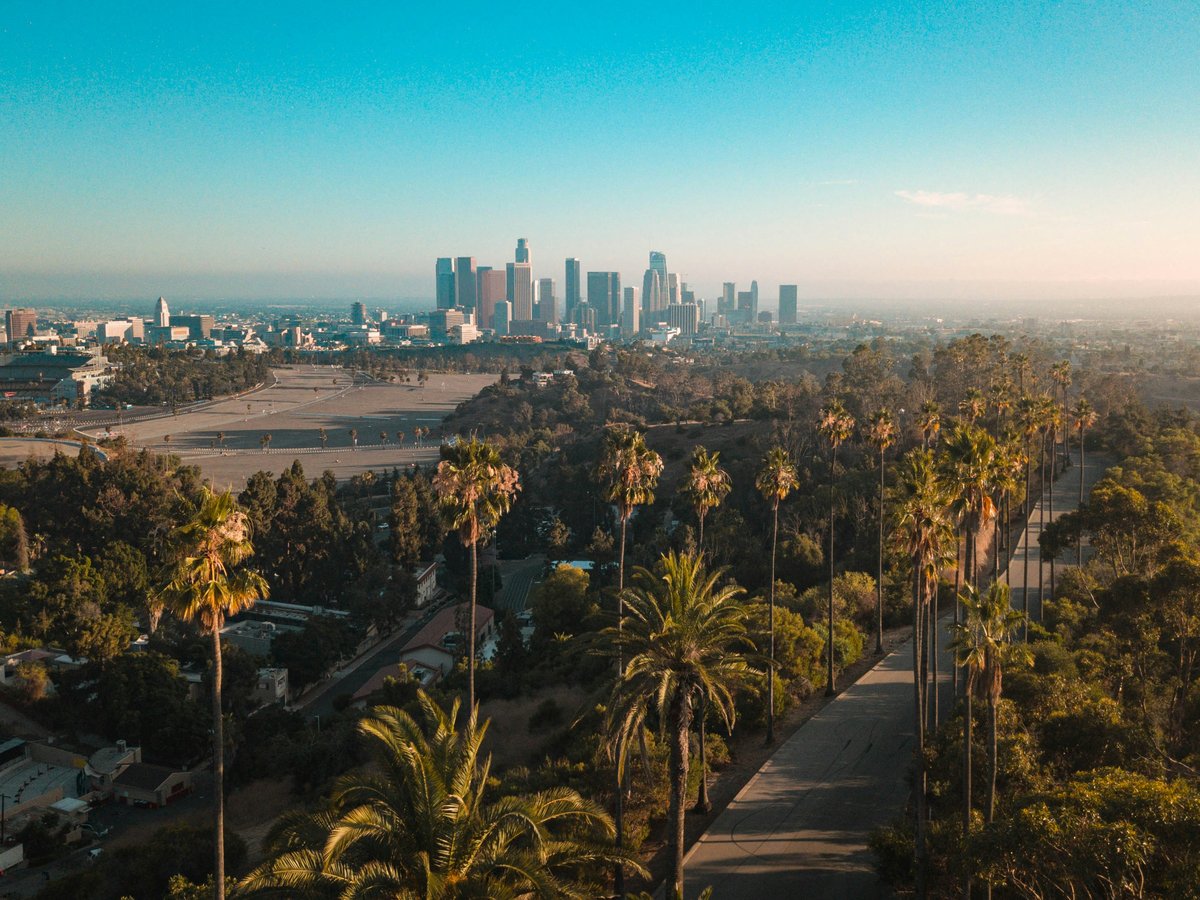
Los Angeles shops the way it drives: in separate neighbourhoods spread across roughly 500 square miles, each with its own crowd. Rodeo Drive in Beverly Hills handles the global luxury labels, and twenty minutes east the Fashion District downtown sells fabric by the yard and sample-sale dresses to people who know where to look. The city's strongest suit is probably vintage. Decades of studio wardrobe departments, surf culture, and Hollywood estate sales have left Melrose Avenue, Silver Lake, and the Rose Bowl in Pasadena with racks of worn-in denim, band tees, and mid-century furniture that you might struggle to find anywhere else in the United States. Food shopping counts too: the Original Farmers Market at Third and Fairfax and Grand Central Market downtown are as much a part of a local's weekend as any mall. Distance is the real cost here though, so most Angelenos pick one or two neighbourhoods per outing rather than trying to cover the whole map in a day.
Shopping districts
-
Rodeo Drive, Beverly Hills
luxuryRodeo Drive runs through the Golden Triangle of Beverly Hills, and its three blocks between Wilshire Boulevard and Santa Monica Boulevard hold the flagship boutiques of the big European fashion houses. Most locals come to window-shop or to buy one considered piece, and the cobbled Two Rodeo lane at the Wilshire end is where the tourist photos tend to happen. The surrounding streets, Beverly Drive and Canon Drive, are calmer and a little more affordable, with American designers and beauty counters.
Best for: Designer flagships, fine jewellery and watches, people-watching on a weekday afternoon
-
Melrose Avenue
mixedMelrose Avenue splits into two personalities. West of La Cienega Boulevard, Melrose Place is quiet and polished, with designer boutiques and florists under the trees, while east of Fairfax Avenue the stretch toward La Brea Avenue is louder, with sneaker shops, streetwear drops that draw queues on release mornings, and vintage stores pressed close together behind painted murals. The Sunday flea at Fairfax High School anchors the eastern end.
Best for: Streetwear, sneakers, vintage clothing and street-art photo stops
-
Abbot Kinney Boulevard, Venice
mid-range to highAbbot Kinney Boulevard in Venice runs about a mile from Venice Boulevard toward Main Street, and it still carries the beach-town feel of salt air and sidewalk espresso. The shops lean toward independent fashion, homewares, ceramics, and surf-inspired design, with prices running well above the boardwalk a few blocks west. The First Fridays evening event currently brings food trucks and crowds once a month.
Best for: Independent boutiques, California-made homewares, a slow afternoon stroll
-
Fashion District, Downtown LA
budgetThe Fashion District covers roughly 100 blocks of downtown south of 7th Street, and it's where the Los Angeles garment trade still works. Santee Alley is the noisy, crowded core, stalls spilling over with knock-off sunglasses, phone cases and cheap clothing. Several surrounding wholesale showrooms sell exclusively to the trade on weekdays, but many open to the public on Saturdays, and the fabric shops near Maple Avenue will sell to anyone who walks in.
Best for: Fabric, costume supplies, bargain clothing and the city's working garment trade
-
Silver Lake and Los Feliz
mid-rangeSunset Boulevard through Silver Lake, around Sunset Junction, and Vermont Avenue and Hillhurst Avenue in Los Feliz are the streets where east-side Angelenos do their shopping. You'll find secondhand bookstores, record shops, plant stores, small-batch candle makers and well-edited vintage racks, and the pace is slower than on the Westside. Many shops don't open until late in the morning.
Best for: Vinyl, used books, vintage, independent design and gifts with a local feel
-
Third Street Promenade, Santa Monica
mid-rangeThe Third Street Promenade is a three-block pedestrian street in downtown Santa Monica, a few minutes' walk from the pier. National chains make up most of it, with buskers and a sea breeze in the evening, and Santa Monica Place mall anchors its southern end. Locals use it for errands rather than discovery, but it's one of the few places in Los Angeles where you can shop on foot for a full afternoon.
Best for: Familiar brands, easy walking, pairing shopping with the beach on the Metro E Line
-
Hollywood Boulevard
budget to mid-rangeHollywood Boulevard carries the full souvenir spread: Oscar-shaped statuettes, star-map tours, printed T-shirts, all on sidewalks set with the Walk of Fame's more than 2,700 terrazzo-and-brass stars. The Ovation Hollywood complex beside the Dolby Theatre adds chain stores and a view of the Hollywood Sign from its upper terraces, while the costume and memorabilia shops are the more interesting stops along the stretch. The Metro B Line stops right on the boulevard.
Best for: Kitschy souvenirs, movie memorabilia and costume pieces
-
Little Tokyo and the Arts District
mixedLittle Tokyo, around 1st Street and Japanese Village Plaza downtown, sells Japanese stationery, ceramics, snacks and anime goods, with the smell of grilled mochi and curry drifting out of the plaza. A short walk east, the Arts District fills converted warehouses with design shops, skate brands and makers' studios. Put them together and you have a solid half-day on foot from Union Station.
Best for: Japanese goods, stationery, design objects and warehouse-district browsing
Markets
-
Rose Bowl Flea Market
fleaThe Rose Bowl Flea Market fills the grounds around the stadium in Pasadena with more than 2,000 vendors on a typical month, and it is the city's best-known source for vintage clothing, mid-century furniture, old Levi's and odd Hollywood ephemera. Serious dealers arrive at early entry, which carries a higher ticket price. The asphalt gets hot by midday, so bring water, a hat and cash.
Second Sunday of each month
-
Melrose Trading Post
fleaThe Melrose Trading Post sets up in the parking lot of Fairfax High School at Melrose Avenue and Fairfax Avenue, with a few hundred vendors selling vintage clothes, jewellery, art and furniture, plus live music and food stalls. It has run since 1997, and admission proceeds currently support the school's programmes. It is smaller and easier to cover than the Rose Bowl.
Sundays, morning to late afternoon
-
Original Farmers Market
foodThe Original Farmers Market at Third Street and Fairfax Avenue dates from 1934: a covered maze of produce stands, butchers, bakeries, candy makers and lunch counters, with the clock tower and green awnings still looking much as they do in old postcards. The Grove shopping centre sits next door, linked by a small trolley.
Daily
-
Grand Central Market
foodGrand Central Market on Broadway in downtown has fed Los Angeles since 1917. Under the neon signs, long-running Mexican stalls sell dried chiles and pupusas alongside newer counters for egg sandwiches, ramen and natural wine. The Angels Flight funicular stops across Hill Street, which makes it an easy combination with Bunker Hill.
Daily, with longer evening hours on weekends
-
Santa Monica Farmers Market
farmersThe Wednesday market on Arizona Avenue in Santa Monica is the one local chefs shop, with California stone fruit, citrus, avocados and heirloom tomatoes depending on the month. Prices tend to run above the supermarket, but the quality and the chance to taste before buying make up for it. The Saturday edition on the same street is smaller and more relaxed.
Wednesdays and Saturdays, mornings
-
Hollywood Farmers' Market
farmersThe Hollywood Farmers' Market spreads over several blocks around Ivar Avenue and Selma Avenue, a short walk from the Hollywood and Vine Metro station, mixing growers with prepared-food stalls and crafts. The smell of tamales and fresh tortillas carries down the street. It is one of the larger certified markets in Los Angeles County.
Sundays, morning to early afternoon
-
Smorgasburg LA
food and artisanSmorgasburg LA takes over the open lot at ROW DTLA in the downtown industrial area with dozens of food vendors and a handful of makers selling ceramics, prints and clothing. It leans toward new food concepts, so expect queues for whatever is popular that season. ROW DTLA's own shops are open on the same day.
Sundays
Souvenirs worth bringing home
See's Candies has been made in Los Angeles since 1921, and a box of its chocolates remains the gift Angelenos pack when they head home to family elsewhere. Tapatío hot sauce also comes from the Los Angeles area, and a bottle picked up from a Grand Central Market stall costs very little and travels easily in checked luggage. Dodgers caps and jerseys, bought at Dodger Stadium or a sporting-goods shop, are a local purchase in a way that the generic "Hollywood" shirts on the boulevard are not. Vintage denim and band T-shirts from the Rose Bowl or Melrose are probably the best value the city offers, though prices on rare pieces have risen sharply over the past decade. In Little Tokyo, look for Japanese-American stationery and ceramics. From the farmers markets, California dried fruit, almonds, and local honey pack easily, but check your home country's customs rules before carrying fresh produce. Locally roasted coffee beans from Silver Lake or Venice cafes round out a light, useful haul.
Practical tips
- Sales tax and refunds
- The United States has no national VAT, which means there is no tourist tax refund waiting at the airport. Sales tax in Los Angeles County currently runs close to 10 percent, varies by city, and is added at the register rather than included in the price tag, so factor it into every purchase.
- Bargaining
- Prices in Los Angeles shops are fixed, but at the Rose Bowl, the Melrose Trading Post, and in Santee Alley, haggling is expected, and a polite counter-offer with cash in hand usually moves things along, especially late in the afternoon when vendors are already packing up.
- Payment
- Credit cards and contactless phone payments work almost everywhere, including most farmers market stalls, but carry some cash for flea-market vendors, parking lots, and market admission, as card readers can be unreliable in the Rose Bowl's back rows.
- Opening hours
- Malls such as The Grove and Westfield Century City generally open around 10am and close around 9pm, with shorter hours on Sundays. Independent shops in Silver Lake, Venice, and Los Feliz often don't open until 11am or noon, and some close on Mondays, so check before driving across town.
- Getting there and parking
- Parking is the hidden cost of shopping in Los Angeles. Beverly Hills has municipal garages with free first hours, while Abbot Kinney and Melrose rely on metered street parking. The Metro B Line serves Hollywood Boulevard and the E Line runs to Santa Monica, sparing you the traffic on Interstate 10.
- Bags and weather
- California law requires shops to charge for paper bags, so bring a tote. Afternoons in October can still feel like summer here, and on 19 October 2026 the reading was 27.3°C under clear sky, so pack water and sunscreen before heading to open-air flea markets.
FAQ
Is the Rose Bowl Flea Market worth the trip from Hollywood?
For vintage clothing, furniture or collectibles, yes. It is the largest regular flea market in the Los Angeles area, so arrive early, wear comfortable shoes and plan on at least three hours to cover it.
Can tourists get a tax refund on purchases in Los Angeles?
No. The United States has no VAT refund scheme, which means sales tax paid in Los Angeles shops is not refundable when you leave from LAX or any other airport.
Where do locals shop for vintage clothing in Los Angeles?
Locals gravitate toward the eastern stretch of Melrose Avenue, the shops of Silver Lake and Los Feliz, and the monthly flea in Pasadena. Prices are usually better at the markets than in curated storefronts.
What is the best area for budget shopping in Los Angeles?
The Fashion District downtown, especially Santee Alley, has the lowest prices on clothing, accessories and fabric. Saturday is the busiest day, when many wholesale showrooms sell to the public.
Do I need a car to go shopping in Los Angeles?
Not always. Hollywood Boulevard, downtown's markets and Little Tokyo, and Santa Monica's Third Street Promenade are all reachable on Metro rail, but Abbot Kinney, Silver Lake and the Pasadena flea are easier by car or rideshare.
Last verified by automated review (v1.7.2) on . What is automated review?