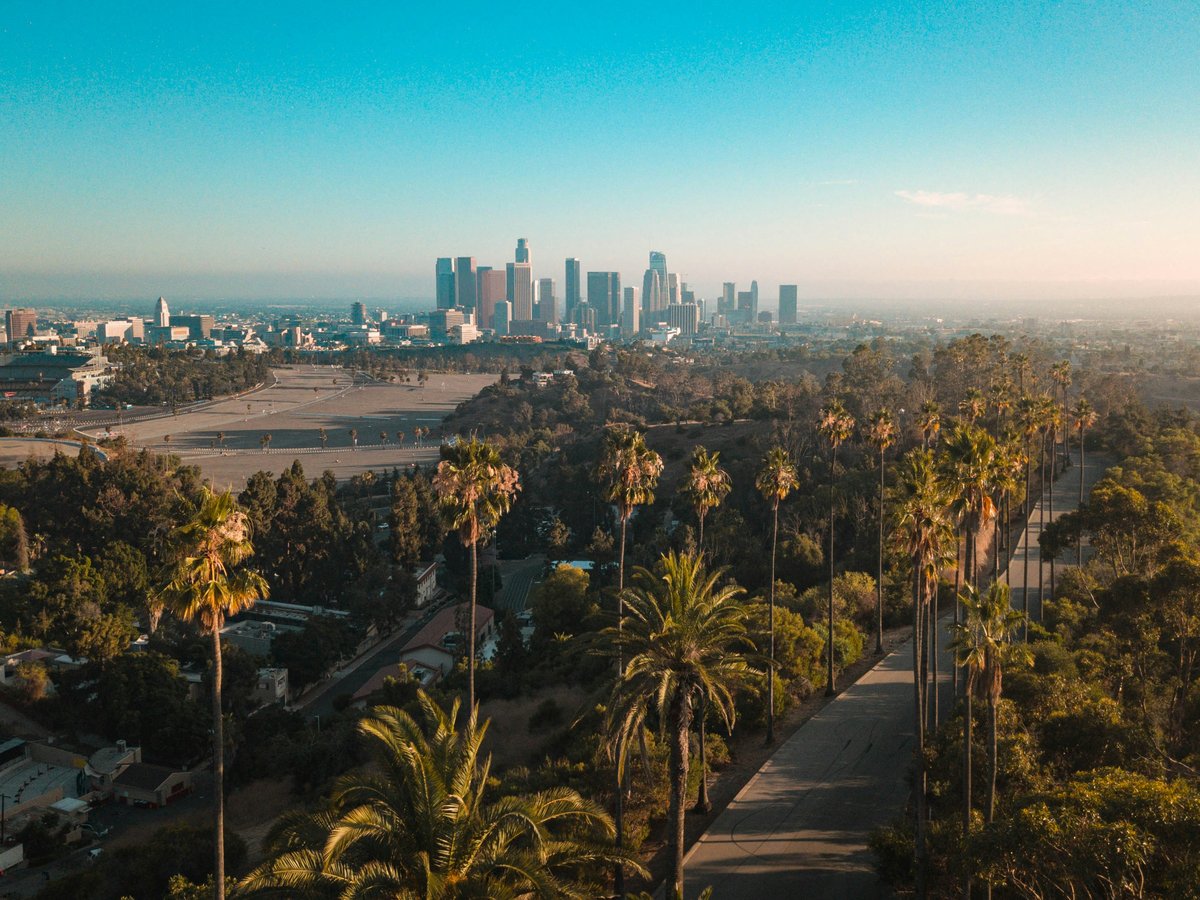
When's the best time to visit Los Angeles in 2026?
March through May and October through November. Summer heat inland tops 100°F in Pasadena and the San Fernando Valley, June stays overcast along the coast until noon, and July hotel rates near Santa Monica climb 40-60%. Spring and fall bring 68-78°F days, clear air over the San Gabriel Mountains, and shorter lines at the Getty Center.
March through May and October through November give first-time visitors the clearest version of Los Angeles. Daytime temperatures along the coast sit between 68°F and 78°F. The air over the San Gabriel Mountains is clean enough to see the snow-capped peaks from the 110 freeway, which happens maybe 15 days a year in summer. Lines at the Getty Center run 20-30 minutes instead of the 90-minute July waits, and hotel rates in Santa Monica drop roughly 35% compared to peak summer.
June is LA's trick month. Locals call it June Gloom. A thick marine layer rolls in off the Pacific around 9pm and does not burn off until noon or later, sometimes not at all. The beaches at Venice and Manhattan Beach sit under a flat grey ceiling that smells of damp salt and feels about 62°F while the rest of the country assumes you're getting a tan. By July the fog lifts but the heat arrives. Pasadena and the San Fernando Valley regularly hit 100°F through August. The 405 freeway smells like hot asphalt and brake dust at 2pm. Smog settles into the LA Basin and the downtown skyline disappears behind a brown haze visible from the 10 freeway. A mid-range Santa Monica hotel room that runs $180 in April will cost $280-320 in late July.
April mornings in Silver Lake start cool, around 58°F. The smell of jasmine carries from the hillside gardens along Griffith Park's eastern trails. By 10am the sun is warm on your shoulders but not punishing. The light across LA in April draws film crews to Malibu and the Palisades. It is softer and warmer than the bleached-out summer glare, and it makes the Getty Center's travertine walls glow pale gold against the Santa Monica Mountains. October brings the Santa Ana winds, which push hot, dry air from the inland deserts toward the coast. Temperatures can spike to 90°F for 2-3 days, but the trade-off is extraordinary visibility. The Hollywood Sign, up on Mount Lee since 1923, stands out sharp and white against the chaparral from 10 miles away.
December through February is LA's rainy season, though 'rainy' needs context. The city averages about 14.9 inches of rain per year, and most falls in these 3 months. You might get 3-4 genuinely wet days per month, but hotels in Hollywood and Downtown drop 40-50% from summer peaks. The Los Angeles County Museum of Art on Wilshire has no line on a Tuesday in January. Evenings cool to the low 50s, so you will want a light jacket for dinner in Los Feliz or a night at the Hollywood Bowl. Mind you, the Bowl's main season runs June through September, so winter programming tends to be thinner. The La Brea Tar Pits next to LACMA rarely draw a crowd in February.
Month-by-month outlook
- Jan Shoulder
- Feb Shoulder
- Mar Ideal
- Apr Ideal
- May Ideal
- Jun Shoulder
- Jul Avoid
- Aug Avoid
- Sep Shoulder
- Oct Ideal
- Nov Ideal
- Dec Shoulder
Year-round climate
Averages from the last 5 years.
| Month | Avg high (°C) | Avg low (°C) | Rainfall (mm) |
|---|---|---|---|
| Jan | 19 | 7 | 85 |
| Feb | 20 | 8 | 110 |
| Mar | 20 | 9 | 85 |
| Apr | 24 | 11 | 8 |
| May | 25 | 13 | 7 |
| Jun | 28 | 15 | 10 |
| Jul | 31 | 17 | 2 |
| Aug | 32 | 18 | 18 |
| Sep | 30 | 18 | 22 |
| Oct | 27 | 15 | 18 |
| Nov | 23 | 11 | 57 |
| Dec | 19 | 9 | 132 |
Coastal LA averages 65-78°F in spring and fall, 75-90°F in summer with inland areas above 100°F. Annual rainfall totals about 14.9 inches, nearly all falling December through February.
Go deeper into Los Angeles
Last verified by automated review (v1.7.2) on . What is automated review?