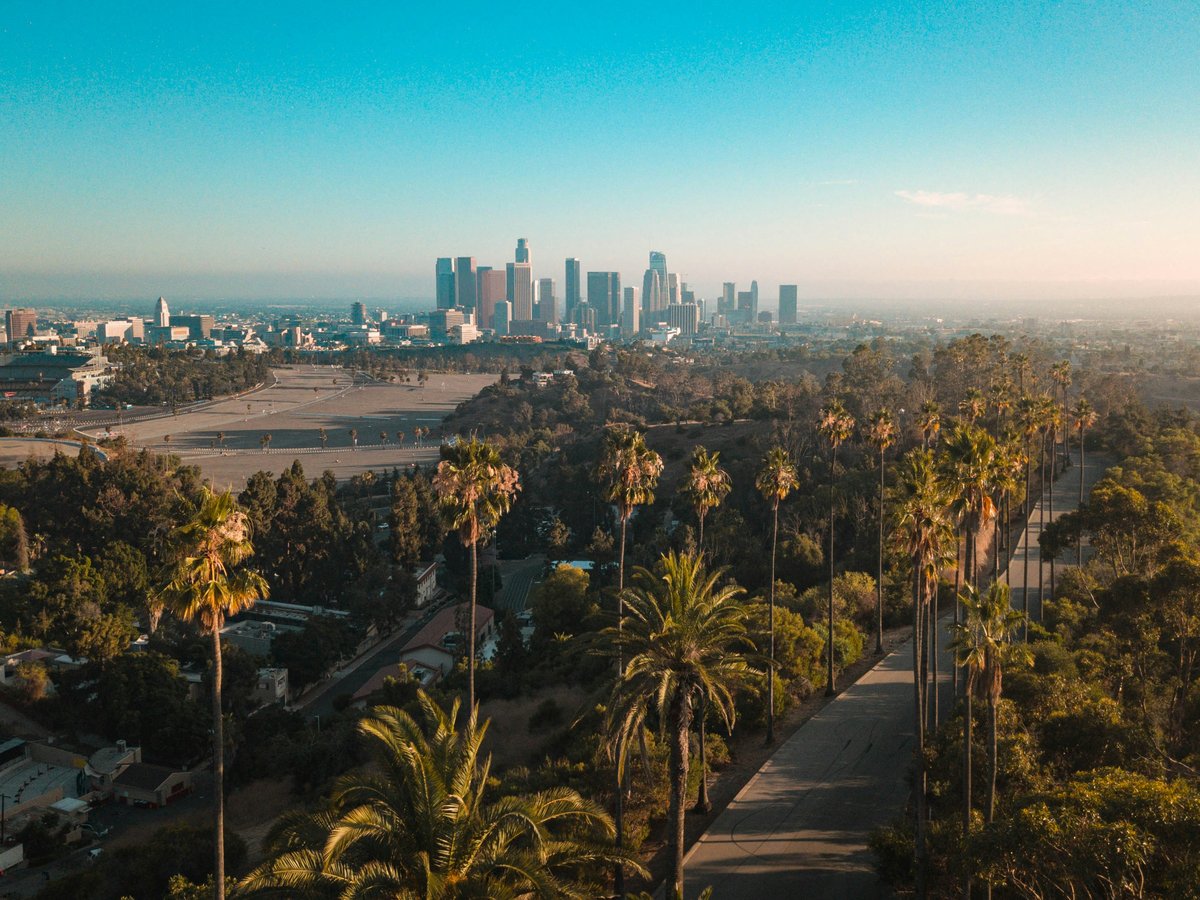
Best Time to Visit Los Angeles, by Season
Los Angeles averages 18.6°C in January and 31.9°C in August. That 13°C range creates four distinct travel windows, each with its own trade-off between weather, crowds, and cost. Here is the month-by-month verdict, with one best month named for five kinds of visitor.
Published · Updated
1 The 13°C Swing from January to August Makes 'Visit Anytime' the Worst Advice in Travel
The air outside LAX at 6 AM in January is cool enough to see your breath. Not freezing, not close, but the damp Pacific chill sits near January's 7.4°C overnight low, a long way from the permanent-summer postcard. By noon the clouds lift and the temperature reaches January's average high of 18.6°C. Pleasant for walking. Not for swimming.
Los Angeles spans a 13.3°C range on average highs across the year, from January's 18.6°C to August's 31.9°C. That is not a minor seasonal wobble. It is the difference between needing a jacket after dark and needing air conditioning around the clock. The overnight lows tell a sharper story. January bottoms out at 7.4°C. August and September share the warmest nights at 17.9°C, a 10.5°C gap that separates two very different trips.
Four distinct travel seasons emerge from the data. Winter, from December through February, holds highs between 18.6°C and 19.7°C and offers the lowest prices. Spring climbs from March's 20.1°C to May's 24.7°C and carries the best weather-to-crowd ratio on the calendar. Summer pushes past 30°C, with July at 30.9°C and August at 31.9°C, but brings peak pricing and wall-to-wall tourists on Hollywood Boulevard. Autumn starts hot at September's 30.4°C and cools steadily to November's 23.1°C while the crowds thin out.
The common advice is "anytime is a good time." That is marketing, not analysis. July's 30.9°C and December's 19.1°C demand different packing lists, different itineraries, different budgets. A first-time beach visitor and a film-industry pilgrim have different best months. A family with young children and a couple chasing restaurant reservations face different crowd calculus.
What follows is a month-by-month projection from verified 5-year daily-observation weather averages, layered with seasonal crowd and pricing patterns. Each recommendation names the month, the verified high and low, and the specific trade-off.
The common advice is 'anytime is a good time.' That is marketing, not analysis.
2 December Through February Averages 19°C and Nobody Comes, Which Is the Point
A December evening on the Santa Monica Pier starts with fairy lights and a spinning Ferris wheel, all very cinematic, until the breeze off the Pacific reminds you that December's overnight low averages 8.7°C. By January, the nighttime temperature drops to the year's coldest at 7.4°C. February recovers slightly to 7.9°C. None of this is brutal cold. All of it requires a layer you did not plan to pack for Southern California.
The daytime highs across these three months sit in a narrow band. December averages 19.1°C, January 18.6°C, February 19.7°C. The spread between the coolest month, January at 18.6°C, and the warmest of the trio, February at 19.7°C, is barely 1.1°C. For practical purposes, winter in Los Angeles is one continuous season at roughly 19°C midday and 8°C after dark.
This is the off-season, and the economics follow. Flights from the East Coast and from Europe drop after the New Year's spike. Hotels from Santa Monica to Downtown Los Angeles that charge summer premiums become negotiable in January and February. The caveat is the two-week stretch around Christmas and New Year's Eve, when prices temporarily rise despite December's 19.1°C daytime reading.
The best play for a winter visit is early January through mid-February. January's 18.6°C average high is warm enough for outdoor sightseeing at the Getty Center, for hiking Griffith Park without overheating, for a restaurant patio at noon. The 7.4°C evening low means dinner outdoors needs a patio heater or a move inside.
Beach time is off the table. But if your Los Angeles trip is about food, museums, studio tours, and driving the Pacific Coast Highway with the windows cracked in 19°C afternoon air, winter delivers the same city at a fraction of the summer cost. For the budget traveller, January's 18.6°C highs and rock-bottom pricing make it the strongest value month on the calendar.
3 April's 3.5°C Rise from March Makes It the Best Weather-to-Price Month of the Year
The jacaranda trees along 3rd Street in Mid-City bloom in late April. Purple petals collect on parked cars and sidewalk cafe tables. The air is dry and warm. April's average high of 23.6°C feels like the temperature Southern California was designed for.
Spring in Los Angeles unfolds as a steady climb. March starts at 20.1°C on the highs, still cool enough that mornings near the coast carry a chill. The overnight low in March sits at 8.9°C, not far from February's 7.9°C. By April, the high reaches 23.6°C and the nighttime low rises to 11.0°C. May pushes further to 24.7°C days and 13.2°C nights. That 4.6°C climb from March to May on the average highs is the steepest three-month ramp on the Los Angeles calendar.
March is the transitional month. Its 20.1°C high is only 0.4°C warmer than February's 19.7°C, and it still feels like winter in the shade. The real inflection comes in April. The 3.5°C rise from March's 20.1°C to April's 23.6°C is the single largest month-over-month increase in the entire year. Outdoor dining shifts from tolerable-with-a-sweater to preferred.
Summer break has not started. European visitors are weeks away from their July bookings. April and May deliver daytime temperatures of 23.6°C and 24.7°C respectively, warm enough for the beach by mid-May, comfortable for all-day outdoor activity in April. Pricing sits between winter's floor and summer's ceiling.
The pick for spring is April. May's 24.7°C is warmer, but hotel and flight prices begin to rise as Memorial Day approaches. April's 23.6°C high and 11.0°C low sit at the intersection of genuinely good weather, moderate crowds, and mid-tier pricing. For the first-time visitor who wants outdoor Los Angeles without the summer gridlock, April is the month. Only October at 27.4°C offers a similar balance, but April has the longer daylight and the jacaranda bloom.
4 June's 27.9°C Average Hides Behind the Marine Layer Until Noon
You wake up in Venice Beach on a June morning and look out the window. The sky is solid grey. The air is damp. June's overnight low of 15.3°C lingers well past sunrise when the marine layer sits overhead. This is June Gloom, the coastal fog that Southern California locals expect and tourists rarely plan for. It arrives off the Pacific most mornings from late May through June and sometimes holds until early afternoon.
June's average high of 27.9°C is real but misleading without context. That number represents the afternoon, after the marine layer burns off between 11 AM and 1 PM. The morning hours at the coast feel like a different city from the afternoon in the San Fernando Valley. The 2.1°C rise from May's 13.2°C overnight low to June's 15.3°C marks the first month where nighttime temperatures feel genuinely mild. But the morning grey unsettles visitors who arrived expecting immediate wall-to-wall sunshine.
The inland story diverges. After the clouds clear, neighborhoods like Pasadena and Burbank regularly exceed that 27.9°C coastal average. The LA basin's topography creates two different Junes within one metro area. Coastal Santa Monica at noon might still be fighting through fog while Burbank has been in full sun since 10 AM.
June's position on the travel calendar is awkward. It is technically the start of summer, and prices reflect that. Flights and hotels climb toward their July-August peak. Yet the coastal weather is not consistently warm and clear until after noon. You pay closer to summer rates for spring-like mornings.
The strongest case for June goes to the late riser who fills mornings with indoor time. Gallery visits, museum mornings, long breakfasts in Silver Lake. The 27.9°C afternoons arrive reliably, and June's 15.3°C evenings are comfortable for a sunset walk along the Venice boardwalk. If your schedule runs late and you lean toward afternoon beach hours, June's 27.9°C works. If you need blue sky from sunrise and 30°C-plus warmth, wait for July's 30.9°C and its clearer mornings, or September's 30.4°C with fewer tourists.
5 July and August Deliver 31°C Days and Peak Prices in Equal Measure
The asphalt on Hollywood's Walk of Fame radiates warmth through your shoes by 11 AM in August. The air temperature reaches August's average high of 31.9°C, the hottest monthly reading on the Los Angeles calendar. The concrete corridors of Downtown push the felt temperature higher still. By the time you reach shade and an iced drink, you have earned both.
July and August are the months the tourism industry prices around. July averages 30.9°C on the highs, August 31.9°C. The overnight lows of 17.0°C in July and 17.9°C in August mean the warmth does not fully relent after sundown. A 2-block walk from a parking garage to a restaurant in Downtown LA at 8 PM in August still produces a light sweat at 17.9°C.
This is peak crowd season. Hollywood Boulevard, Griffith Observatory, the Santa Monica Pier, and the Getty Center all see their heaviest foot traffic. Weekend parking at Griffith fills early. The Hollywood Sign trailheads are packed by 8 AM with hikers trying to beat the 30.9°C-plus afternoon.
The beach is the draw that justifies the premium. August's 31.9°C makes the Pacific feel genuinely inviting, and the morning marine layer that defined June is largely gone by July. Santa Monica State Beach and Manhattan Beach fill early on summer weekends. Arrive by 9 AM on a Saturday in August for a decent spot.
The honest assessment. July and August deliver the weather that matches the Los Angeles fantasy, with clear skies, hot days, and warm nights. But you pay peak prices, navigate the largest crowds of the year, and spend considerable time at 31°C waiting for attractions that are half as crowded in October at 27.4°C. For the beach-first visitor locked into a summer schedule, August's 31.9°C is the peak. For anyone with date flexibility, the summer premium is hard to defend when September opens at 30.4°C with a fraction of the crowds.
You pay peak prices, navigate the largest crowds of the year, and spend considerable time at 31°C waiting for things that are half as congested in October.
6 September Starts at 30.4°C with Fewer Crowds and Lower Prices Than August
Late September afternoon light in Los Angeles turns golden early. The shadows from palm trees on Wilshire Boulevard stretch long by 4 PM, and the haze that hung through summer tends to lift. September's average high of 30.4°C sits within 1.5°C of August's 31.9°C. You lose very little warmth. You gain a calmer city.
September is the opening of LA's shoulder season. Summer break ends. The European tourist wave recedes. Hotels and flights between Labor Day and Thanksgiving drop from their summer peak. Yet September's 30.4°C average high makes it functionally a summer month by temperature. The overnight low of 17.9°C, identical to August's, keeps evenings warm enough for outdoor dining across Silver Lake and Los Feliz without any chill.
October cools to a 27.4°C average high and a 14.5°C overnight low. That 3.0°C drop from September is noticeable but welcome. October in Los Angeles feels like what tourists imagine LA is supposed to feel like. Warm, clear, dry, without the oppressive heat of July's 30.9°C or August's 31.9°C. Beach days remain viable through mid-October. A hike at Griffith Park or Runyon Canyon at 27.4°C is markedly more comfortable than attempting either at August's 31.9°C.
November transitions toward winter. Its average high of 23.1°C and low of 10.6°C bring the first evenings where a jacket becomes necessary. Beach season is effectively over by early November, and the rhythm shifts toward indoor restaurants, museums, and early-holiday events.
For the traveller who wants summer weather without summer pricing or summer crowds, September is the most undervalued month on the Los Angeles calendar. Its 30.4°C days and 17.9°C nights match August in temperature while costing less. October at 27.4°C is the pick for anyone who finds 30°C a touch warm. Together, September and October span from 30.4°C to 27.4°C on the highs, covering 8 weeks of warm weather at shoulder-season cost.
7 Five Kinds of LA Visitor, Five Different Best Months, Defended with Data
The view from a rooftop bar in Downtown Los Angeles on a clear October evening extends to the San Gabriel Mountains. The air sits at a comfortable 27.4°C. The crowd is relaxed. Eventually, the question comes up. When should I visit? The answer depends on why you are coming.
The budget traveller picks January. The year's lowest average high at 18.6°C and its coldest nights at 7.4°C keep most tourists away, which is the entire point. Flights and hotels hit their annual floor between New Year's Day and Valentine's Day. The 18.6°C afternoon is warm enough for the Getty Center, LACMA, the Warner Bros. Studio Tour, and the Arts District. The trade-off is a jacket after 5 PM and no beach time.
The first-time visitor picks April. At a 23.6°C average high and an 11.0°C low, April delivers warm-but-not-hot weather with pre-summer pricing and manageable crowds. The 3.5°C rise from March's 20.1°C to April's 23.6°C makes spring feel like a different city from winter. You can walk Hollywood Boulevard, drive to Malibu, hike to the Hollywood Sign, and eat outdoors every night.
The beach visitor picks August. This is not a contrarian call. August's 31.9°C average high and 17.9°C low deliver the best beach conditions on the calendar. The marine layer is gone. You will pay peak prices and deal with peak crowds, but if the goal is sand, surf, and long warm evenings, August delivers without compromise.
The heat-averse culture visitor picks October. At 27.4°C and 14.5°C, October is warm without being punishing. Lines at Griffith Observatory and the Getty Center are shorter than in summer. Restaurant patios across Silver Lake and Venice are comfortable from noon through midnight. The 4.5°C gap between October's 27.4°C and August's 31.9°C is enough to make all-day walking through Downtown pleasant rather than draining.
The visitor who wants everything picks September. September's 30.4°C average high sits within 1.5°C of August's 31.9°C. Its 17.9°C overnight low is identical to August's. The crowds have thinned. The prices have dropped. September's 30.4°C, paired with 17.9°C nights and post-summer pricing, makes it the strongest overall month to visit Los Angeles.
September's 30.4°C, paired with 17.9°C nights and post-summer pricing, makes it the strongest overall month to visit Los Angeles.
Last verified by automated review (v1.7.0_onboard-los-angeles-flagship-2026-06-16) on . What is automated review?