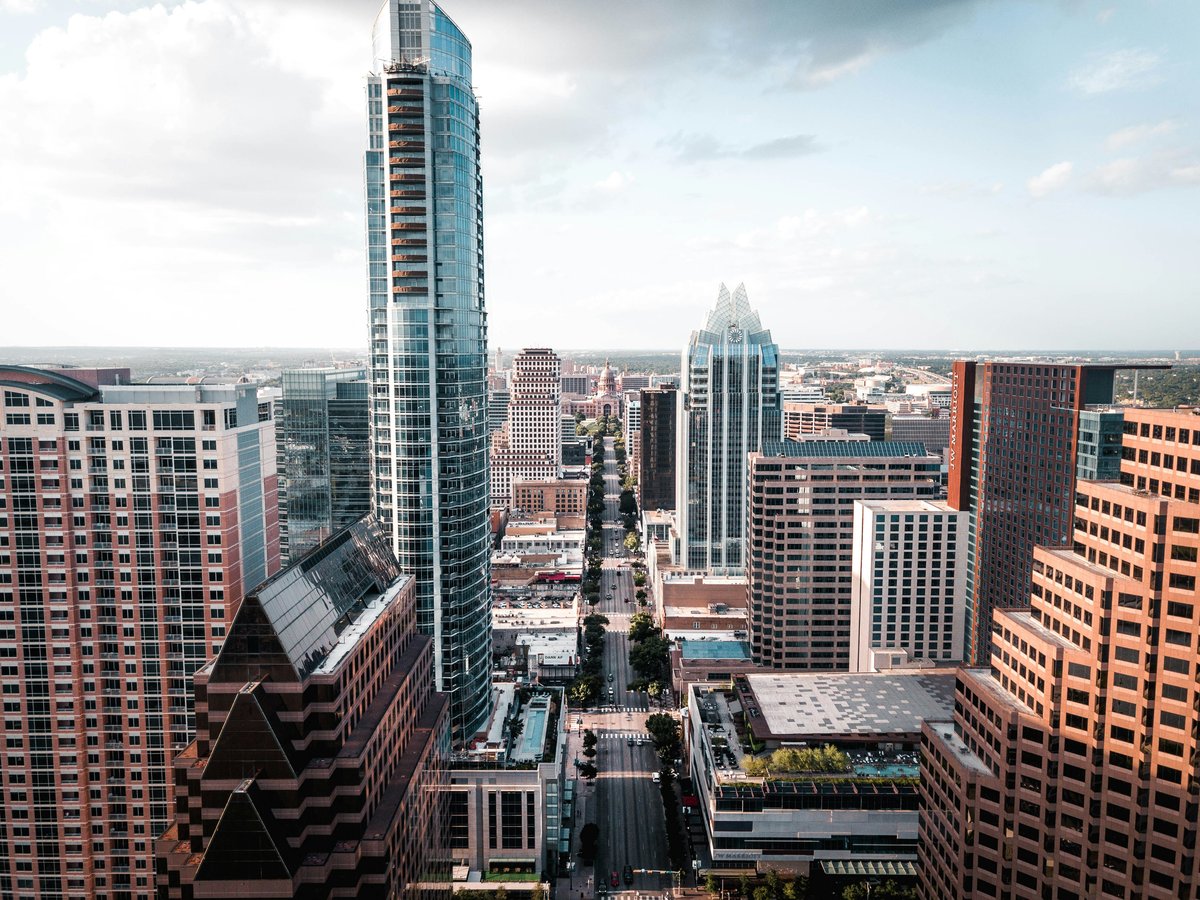
Austin With Kids: What Works
Austin pulls an 8.2 on the family-friendliness index, which sounds good until your toddler melts down on South Congress at 2 PM in July. The parks are world-class, but the city does not hand you a family itinerary. This guide builds one from what actually works.
Published · Updated
1 Austin's 8.2 Family Score Hides a City with a Split Personality
The crack of a live band bleeds through a wall at 11 PM on a Tuesday on East 6th Street. Two blocks south, a father pushes a double stroller past a taco truck at 7 AM. The street is still damp from overnight cleaning. Austin holds these two realities at the same time, and the family-friendliness score of 8.2 out of 10 captures the tension.
That 8.2 places Austin ahead of most Texas cities but behind San Diego and Portland on the same index. The high end of the score comes from raw park infrastructure. Zilker Park covers 351 acres along the south bank of Lady Bird Lake. Barton Springs Pool stays open year-round at a natural 68°F. The trail network around Lady Bird Lake runs over 10 miles. The Thinkery children's museum in the Mueller development has been operating since 2013 and pulls over 500,000 visitors a year.
The low end of the 8.2 is where the problems live. Austin's DNA is live music and nightlife. East 6th Street after dark is no place for kids. Summer temperatures push past 100°F for weeks between June and September. Public transit is thin enough that you will need a car or rideshare for almost every outing. The walkable zones that work for families, mainly Zilker, Mueller, and the Domain, are islands in a sprawl that grew over 30% in the decade before 2023.
What the 8.2 means in practice is that Austin has excellent raw material for families but requires more route-planning than a city designed around them. The food scene is genuinely child-tolerant in ways that San Francisco and Manhattan are not. But the city does not hand you a schedule. You have to know which 4 square miles to orbit, which famous attractions are meltdown factories, and which overlooked spots deliver consistently. Summer highs in Austin reach 105°F in July and August, and South Congress Avenue has no shade structures on its most photographed block.
2 South Congress with a Stroller Is a Beautiful Lie
The vintage neon signs along South Congress Avenue look perfect in photographs. The smell of fresh-roasted coffee from Jo's Coffee drifts across the sidewalk near the corner at James Street. Walk 200 feet with a 3-year-old and the illusion cracks.
South Congress, known locally as SoCo, is Austin's most Instagrammed family outing. It is also the one most likely to end in tears before lunch. The sidewalks narrow to single-file in spots between Barton Springs Road and Elizabeth Street, a stretch of roughly 0.6 miles. Most of the shops sell breakable or expensive merchandise. There is almost no shade on the east side of the street. The restaurants cluster around peak wait times of 45 minutes or more on weekends, and few offer outdoor play space for children.
The deeper problem is structural. SoCo is a browsing experience. It rewards adults who want to wander for 2 hours through boutiques and vintage stores. It punishes small children who need a destination they can see, reach in 5 minutes, and interact with physically. A 4-year-old does not browse.
What works instead depends on the age. For toddlers through age 5, skip SoCo entirely and drive 10 minutes to the Austin Nature & Science Center inside Zilker Park. Admission is free. The Dino Pit, a genuine fossil dig area, holds a 3-year-old's attention for a solid 45 minutes. For kids ages 6 through 10, South Congress can work if you start at Jo's Coffee, walk south on the west side where the awnings provide shade, and set a firm 90-minute window with a specific endpoint near the 1400 block.
To be fair, SoCo does have one genuinely family-useful anchor. The food trailers near the 1600 block of South Congress offer outdoor seating on grass, and most vendors serve meals under $12.
A 4-year-old does not browse.
3 Zilker Park Before 10 AM Is the Entire Vacation
At 8:30 on a Saturday morning in October, the grass at Zilker Park is still cool enough to sit on barefoot. A red-tailed hawk circles above the Great Lawn. The parking lot at 2100 Barton Springs Road is half-empty, and the Zilker Zephyr miniature train has not started its first loop.
This is the window. Zilker Park covers 351 acres along Lady Bird Lake's south bank, and by 10:30 AM on any weekend between March and November, the parking situation alone can unravel a family outing. The main lot fills by 11 AM. The overflow along Stratford Drive adds a 15-minute walk carrying gear and a toddler. After noon in summer, the temperature crosses 95°F and the shade thins across the main lawn.
Before 10 AM, Zilker is a different place entirely. The playground near the Barton Springs Pool entrance has structures that work for ages 2 through 8. The Zilker Botanical Garden, a 5-minute walk south, charges $5 for adults and is free for children under 2. The Zilker Zephyr train ride runs $4 per person for a 25-minute loop along the river. That sequence, playground then garden then train, fills about 2.5 hours without a meltdown and costs under $15 for a family of 4.
The runner-up for morning outdoor time is the Ann and Roy Butler Hike-and-Bike Trail along Lady Bird Lake. The flat, paved section from the Pfluger Pedestrian Bridge to the Lamar Boulevard bridge covers 1.2 miles and handles strollers easily. Mind you, there is no shade on the Pfluger Bridge itself, so this stretch is a morning or late-afternoon route only.
For families with kids under 3, Zilker's Playscape area near the rock garden is the single strongest stop in Austin. The area is fenced, shaded by live oaks after about 3 PM, and fully visible from the surrounding benches.
4 Barton Springs Pool Is a Shock Test for the Under-Fives
The water is 68°F year-round. That first step in, ankle-deep on the limestone shelf at the shallow south end of Barton Springs Pool, makes adults gasp. A 4-year-old will scream or laugh. There is no middle ground.
Barton Springs Pool sits inside Zilker Park, fed by underground springs that hold the temperature between 68°F and 70°F regardless of the 102°F air above in August. Admission runs $5 for adults, $3 for children ages 1 through 11, and free for infants under 1. The pool stretches roughly 900 feet long and averages about 16 feet deep in the center channel. It is not a swimming pool in the suburban sense. It is a spring-fed limestone canyon filled with cold, clear-green water.
Worth noting, the family-friendly part of Barton Springs is not the main pool. It is Splash, the free shallow wading area immediately upstream of the dam on the north side. Splash has no entry fee, a soft gravel bottom, water that barely reaches a toddler's knees, and cottonwood shade along the east bank. For families with children under 5, Splash is the destination. Skip the main pool entirely until your child can swim confidently and tolerate cold water.
For the main pool, the south-side shallow shelf is the realistic entry point for children ages 5 through 8. The depth drops to 18 feet within about 30 feet of the shelf edge, so this is not a pool for unsupervised kids of any age. Lifeguards station along the south wall for this reason.
The named alternative is Deep Eddy Pool, about 1.5 miles west on Lake Austin Boulevard. Deep Eddy opened in the 1930s, runs warmer through the summer, and charges $5 for adults and $3 for children. It has a dedicated toddler pool separated from the main basin. Deep Eddy's water tends to reach the low 80s°F by August, a full 15-degree difference from Barton Springs' constant 68°F.
A 4-year-old will scream or laugh. There is no middle ground.
5 The Thinkery Wins Every Rainy Day and Most Sunny Ones
The sound inside the Thinkery on a Tuesday morning has a specific frequency. Water tables splash in the outdoor courtyard. Gears click in the maker space on the second floor. A toddler shrieks somewhere near the light-and-shadow exhibit, and the building's acoustics absorb the sound before it reaches the front desk.
The Thinkery sits at 1830 Simond Avenue in the Mueller development, about 3 miles northeast of downtown Austin. It opened in 2013 after relocating from a smaller downtown location. Admission is $14 for anyone over 1 year old. The building covers roughly 40,000 square feet across 2 floors, plus an outdoor courtyard with water features that effectively doubles the usable space from April through October.
This is the under-rated winner of Austin family tourism, and the reason is structural. The Thinkery works for ages 0 through 8 simultaneously. The ground floor has a dedicated infant-and-toddler area, walled off with low barriers, with soft surfaces and age-calibrated stations. The second floor runs older, with building challenges, basic circuitry exhibits, and science demonstrations that hold a 7-year-old's focus. A family with a 2-year-old and a 6-year-old can split between floors and both children stay engaged. That almost never happens at a single venue.
Tuesday through Thursday mornings tend to draw the lightest crowds. Weekend afternoons after 2 PM are the most packed. Because Mueller is a planned community with its own street grid, parking is free and plentiful on the surrounding blocks. That alone is a sharp contrast to the Zilker or downtown parking scramble.
The alternative for museum time is the Bullock Texas State History Museum on Congress Avenue downtown. The Bullock appeals more to children over 8, charges $13 for adults and $9 for ages 4 through 17, and has an IMAX theater with rotating programming. For children under 5, the Thinkery has a dedicated ground-floor play area with no equivalent at the Bullock.
6 Skip the Sit-Down Brunch and Find a Food Truck with a Playground
The brisket smoke from a trailer at Meanwhile Brewing hits you from the parking lot at 11 AM on a Saturday. Kids are running between picnic tables on the grass. Nobody is shushing anyone.
Austin registered over 1,000 food trucks across the metro area as of 2023. For families, this is the single most useful feature of the city's food scene. A food truck lot with outdoor seating solves the 3 problems that make sit-down restaurants miserable with toddlers. No waiting for a table. No worrying about volume. And if the kid rejects the food, you walk 30 feet to a different truck and try again.
The strongest family food truck lots in Austin tend to be attached to breweries, which sounds odd but works. Meanwhile Brewing at 3901 Promontory Point Drive has a full playground, 8 to 10 rotating food trucks, and a grass lawn. Entry is free. Zilker Brewing Company on East 6th Street runs a similar setup with fewer trucks but more covered shade. The beer is for you. The open space is for them.
For sit-down restaurants that genuinely work with families, Chuy's on Barton Springs Road has been feeding Austin kids since 1982. The Tex-Mex is reliable, the weekday-evening wait rarely exceeds 20 minutes, and the portions are sized for sharing with small children. Matt's El Rancho on South Lamar Boulevard is the local pick. It has been open since 1952, with a longer history and a loyal Austin following.
That said, the highest-value family meal in Austin might be breakfast tacos from a counter-service spot. Veracruz All Natural on East Cesar Chavez Street sells migas tacos for about $4.50 each. The line moves in under 10 minutes most mornings. The seating is outdoor picnic tables under live oaks. A family of 4 eats well for under $25.
7 The Congress Avenue Bats Are Free, Loud, and Toddler-Approved
On a late-June evening around 8:15 PM, the first bats drop from under the Congress Avenue Bridge. The smell of warm granite and river water rises from Lady Bird Lake below. Within about 10 minutes, roughly 1.5 million Mexican free-tailed bats pour south in a dark, twisting ribbon against the fading sky. Your 3-year-old points with both hands.
The Congress Avenue Bridge colony is the largest urban bat colony in North America. The bats roost from roughly March through October each year, with peak numbers between June and August. Viewing is free from the bridge sidewalk, from the south shore trail of Lady Bird Lake, or from restaurant patios on the north bank. No ticket. No reservation. No line.
This works for families because of 3 factors. The emergence happens at sunset, which is when toddlers tend to get a second wind after the afternoon slump. It lasts about 15 to 20 minutes, which matches a small child's attention span almost perfectly. And it requires zero walking, zero entrance procedure, and zero behavior management. You stand on the bridge and look down.
Viewing position matters. The south side of the bridge, approached from the Ann and Roy Butler Trail, gives a downward angle as the bats exit southward. The north sidewalk puts you at bat-level, which is more dramatic but can be startling for children under 4. The Statesman Bat Observation Center on the southeast bank has interpretive signs and a slightly lower vantage point.
Arrive about 30 minutes before sunset to claim a bridge-rail spot with a clear sightline. Sunset in Austin falls around 8:35 PM in June and closer to 6:50 PM by mid-October. The emergence follows roughly 15 to 20 minutes after sundown, though timing varies by a few minutes each night. Evening temperatures during bat season still sit in the mid-80s°F after dark.
No ticket. No reservation. No line.
8 The Three-Day Itinerary Shape That Survives Children Under Five
By the third morning, you know the routine. The sunrise through the live oaks at Zilker Park smells like cedar and warm soil. Your kid is already asking about the train.
The itinerary shape that works for Austin with small children follows one rule. One outdoor morning, one indoor afternoon, one low-effort evening. This is not ambitious. It is survivable, and survival is the correct goal with kids under 5.
Day 1 opens at Zilker Park from 8:30 to 11 AM. Hit the playground first, the Zilker Zephyr train at $4 per person second, and the Zilker Botanical Garden at $5 adult entry third. Pick up lunch from a food truck on Barton Springs Road. The afternoon goes to the Thinkery in Mueller from 1:30 to 4 PM at $14 per person over age 1. In the evening, walk onto the Congress Avenue Bridge for the bat emergence, arriving 30 minutes before sunset.
Day 2 starts at Barton Springs Pool or Splash, depending on your family's cold-water tolerance. Splash is free. The main pool charges $5 for adults and $3 for children. Stay until about 11:30 AM. Lunch at Veracruz All Natural on East Cesar Chavez Street runs under $25 for a family of 4. The afternoon goes to the Austin Nature & Science Center inside Zilker Park, where admission is free and the Dino Pit fossil dig holds ages 3 through 7 for close to an hour. Dinner at Meanwhile Brewing solves itself with food trucks and the playground.
Day 3 begins on the Lady Bird Lake section of the Butler Trail, the flat 1.2-mile stretch from the Pfluger Bridge. Stroller-friendly, shaded in the morning. If the kids want more water, Deep Eddy Pool charges $5 for adults and $3 for children, and its water runs a warmer 80°F compared to Barton Springs' constant 68°F. Lunch at Chuy's on Barton Springs Road, a fixture since 1982, closes the food loop.
The total cost for this 3-day route runs roughly $150 to $200 for a family of 4, excluding meals beyond those listed. Austin's 8.2 family score reflects a city where this itinerary exists. The gap between 8.2 and a perfect 10 shows up as the 105°F July afternoon, the 20-minute drive between Zilker and Mueller, and the 0.6-mile stretch of South Congress sidewalk with no shade on the east side.
Last verified by automated review (v1.7.0_onboard-austin-flagship-2026-06-10) on . What is automated review?