Best Time to Visit Anchorage, by Season
Anchorage swings from -11.5°C December lows to 19.1°C July highs, a 30-degree range that decides whether you get midnight sun on a glacier or aurora over a frozen inlet. Here is every month, weighed for weather, crowds, and cost, with one best window named for each kind of traveller.
Published
1 Anchorage Swings 25.5 Degrees Between Seasons, and Most Visitors Only See the Warm Half
The airport arrivals hall in Anchorage smells like jet fuel and coffee in every season, but the air outside tells you which city you landed in. Step out in July and it sits at 19.1°C, warm enough for short sleeves on the Tony Knowles Coastal Trail while the sun hangs over the Alaska Range past 11 PM. Come back in December and you pull your hood tight against -6.4°C highs, watching your breath crystallize under less than 6 hours of grey light over Cook Inlet.
That 25.5-degree spread matters more here than in almost any other North American city. Anchorage's average highs range from -6.4°C in December to 19.1°C in July. The overnight numbers cut deeper. July's low of 11.7°C means you can walk 4th Avenue at 10 PM in a light jacket. December's -11.5°C low means that same walk hurts exposed skin in minutes.
Most guides reduce Anchorage to a June-through-August destination. That framing misses 9 months of the city's year. May's 13.6°C average high opens trails in the Chugach Mountains weeks before peak pricing. September's 12.3°C still supports a full day on Flattop Mountain, and the tundra above the tree line turns copper and red. October at 5.4°C has a real case for aurora chasers along the Glenn Highway.
The right month for Anchorage depends entirely on what you came for. A photographer needs February's -9.5°C darkness for northern lights. A family with young children needs July's 19.1°C warmth and 19 hours of daylight. A budget traveller gets the cheapest Alaska flights in January, when Anchorage highs struggle past -4.4°C. What follows is the month-by-month breakdown from 5-year daily-observation averages, from January's -4.4°C to July's 19.1°C.
Anchorage's average highs range from -6.4°C in December to 19.1°C in July, a 25.5-degree swing that rewrites everything about the trip.
2 December and January Below -4°C: Aurora Season and the Cheapest Flights of the Year
You hear the cold before you feel it in Anchorage in December. The crunch of packed snow underfoot at 3 PM, already dark, the parking lot outside the Anchorage Museum lit by headlamps and streetlights. December's average high reaches only -6.4°C, with lows dropping to -11.5°C overnight. January is marginally warmer at -4.4°C highs and -9.6°C lows, a difference you would not notice without a thermometer.
These 2 months are uncomfortable by any leisure standard in Anchorage. Your face stings walking from a car to a building on C Street. But two things make December and January worth considering for the right visitor.
The aurora is the first. Anchorage sits at 61°N latitude, inside the auroral oval, and 18-plus hours of December darkness give the northern lights room to perform. You will not see them from downtown, where light pollution along 4th Avenue washes out the display. Drive 30 minutes north toward Palmer on the Glenn Highway and the odds improve considerably. February at -9.5°C lows offers equally dark skies with drier air and clearer conditions than December's -11.5°C, which tends to carry moisture off Cook Inlet.
Winter pricing is the second draw. Flights to Ted Stevens Anchorage International Airport in January typically drop to their annual low. Hotels near the airport and along C Street follow the same curve. If your trip revolves around the Anchorage Museum, restaurants along Spenard Road, and aurora viewing from a rental car, the -4.4°C of January works. The Fur Rendezvous festival anchors late February, when temperatures have barely budged from January's -4.4°C highs.
Who benefits from December and January in Anchorage? Aurora hunters willing to stand outside below -10°C. Budget travellers who want the cheapest possible Alaska trip. Anyone for whom Anchorage is a stopover en route to Alyeska ski resort, a 40-minute drive south in Girdwood. The Chugach Mountains are still there at -6.4°C, but trail access is limited and daylight runs under 6 hours.
3 February and March: The Cold Barely Breaks Past 1.0°C, but Daylight Returns Fast
The light comes back before the warmth does in Anchorage, and February is where you feel that imbalance most sharply. Highs average -3.6°C, barely 3 degrees above January's -6.4°C. Lows remain at -9.5°C. But daylight grows fast in February. By month's end, Anchorage gains about 5 minutes of light per day, pushing past 10 hours total. The air is still cold enough to freeze your nostrils on a morning walk through Earthquake Park, but the sky carries a deep, clean blue you never see under December's overcast -6.4°C.
March brings Anchorage its first above-zero average high of the year at 1.0°C. That single degree above freezing sounds trivial, but it changes the city's texture. Snow softens along Spenard Road during the afternoon. Icicles drip from building eaves. Lows still drop to -6.8°C at night, refreezing everything, but March afternoons in Anchorage feel bright in a way that December and January never manage.
The Iditarod ceremonial start traditionally runs through downtown Anchorage on the first Saturday of March. Sled dog teams head down 4th Avenue while the air hovers near 1.0°C. It draws a genuinely local crowd, not a tour-bus audience. March also opens longer backcountry skiing days in the Chugach Mountains, where 1.0°C highs make extended time outdoors tolerable compared to January's -4.4°C.
February at -3.6°C gives you aurora potential plus rapidly growing daylight, and it tends to be the driest winter month along Cook Inlet's shore. March at 1.0°C gives you the Iditarod, later sunsets, and the first thaw. Neither month competes with June's 18.4°C or July's 19.1°C for raw comfort. Both beat December's -6.4°C and January's -4.4°C for livability, at a fraction of summer hotel rates in Anchorage.
4 April and May: 6.7°C to 13.6°C as the Snow Line Retreats Uphill
The smell of thawing earth hits you first in April in Anchorage. Wet soil, rotting birch leaves, the mineral tang of snowmelt running through Kincaid Park. April's average high of 6.7°C won't turn heads, but it represents a 5.7-degree jump from March's 1.0°C, the single largest month-over-month increase in Anchorage's year. Lows of -3.2°C still dip below freezing overnight, and patches of ice linger on sidewalks along Northern Lights Boulevard through mid-month.
May is where Anchorage becomes recognizably green. Average highs reach 13.6°C, a 6.9-degree leap from April's 6.7°C. Lows settle at 4.2°C, the first month where overnight temperatures stay reliably above freezing in Anchorage. The snow line on the Chugach Mountains retreats visibly day by day. Trails along Powerline Pass begin opening by mid-May. The Tony Knowles Coastal Trail, an 11-mile route from downtown to Kincaid Park, is fully walkable without ice cleats by the third week of May.
This is shoulder season, and Anchorage's shoulder is wide and underpriced. Hotels in May cost noticeably less than in June at 18.4°C or July at 19.1°C. Cruise ships have not arrived yet. The Alaska Wildlife Conservation Center, a 20-minute drive south on the Seward Highway toward Girdwood, is open but uncrowded. You might spot moose calves along the highway in late May.
The catch is variability. May's 13.6°C is an average for Anchorage. Individual days can dip to 5°C with rain or push past 18°C under a ridge of high pressure. April's 6.7°C average conceals a similar range.
For budget-conscious hikers and wildlife watchers, May is the window most visitors miss. You avoid July's 19.1°C peak-season crowds entirely. April at 6.7°C with lows of -3.2°C still feels more like late winter than early spring. May at 13.6°C and 4.2°C hits the threshold where you can spend a full day outdoors on the Seward Highway or Flattop Mountain without retreating to warm up on Northern Lights Boulevard.
5 June and July Hit 18.4°C and 19.1°C, and Every Tourist in Alaska Knows It
The midnight sun in late June is not a metaphor in Anchorage. At 11 PM the sky glows pale gold over the Chugach Mountains, and you can read a paperback outdoors near Ship Creek without a headlamp. June's average high of 18.4°C makes this the first month that feels warm against your skin. Lows of 9.7°C mean evenings need only a light layer. July nudges higher to 19.1°C average highs and 11.7°C lows, the warmest Anchorage gets by any measure.
These are the 2 months that draw nearly every visitor to Alaska. Cruise passengers funnel through Whittier and Seward, and many fill Anchorage hotels for a night or two. Flightseeing operations toward Denali run at capacity. The Anchorage Market on 3rd Avenue hits its peak attendance in June and July. Hotel rates reach their annual ceiling along C Street. A room that costs under $100 in January at -4.4°C can reach $250 or more in July at 19.1°C.
Is July in Anchorage overrated? Not exactly. The 19.1°C average high and 11.7°C lows create real comfort for outdoor activity. You can hike Flattop Mountain, fish for salmon at Ship Creek, kayak Eklutna Lake, and eat dinner on a patio near the Park Strip, all without temperature being a factor. June's 18.4°C is functionally identical. The difference between June's 9.7°C low and July's 11.7°C low is 2 degrees Celsius. You will not feel it.
To be fair, if you travelled to Alaska expecting to feel remote, June and July in Anchorage will disappoint. The city of roughly 290,000 absorbs tourists well, but popular trailheads like Flattop Mountain fill by midmorning on July weekends.
For first-time Alaska visitors who want warmth and long days, June or July is the right answer. Choose June for the solstice light at 18.4°C. Choose July for marginally warmer evenings at 11.7°C versus 9.7°C. Either month delivers 18°C-plus highs and the longest daylight in Anchorage's year.
If you travelled to Alaska expecting to feel remote, June and July in Anchorage will disappoint.
6 August and September: 17.5°C Dropping to 12.3°C, Fewer Crowds, and the Best Light of the Year
The first thing you notice about late August in Anchorage is the light shifting. After the flat, high brightness of June at 18.4°C, the sun drops lower and shadows along the Tony Knowles Coastal Trail stretch longer each evening. Late afternoon turns Cook Inlet a deep copper. August's average high of 17.5°C sits only 1.6 degrees below July's 19.1°C peak. Lows of 10.6°C stay comfortable. This is still summer in Anchorage.
The difference is density. Cruise ship traffic thins after mid-August. Flattop Mountain's parking lot, overflowing in July at 19.1°C, has spaces again. Hotels along C Street start dropping from peak rates. The Anchorage Market on 3rd Avenue continues into September, but August weekends are more manageable than June or July.
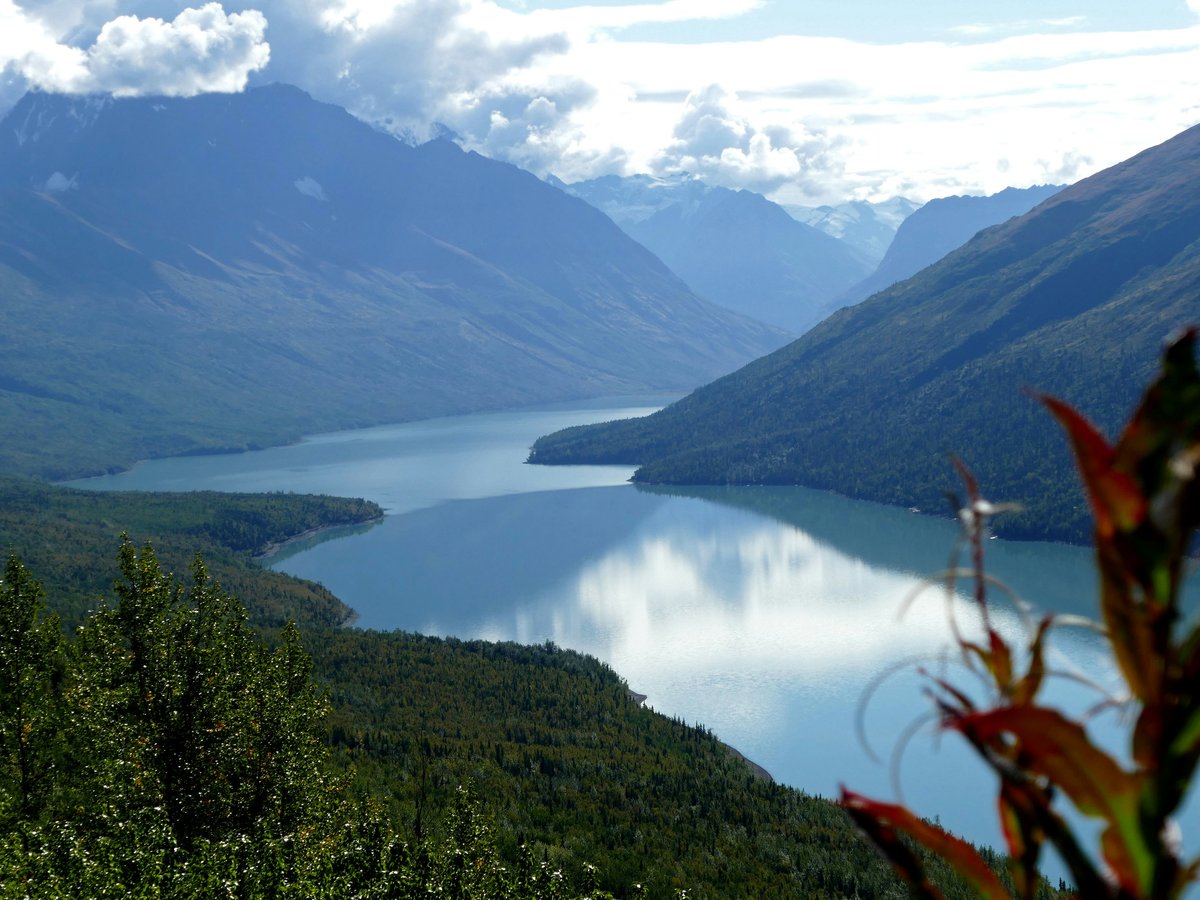
September is the pivot month in Anchorage. Average highs of 12.3°C with lows of 6.3°C demand a proper jacket. The Chugach Mountains above the city turn gold and red as birch and tundra respond to shortening days. Locals tend to consider September the most photogenic month in Anchorage. Clear skies appear more often than in July, which carries Gulf of Alaska moisture. The aurora window reopens too. September nights are dark enough for northern lights along the Glenn Highway, where June's endless daylight makes them invisible.
The trade-off is narrowing daylight and falling temperatures. September's 12.3°C sits about 6 degrees below June's 18.4°C. Some higher trails carry early snow. Silver salmon fishing on Ship Creek runs through September, making it a stronger month for anglers than the king salmon season and heavier crowds of June at 18.4°C.
For experienced travellers who have visited Alaska before, September at 12.3°C and 6.3°C is likely the best month on the Anchorage calendar. You get hiking temperatures, fall color, aurora potential, and shoulder-season pricing. August at 17.5°C and 10.6°C is the compromise pick if you want summer warmth without July's 19.1°C peak-season crowds.
7 October and November Fall Below 5.4°C, and the Window Closes Fast
The first frost on the windshield of a rental car at Ted Stevens Anchorage International Airport tells you everything about October. The average high of 5.4°C is nearly 7 degrees below September's 12.3°C, the steepest single-month temperature drop in Anchorage's year. Lows hit 0.0°C, right at the freezing line. The Chugach Mountains above the city carry fresh snow at elevation. Trails like Flattop Mountain can ice over without warning. The Tony Knowles Coastal Trail is walkable, but you need a winter hat.
November skips the gentle-decline stage entirely in Anchorage. Average highs of -3.5°C and lows of -8.6°C land close to January's -4.4°C and -9.6°C. The city goes from October's above-freezing 5.4°C highs to November's -3.5°C in 31 days. There is no lingering golden autumn in Anchorage. The birch trees along Northern Lights Boulevard drop their leaves in a week, not a month.
October has a narrow case for aurora hunters visiting Anchorage. Nights are long enough for northern lights, and temperatures have not yet reached the painful sub-minus-10 range. October's 0.0°C overnight low is cold but manageable with proper layers, and far more tolerable than February's -9.5°C. The Glenn Highway drive north toward Palmer offers open views of the Talkeetna Mountains under October's first dustings of valley snow.
November has almost no tourist case in Anchorage. At -3.5°C highs and -8.6°C lows, outdoor time is limited to short walks. Daylight shrinks toward 7 hours. The city sits between seasons, past October's fall color and before December's holiday events and the Fur Rendezvous.
If you find yourself in Anchorage in October at 5.4°C, you can still make it work. Focus on the Anchorage Museum, short aurora outings from the Glenn Highway, and the emptiest hotel rates of any shoulder month. November at -3.5°C is the one month where the honest advice is to reschedule. December at -6.4°C at least brings winter activities and atmosphere.
8 The Verdict: June for First-Timers, September for Returnees, May for the Budget Play
The difference between stepping outside in Anchorage in January at -4.4°C and in July at 19.1°C is not gradual. It is a 23.5-degree swing that rewrites the entire trip. After 12 months of temperature data, the verdict sorts itself by what you are willing to trade.
For first-time visitors to Alaska, June is the single best month in Anchorage. Average highs of 18.4°C, lows of 9.7°C, and close to 22 hours of functional daylight. You will pay peak-season rates at hotels along C Street and share Flattop Mountain with cruise passengers from Seward. That is the cost of the warmest, longest days in Anchorage's year. July at 19.1°C is interchangeable. Pick June for the solstice light, July for slightly warmer evenings at 11.7°C versus 9.7°C.
For returning visitors, photographers, and anyone who values solitude, September is the answer. Average highs of 12.3°C and lows of 6.3°C need a jacket but nothing extreme. The Chugach Mountains are in full fall color above Anchorage. The aurora window is open. Hotels have dropped from summer peaks. You share trails with a fraction of July's foot traffic.
For budget travellers willing to endure real cold, January is Anchorage's cheapest month. At -4.4°C highs and -9.6°C lows, extended outdoor time is genuinely uncomfortable. But flights to Ted Stevens Anchorage International Airport are at their floor, the Anchorage Museum fills a full day, and northern lights are visible from the Glenn Highway.
For hikers and wildlife watchers, May at 13.6°C and 4.2°C is the overlooked month. Trails are opening in the Chugach Mountains. Moose calves appear along the Seward Highway. Summer pricing has not started. August at 17.5°C and 10.6°C is the safer pick if May's variability feels like too much risk.
The months to skip in Anchorage are November at -3.5°C and -8.6°C, and April at 6.7°C with -3.2°C lows, both caught between seasons with no compensating draw. October at 5.4°C is a maybe. Every other month, from February's -3.6°C to August's 17.5°C, has a defensible case for the right traveller.
For experienced travellers, September at 12.3°C and 6.3°C is likely the best month on the Anchorage calendar.
Last verified by automated review (v1.7.2_onboard-anchorage-flagship-2026-08-21) on . What is automated review?