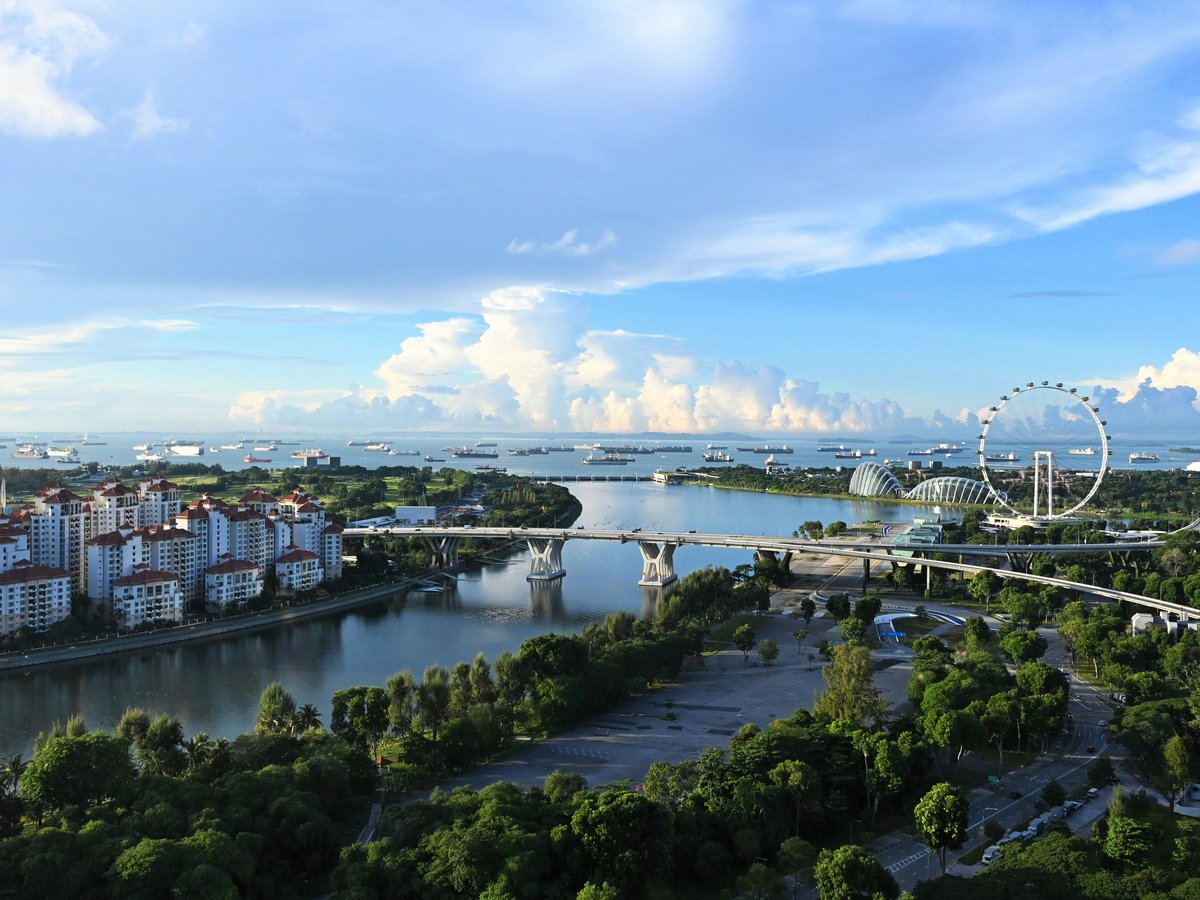
Singapore has a reputation as an expensive city, and that reputation is largely earned when it comes to hotels and sit-down dining. But here's what most visitors miss: the city-state has invested heavily in public spaces, green corridors, and cultural infrastructure that costs nothing to enjoy. The outdoor gardens at Gardens by the Bay, the entire Singapore Botanic Gardens, waterfront promenades stretching for kilometres, free programming at the Esplanade — the list runs longer than you'd expect. The tropical climate means everything is accessible year-round, though you'll want to time your outdoor exploring for mornings or late afternoons when the humidity drops from oppressive to merely insistent. The MRT system is cheap enough that getting between free attractions rarely costs more than a couple of dollars, and the hawker centres — while not free — let you eat well for three to five Singapore dollars a plate, which is about as close to free as eating out gets in this city.
Free attractions
-
Gardens by the Bay (Outdoor Gardens)
The outdoor areas of Gardens by the Bay are completely free, and honestly they're the highlight for most visitors. The Supertree Grove is the centrepiece — those towering vertical gardens look otherworldly at dusk when the lights come on during the Garden Rhapsody sound-and-light show, which is also free. You can walk the full Bayfront garden loop, stroll through the Heritage Gardens and Sun Pavilion, and sit along the waterfront for as long as you like. The two conservatories (Cloud Forest and Flower Dome) require paid tickets, but the open-air sections alone justify a visit of two or three hours. Mornings before 9am tend to be quieter and cooler.
Marina BayGarden -
Singapore Botanic Gardens
A UNESCO World Heritage Site and the one green space in Singapore that locals are fiercely protective of. The 82-hectare grounds are free to enter and wander — the rainforest area, Swan Lake, the ginger garden, the Evolution Garden, all of it. The only paid section is the National Orchid Garden, which charges a modest entry fee. Early mornings here have a particular quality: the air still smells of wet earth, joggers circle the paths, and tai chi groups occupy the gazebos. The Jacob Ballas Children's Garden section is free too, though it closes on Mondays. It's a genuinely peaceful place, which sounds like a cliché until you've spent three days in the Marina Bay shopping belt and suddenly need trees.
TanglinPark and Garden -
Marina Barrage
Perched at the mouth of the Marina Channel, this dam doubles as a public park with a rooftop green space that offers one of the widest panoramic views of the Singapore skyline. Families fly kites here on weekends. The Sustainable Singapore Gallery inside is free and surprisingly well done — it covers water management, which might sound dry but Singapore's relationship with water scarcity is genuinely fascinating. On clear evenings, the sunset behind the city from the rooftop grass is worth the trip out.
Marina BayViewpoint and Park -
MacRitchie Reservoir Park
This is where Singapore feels least like a city. The trails around MacRitchie wind through mature secondary rainforest, and if you commit to the full 11-kilometre loop, you'll pass the TreeTop Walk — a free 250-metre suspension bridge that sways gently above the canopy at about 25 metres high. Long-tailed macaques are common along the boardwalk sections, and you might spot a monitor lizard sunning itself by the water's edge. The TreeTop Walk closes on Mondays and has restricted hours, so check before heading out. Bring water; there's limited shade on some segments and the humidity can be fierce.
Central CatchmentNature Reserve -
Southern Ridges
A 10-kilometre elevated trail connecting Mount Faber Park to Kent Ridge Park through a series of bridges, forest walks, and hilltop lookouts. Henderson Waves is the showpiece — a sculptural wooden bridge that undulates 36 metres above Henderson Road. The bridge lights up at night and is genuinely striking. The Forest Walk section uses elevated metal walkways through the treetops. You can start from HarbourFront MRT and walk the whole thing in about three hours at a comfortable pace, finishing at the NUS end of Kent Ridge. The trail is well maintained and signposted, and surprisingly quiet on weekday mornings.
Bukit Merah to QueenstownWalking Trail -
Fort Canning Park
Layers of history compressed into one green hill in the middle of the city. The park sits on what was once the seat of 14th-century Malay kings, then a colonial military headquarters. The spice garden, the Gothic gate, the underground bunker exterior (the Battle Box interior is ticketed, but the park itself is free), the archaeological dig sites — you can spend a couple of hours here tracing Singapore's past. The park has become popular for photography at the spiral staircase near the Sally Port, and the tree canopy keeps the temperature a few degrees cooler than the surrounding streets.
River ValleyHistorical Park -
Merlion Park
Yes, it's touristy. But the waterfront esplanade around the Merlion statue is free and the view across Marina Bay towards the ArtScience Museum and Marina Bay Sands is legitimately good, particularly after dark when the buildings light up. Worth noting that the park is small — you'll see everything in fifteen minutes — but it connects easily to a longer walk along the waterfront towards the Esplanade.
Downtown CoreLandmark -
Jewel Changi Airport (Public Areas)
Even if you're not flying anywhere, Jewel is open to the public and free to enter. The Rain Vortex — a 40-metre indoor waterfall — is visible from multiple floors and the surrounding Shiseido Forest Valley is open without a ticket. The Canopy Park on the top level has paid attractions, but walking through the lower levels, watching the waterfall, and exploring the terraced gardens costs nothing. The light-and-sound shows that run through the waterfall in the evenings are free to watch from any vantage point. Getting there is straightforward via the MRT's Changi Airport station.
ChangiArchitectural Attraction -
Singapore City Gallery
Tucked inside the URA Centre on Maxwell Road, this gallery is free for everyone — locals and visitors alike. It houses an enormous scale model of the entire island that's detailed enough to pick out individual buildings, and the exhibitions on urban planning are surprisingly engaging. Singapore's approach to land use is unlike anywhere else on earth, and this gallery makes the complexity visible. It tends to be uncrowded, which is a rarity for free attractions here.
Tanjong PagarMuseum -
NUS Museum
Located on the National University of Singapore campus at Kent Ridge, this museum is free for all visitors. The permanent collection includes Southeast Asian art and archaeology, with rotating contemporary exhibitions that are often more adventurous than what the larger national museums show. The South and Southeast Asian Gallery has pieces dating back several centuries. It's a bit out of the way, but if you're already walking the Southern Ridges, you're practically at the doorstep.
Kent RidgeMuseum
Free activities
-
Tiong Bahru Heritage Walk
Tiong Bahru is Singapore's oldest public housing estate, built in the 1930s in an art deco style that looks nothing like the high-rise HDB blocks elsewhere. Walking the low-rise blocks along Seng Poh Road and Eng Hoon Street, you'll notice curved balconies, porthole windows, and spiral staircases that feel more Mediterranean than Southeast Asian. The neighbourhood has become popular with cafes and independent shops, but the architecture is the real draw. The murals by Yip Yew Chong on the building walls depict scenes from old Singapore and are worth seeking out. A walking loop takes maybe an hour, or longer if you stop for kopi at a corner coffeeshop.
Tiong BahruWalking Route -
Kampong Glam and Haji Lane Exploration
The area around Sultan Mosque — with its golden dome visible from several streets away — is one of Singapore's most walkable neighbourhoods. Arab Street still has textile shops that have been there for decades. Haji Lane is narrow and lined with street art, independent boutiques, and murals that change regularly. Bussorah Street, the pedestrianised stretch leading to the mosque, has a certain calm in the mornings before the restaurants set up. The mosque itself is free to enter outside of prayer times, and the Malay Heritage Centre nearby occasionally runs free programmes, though the main galleries have an entry fee.
Kampong GlamWalking Route and Cultural District -
Little India Sunday Market Walk
On Sundays, the streets around Tekka Centre and the stretch of Serangoon Road come alive in a way that the rest of buttoned-up Singapore doesn't quite replicate. The energy is different — louder, more chaotic, more human. Tekka Centre's wet market on the ground floor is free to browse and is one of the last traditional wet markets in the city. The flower garland sellers along Buffalo Road, the goldsmith shops on Serangoon, the Sri Veeramakaliamman Temple (free to enter) — the whole neighbourhood rewards slow walking. The spice shops around Campbell Lane smell powerfully of turmeric and dried chilli, and nobody minds if you're just looking.
Little IndiaMarket and Walking Route -
Chinatown Heritage Trail
The streets between Pagoda Street and Telok Ayer are packed with free temples, clan houses, and shop-houses that tell the story of Singapore's Chinese immigrant community. Thian Hock Keng Temple on Telok Ayer Street is one of the oldest Hokkien temples in Singapore and free to visit — the ornamental roof alone is worth a stop. The Buddha Tooth Relic Temple on South Bridge Road is also free, with a rooftop garden that most visitors skip. The Chinatown Heritage Centre in the shop-houses is ticketed, but walking the streets themselves, ducking into temples, and browsing the market stalls costs nothing.
ChinatownWalking Route and Heritage -
East Coast Park Cycling and Beach
Singapore's beaches won't compete with Thailand's, but East Coast Park stretches for 15 kilometres along the southeastern coastline and is completely free. The beach is swimmable in patches, the barbecue pits fill up on weekends with family gatherings, and the cycling and skating paths run the length of the park. The sound of waves here is muffled by the container ships anchored offshore — it's a distinctly Singaporean beach experience. Watching planes descend toward Changi from the eastern end is oddly meditative. Bike rental costs a few dollars if you want wheels, but walking and swimming are free.
East CoastBeach and Park -
Civic District Art and Architecture Walk
Starting from the old Supreme Court building — now the National Gallery Singapore, whose exterior and ground-floor areas are free to walk through — you can trace a loop past the Victoria Theatre, the Asian Civilisations Museum's riverside terrace (free to sit and watch the river traffic), the Cavenagh Bridge, and the Fullerton Hotel, a former post office. The architecture along this stretch tells the colonial story more clearly than any textbook. St Andrew's Cathedral, a little further north, is free to enter and has an unexpectedly cool interior that's a relief after the outdoor humidity.
Civic DistrictWalking Route -
Pulau Ubin Day Trip
A bumboat ride from Changi Point Ferry Terminal costs about four dollars each way, so it's not entirely free, but once you're on the island everything is. Pulau Ubin is what Singapore looked like before the development boom — kampong houses, dirt roads, quarry lakes turned turquoise, and the Chek Jawa Wetlands boardwalk that loops through mangroves and coastal forest. The wetland boardwalk is free and well maintained. You might see hornbills, wild boar, or mudskippers depending on the tide. Bring your own water and snacks; options on the island are limited to a couple of drink stalls near the jetty.
Pulau UbinNature and Heritage
Free events
-
Garden Rhapsody Light and Sound Show
Nightly, 7:45pm and 8:45pmA nightly sound-and-light show projected onto the Supertree Grove at Gardens by the Bay. The trees pulse with colour synced to orchestral and pop music, and the whole thing lasts about 15 minutes. It runs twice each evening, typically at 7:45pm and 8:45pm. The surrounding lawn fills up with people lying on their backs watching the lights — the atmosphere is relaxed and almost communal. Check the Gardens by the Bay website for occasional schedule changes during events.
Supertree Grove, Gardens by the Bay -
Esplanade Presents Free Performances
Multiple times weekly, check Esplanade scheduleThe Esplanade — that durian-shaped arts centre on the waterfront — runs an extensive free programming series. The outdoor theatre stages host concerts, dance performances, and theatre several evenings a week, and the Concourse area inside hosts free lunchtime and evening performances ranging from jazz and classical to traditional Malay and Indian music. The programming is curated, not open-mic, and the quality is consistently strong. The Bayfront outdoor stage is particularly good on breezy evenings.
Esplanade – Theatres on the Bay -
Singapore Night Festival
Annually in August, over two weekendsHeld annually in August around the Bras Basah and Bugis precinct, the Night Festival transforms the museum district into an open-air arts event. Light installations project onto the facades of the National Museum and surrounding heritage buildings, there are live performances and street acts, and several museums extend their hours with free admission during the festival. It typically runs over two weekends and draws large crowds — arrive early if you want to see the projections without craning over shoulders.
Bras Basah – Bugis precinct -
Chingay Parade
Annually, January or February (post-Chinese New Year)Southeast Asia's largest street parade happens annually in the weeks following Chinese New Year, and it's free to watch along the route. The floats are elaborate — LED-lit, multi-storey constructions — and the performers include cultural troupes, stilt-walkers, and dragon dancers from across Asia. The energy is high and the crowd is multigenerational. The parade route has shifted between locations in recent years, so check the Chingay website for the current year's path. Grandstand seats are ticketed but standing along the route is free.
Varies; typically F1 Pit Building area or Marina Bay -
Music at the Meadow – Singapore Botanic Gardens
Selected weekends, typically late afternoonFree weekend concerts held on the Shaw Foundation Symphony Stage in the Botanic Gardens, usually featuring the Singapore Symphony Orchestra or visiting ensembles. Bring a picnic blanket, sit on the sloped lawn, and listen to live orchestral music with the garden canopy overhead. Performances tend to start in the late afternoon. The series doesn't run every weekend, so checking the Botanic Gardens events calendar beforehand saves a wasted trip.
Shaw Foundation Symphony Stage, Singapore Botanic Gardens -
Thaipusam Procession
Annually, January or February (Tamil calendar)One of Singapore's most visually intense public events. Held in January or February at the full moon of the Tamil month of Thai, the procession moves from Sri Srinivasa Perumal Temple on Serangoon Road to Sri Thendayuthapani Temple on Tank Road. Devotees carry kavadi — elaborate steel structures decorated with peacock feathers and attached to the body through piercings — while drummers and singers accompany the route. It's deeply spiritual, very loud, and free to observe from the streets. The procession starts before dawn, and the morning hours tend to be the most intense.
Serangoon Road to Tank Road
How to Eat Well for Almost Nothing
Singapore's hawker centres are the closest thing to free eating you'll find in a developed city. A plate of chicken rice at Tian Tian in Maxwell Food Centre currently runs about three to four Singapore dollars. Char kway teow at a neighbourhood hawker stall might be three fifty. These aren't budget compromises — hawker food is genuinely what most Singaporeans eat daily, and two stalls in the city hold Michelin stars at hawker-centre prices. Tekka Centre in Little India, Maxwell Food Centre in Chinatown, and Old Airport Road Food Centre in Geylang are all worth a visit. Free water is available at hawker centres from self-service taps, though most people buy a drink for a dollar or so. If you're watching every cent, eating at hawker centres three times a day might cost you ten to fifteen dollars total — not free, but close enough that your daily food budget starts to feel negligible.
Free Waterfront Walks That Connect the City
Singapore's waterfront network is more extensive than most visitors realise, and walking it costs nothing. From Marina Bay, you can follow the Jubilee Bridge across to the Esplanade, continue along the Helix Bridge toward the Marina Bay Sands boardwalk, loop around the waterfront past the ArtScience Museum, and return via the Bayfront pedestrian bridge. That loop alone is about three kilometres and takes you past most of the skyline's landmarks. A longer route follows the Singapore River upstream from the Merlion through Boat Quay and Clarke Quay — the old godowns and shophouses along the river are lit up at night and the walk has a different character after dark. The Kallang Riverside Park connects from the other direction, following the Kallang Basin out past the old National Stadium site. None of it costs anything, and the paths are well lit and maintained enough to walk comfortably after sunset.
Temples, Mosques, and Churches — Open Doors Across Faiths
Singapore's religious buildings are among its most visually rich spaces, and most are free to enter. Sri Mariamman Temple on South Bridge Road — the oldest Hindu temple in Singapore — has a gopuram tower covered in colourful deity figures and is free to visit, though there's a small fee if you want to take photographs inside. Sultan Mosque in Kampong Glam welcomes visitors outside prayer times. St Andrew's Cathedral in the Civic District is free and has a quiet interior that feels worlds away from the traffic outside. Thian Hock Keng Temple on Telok Ayer Street is elaborately decorated and free. The Buddha Tooth Relic Temple in Chinatown is free to enter across all floors, including the rooftop garden. Mind you, dress modestly — shoulders and knees covered — at any house of worship, and remove shoes where indicated. These aren't tourist attractions performing religion; they're active congregational spaces that happen to welcome visitors.
What Used to Be Free (Check Current Admission Policies)
Singapore occasionally adjusts admission policies at popular attractions, and what was free two years ago might not be now. The ArtScience Museum at Marina Bay Sands has always been ticketed for exhibitions. The National Gallery Singapore charges international visitors for the permanent galleries, though Singapore citizens and permanent residents enter free. The same applies to the Asian Civilisations Museum, the National Museum of Singapore, and the Peranakan Museum — free for citizens and PRs, ticketed for international visitors, with occasional free-admission events or evenings that are worth checking the individual museum websites for. The Lee Kong Chian Natural History Museum charges everyone. If a particular museum matters to you, verify the current admission policy on their website before making the trip — policies shift, and what a blog post from 2019 told you may no longer hold.
FAQ
Is Gardens by the Bay free to visit in Singapore?
The outdoor gardens — including the Supertree Grove, Heritage Gardens, and waterfront areas — are completely free. The two conservatories (Cloud Forest and Flower Dome) and the Floral Fantasy attraction require paid tickets. The nightly Garden Rhapsody light show at the Supertrees is also free. You could easily spend two to three hours in just the free outdoor sections.
Are any museums in Singapore free for international visitors?
A few are genuinely free for everyone: Singapore City Gallery at the URA Centre on Maxwell Road and NUS Museum at the National University campus are both free regardless of nationality. The larger national museums — National Gallery, National Museum, Asian Civilisations Museum — currently offer free admission for Singapore citizens and permanent residents but charge international visitors. That said, these museums occasionally hold free-admission events or extended evening hours during festivals like the Singapore Night Festival in August, so checking event calendars can save you the entry fee.
What is the best free walking route in Singapore?
The Southern Ridges trail is likely the most rewarding single walk — about 10 kilometres from Mount Faber to Kent Ridge through elevated forest walkways and across Henderson Waves bridge. For something more urban, the Singapore River walk from Merlion Park upstream through Boat Quay and Clarke Quay covers colonial history, old trading districts, and waterfront dining areas in about an hour. Tiong Bahru's art deco housing estate offers a shorter loop with a completely different character. It depends on whether you want nature or city, but the Southern Ridges tends to be the one people remember.
Is it safe to swim at Singapore's beaches?
East Coast Park and Sentosa's public beaches (Palawan, Siloso, and Tanjong Beach) are generally safe for swimming, though the water won't be Caribbean-clear — container ships anchor just offshore and the Strait of Singapore sees heavy shipping traffic. Lifeguards are present at Sentosa beaches. Jellyfish stings are uncommon but not unheard of. The water temperature hovers around 28 to 30 degrees Celsius year-round, so it's warm but not exactly refreshing. Sentosa's beaches are free to access, though getting to Sentosa itself involves a small entry fee via the Sentosa Express monorail or a free walk across the Sentosa Boardwalk from VivoCity.
How much should I budget per day if I only do free activities?
If you stick to free attractions and eat at hawker centres, your daily spending in Singapore could realistically sit around 20 to 30 Singapore dollars — roughly 15 to 22 US dollars. That covers three hawker meals and MRT transport between sites. Water from convenience stores runs about a dollar a bottle. The biggest variable is accommodation, which is never free and rarely cheap in Singapore, but the activities and sightseeing themselves can genuinely cost nothing if you plan around the options listed here.
When is the best time of year to visit Singapore for free outdoor activities?
Singapore's weather is tropical year-round with temperatures consistently between 25 and 32 degrees Celsius, so there's no bad season in the way temperate cities have one. That said, the drier months of February through April tend to have fewer afternoon downpours, which makes outdoor walks more predictable. The monsoon season from November to January brings heavier rain, though showers are usually intense but short — an hour at most. The Singapore Night Festival in August and Chingay Parade around Chinese New Year add free events to the calendar if you can time your visit around them.
Last verified by automated review (v1.7.2) on June 2, 2026. What is automated review?