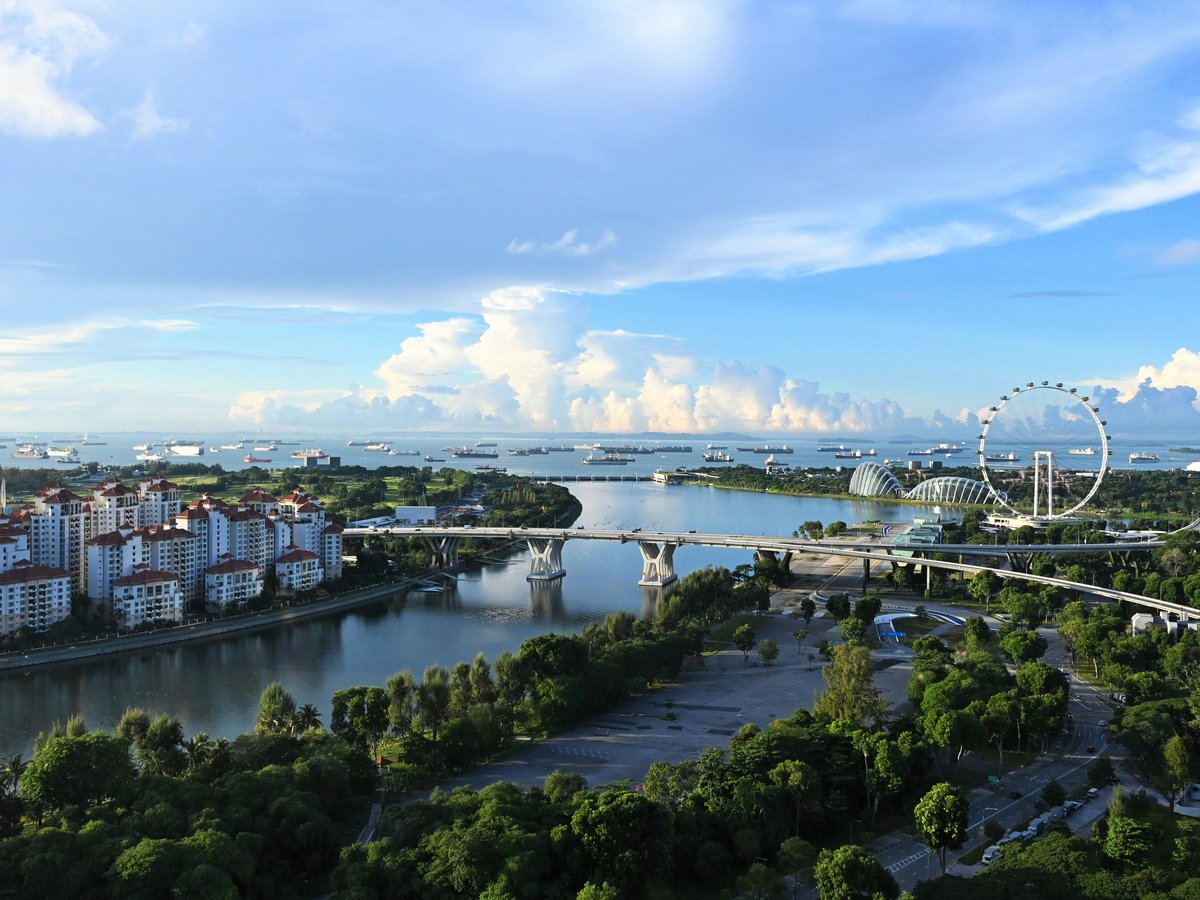
Singapore sits almost exactly on the equator, a fact your body will remind you of roughly thirty seconds into any outdoor activity here. The heat is constant, not the dry, bearable kind, but a thick, sticky warmth that wraps around you like a damp towel the moment you step outside. And yet, for a city-state barely larger than some national parks, Singapore holds a surprising amount of green. About half the island is still covered in vegetation of some kind, from manicured gardens to genuine patches of primary rainforest that have somehow survived two centuries of development. The outdoor scene here tends to reward early risers. Get moving by 7 a.m. and you'll find trails that feel almost cool, reservoirs glassy and still, and park benches not yet too hot to sit on. Wait until noon and you'll understand why locals mostly exercise at dawn or after dark. That said, there's real variety packed into this small island: old-growth jungle, mangrove coastline, offshore islands you can reach by bumboat, and a network of park connectors that lets you cycle or walk for hours without touching a main road. It's not wilderness in the backcountry sense, but it's genuinely good outdoor territory if you know where to look and when to go.
Outdoor activities
-
Cycling the Park Connector Network
Singapore has stitched together over 300 kilometres of dedicated cycling and walking paths called Park Connectors, linking green spaces across the island. The Eastern Coastal Loop is probably the most popular stretch: flat, breezy, and running along the sea from Changi Beach Park down past East Coast Park. You can rent bikes at East Coast Park for a few dollars an hour. The paths are well-paved, mostly shaded in patches, and you'll share them with joggers, families on scooters, and the occasional monitor lizard sunning itself on warm tarmac. Mind you, weekends get crowded, especially around Marina Bay. Weekday mornings are the sweet spot.
- Difficulty
- Easy to moderate
- Duration
- 2-5 hours depending on route
- Best season
- February to April (slightly drier, marginally less humid)
-
Rock Climbing at Dairy Farm Quarry
The old granite quarry walls at Dairy Farm, tucked into the Bukit Timah area, offer Singapore's only real outdoor climbing. The routes top out around 12 metres on weathered granite, not tall, but the rock is textured and grippy when dry, slippery when wet. You'll need your own gear or go with a local climbing group, as there's no rental on-site. The approach is a short walk through secondary forest, and you might hear long-tailed macaques crashing through the canopy overhead. It's a niche scene, but the regulars are welcoming. Best to go during a dry spell: the rock stays damp for hours after rain.
- Difficulty
- Moderate to difficult (depending on route)
- Duration
- Half day
- Best season
- February to March (driest window)
-
Trail Running at MacRitchie Reservoir
The trails looping MacRitchie Reservoir are the closest Singapore gets to proper trail running. The full loop is roughly 11 kilometres of undulating terrain: root-covered dirt paths, boardwalks over marshy sections, and short steep climbs that'll get your heart rate up. The air smells like wet earth and decomposing leaves, and you'll hear the constant hum of insects layered over birdsong. Watch your footing on the root sections after rain; they get genuinely treacherous. Most runners do the loop in 60 to 90 minutes. Carry water: there's nowhere to refill once you're on the trail.
- Difficulty
- Moderate
- Duration
- 1-2 hours for the full loop
- Best season
- Year-round, but mornings in February to April are most comfortable
-
Kayaking Around Pulau Ubin
Pulau Ubin is a small island off Singapore's northeast coast, reachable by a short bumboat ride from Changi Point Ferry Terminal. The mangrove-lined coastline is ideal for kayaking: quiet water, interesting root systems to paddle through, and a good chance of spotting hornbills, herons, and mud crabs. Several operators on the island rent sit-on-top kayaks. The water is murky and warm, and the channels between mangroves can feel almost enclosed, with the smell of tidal mud and the sound of snapping shrimp clicking beneath you. Tide matters here: check before you go, because low tide exposes mud flats that'll strand you.
- Difficulty
- Easy to moderate
- Duration
- 2-4 hours
- Best season
- February to April (calmer seas, less rain)
-
Mountain Biking on Pulau Ubin
The same island that's good for kayaking also has Singapore's best mountain biking. The Ketam Mountain Bike Park has purpose-built trails through secondary forest, with bermed corners, rock gardens, and some punchy climbs. The terrain is red laterite soil: fast when dry, a clay-slick mess when wet. You can rent bikes on the island, though the rental fleet tends toward basic. Serious riders bring their own on the bumboat. The trails are quiet on weekday mornings, and you'll likely share the singletrack with nothing but butterflies and the occasional wild boar.
- Difficulty
- Moderate to difficult
- Duration
- 2-4 hours
- Best season
- February to March (drier trails)
Day hikes
-
MacRitchie TreeTop Walk and Reservoir Loop
The signature hike in Singapore. The full loop around MacRitchie Reservoir is roughly 11 kilometres, and the TreeTop Walk (a 250-metre freestanding suspension bridge at canopy height) is the main draw. You'll need to walk about 4.5 kilometres from the nearest entrance to reach the bridge, and it's one-way, so plan your route. The trail is a mix of boardwalks, dirt paths tangled with tree roots, and short scrambles. Humidity inside the forest canopy is intense, and the light filters through in shifting green patterns. Monitor lizards occasionally sun on the boardwalks. The TreeTop Walk closes at 5 p.m. and isn't open on Mondays.
- Difficulty
- Moderate (undulating terrain, exposed roots, length)
- Duration
- 3-4 hours for the full loop including the TreeTop Walk
- Best season
- Year-round; February to April slightly drier
-
Bukit Timah Summit Trail
A steep but short hike to Singapore's highest point at 163 metres. The main trail is paved and well-maintained (more of a power walk than a hike, honestly) but the side trails branching into Dairy Farm and Hindhede offer more interesting terrain. The forest is dense primary rainforest, dark underfoot and loud with insects. The climb takes maybe 30 minutes at a steady pace, and the summit itself is underwhelming: a trigonometric marker and not much view through the canopy. The real reward is the forest itself. The quarry at Hindhede is a good cool-down spot, with still green water surrounded by steep rock faces.
- Difficulty
- Easy to moderate (short but steep)
- Duration
- 1-2 hours depending on side trails
- Best season
- Year-round; arrive by 7:30 a.m. on weekends to beat the crowds
-
Coast-to-Coast Trail (Central Section)
Singapore's 36-kilometre cross-island trail connects Jurong Lake Gardens in the west to Coney Island in the northeast. Most people don't do the whole thing in one go: the central section from MacRitchie Reservoir through Bishan-Ang Mo Kio Park is probably the most rewarding chunk, about 12 kilometres with a mix of reservoir trails, park connectors, and quiet residential stretches. It's flat to gently rolling, well-marked with green trail markers, and you pass through enough variety (forest, reservoir edge, canal paths, manicured parks) that it doesn't feel monotonous. Bring sun protection for the exposed sections.
- Difficulty
- Easy to moderate (flat, long)
- Duration
- 3-5 hours for the central section
- Best season
- Year-round; avoid the peak northeast monsoon weeks in December and January
-
Chestnut Nature Park Trails
Singapore's largest nature park, sitting between Bukit Timah and the Central Catchment. The trails here are split into a northern and southern section, with separate loops for hiking and mountain biking. The southern hiking loop is about 2.3 kilometres through secondary forest and stream crossings: short but surprisingly wild-feeling for its location. You'll walk through patches of bamboo, cross small wooden bridges over rocky streams, and the birding is decent. The ground can be muddy after rain, and leeches appear during wet spells. Worth combining with Bukit Timah for a longer morning out.
- Difficulty
- Easy
- Duration
- 1-1.5 hours
- Best season
- Year-round; muddier during the northeast monsoon (December to February)
-
Coney Island (Pulau Serangoon) Loop
Coney Island is a 50-hectare nature park off Punggol's northeastern tip, connected by a short bridge. The trails loop through casuarina woodland and along the beach, covering about 5 kilometres total. It feels remote despite being ten minutes from HDB blocks. The beach sections face the Johor Strait, and on clear mornings the light coming off the water is soft and warm. Birdwatching is good here: look for white-bellied sea eagles and the resident otters sometimes spotted along the shore. The trails are flat and sandy in parts, with some boardwalk sections. No shops or water on the island, so bring everything you need.
- Difficulty
- Easy
- Duration
- 1.5-2.5 hours
- Best season
- Year-round; best early morning for wildlife
Water activities
-
Stand-Up Paddleboarding at Marina Bay or Sentosa
Several outfitters run SUP sessions at Marina Bay and along Sentosa's Tanjong Beach. Marina Bay is flat calm on most days, and paddling past the city skyline at dusk has a particular appeal: the reflection of the buildings on the water surface, the occasional river taxi puttering past. Sentosa offers slightly more open water and a beach to retreat to afterward. Most sessions run about 90 minutes, with instruction for beginners. The water isn't clear (this is harbour water) but it's calm and warm. Weekend mornings tend to be quieter on the water.
- Difficulty
- Easy (beginner-friendly with instruction)
- Duration
- 1-2 hours
- Best season
- Year-round; calmest conditions February to April
-
Kayaking at Pulau Ubin's Mangroves
Guided and self-guided kayak routes thread through the mangrove channels on Pulau Ubin's eastern shore, near Chek Jawa Wetlands. The water is shallow, warm, and tea-coloured from tannins. Paddling through the mangrove tunnels is an oddly quiet experience: the roots dampen sound, and you'll hear water dripping and the clicks of snapping shrimp more than anything else. Hornbills sometimes fly overhead with their distinctive whooshing wingbeats. Check the tide schedule before going; the channels become impassable at low tide. Operators on the island rent kayaks and can suggest routes.
- Difficulty
- Easy to moderate (tide-dependent)
- Duration
- 2-4 hours
- Best season
- February to April (calmer conditions, less rain)
-
Swimming at Sentosa's Beaches
Sentosa has three main beaches: Palawan, Siloso, and Tanjong. Siloso tends to be the busiest, with bars and rental shops along the sand. Tanjong is at the far end and noticeably quieter, with a more natural feel despite being entirely man-made. The water is warm year-round (around 28 to 30 degrees) and visibility is limited, as you'd expect from waters near one of the world's busiest shipping lanes. Still, the swimming is safe, with netted areas and lifeguards on weekends. Palawan has a narrow walkway to a small islet that claims to be continental Asia's southernmost point, which is a fun bit of geography trivia if nothing else.
- Difficulty
- Easy
- Duration
- Half day
- Best season
- Year-round; slightly less crowded on weekday mornings
-
Open Water Swimming at East Coast
An informal but growing open-water swimming community gathers at East Coast Park, typically near the swimming lagoon or Bedok Jetty. The lagoon area has calmer water and is better for newer swimmers. The sea beyond is shipping-lane adjacent, so you'll want to stay within marked areas or swim with a group that knows the currents. The water is warm enough that you don't need a wetsuit at any time of year. Morning swims before 8 a.m. tend to have the calmest water and fewer jet ski concerns. Not the clearest water you'll ever swim in, but the community is genuinely welcoming and there are organised groups that swim regularly.
- Difficulty
- Moderate (open water awareness needed)
- Duration
- 1-2 hours
- Best season
- Year-round; calmer seas February to April
-
Wakeboarding at Singapore Wake Park
Located at East Coast Park's lagoon, Singapore Wake Park uses a cable system rather than boat tow, which keeps costs down and makes it accessible to beginners. The system pulls you around a circuit on the lagoon: you'll fall a lot at first, and the water is warm enough that falling in is more amusing than unpleasant. Sessions run in two-hour blocks, with gear rental included. The park has a bar and viewing area, so non-participants can watch and provide commentary. It's a good option on overcast days when the trails are soggy.
- Difficulty
- Easy for beginners (cable system), moderate to learn properly
- Duration
- 2-hour sessions
- Best season
- Year-round
Parks & gardens
-
Singapore Botanic Gardens
FreeA UNESCO World Heritage Site, and honestly one of the few botanic gardens anywhere that justifies spending an entire morning in. The grounds sprawl across 82 hectares and range from manicured lawns near the Tanglin entrance to the older, wilder rainforest section near the centre, where the canopy closes overhead and the temperature drops noticeably. The National Orchid Garden is the main ticketed section and worth the modest entry fee. Early mornings, the place belongs to tai chi groups and dog walkers, and there's a particular calm to it before the tour buses arrive.
Highlights: National Orchid Garden, the Heritage Trees along the Rainforest Walk, Swan Lake, the Ginger Garden's stream and waterfall section
-
Gardens by the Bay
FreeThe Supertree Grove at night gets all the attention, but the outdoor gardens are genuinely interesting in their own right and completely free to wander. The layout is thoughtful: themed sections transition into each other along the waterfront, and on overcast afternoons the whole place has a slightly surreal quality, like a designed landscape that's slowly being reclaimed by the tropics. The paid conservatories (Cloud Forest and Flower Dome) are climate-controlled and worth ducking into when the humidity becomes unbearable. The dragonfly lake section is quieter than the main promenade and has better birdwatching.
Highlights: Supertree Grove evening light show, Cloud Forest conservatory waterfall, the Dragonfly Lake boardwalk, Kingfisher Wetlands for birding
-
Bukit Timah Nature Reserve
FreeSingapore's chunk of primary rainforest, sitting on the island's highest hill at 163 metres. It's small (you can walk across it in under an hour) but the density of the forest is striking. The canopy blocks most direct sunlight, and inside it's noticeably cooler and damper, with the rich smell of leaf litter and the constant background noise of cicadas. Long-tailed macaques are everywhere and have zero fear of humans. Keep food sealed and bags closed. The main summit trail is paved and steep in sections, drawing steady foot traffic on weekends.
Highlights: Primary dipterocarp rainforest, long-tailed macaques, the steep summit path through buttress-rooted trees, Hindhede Quarry's still green water at the reserve's edge
-
East Coast Park
FreeA long, narrow strip of reclaimed coastline running about 15 kilometres along the southeast shore. It's not pretty in the postcard sense (the view is of container ships and Tanah Merah's industrial cranes) but it has a worn-in, comfortable feel. Families barbecue under casuarina trees on weekends, cyclists cruise the connector paths, and there's a particular golden-hour light in the late afternoon that softens the whole place. The hawker centres along the park serve solid seafood: the barbecue stingray at East Coast Lagoon Food Village is a local institution.
Highlights: Cycling and rollerblading paths, barbecue pits under casuarina groves, East Coast Lagoon Food Village for seafood, the Bedok Jetty for fishing
-
Sungei Buloh Wetland Reserve
FreeSingapore's premier wetland habitat, up in the far northwest corner near the Johor Strait. The boardwalks thread through mangrove forest, and from the hides you can watch migratory shorebirds, mudskippers hauling themselves across tidal flats, and (if you're patient and lucky) estuarine crocodiles. The smell of tidal mud is strong and not for everyone. Mornings between September and March tend to be best, when migratory species from as far as Siberia stop over. The place feels genuinely wild, which is remarkable given you can see apartment blocks from some of the hides.
Highlights: Migratory shorebird watching (September to March), estuarine crocodiles, mudskipper-covered tidal flats, the mangrove boardwalk loop
-
Southern Ridges
FreeA connected series of parks and trails running along a ridge in the south of the island, linking Mount Faber Park to Kent Ridge Park via Henderson Waves: that distinctive curved timber bridge suspended 36 metres above the road. The walk covers about 10 kilometres total, mostly on elevated boardwalks and paved paths shaded by mature trees. The Forest Walk section has a steel canopy walkway that puts you at treetop level, and you'll catch views of the harbour, Sentosa, and the container terminal. It's urban nature at its most engineered, but the views are legitimate and the shade makes it manageable even in the afternoon.
Highlights: Henderson Waves bridge, Forest Walk canopy walkway, harbour views from Mount Faber, the Canopy Walk connecting HortPark to Kent Ridge
Practical tips
- Hydration
- Carry at least a litre of water per hour of activity in Singapore's heat. The humidity is relentless: you'll sweat more than you think, even on shaded trails. Most parks don't have water refill points once you're on the trail, so bring more than you expect to need. Isotonic drinks or electrolyte tablets are worth packing for anything over two hours. Dehydration sneaks up on you here because you're wet from sweat already and don't always notice the thirst signals.
- Sun Protection
- SPF 50 sunscreen, reapplied every 90 minutes if you're sweating, which you will be. A hat with a brim is more useful than you'd think, even under tree cover: the UV index in Singapore regularly hits 11 or higher, and reflected light off water or pavement adds exposure. Lightweight long sleeves in moisture-wicking fabric work better than sunscreen alone for extended activities. Sunglasses with good UV protection are easy to forget but matter, especially near water.
- Timing Your Activity
- Start early. By 10 a.m. the heat becomes punishing, and by noon exposed trails are genuinely uncomfortable. The sweet window is 6:30 to 9:30 a.m.: the light is soft, the air is still relatively cool (28 degrees counts as cool here), and you'll share trails with regulars rather than crowds. Late afternoon from 4:30 p.m. onward is the second window, though afternoon thunderstorms are common and can arrive fast. If you hear thunder, get off exposed ridges and away from tall isolated trees.
- Footwear and Gear
- Trail shoes with good grip are important: the roots on MacRitchie's trails get genuinely slippery when wet, and Singapore's frequent rain means wet conditions are more common than dry. Cotton is a poor choice; it absorbs sweat and stays heavy. Lightweight synthetics dry quickly and prevent chafing. A small dry bag for your phone and wallet is worth carrying, both for rain and the humidity that fogs electronics. Insect repellent with DEET is advisable for forested trails, especially around dusk when mosquitoes are active.
- Wildlife Awareness
- Long-tailed macaques at Bukit Timah and MacRitchie are habituated to humans and will approach if they see food or plastic bags. Keep food sealed and in your pack. Do not feed them: it's illegal and makes them more aggressive. Monitor lizards look intimidating but are harmless and will move away. At Sungei Buloh, estuarine crocodiles are real residents: stay on boardwalks and don't dangle limbs near the water's edge. Wild boar on Pulau Ubin are generally shy but can be startled; give them space.
- Rain and Weather
- Singapore gets rain year-round, but the northeast monsoon from December through early March brings the most sustained wet weather. Afternoon thunderstorms are common from April through November and can be intense (heavy rain, lightning, strong gusts) but they typically pass within an hour. Check the NEA weather app or website before heading out; the two-hour nowcast radar is surprisingly accurate. Trails like MacRitchie and Chestnut become muddy and root-slick after rain. If a trail is waterlogged, it's better to postpone than churn through: erosion is a real concern on Singapore's limited natural trails.
FAQ
Do I need permits to hike in Singapore's nature reserves?
No permits are needed for hiking in any of Singapore's nature reserves or parks. Bukit Timah, MacRitchie, Sungei Buloh, and the others are all free to enter during operating hours. Most reserves open at 7 a.m. and close at 7 p.m., though specific facilities like the TreeTop Walk have shorter hours (closing at 5 p.m., closed Mondays). Coney Island and Pulau Ubin are also free to access, though you'll pay a small fare for the bumboat to Ubin.
Is it safe to swim in the sea around Singapore?
The designated swimming areas at Sentosa's beaches and the East Coast swimming lagoon are lifeguard-patrolled and generally safe, with netted areas to keep out larger marine life. The water quality isn't tropical-clear (you're near a major shipping port) but it meets safety standards for recreational swimming. Avoid swimming outside designated areas, as currents near the shipping lanes can be strong and boat traffic is heavy. Jellyfish stings are uncommon but not unheard of during certain months.
What's the best time of day for outdoor activities in Singapore?
Early morning, without question. Aim to start between 6:30 and 7:00 a.m. The temperature is at its lowest (still around 25 to 27 degrees), the humidity feels marginally less oppressive, and the trails are quieter. By 10 a.m. the sun is high enough that exposed sections become uncomfortable, and by midday most locals have retreated to air conditioning. The late afternoon window from about 4:30 p.m. onward is the second-best option, though afternoon thunderstorms are common and can cut your activity short.
How do I get to Pulau Ubin from mainland Singapore?
Take the bumboat from Changi Point Ferry Terminal (not Changi Airport Ferry Terminal: different place). Boats depart when they have 12 passengers, or you can pay for the empty seats to leave sooner. The crossing takes about 10 minutes and costs a few Singapore dollars each way. Bring cash: the bumboat operators don't take cards. On the island, you can rent bicycles from several shops near the jetty. There are basic toilet facilities and a couple of small shops, but bring your own water and food for longer excursions.
Are there any dangerous animals to worry about on Singapore's trails?
The most common concern is long-tailed macaques, which are bold around humans at Bukit Timah and MacRitchie. They won't attack unprovoked, but they will grab at food, bags, and anything that crinkles. Keep belongings secured and avoid making eye contact, which they can read as a challenge. Estuarine crocodiles live at Sungei Buloh and occasionally turn up in other waterways: stay on boardwalks and designated paths. Snakes exist but are rarely seen on main trails. The most frequent actual nuisance is mosquitoes, particularly around dusk in forested areas.
Can I cycle across Singapore in a single day?
Yes, and it's a popular challenge. The Coast-to-Coast Trail runs 36 kilometres from Jurong Lake Gardens in the west to Coney Island in the northeast, and strong cyclists can complete it in three to four hours with stops. The Park Connector Network offers even longer routes if you want to extend the ride. The paths are mostly flat and paved, though some sections share space with pedestrians, so you'll need to moderate your speed. Start early, carry plenty of water, and download the NParks app: it has detailed maps of every connector route.
Last verified by automated review (v1.7.2) on . What is automated review?