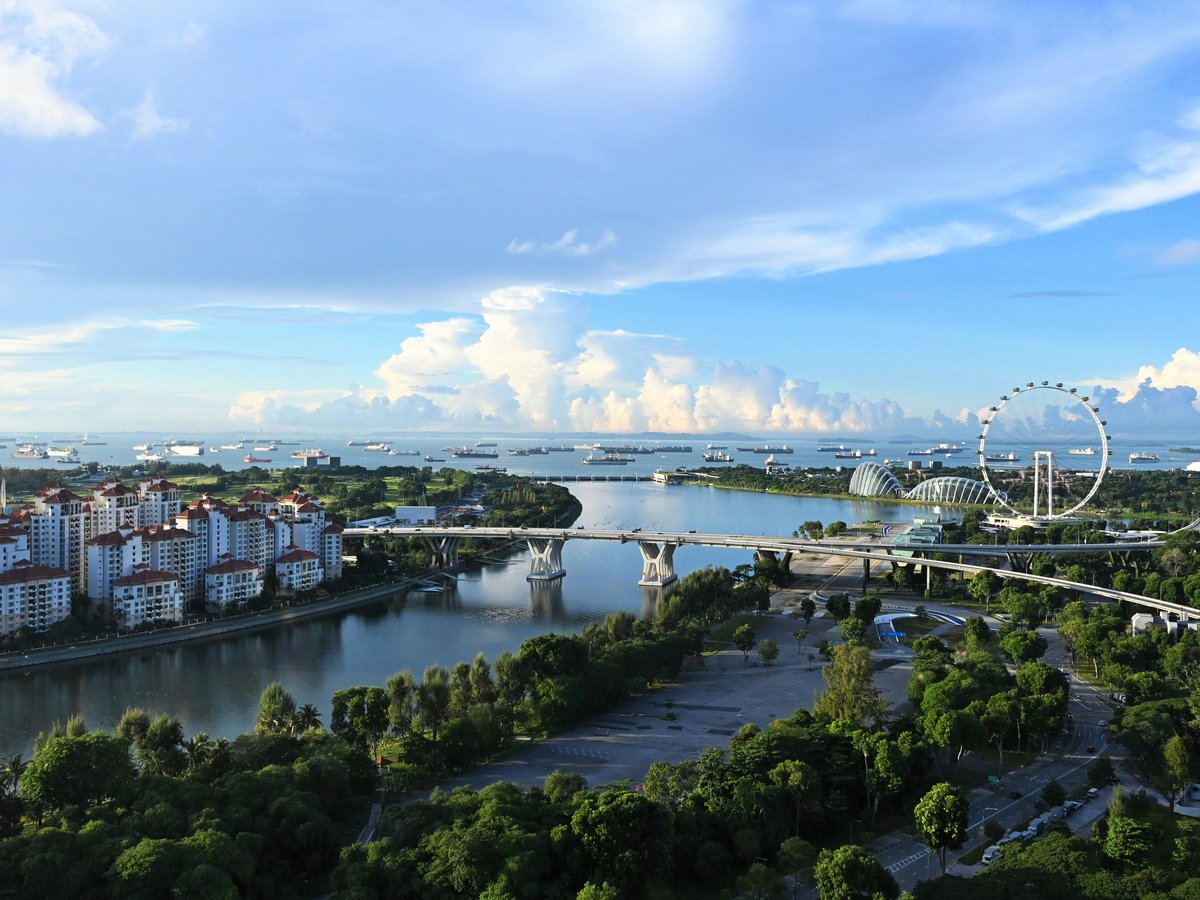
Where do locals actually go in Singapore?
Locals eat breakfast at Tiong Bahru Market before 9am and lunch at Amoy Street Food Centre with the Tanjong Pagar office crowd. Dinner is at Old Airport Road Food Centre near Dakota MRT. Evenings go to Smith Street Taps in Chinatown Complex and East Coast Lagoon Food Village. Skip Lau Pa Sat and Maxwell, where the queues are mostly tourists.
In Singapore, locals hang out where they eat, and they eat at hawker centres. Tiong Bahru Market on Seng Poh Road is, in our view, the best breakfast in the city. By 7am the wet market downstairs smells of cut ginger and hosed-down concrete, and upstairs, Jian Bo Shui Kueh sells steamed rice cakes under salty preserved radish for about S$3 a plate. On weekdays the crowd is aunties with shopping trolleys; on Saturdays you might wait 20 minutes for a table. Lunch moves to Amoy Street Food Centre, where Tanjong Pagar office workers fill the second floor from 12pm to 1:30pm. Claim a seat the local way by leaving a tissue packet on the table, which Singaporeans call choping. Maxwell Food Centre is 10 minutes away and overrated: the Tian Tian chicken rice queue is mostly tourists. A hawker meal still costs around S$4 to S$6, or about US$3.10 to US$4.70 at 1.2792 SGD to the dollar.
For a stay of a month or more, the east side of Singapore beats the centre. Old Airport Road Food Centre is a 5-minute walk from Dakota MRT and has roughly 150 stalls; after 6pm it fills with families from Mountbatten and Geylang. Order the char kway teow and listen to the woks clatter while a ceiling fan stirs the heat without cooling much. Katong and Joo Chiat run further east, with laksa shops on East Coast Road, NTUC FairPrice supermarkets in walking distance, and coin laundromats under many HDB blocks. On weekday evenings after 7pm, cyclists fill East Coast Park. East Coast Lagoon Food Village serves sambal stingray and satay, and you can smell the charcoal from the car park. The sea breeze along the East Coast is the most dependable cooling you will get outdoors: at 1am on 18 October 2026 the city was still at 24.7°C with 98% humidity and fog.
If you need to work during the day, Singapore's public libraries beat most cafes. The Lee Kong Chian Reference Library in the National Library on Victoria Street and library@orchard in Orchard Gateway are both free to enter, and the air conditioning is cold enough that you'll want a sweater. Both run the free Wireless@SGx network, though it tends to slow down once students arrive after 3pm on school days. Pack an adapter for Singapore's Type G three-pin sockets. Cafes in Tiong Bahru are less forgiving: several ban laptops on weekends, and a flat white costs S$6 to S$7, against S$1.50 to S$2 for kopi at a neighbourhood coffeeshop. Chye Seng Huat Hardware on Tyrwhitt Road in Jalan Besar is a converted hardware store with the roaster humming behind glass, and it works for one coffee and an hour of email, not a full workday. TTDI rates Singapore 6.2/10 for digital-nomad suitability (sourced from TTDI's editorial rubric).
Come evening, locals make for Chinatown Complex Food Centre on Smith Street, where Smith Street Taps on the second floor pours rotating craft beers into plastic cups from early evening, usually around 6pm. The regulars are civil servants and engineers, standing around while the neighbouring stalls pull their shutters down. On Sunday mornings, runners arrive at the Singapore Botanic Gardens when the gates open at 5am, and entry is free. The paths smell of wet leaves and frangipani before the sun is properly up. The gardens are a UNESCO World Heritage Site, yet at 6:30am the path around Symphony Lake belongs to joggers and tai chi groups, not tour buses.
Where they actually go
Tiong Bahru Market
Tiong Bahru: Wet market downstairs and hawker floor upstairs. Retirees read the Lianhe Zaobao over kopi, and the air smells of steamed rice cake and fish on ice. Go before 9am on a weekday: the weekend crowds take every stool.
Amoy Street Food Centre
Tanjong Pagar: Office workers with lanyards queue in silence at the noodle stalls on the second floor. Tissue packets mark seats, trays clatter at the return points, and by 1:30pm the CBD crowd has gone back to work.
Old Airport Road Food Centre
Dakota / Mountbatten: A low 1970s building, thick with wok smoke and the smell of lard from the char kway teow stalls. Three generations share a table at dinner, and most of the talk is in Hokkien and Malay rather than English.
Smith Street Taps
Chinatown: A craft-beer stall inside Chinatown Complex Food Centre. Regulars drink IPAs from plastic cups under fluorescent tubes while the neighbouring stalls clang their shutters closed. The crowd is local professionals, not backpackers.
East Coast Lagoon Food Village
East Coast Park: Families arrive by bike and spread out at outdoor tables where the sea breeze carries charcoal satay and sambal on banana leaf; the crowd peaks after sunset on weekdays, and the tables stay sticky with sugarcane juice.
Chye Seng Huat Hardware
Jalan Besar: A coffee bar in a converted hardware store, with the roaster rumbling behind glass and concrete floors that stay cool under bare feet. Weekday mornings bring designers from the nearby shophouse studios, and weekend brunch turns into a queue.
Lee Kong Chian Reference Library
Bras Basah / Bugis: Silent, very cold study floors high up in the National Library, with skyline views. Students and freelancers spread across long desks, so bring a layer and arrive before the after-school rush slows the wifi.
Best times to visit
Tiong Bahru Market 7am to 9am on weekdays; Amoy Street 12pm to 1:30pm on weekdays; Old Airport Road after 6pm; Smith Street Taps from about 7pm Thursday and Friday; Botanic Gardens 5:30am to 7am on Sundays.
Last verified by automated review (v1.7.2) on . What is automated review?