
Kyoto's must-see list is almost entirely temples and shrines, and the founding dates tell you something real about the place. Tō-ji traces back to AD 676, Fushimi Inari-taisha to AD 711, and by comparison Heian Jingū, dating from 1895, is practically new. Kyoto Tower, an observation tower from 1964, is the one modern landmark in the set. Most of the twelve carry a UNESCO World Heritage listing, among them Kiyomizu-dera, Kinkaku-ji, and Nijō Castle, while Tōfuku-ji and Sanjūsangen-dō hold Japan's own top designation as National Treasures. Two entries take you beyond the city: Byōdō-in has an address in 宇治市, and Enryaku-ji is in Shiga Prefecture. This list is for visitors who plan their day around opening hours, because the hours decide your day here. Kiyomizu-dera opens at 06:00, Tō-ji opens at 05:00, and Tōfuku-ji closes at 16:30. Each entry below gives the gate times and the address to show a driver, plus one honest view on how to get the visit right.
-
1 Kiyomizu-dera
京都府京都市東山区清水1丁目294An early-morning visit to a Buddhist temple dating from AD 778, with gates open from 06:00
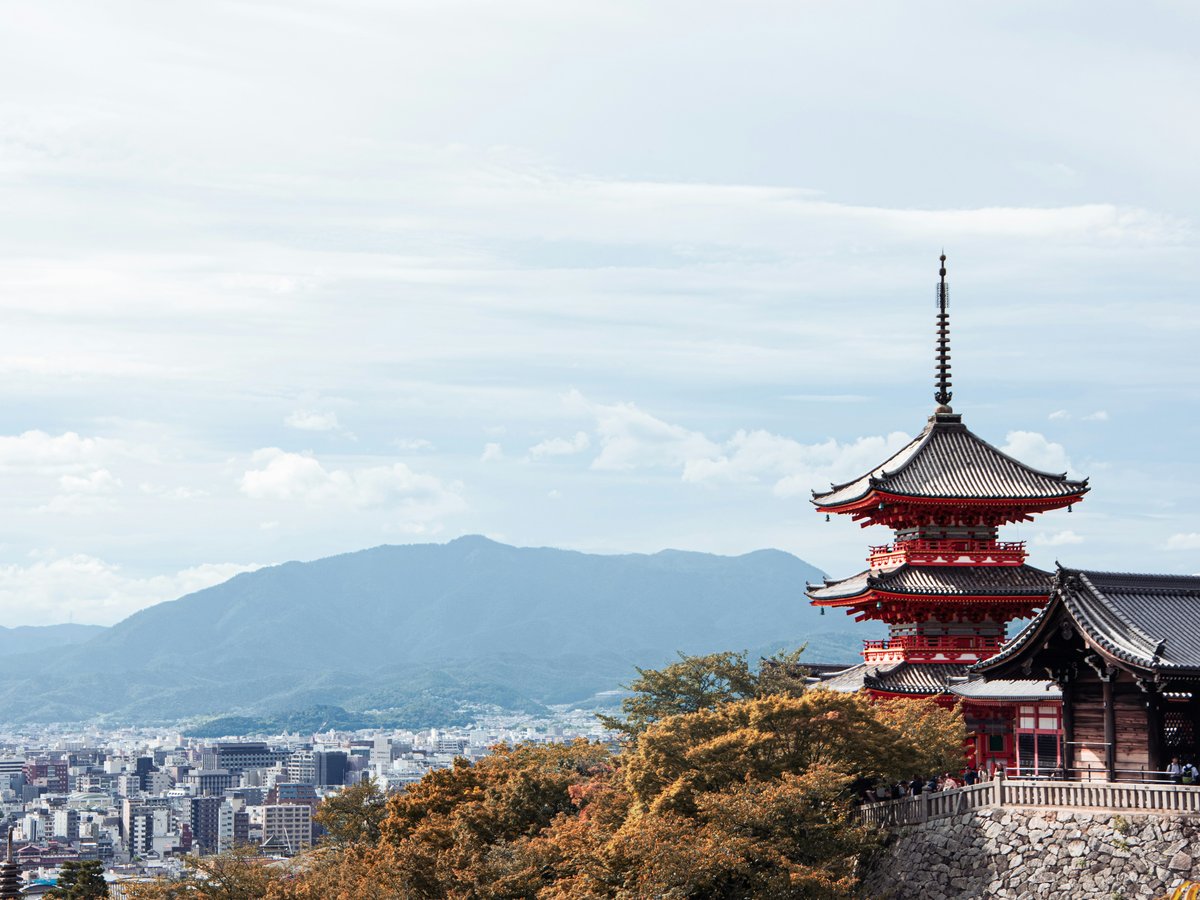
From 06:00, Kiyomizu-dera is open to anyone willing to set an alarm, and we'd skip the late-morning slot entirely. The early hour is the best reason to come to this Buddhist temple in Higashiyama-ku, when the paths are yours and the city below is still quiet. The founding is dated to AD 778, and it is part of a UNESCO World Heritage Site. The gates close at 18:00, so for a dusk visit you need to arrive well before then, not drift up at sunset. Check kiyomizudera.or.jp for closures and special openings before you set out. Come early, walk slowly, and leave before the day gets crowded.
Dates from AD 778 · Part of a UNESCO World Heritage Site
Hours: Mo-Su 06:00-18:00
-
2 Kinkaku-ji Temple
京都府京都市北区金閣寺町1A Zen Buddhist temple dating from 1397, part of a UNESCO World Heritage Site
Kinkaku-ji Temple dates from 1397 and stands at 京都府京都市北区金閣寺町1 in the north of the city's address system. We'd skip the coach-tour version of this visit, the one that treats it as a photo stop squeezed between lunch and the next bus. It is a Zen Buddhist temple and part of a UNESCO World Heritage Site, and it rewards anyone who slows down to its pace. The gates open at 09:00 and close at 17:00, so the window is shorter than it looks. Arrive at opening or in the last hour, when the crowd thins. The official page on shokoku-ji.jp carries current notices.
Dates from 1397 · Part of a UNESCO World Heritage Site
Hours: Mo-Su 09:00-17:00
-
3 Ginkaku-ji Temple
京都府京都市左京区銀閣寺町2A temple in Sakyo ward that is part of a UNESCO World Heritage Site
Ginkaku-ji Temple sits at 京都府京都市左京区銀閣寺町2, number 2 in 銀閣寺町, and we'd skip the rushed add-on version of this visit, the one wedged in at the end of a packed temple day. This temple in the Sakyo ward of Kyoto is part of a UNESCO World Heritage Site, and it earns an unhurried hour of its own, in the morning if you can manage it. Show your driver the 2 at the end of that address, then put the phone away. Hours and seasonal notices are posted at shokoku-ji.jp, so check there rather than trusting an old guidebook.
Part of a UNESCO World Heritage Site
-
4 Fushimi Inari-taisha
〒612-0882 京都市伏見区深草薮之内町68番地A complex of Shinto shrines whose founding is dated to AD 711
Fushimi Inari-taisha is not one shrine but a set of Shinto shrines in Kyoto, founded in AD 711 and designated an Important Cultural Property by Japan. That founding puts it among the oldest on this list, and the scale matches the age. We'd skip the quick-snapshot approach entirely. It is a place to walk through, not a backdrop, and the people who come away satisfied are the ones who allowed time to keep going. Check inari.jp for festival dates and notices before you go. Wear shoes you trust, carry water, and plan on an AD 711 foundation taking more of your morning than you expected.
Dates from AD 711 · Important Cultural Property of Japan
-
5 Byōdō-in Temple
京都府宇治市宇治蓮華116A Buddhist temple dating from 1052, part of a UNESCO World Heritage Site
Give your driver 京都府宇治市宇治蓮華116, the address of Byōdō-in Temple. This Buddhist temple sits in Kyoto Prefecture, though the address places it in 宇治市 rather than in Kyoto city, and it dates to 1052 as part of a UNESCO World Heritage Site. Don't treat it as a rushed half-day detour. Plan a proper morning and aim to arrive close to the 08:45 opening, since the gates close at 17:30 and an early start makes the difference. For group bookings or questions, the temple's number is +81 774-21-2861, and byodoin.or.jp posts current notices.
Dates from 1052 · Part of a UNESCO World Heritage Site
Hours: Mo-Su 08:45-17:30
-
6 Tōfuku-ji Temple
15-778 京都市東山区本町A Buddhist temple dating from 1236 that holds the National Treasure of Japan designation
The gates at Tōfuku-ji Temple open at 08:30, and arriving close to that time pays off. The address is 15-778 京都市東山区本町. This Buddhist temple dates to 1236 and holds the National Treasure of Japan designation. The gates close at 16:30, a short day by Kyoto standards, so treat it as your first stop rather than your last. Check tofukuji.jp before you go, because seasonal notices matter here.
Dates from 1236 · National Treasure of Japan
Hours: Mo-Su 08:30-16:30
-
7 Nijō Castle
A castle dating from 1601, part of a UNESCO World Heritage Site
Nijō Castle is a castle rather than a temple, breaking up a list that would otherwise be dominated by incense and sutras, and it dates from 1601 as part of a UNESCO World Heritage Site. That makes it the place where Kyoto's political past comes into focus rather than its religious one. Skip the guided tour if you can, and walk the rooms and grounds at your own pace, which reward a slow eye far more than a narrated sprint. Gates open at 08:45 and close at 17:00, so a mid-morning arrival leaves time for a temple in the afternoon. Current ticketing and closure notices are at nijo-jocastle.city.kyoto.lg.jp.
Dates from 1601 · Part of a UNESCO World Heritage Site
Hours: Mo-Su 08:45-17:00
-
8 Tō-ji Temple
京都府京都市南区九条町1A temple open from 05:00 whose founding is dated to AD 676
Tō-ji Temple opens its grounds at 05:00, and we'd arrive at dawn: the locals prefer it then. Founded in AD 676, the oldest date given for any site in this list, it is part of a UNESCO World Heritage Site. The gates close at 17:00, so a late-afternoon visit means spending your hour rushing the finish. An early start also frees the rest of your day for sites that open later. Check toji.or.jp before you go for special openings and market days.
Dates from AD 676 · Part of a UNESCO World Heritage Site
Hours: Mo-Su 05:00-17:00
-
9 Sanjūsangen-dō Temple
657 京都市東山区三十三間堂迴りA Buddhist temple dating from 1165 that holds the National Treasure of Japan designation
Sanjūsangen-dō Temple is a National Treasure of Japan, standing at 657 京都市東山区三十三間堂迴り and founded in 1165. The hours change with the season, which catches visitors out: from 01 April to 15 November the temple is open 08:30 to 17:00, but from 16 November to 31 March it opens at 09:00 and closes at 16:00. Arriving late on a winter afternoon means a hurried walk-through, not a visit. Come in the morning and give the place the time it earns.
Dates from 1165 · National Treasure of Japan
-
10 Kyoto Tower
京都府京都市下京区烏丸七条下ル東塩小路町721-1An observation tower from 1964, open until 21:00
Kyoto Tower dates from 1964 and stands at 京都府京都市下京区烏丸七条下ル東塩小路町721-1. We'd skip it as a daytime stop: the temples deserve your daylight hours, and since the tower stays open until 21:00, it works far better as an evening destination. Go after dinner, when the shrines have closed and you still want something to do. If the weather or your schedule pushes you toward an earlier visit, it opens at 10:00. The tower's official page, on keihanhotels-resorts.co.jp, has current ticket and opening details.
Dates from 1964
Hours: Mo-Su 10:00-21:00
-
11 Enryaku-ji Temple
滋賀県大津市坂本本町4220A Buddhist temple dating from AD 788, part of a UNESCO World Heritage Site
Enryaku-ji Temple is a Buddhist temple in Shiga Prefecture, and it still earns its place on a Kyoto list. Founded in AD 788, it is part of a UNESCO World Heritage Site. Don't start after lunch. From March to November the gates open at 08:30 and close at 16:30; in January and February the hours are 09:00 to 16:30, and in December 09:00 to 16:00. Leave in the morning and treat it as a full day out, not one more box to tick. Check hieizan.or.jp for current notices before you set out.
Dates from AD 788 · Part of a UNESCO World Heritage Site
-
12 Heian Jingū
〒606-8341 京都市左京区岡崎西天王町A Shinto shrine dating from 1895, listed as an Important Cultural Property of Japan
Dating from 1895, Heian Jingū is a Shinto shrine with a much younger foundation than most of the sites on this list, yet Japan lists it as an Important Cultural Property. Age isn't the whole measure of a Kyoto site worth your time. The shrine opens at 06:00 all year, making it a good place for an early walk before the temples open; closing times shift with the season: 18:00 from 15 March to 30 September, 17:30 in October and from 15 February to 14 March, and 17:00 from 1 November to 14 February. Check heianjingu.or.jp for festival dates.
Dates from 1895 · Important Cultural Property of Japan
Last verified by automated review (v1.7.2_fame1017d-1015-1159-20261017034735) on . What is automated review?