
Kyoto for first-time visitors
Kyoto Imperial Palace is the former imperial seat, still administered by the Kunaicho and free to enter on scheduled tour days. The earliest of the picks for first-time visitors in Kyoto opens at 11:00 and the latest closes at 02:00.
Kyoto for first-timers, in numbers
- Picks on this page
- 24 places across 2 lists, led by Kyoto Imperial Palace, Kyoto Tower, Saihō-ji Temple
- Posted hours
- 8 picks post hours earliest 11:00, latest 02:00; 0 open by 09:00, 5 past 21:00
Questions first-timers ask about Kyoto
-
Must-see
Kinkaku-ji, the Golden Pavilion, in Kita-ku. The Zen temple dates to 1397 and was rebuilt in 1955 after arson. Two hundred thousand sheets of gold leaf coat the upper floors. Arrive at the 9am opening to see the reflection on Kyōko-chi pond before tour buses fill the gravel paths. Entry is ¥500, about $3.10.
Read the full answer → -
Best time to visit
Go in the second half of November, when maple colour at Tofuku-ji and Eikan-do usually peaks from about November 20 into early December, rain is light, and days are cool enough for long temple walks. Late March to early April brings cherry blossom with the year's worst crowds and room rates. Avoid June to August for the rainy season and heavy heat.
Read the full answer → -
Airport to city
Take the JR Haruka Express from Kansai International Airport (KIX) to Kyoto Station: 75 minutes, around ¥2,200 ($14) with the tourist-discount ICOCA & Haruka ticket sold at the JR counter in arrivals. Runs twice an hour until roughly 10pm. Bring your passport to buy the discounted fare.
Read the full answer → -
How to get there
Kyoto has no airport: fly into Kansai International (KIX) near Osaka, then take the JR Haruka Express 75 minutes north to Kyoto Station. From North America, expect one stop via Tokyo, Seoul, or Taipei at $800–1,300 round-trip. From Europe, connect through Helsinki or a Gulf hub, or catch a direct BA or Finnair flight to KIX.
Read the full answer → -
Getting around
IC card on Kyoto's buses and two subway lines, bicycle for the flat central grid, taxi or GO app after dark. Buses run everywhere temples are: the subway doesn't. Load an ICOCA at Kyoto Station for 2,000 yen and tap on everything. The old bus day pass is gone; the 1,100-yen subway-bus combo pass replaced it.
Read the full answer →
Curated for first-timers
-
Must-see attractions
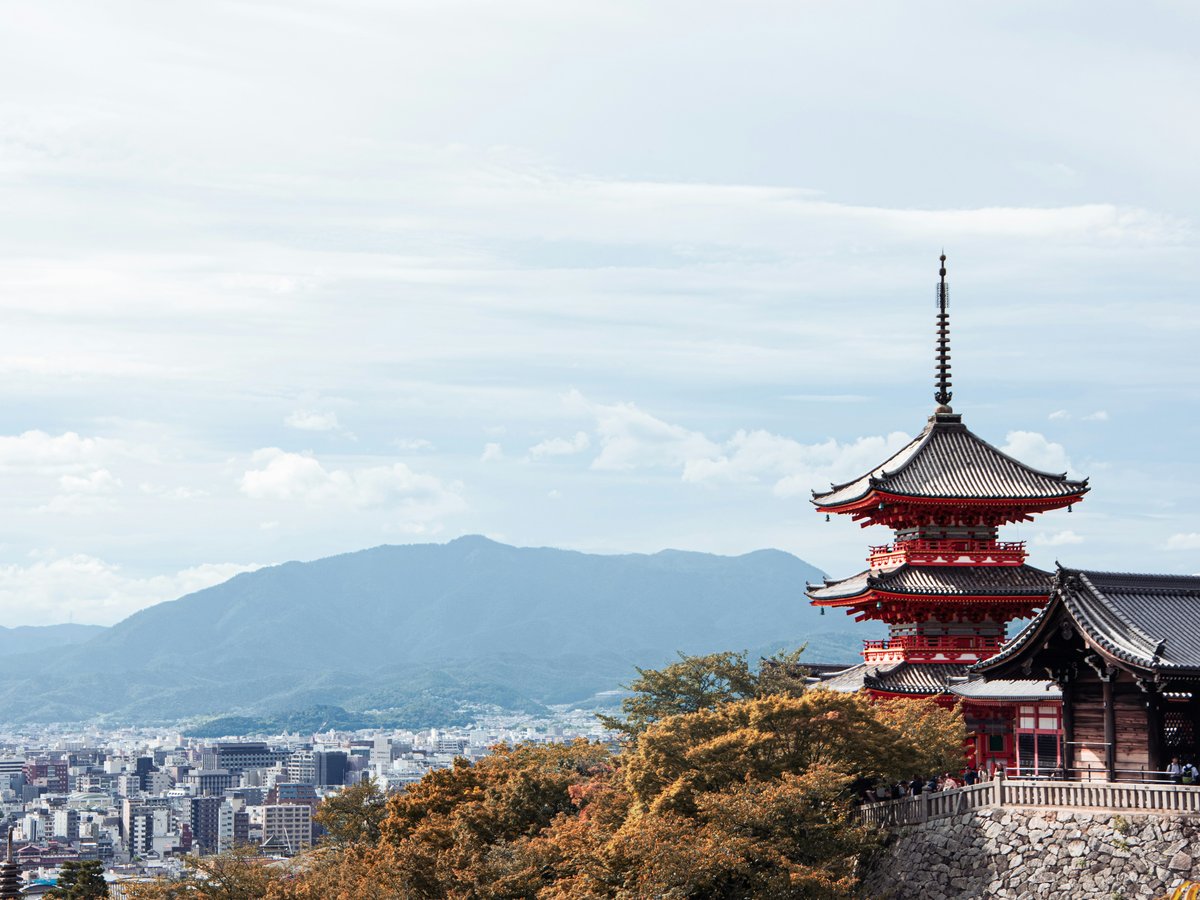
Kyoto's must-see list is almost entirely temples and shrines, and the founding dates tell you something real about the place. Tō-ji traces back to AD 676, Fushimi Inari-taisha to AD 711, and by comparison Heian Jingū, dating from 1895, is practically new. Kyoto Tower, an observation tower from 1964, is the one modern landmark in the set. Most of the twelve carry a UNESCO World Heritage listing, among them Kiyomizu-dera, Kinkaku-ji, and Nijō Castle, while Tōfuku-ji and Sanjūsangen-dō hold Japan's own top designation as National Treasures. Two entries take you beyond the city: Byōdō-in has an address in 宇治市, and Enryaku-ji is in Shiga Prefecture. This list is for visitors who plan their day around opening hours, because the hours decide your day here. Kiyomizu-dera opens at 06:00, Tō-ji opens at 05:00, and Tōfuku-ji closes at 16:30. Each entry below gives the gate times and the address to show a driver, plus one honest view on how to get the visit right.
See the picks → -

Best restaurants
Kyoto rewards eaters who plan the day around meals, not the other way around. The city's restaurants split into a few honest camps: kaiseki rooms that price themselves out of a weekly rotation, teppan and shabu counters where the theatre is the meal, ramen shops that open at lunch and don't stop, and a growing bench of curry and sandwich specialists that would look at home in Osaka or Tokyo. The list below leans on twelve addresses that show up in OpenStreetMap with hours, phones and websites you can act on tonight. Skip the queue-and-photograph rotation around Nishiki and the marquee tempura counters in Gion that trade on the postcode; the venues here span Nakagyo, Higashiyama and Kamigyo, and each earns its slot on something more specific than a district. Read the hours before you walk: several of these kitchens close between 14:30 and 17:30, which is exactly when a jetlagged first-day visitor tends to go looking for food. Every claim below traces to the venue's own listing.
See the picks →