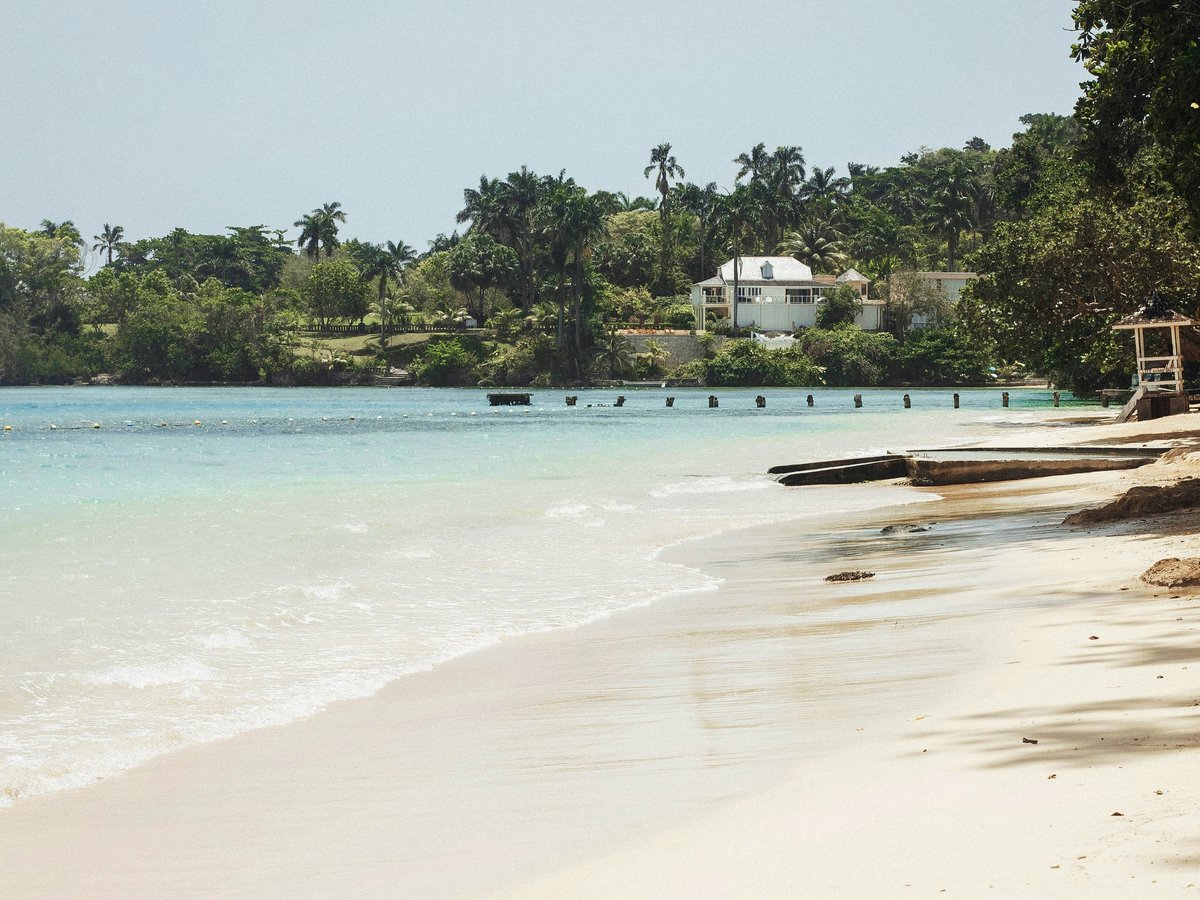
Best Time to Visit Montego Bay, by Season
Montego Bay's average highs range from 28.4°C in January to 31.7°C in September, a gap of 3.3 degrees that masks real swings in price, hurricane risk, and beach crowds. Here is the trade-off for each month, with the single best window named for budget travellers, families, couples, and solo visitors.
Published
1 Montego Bay's 3.3-Degree Annual Range Masks the Real Decision
Step off a plane at Sangster International in January, and the breeze off Montego Bay greets you at 28.4°C, dry and faintly salt-tinged. Return in September, and that same tarmac pushes radiant heat upward under a 31.7°C sky, the air so heavy with moisture you can taste the Caribbean before you clear the terminal.
A span of 3.3 degrees separates January's 28.4°C high from September's 31.7°C peak. Most travellers assume that gap means any month works. It does not.
The dry season runs roughly December through April, when highs range from 28.4°C to 29.7°C and the trade winds keep Gloucester Avenue comfortable well into the afternoon. North American visitors pack the Hip Strip during these months, filling the chairs at Doctor's Cave Beach and the waterfront tables along the north coast. Room rates from Rose Hall east to Ironshore climb accordingly. The wet season follows from May through November, when highs push past 30°C and afternoon downpours scatter the beaches for an hour before the sun returns. By September, at 31.7°C with the Atlantic hurricane season in full swing, room prices reach their annual floor.
The real decision in Montego Bay is not temperature. It is the trade between the dry season's 21.7°C February evenings, cool enough to walk the Hip Strip in a light shirt, and the wet season's discounts, deep enough that a week's stay might cost half of what it runs in February. September's 25.0°C overnight low, the warmest on the calendar, sits 3.3°C above February's 21.7°C floor.
A span of 3.3 degrees separates January's 28.4°C high from September's 31.7°C peak. Most travellers assume that gap means any month works.
2 December Through February Costs the Most, but 21.7°C Evenings Earn the Premium
The sun drops behind the hills west of Montego Bay around 5:45 PM in January, and within an hour the temperature slides toward 21.9°C. You notice it on bare arms along Gloucester Avenue, where the Hip Strip's open-air bars fill with the sound of reggae and the smell of jerk chicken from roadside grills.
December averages a high of 28.6°C and a low of 23.0°C. January dips to the year's coolest high at 28.4°C with a 21.9°C low. February settles at 28.5°C with the lowest overnight temperature of the entire year at 21.7°C. That overnight drop from December's 23.0°C to February's 21.7°C floor is what peak-season visitors pay for.
February's 21.7°C evenings mean sleeping with the windows open if your room catches the trade winds off the bay. Doctor's Cave Beach, about halfway along Gloucester Avenue, is the classic north-coast swim during these months, with water temperatures around 26°C in January. Dead End Beach, a free public stretch nearby, tends to draw more locals than tourists and stays quieter even in peak weeks. For a non-beach afternoon, Rose Hall Great House sits about 15 minutes east by taxi, an 18th-century plantation with guided tours of its stone rooms and a view across the cane fields to the coast.
The trade-off in December through February is price and crowd density. Montego Bay books earliest and charges the most per night during these months. Worth noting, though, that February tends to thin after the holiday rush. Couples who want dry-season weather without Christmas-week crowds might find the first 2 weeks of February the sweet spot inside peak season. Pier 1, the waterfront restaurant and bar west of Gloucester Avenue, is easier to walk into on a February Tuesday than a December Saturday. For a meal away from the tourist corridor, Union Street Restaurant & Cafe in downtown Montego Bay draws a local crowd year-round.
3 March and April Break 29°C With Fewer Crowds Than February
The light changes in Montego Bay around March. The sun sits higher, the glare off the water sharpens, and by midday the pavement on Gloucester Avenue radiates 29.4°C heat through the soles of your sandals.
March averages a high of 29.4°C with a low of 21.8°C. April pushes to 29.7°C with a low of 22.5°C. Both months sit firmly in the dry season, but the peak-season crowds have started to thin. March's 29.4°C represents a 0.9°C jump from February's 28.5°C, the largest warming step between adjacent months in the dry season.
The value shifts here. Rates start to drop from their December-February peak while the weather holds. March's 21.8°C overnight low is nearly identical to January's 21.9°C, so evenings on the Hip Strip still feel comfortable without air conditioning. April's humidity creeps into the afternoons in a way that February never carries. That said, April still belongs to the dry season, and rain remains sporadic rather than daily.
For families with school-age children, late March aligns with spring break across much of North America, which can briefly push rates upward at resorts between Rose Hall and Ironshore. The smarter play for price-conscious travellers might be the first 2 weeks of April, when the spring break surge has passed. Cornwall Beach, a quieter stretch south of Doctor's Cave Beach, draws fewer tour groups in April than in March. April's warmer mornings suit Martha Brae River for bamboo rafting, about 30 minutes east near Falmouth, without the early-morning goosebumps you might get from the river spray in January. The Luminous Lagoon at Glistening Waters, also near Falmouth, runs nightly boat tours into the bioluminescent water year-round, but April's smaller tourist numbers typically mean shorter waits at the dock.
4 May Crosses 30°C and the Pricing Calendar Flips
The first real afternoon downpour catches you by surprise in Montego Bay. One moment the sky over the bay glows at 30.7°C. Thirty minutes later, warm rain hammers the tin roofs of the Hip Strip hard enough to drown out conversation, and then it stops. The pavement steams. By 4 PM the sand at Doctor's Cave Beach is dry again.
May averages a high of 30.7°C with a low of 23.5°C. June reaches 31.1°C with a low of 24.5°C. May's 30.7°C is a full degree above April's 29.7°C, the largest month-over-month rise in the annual temperature curve. June's overnight low of 24.5°C is warm enough that air conditioning shifts from optional to expected.
The upside in May is price. Room rates along the north coast tend to drop as North American demand falls with the end of the dry season. Dead End Beach, the free public stretch near the north end of Gloucester Avenue, fills with locals on Sunday mornings through the wet season. Jerky's on Gloucester Avenue sells jerk pork and chicken at local prices, and you can eat well for a fraction of what the resort restaurants charge. The pepper sauce is hot enough to make your eyes water, and the smoke from the charcoal drums hangs in the air along the strip.
Mind you, the rain in May and June is rarely all-day. Mornings tend to stay dry, with showers concentrating in the afternoon and early evening. A morning swim at Cornwall Beach or an early drive to Rocklands Bird Sanctuary, about 25 minutes into the hills near Anchovy, still works on most May days. The Atlantic hurricane season opens on June 1, but major Caribbean hurricanes tend to cluster between August and October, placing May and early June at the lower end of the risk curve.
5 July Through September Peaks at 31.7°C, and the Discounts Peak With It
Montego Bay in August feels like standing inside a warm, wet cloth. The air at 31.4°C carries enough moisture to leave a sheen on your skin within minutes of stepping outside. Afternoon thunder rumbles across the hills behind the coast, and you can hear the rain approaching across the water like static.
July averages a high of 31.1°C with a low of 24.9°C. August pushes to 31.4°C with a 25.0°C low. September reaches the year's peak at 31.7°C, also at 25.0°C. These 3 months are Montego Bay's hottest, wettest, and cheapest.
July's draw is Reggae Sumfest, Jamaica's largest annual music festival. The event runs in mid-July at Catherine Hall Entertainment Complex, about 10 minutes from the Hip Strip. Sumfest pulls dancehall and reggae headliners from across the Caribbean, and Montego Bay fills with a festival crowd that replaces the winter resort demographic with something louder and more local. Rooms book early in Sumfest week despite the low-season pricing.
Outside of Sumfest week, July and August on the resort strip are quiet. The beaches thin out. The sound of afternoon rain on the bay replaces the speaker stacks, and the wet air carries the smell of asphalt and salt.
Hurricane risk is the dominant factor from August through September. The Atlantic season's statistical peak falls in September, Montego Bay's hottest month. Jamaica sits in the Caribbean hurricane belt. Hurricane Gilbert struck the island in September 1988. Hurricane Ivan hit in September 2004. Both caused severe damage across St. James parish. Travel insurance with hurricane coverage is worth the cost for any August or September booking. Montego Bay's pricing compensates for that risk. Solo travellers and couples without fixed school schedules can book July at 31.1°C and spend less than they would in January's peak-season window. Pier 1 still runs its Friday-night waterfront parties through the summer months, and the jerk joints along Gloucester Avenue keep their prices steady year-round. September's 31.7°C highs and 25.0°C lows define the absolute ceiling of Montego Bay's heat-for-savings trade.
September's 31.7°C highs and 25.0°C lows define the absolute ceiling of Montego Bay's heat-for-savings trade.
6 October and November Drop to 29.4°C as the Bargain Window Closes
By late October, Montego Bay's afternoon light takes on a softer quality. The glare off the water eases as the sun tracks lower, and the evening air at 24.5°C carries a breeze that recalls March more than August.
October averages a high of 30.6°C with a low of 24.5°C. November drops to 29.4°C with a 23.8°C low. October still carries the wet season's humidity, and the month sits inside the hurricane season's tail. October is a month for flexible travellers who can ride out a disrupted flight or spend a rainy afternoon browsing the shops around Sam Sharpe Square in downtown Montego Bay rather than lying on the sand.
November is a different proposition. The high drops to 29.4°C, matching March exactly. The Atlantic hurricane season officially ends on November 30, and by mid-November the risk has declined sharply. Rain frequency begins to taper. November functions as the reverse shoulder of March, offering similar temperatures at lower prices.
The second half of November, from roughly November 15 onward, is when the weather-price ratio turns most attractive. The Hip Strip is quieter than it will be 3 weeks later when December's arrivals flood Gloucester Avenue. Redstep Seafood Bar & Grill serves local catch without the resort markup. Rose Hall Great House, about 15 minutes east by taxi, tends to run its guided tours with smaller groups in November than during the December-February crush. The north-coast beaches feel spacious rather than contested, and you can walk into the waterfront restaurants without a reservation.
October to November delivers the steepest monthly temperature decline on the cooling side of the calendar, a 1.2°C drop from 30.6°C to 29.4°C. Late November, with 29.4°C days and 23.8°C nights, is the last affordable window before December's peak-season pricing returns to the north coast.
7 The Best Window for Budget, Family, Couple, and Solo Travellers in Montego Bay
Montego Bay's 12 months offer no single perfect window. The range from January's 28.4°C high to September's 31.7°C peak draws the boundaries. Here is the verdict for 4 kinds of traveller.
For budget travellers, May is the pick. May's 30.7°C high sits at the front edge of the wet season, before the deeper humidity of August and September. Morning swims at Dead End Beach cost nothing. Jerky's on Gloucester Avenue feeds you jerk pork and chicken at local prices. The runner-up is November, with its 29.4°C high and declining hurricane risk. Redstep Seafood Bar & Grill is worth the walk past the Hip Strip's resort-facing restaurants.
For families, February is the pick. February's 28.5°C high and 21.7°C low deliver the dry season's mildest overnight temperatures, in a window after the Christmas rush when the north coast thins out. Doctor's Cave Beach is the default family swim along Gloucester Avenue. Martha Brae River bamboo rafting, about 30 minutes east near Falmouth, works well with older children. The runner-up is late March, before the spring break surge lifts prices. March's 21.8°C overnight low keeps evenings comfortable for younger children.
For couples, late November through early December bridges the transition. Late November's 29.4°C days offer near-dry-season comfort before peak pricing locks in around mid-December. Pier 1's waterfront tables at sunset are easier to book before the December wave. The runner-up is February's first 2 weeks, with 28.5°C highs and thinner crowds than the holidays.
For solo travellers, the answer splits on heat tolerance. Budget-focused solo visitors should target May, when Gloucester Avenue still hums but the crowd shifts toward locals and Caribbean visitors rather than winter-break North Americans. Comfort-first solo visitors should look at April, with 29.7°C highs and neither peak prices nor hurricane risk. April's shoulder position suits day trips to Rocklands Bird Sanctuary near Anchovy or the Luminous Lagoon near Falmouth. April at 29.7°C, May at 30.7°C, and November at 29.4°C are the 3 shoulder months where Montego Bay's weather-cost curves cross.
April at 29.7°C, May at 30.7°C, and November at 29.4°C are the 3 shoulder months where Montego Bay's weather-cost curves cross.
Last verified by automated review (v1.7.2_onboard-montego-bay-flagship-2026-09-07) on . What is automated review?