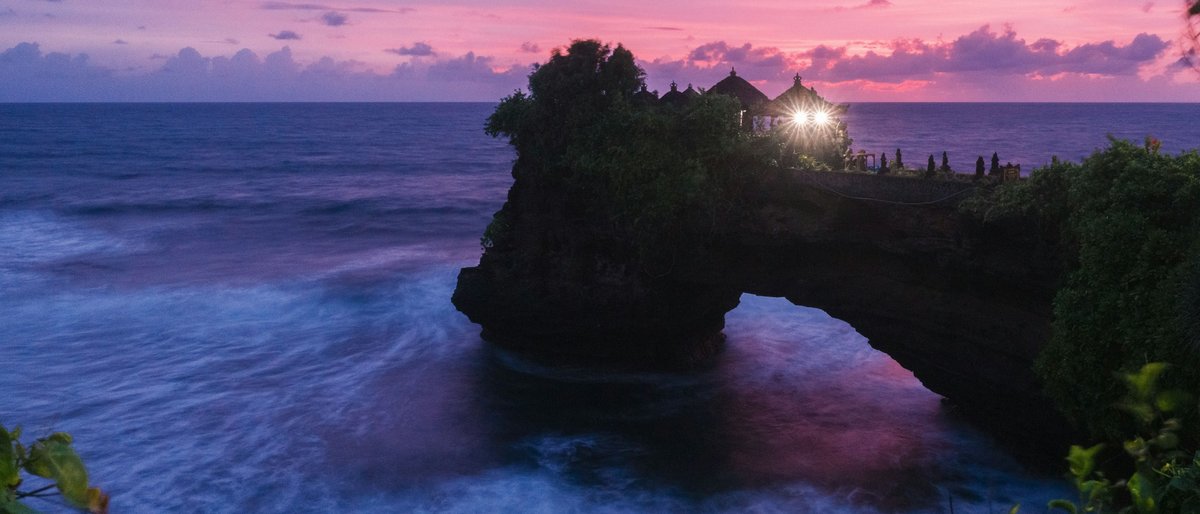
What's the must-see thing in Bali?
Pura Luhur Uluwatu at sunset. The temple perches on a 70-metre cliff above the Indian Ocean, and every evening at 6pm a kecak fire dance begins in an open amphitheatre carved into the rock. The sun drops behind the dancers straight into the water. Arrive by 5pm for left-side seats. Ticket: 50,000 IDR, about $3 USD.
Most first-timers to Bali get pointed toward Tanah Lot or the Tegallalang rice terraces. Both are fine. But Uluwatu is the one place on the island where landscape, architecture, and live performance collide in a way that doesn't exist anywhere else on earth. The temple compound sits at the southern tip of the Bukit Peninsula, on a cliff that drops straight down into surf breaks you can hear but not see from the prayer platforms above. The limestone is sharp and warm underfoot even in late afternoon. Monkeys patrol the stairways — they will take your sunglasses right off your face, and the temple staff sell bananas to negotiate their return. That sounds annoying. It is. But it's also part of the texture of the place: incense drifting from the shrines, the crash of waves 70 metres below, macaques screaming at each other in the banyan trees. You're not in a museum.
The kecak dance starts at 6pm in an open-air amphitheatre cut into the cliff edge. No instruments — just 50 or 60 men sitting in concentric circles, chanting 'cak-cak-cak' in interlocking rhythms while dancers perform episodes from the Ramayana in the centre. The sound is percussive and strange, closer to minimalist music than anything you'd expect from a traditional dance. As the performance builds, the sun sets directly behind the stage, turning the ocean gold, then copper, then dark blue. The fire dance segment at the end — a performer kicking through a pile of burning coconut husks with bare feet — happens in near-darkness with only the flames lighting the amphitheatre. Tickets for the kecak are 150,000 IDR (around $9 USD), separate from the temple entry. Buy them at the gate; online resellers charge triple. Seating is first-come on stone steps, no cushions. Your back will know about it.
The honest downside: Uluwatu is at the far south of Bali, roughly 90 minutes from Ubud and 40 minutes from Seminyak in traffic that tends to be worse than you'd guess. If you're staying in the Ubud area, this is a half-day commitment at minimum. The temple itself closes before the kecak starts, so you'll walk the grounds first, then move to the amphitheatre. Wear a sarong — they're required and available for rent at the entrance for 10,000 IDR. Leave anything shiny in the car. The long-tailed macaques here are not cute; they are professional thieves who have learned that earrings and phone cases come off humans with minimal effort. Dress code is real but relaxed: shoulders covered, knees covered, sarong on. No one checks twice.
If Uluwatu is your evening, Tirta Empul should be your morning. The spring temple near Tampaksiring, about 40 minutes northeast of Ubud, feeds cold mountain water through a series of carved stone spouts into a purification pool. Balinese Hindus queue to stand under each spout in sequence — visitors can join, and most do. The water hits cold, maybe 22°C, and the stone beneath your feet is slick with moss. It feels like participation, not tourism. Entry is 50,000 IDR. Go before 9am; by 10 the tour buses arrive and the pool gets crowded enough that the ritual atmosphere thins out.
Third pick: Tegallalang's rice terraces north of Ubud. They look exactly like the photos, which is both the appeal and the problem — the terraces are real and still farmed, but the walkways now have more selfie platforms than rice paddies. Fifteen minutes is enough to take it in. Stop at one of the warungs on the valley rim for a bowl of black rice pudding and the view, skip the rope swings the touts push on you, and move on. The morning light here is soft and green, and the sound of water running through the subak irrigation channels is the one thing no photograph captures.
The top three
Pura Luhur Uluwatu
The only place on Bali where a 70-metre sea cliff, an 11th-century Hindu temple, and a nightly kecak fire dance performed by 60 chanting men happen in the same spot. Arrive by 5pm for left-side amphitheatre seats facing the sunset. 50,000 IDR entry, 150,000 IDR for the kecak.
Tirta Empul
Cold mountain spring water flows through carved stone spouts into a purification pool where Balinese Hindus and visitors stand under each spout in sequence. Feels like participation, not tourism. Go before 9am to beat the tour buses. 50,000 IDR, 40 minutes northeast of Ubud.
Tegallalang Rice Terraces
The terraces look exactly like the photos — still farmed, still green, worth seeing for 15 minutes. Stay for black rice pudding at a valley-rim warung. Skip the rope swings. The subak irrigation sound is the one thing no photo captures.
Verified attractions
Sourced from Wikidata and OpenStreetMap — each entry links to its authoritative page.
-
Tanah Lot
attractionrock formation off the Indonesian island of Bali
View on Wikidata -
Goa Gajah
archaeological siteHindu temple in Indonesia
View on Wikidata -
Pura Luhur
attractionBalinese temple in Indonesia
View on Wikidata -
Garuda Wisnu Kencana
parkprivate cultural park on the Bukit Peninsula, Badung Regency, Bali, Indonesia
View on Wikidata -
Ubud Monkey Forest
parkBali, Indonesia
View on Wikidata -
Bali Museum
museummuseum in Bali, Indonesia
View on Wikidata -
Klungkung Palace
palacepalace in Indonesia
View on Wikidata -
Ubud Palace
palacebuilding complex in Bali, Indonesia
View on Wikidata -
Bajra Sandhi Monument
museummonument, museum in Denpasar, Bali
View on Wikidata -
Holy Spirit Cathedral
churchcathedral in Denpasar, Indonesia
View on Wikidata -
Puri Lukisan Museum
museummuseum in Bali
View on Wikidata -
Agung Rai Museum of Art
museummuseum or art in Bali
View on Wikidata -
Neka Art Museum
museumart museum in Bali, Indonesia
View on Wikidata -
Bali Bird Park
parkIndonesian tourist attraction
View on Wikidata -
Le Mayeur Museum
museumartist's house museum in Sanur, Bali, Indonesia
View on Wikidata -
Pandawa Beach
attractionbeach in Bali, Indonesia
View on Wikidata -
Blanco Renaissance Museum
museummuseum
View on Wikidata -
Museum Pasifika
museumart museum in Bali, Indonesia
View on Wikidata -
Museum Rudana
museumart museum in Indonesia
View on Wikidata -
Semarajaya Museum
museummuseum at Klungkung Regency
View on Wikidata -
Taman Safari Bali (Bali Safari)
attractionzoo in Bali, Indonesia
View on Wikidata -
Tegenungan Waterfall
attractionwaterfall in Bali, Indonesia
View on Wikidata -
Kompyang Sujana Stadium
stadiumstadium in Bali
View on Wikidata -
Ngurah Rai Stadium
stadiummulti-use stadium in Denpasar, Indonesia
View on Wikidata -
Purbakala Archaeological Museum
museummuseum in Bedulu on Bali, Indonesia
View on Wikidata -
Gelora Samudra Stadium
stadiumstadium in Indonesia
View on Wikidata -
Sangeh
parknatural forest
View on Wikidata -
Taman Pujaan Bangsa Margarana
monumentHeroes cemetery in Bali
View on Wikidata -
Alas Kedaton
parkMonkey Forest
View on Wikidata -
Bali Zoo
attractiontourist attraction in Bali
View on Wikidata -
Museum Agung Bung Karno
museummuseum in Indonesia
View on Wikidata -
Puputan Monument
museummonument in Semarapura
View on Wikidata -
Subak Museum
museumSubak Museum is a museum that presents information related to the traditional Balinese rice field irrigation system Subak.
View on Wikidata -
The House of Masks and Puppets Setia Dharma
museumMuseum in Indonesia
View on Wikidata -
Turtle Conservation And Education Center
museumMuseum in Denpasar, Indonesia
View on Wikidata -
Yeh Pulu
archaeological siteView on Wikidata -
Balinese Cultural Documentation Library Office
attractionlibrary at Bali, Indonesia
View on Wikidata -
Barong Tanah Kilap
attractiontraditional dance theatre group in Denpasar, Bali, Indonesia
View on Wikidata -
Debes Stadium
stadiumstadium in Bali
View on Wikidata -
Melasti Beach
attractionbeach in Bali
View on Wikidata
Last verified by automated review (v1.5.J.2) on May 11, 2026. What is automated review?