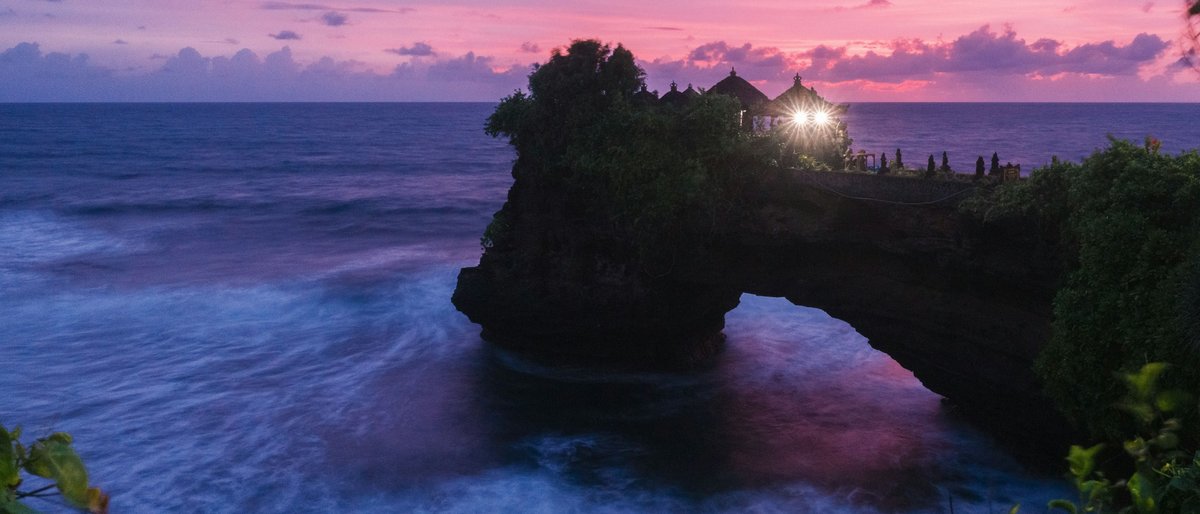
Bali sits on a volcanic spine that runs east to west, and that geology shapes everything you can do outdoors here. The southern coast is all limestone cliffs and reef breaks. Head inland and you're climbing through rice terraces into cloud forest. The north side drops steeply to a calmer sea. It's a small island — roughly 140 kilometers across — but the terrain packs in a surprising range, from black-sand beaches to crater lakes sitting above 1,500 meters. The dry season, roughly April through October, is when most people come for outdoor stuff, and for good reason. Humidity drops, trails firm up, and the mornings on the volcanoes tend to be clear. That said, Bali's wet season isn't a washout. Rain usually comes in heavy afternoon bursts, so mornings can still be well usable for a hike or a paddle. You'll just want to be flexible. The culture here is tied to the landscape — temples perch on cliff edges, holy springs bubble up in forest ravines, and ceremony processions wind through rice fields. So even a simple walk often turns into something more layered than you expected. Worth noting: Bali is not one city. It's a province with distinct regions, and where you base yourself dramatically changes what's accessible. Ubud puts you near the rice terraces and river gorges. Amed and Lovina give you quick access to Mount Agung and the northern reefs. The Bukit Peninsula in the south is where the surf and cliff walks are. Plan accordingly.
Outdoor activities
-
Mount Batur Sunrise Trek
The most popular volcano hike on the island, and honestly it earns that popularity. You start around 3:30 AM from Toya Bungkah or one of the nearby trailheads, climbing roughly 700 meters of elevation over loose volcanic scree and packed trail. The summit sits at 1,717 meters. On a clear morning, you watch the sun come up over Mount Agung with Lake Batur spread out below — the kind of scene that makes the 2 AM alarm feel worth it. Guides are technically required by the local trekking association, and while enforcement varies, hiring one supports the community and keeps the trail less chaotic. The descent takes about 90 minutes and your knees will know about it.
- Difficulty
- Moderate — steep sections on loose ground, but no technical scrambling
- Duration
- 4-5 hours round trip
- Best season
- April through October for clearest skies, though year-round is feasible
-
Cycling the Jatiluwih Rice Terraces
The UNESCO-listed rice terraces around Jatiluwih, up in Tabanan regency, are impressive to ride through. The roads are narrow, mostly paved, and wind through working agricultural land at around 700 meters elevation, so the air is noticeably cooler than the coast. You can rent a bike in the area or join one of the guided tours that start higher up and coast downhill — those are pleasant but you miss the satisfying burn of actually earning the views. A self-guided loop of 20-30 kilometers through Jatiluwih and the surrounding villages gives you a proper half-day workout with plenty of stops for photos and cold drinks at roadside warungs.
- Difficulty
- Easy to moderate depending on route — some hills if you go off the main circuit
- Duration
- 3-5 hours
- Best season
- Dry season, April through October, when the terraces are often lush and green from earlier rains
-
Canyoning in Gitgit or Sambangan
Northern Bali has a cluster of waterfalls fed by steep jungle ravines, and several operators run canyoning trips through them. The Sambangan area, sometimes called Secret Garden, has a series of falls connected by rappels, slides, and short swims through cool mountain water. Gitgit canyon is a bit more technical. You're rappelling down wet rock faces, jumping into pools, and scrambling along mossy ledges. The water temperature up here is refreshing — noticeably colder than the coast. Operators provide harnesses, helmets, and wetsuits. You provide the willingness to get very, very wet.
- Difficulty
- Moderate to strenuous depending on the canyon chosen — prior experience not required but reasonable fitness helps
- Duration
- 3-4 hours for the activity, plus travel time from south Bali
- Best season
- Dry season is safer with more predictable water levels, but some operators run year-round
-
Surfing at Uluwatu and the Bukit Peninsula
The Bukit Peninsula is where Bali's serious surf lives. Uluwatu is the headline act — a long, fast left-hander breaking over reef, best at 4-8 foot faces. You access it down a cave stairway cut into the cliff, which is an experience in itself. Padang Padang, just up the coast, is shorter and hollower, and gets very crowded when it's on. Bingin has a more mellow vibe with a workable left that's friendlier to intermediates. These are all reef breaks, so booties are worth considering and you should know your limits. The inside sections are shallow. For beginners, Kuta and Seminyak beaches have forgiving sand-bottom waves and dozens of surf schools.
- Difficulty
- Varies widely — Kuta beach is beginner-friendly, Uluwatu is expert-level
- Duration
- Session-dependent, typically 2-3 hours in the water
- Best season
- Dry season, May through September, brings consistent southwest swells to the Bukit. Wet season shifts good surf to the east coast around Keramas and Sanur reef
-
Mountain Biking on the Kintamani Downhill
A popular route starts near Kintamani, up on the caldera rim of Mount Batur, and descends through coffee plantations, bamboo forest, and small villages down toward Ubud. The total descent is roughly 1,000 meters over 25-30 kilometers, mostly on paved village roads with some dirt track sections. Several operators run this as a guided tour with bike, helmet, and lunch included. The scenery shifts noticeably as you drop in elevation — from cool volcanic highlands through dense tropical canopy into the manicured rice paddies around Tegallalang. If you want something more technical, ask operators about their off-road trail options, which tend to use single-track through coconut groves.
- Difficulty
- Easy if you take the guided downhill route; moderate to hard for off-road variants
- Duration
- 3-4 hours including stops
- Best season
- Dry season for better trail conditions, on dirt sections
-
Snorkeling and Freediving at Amed
The northeast coast around Amed is where you go for calm, clear water without fighting crowds. The Japanese shipwreck at Jemeluk Bay sits in shallow water, covered in coral and swarming with fish — you can snorkel right to it from shore. The current is mild here compared to Nusa Penida, making it a better choice if you're not an experienced ocean swimmer. Several freediving schools operate out of Amed, taking advantage of the depth access close to shore — the reef wall drops off steeply. The water is warm year-round, hovering around 27-29°C, so a rash guard is enough for most people. Mind you, conditions can shift — check with local dive shops about current visibility before committing to a plan.
- Difficulty
- Easy for snorkeling; freediving ranges from beginner courses to advanced depth training
- Duration
- Half-day or full-day
- Best season
- April through November for best visibility, though diveable year-round
Day hikes
-
Mount Agung via Pasar Agung (Southern Route)
Bali's highest point at 3,031 meters, and the shorter of the two common routes. Starting from Pasar Agung temple at around 1,500 meters, you're looking at roughly 1,500 meters of elevation gain over steep, exposed trail. The lower sections pass through forest, then you break out onto bare volcanic rock and scree for the final push. This route reaches the southern rim of the crater, not the true summit — which requires the longer Besakih approach. A guide is required and conditions are serious: loose rock, steep drop-offs, and weather that can turn quickly above the treeline. Start around 1-2 AM for a sunrise arrival at the rim. Not a casual outing, but rewarding if your fitness is there.
- Difficulty
- Strenuous — significant elevation gain, loose volcanic terrain, high altitude exposure
- Duration
- 6-8 hours round trip
- Best season
- April through October, outside the rainy season. Avoid during volcanic activity alerts — check PVMBG status.
-
Campuhan Ridge Walk
This is Ubud's easiest and most accessible walk, and it's lovely for what it is. The paved path follows a narrow ridge between two river valleys, with tall grass on both sides catching the morning light. You start near the Ibah hotel on the western edge of Ubud and walk north along the ridge for about two kilometers before the path descends to the road near Bangkiang Sidem. Total distance is short — under 4 kilometers if you turn around — but the views of palm-filled valleys on either side are pleasant. Go at sunrise, before the heat sets in and while the grass is still silver with dew. By mid-morning it gets hot and crowded.
- Difficulty
- Easy — flat, paved path suitable for all fitness levels
- Duration
- 1-1.5 hours
- Best season
- Year-round, but early morning is essential for comfort and atmosphere
-
Mount Batur Crater Rim Trek
Beyond the standard sunrise peak, you can continue along the crater rim of Mount Batur for a longer, more satisfying hike. From the main summit, a trail follows the ridgeline around the caldera, passing several secondary craters and offering views down to the lake on one side and across to Abang and Agung on the other. The footing alternates between hard-packed volcanic soil and loose pumice. Some sections are narrow with steep sides, so this isn't the day for anyone uncomfortable with exposure. The full rim circuit takes considerably longer than the basic sunrise trek and isn't always well-marked, so a guide who knows the extended route is strongly recommended.
- Difficulty
- Moderate to strenuous — longer distance, exposed ridgeline, loose footing in places
- Duration
- 6-8 hours for the extended rim walk
- Best season
- Dry season, April through October, for best footing and visibility
-
Sekumpul Waterfall Trek
Getting to Sekumpul, in northern Bali's Buleleng regency, involves a descent of several hundred steep steps through dense tropical vegetation, crossing a shallow river, and scrambling over some mossy rocks. The falls themselves drop roughly 80 meters in twin cascades into a pool surrounded by cliff walls and ferns. The mist at the base soaks you within minutes. The return climb back up those steps, in tropical humidity, is where you earn it. The trail can be slippery, in wet season, and proper footwear makes a real difference — flip-flops are a mistake people make once. Local guides meet you at the parking area and the fee supports the surrounding village.
- Difficulty
- Moderate — steep stairs, river crossing, uneven terrain. Fitness required for the return climb.
- Duration
- 2-3 hours including time at the falls
- Best season
- Best flow during or just after wet season (November through March), but accessible year-round. Dry season means less dramatic falls but easier trail conditions.
-
Munduk Waterfall Circuit
The village of Munduk, perched in the central highlands at about 800 meters elevation, is a starting point for several waterfall walks through coffee and clove plantations. A common loop links Munduk Waterfall, Melanting Waterfall, and the Golden Valley area over roughly 5-7 kilometers of trail through forest and farmland. The air is noticeably cooler up here, smelling of clove and damp earth. Trails are a mix of concrete paths, dirt tracks, and some rocky stream crossings. The area sees far fewer tourists than the south, so you'll often have sections entirely to yourself. Village homestays and warungs make a good base if you want multiple days of walking.
- Difficulty
- Easy to moderate — some steep descents to waterfall bases, otherwise gentle terrain
- Duration
- 3-4 hours for the multi-waterfall loop
- Best season
- Year-round, though trails are muddier in wet season. The highland climate keeps temperatures comfortable regardless.
Water activities
-
White Water Rafting on the Ayung River
The Ayung is Bali's longest river and the most popular rafting run, winding through a deep gorge near Ubud. The rapids are mostly Class II with a few Class III sections, so it's exciting enough to feel like an adventure without being dangerous for first-timers. The scenery along the gorge is dense tropical forest, carved rock faces, and the occasional waterfall spilling in from the sides. The water is warm. Several operators run the same stretch, and quality varies — look for smaller group sizes and newer equipment. The put-in requires a long staircase descent into the gorge, and the take-out involves a similar climb. Your legs will feel the stairs more than the rafting.
- Difficulty
- Easy to moderate — Class II-III rapids, suitable for beginners and families
- Duration
- 2-2.5 hours on the water, plus logistics
- Best season
- Year-round, though water levels are higher and rapids more exciting during wet season (November through March)
-
Scuba Diving at the USAT Liberty Wreck, Tulamben
A US Army cargo ship torpedoed in 1942 and later pushed off the beach by the 1963 Mount Agung eruption now sits on a black sand slope in Tulamben, northeast Bali. The wreck starts at about 5 meters depth and the stern drops to around 30 meters, making it accessible to everyone from Open Water students to experienced deep divers. The coral encrustation is thick after decades of growth, and the marine life is dense — pygmy seahorses, bumphead parrotfish, garden eels in the sand nearby. Night diving here is good, with Spanish dancers and hunting crustaceans. The site is a shore entry over cobblestones, which can be awkward in full kit. Countless dive shops in Tulamben offer guided dives; it's worth paying slightly more for a shop that limits group sizes.
- Difficulty
- Easy for shallow sections (Open Water certification sufficient), advanced for deep stern exploration
- Duration
- Typically two dives over a half-day
- Best season
- April through November for best visibility, often exceeding 20 meters. Wet season can reduce vis but brings different marine life.
-
Sea Kayaking around Nusa Lembongan
Nusa Lembongan, a small island southeast of mainland Bali reached by a 30-minute fast boat from Sanur, has relatively sheltered waters on its western side that work well for kayaking. You can paddle along the mangrove channels on the island's north end, where the water is shallow and calm, or head along the coast past mushroom-shaped rock formations and small coves. The strait between Lembongan and Ceningan island is narrow and crossable, though currents can be strong — check tide timing with locals. Rental kayaks are available at several beachfront spots. The water clarity here tends to be better than mainland Bali's southern beaches, and you'll likely see reef below you in the shallows.
- Difficulty
- Easy in the mangroves, moderate in open water due to potential currents
- Duration
- 2-4 hours depending on route
- Best season
- Dry season, April through October, for calmer seas and better visibility
-
Swimming and Soaking at Toya Devasya Hot Springs
On the western shore of Lake Batur, Toya Devasya is a hot spring complex fed by natural geothermal water. Several pools at different temperatures sit right at the lake's edge, so you can alternate between hot mineral water and a dip in the cool volcanic lake. The setting is scenic — the lake stretches out in front of you, Mount Batur's dark slopes rise behind, and on clear mornings the reflection is mirror-perfect. It's a good recovery option after a Batur sunrise trek, since you're already in the area. The facilities are well-maintained by Bali standards, and the entry fee is reasonable. Weekends get busy with domestic visitors, so weekday mornings are the sweet spot.
- Difficulty
- Easy — no fitness requirements, just soaking
- Duration
- 1-3 hours
- Best season
- Year-round. The hot springs feel good on the cooler highland mornings of dry season.
-
Snorkeling with Manta Rays at Nusa Penida
Manta Point, off the southwestern coast of Nusa Penida, is one of the more reliable spots in Southeast Asia for snorkeling with oceanic manta rays. Boats depart from the harbors around the island and the ride to the cleaning station takes about 20-30 minutes depending on conditions. The mantas come to specific reef outcrops where cleaner fish remove parasites, and when conditions align you might see several at once, their wingspans reaching 3-4 meters. The water here can be cold — 20-24°C due to upwelling — and currents are real. This is not a casual beach snorkel. Operators provide wetsuits and the better ones brief you on manta etiquette: maintain distance, don't chase, let them come to you.
- Difficulty
- Moderate — cold water, currents, open ocean conditions. Strong swimming ability required.
- Duration
- Half-day trip from Nusa Penida, or full-day from mainland Bali including boat transfer
- Best season
- Mantas are present year-round but sightings tend to peak from April through October when water conditions are more predictable
Parks & gardens
-
Bali Botanic Garden (Kebun Raya Bali)
Set at around 1,300 meters elevation in the Bedugul highlands near Lake Bratan, this 157-hectare botanical garden is cool in temperature — you might actually want a light layer, which feels absurd after sweating through coastal Bali. The collection focuses on tropical mountain flora, with dedicated orchid, fern, and cactus sections spread across rolling lawns and forest paths. There's a canopy walkway that gives you a treetop perspective of the rainforest section. Weekday mornings are quiet enough that you'll mostly hear birds and the occasional temple ceremony drifting up from the valley. The garden dates to 1959 and has a research function, so the labeling is thorough if you're the type who wants to know what you're looking at.
Highlights: Orchid house with over 500 species, treetop canopy walkway, Balinese ceremonial plant collection, cool highland climate
-
Tirta Gangga Water Palace
Built in 1946 by the last king of Karangasem, Tirta Gangga is part royal garden, part working water temple, part public swimming spot. The tiered fountains and spring-fed pools sit in a lush compound of frangipani trees and carved stone, with Mount Agung looming behind on clear mornings. You can swim in the lower pools for an additional fee — the water is cold and spring-fed, and sharing a pool with ornamental fish and stone carvings is a distinctly Balinese experience. The stepping stones across the main pond are slippery and more entertaining than they look. To be fair, the place gets busy by midday, so aim for an early visit.
Highlights: Spring-fed swimming pools, ornamental stepping stone paths over koi ponds, Balinese royal architecture, mountain backdrop on clear days
-
Taman Ujung Water Palace
About twenty minutes south of Tirta Gangga, Taman Ujung is the other royal water palace, but it draws fewer visitors and has a different feel — more grand and open, set against the sea rather than the mountains. The grounds include a large reflecting pool, manicured gardens, and a series of pavilions connected by bridges. It was originally built in 1919 and has been restored after earthquake and eruption damage. The surrounding hills are dry and dramatic by Bali standards, with a coastal scrubland quality that feels closer to eastern Indonesia. Sunset here, looking out over the Lombok Strait, is reliably good.
Highlights: Reflecting pools with ocean views, restored early 20th-century Balinese royal pavilions, less crowded than Tirta Gangga, sunset views toward Lombok
-
Sangeh Monkey Forest
Sangeh is a nutmeg forest — yes, actual tall nutmeg trees, some reportedly over 300 years old — with a moss-covered temple at its center and a resident population of grey long-tailed macaques. It's quieter and wilder-feeling than the more famous Ubud Monkey Forest, partly because it's off the main tourist circuit in Badung regency. The forest floor is soft with fallen leaves and the light filters through in thick green columns. The monkeys here are somewhat less habituated to tourists than their Ubud cousins, which can mean they're either more skittish or more unpredictable, depending on the day. Keep food hidden and glasses secured.
Highlights: Ancient nutmeg forest canopy, Pura Bukit Sari temple, resident macaque population, less commercial atmosphere than Ubud's monkey forest
-
Ubud Monkey Forest (Mandala Wisata Wenara Wana)
The sacred monkey forest in central Ubud spans about 12 hectares of dense tropical forest right in the middle of town, which makes it a surreal transition — you walk off a busy street with coffee shops and motorbikes and within fifty meters you're on a mossy stone path under a towering canopy, with macaques swinging overhead. There are three ancient temples on the grounds, including one at the base of a ravine that's draped in roots and moss. The atmosphere is thick — damp air, the smell of incense and earth, and the constant chatter of about 700 long-tailed macaques who absolutely run this place. They will test your pockets. Secure everything.
Highlights: Ancient banyan and fig tree canopy, three Hindu temples including the atmospheric ravine temple, large macaque population, forest trails with carved stone bridges
Practical tips
- Sun Protection
- The equatorial sun in Bali is no joke — you can burn in under 20 minutes even on overcast days. Bring reef-safe sunscreen rated SPF 50 and reapply frequently, after swimming. A lightweight long-sleeve sun shirt is more reliable than sunscreen for extended outdoor days. Wide-brim hats are essential for hikes that lack tree cover, like the upper sections of Mount Batur and Agung. Sunglasses with UV protection matter more here than in temperate climates.
- Hydration
- You'll sweat more than you realize in Bali's humidity, even at highland elevations. Carry at least 2 liters of water for any hike, more for Agung. Tap water is not potable anywhere on the island — stick to sealed bottles or bring a reliable filter. Coconut water from roadside vendors is cheap and effective for electrolyte replacement. For multi-hour activities, consider electrolyte tablets or powder mixed into your water. Dehydration sneaks up on you here because the humidity masks how much you're sweating.
- Footwear and Gear
- For volcano treks (Batur, Agung), proper hiking shoes with ankle support and good tread are essential — the volcanic scree is loose and abrasive, and rental shoes from guides are often worn out. Waterfall hikes need grippy shoes that you don't mind getting wet; trail runners or water shoes work well. Flip-flops are fine for temple visits and beach walks but will betray you on any real trail. A lightweight rain jacket is worth carrying year-round, as afternoon showers appear fast. Headlamps are necessary for any pre-dawn summit attempt — don't rely on phone flashlights.
- Guides and Permits
- Mount Agung requires a registered guide — this is both enforced and advisable for safety. Mount Batur has a local guide association that strongly encourages hiring guides, and while independent trekking is technically possible, you'll face pressure at the trailhead. For waterfalls and rice terrace walks, guides are optional but the small fees support local communities. Most natural attractions charge an entrance fee, typically 20,000-50,000 IDR for domestic sites, sometimes more for internationally managed ones. Carry small bills in rupiah — card payments are rare at trailheads and rural attractions.
- Trail Conditions and Safety
- Trails in Bali range from paved walkways to unmarked jungle paths. Conditions change rapidly with rain — a manageable trail in the morning can become a muddy stream by afternoon in wet season. Leeches appear in highland forest areas during the rains; tuck pants into socks and check yourself periodically. Monkeys on trails will grab bags, water bottles, and sunglasses if given the chance. For volcano treks, check the PVMBG (Indonesia's volcanology agency) status for both Agung and Batur before booking — exclusion zones expand during elevated activity periods. Mobile signal is unreliable on many highland trails, so download offline maps.
- Best Time to Visit for Outdoor Activities
- The dry season from April through October is the safest bet for most outdoor activities. Mornings are typically clear, trails are drier, and seas are calmer on the popular west and south coasts. The shoulder months of April and October still see some rain but are less crowded. Wet season (November through March) isn't a write-off — mornings often stay dry, waterfalls are at their most dramatic, and rafting rivers run higher. But volcano treks become riskier, some dirt trails close informally, and southern ocean swells can be dangerous. Plan the most ambitious activities for dry season and save the waterfall chasing for the rains.
FAQ
Do I need a guide to hike Mount Batur or Mount Agung?
Mount Agung requires a registered guide — this is enforced and the terrain demands it. Mount Batur has a local trekking association (PPPGB) that strongly pushes guided trips, and you'll likely be turned back at the main trailhead without one. Beyond the rules, guides know the trails in the dark (you're starting at 2-3 AM), carry first aid, and can read weather shifts that casual hikers miss. Budget around 400,000-600,000 IDR per person for Batur and more for Agung.
Is it safe to swim at Bali's beaches?
It depends heavily on which beach. The southern beaches like Kuta and Seminyak have strong rip currents and variable conditions — swim between the flags where lifeguards patrol. The Bukit Peninsula beaches (Padang Padang, Thomas Beach) have calmer swimming in sheltered coves but access can involve steep cliff stairs. Northern beaches around Lovina and Amed are generally calmer. Nusa Penida and Lembongan have strong currents that catch people off guard. Always ask locals about current conditions at any unfamiliar beach.
What should I wear for outdoor activities in Bali?
Lightweight, moisture-wicking clothing is your best friend. Cotton gets soaked with sweat and stays heavy. For volcano treks, bring a warm layer for the summit — temperatures at the top of Batur drop to around 10-15°C before sunrise, and Agung is colder still. Long pants protect against scrub and leeches on forest trails. A sarong is useful as both a cover-up for temple visits and a lightweight picnic blanket. Rash guards are better than sunscreen for extended water activities.
How fit do I need to be for the volcano treks?
For Mount Batur, anyone with reasonable fitness who can handle a sustained steep walk for 2 hours should be fine — it's demanding but not technical. The altitude is modest at 1,717 meters. Mount Agung is a different story: the Pasar Agung route involves 1,500 meters of elevation gain over steep, loose terrain at altitude. You should be comfortable hiking 6-8 hours on rough ground and be honest about your stamina. People regularly underestimate Agung and struggle badly on the descent. If you're unsure, do Batur first as a test.
Are outdoor activities in Bali suitable for families with children?
Many are, with the right choices. The Campuhan Ridge Walk, Ubud Monkey Forest, and Bali Botanic Garden are all manageable for kids. Ayung River rafting operators typically accept children from around age 7. Beach activities at sheltered spots like Sanur, with its reef-protected shallows, work well for younger swimmers. The volcano treks are not suitable for small children — the early hours, steep terrain, and cold conditions make them impractical. Snorkeling at Amed in calm conditions suits confident young swimmers, roughly age 10 and up.
Can I do outdoor activities during Bali's rainy season?
Yes, with adjustments and realistic expectations. Rain typically falls in heavy afternoon bursts, so scheduling activities for the morning is the key strategy. Rice terrace walks, botanical garden visits, and hot spring soaks work well in wet season. Rafting is actually more exciting with higher water levels. However, volcano treks carry real risk in wet conditions — slippery scree, zero visibility in cloud, and potential flash flooding in gullies. Ocean activities on the south coast can be dangerous due to larger swells. Northern and eastern coasts remain calmer. The tradeoff is fewer crowds and lower prices across the board.
Outdoor experiences in Bali
 Free cancellation
 Bali Full-Day Traditional Village Sightseeing Trip All Inclusive
Outdoor experience — 10 hours, free cancellation.
via Viator Free cancellation
 Nusa Penida day trip: boat, 4 snorkeling, Manta rays & Land tour
Outdoor experience — 8 hours, free cancellation.
via Viator Free cancellation
 Mount Batur Sunrise Trekking - Guided Hike with Breakfast on Top
Outdoor experience — free cancellation.
via Viator Free cancellation
 Discover The Best of Ubud: All-Inclusive and Private Guided Tour
Outdoor experience — free cancellation.
via Viator Free cancellation
 Mount Batur Jeep Adventure
Outdoor experience — free cancellation.
via Viator Free cancellation
 Mount Batur Sunrise Jeep Tour & Hot Spring
Outdoor experience — free cancellation.
via Viator Free cancellation
 Mount Batur Sunrise Jeep Tour
Outdoor experience — 8 hours, free cancellation.
via Viator Free cancellation
 Bali ATV Ride and White Water Rafting
Outdoor experience — free cancellation.
via Viator Free cancellation
 Mount Batur Sunrise Trekking Private All Inclusive
Outdoor experience — free cancellation.
via Viator Free cancellation
 Bali ATV Ride Through Rice Fields, Jungle & Traditional Villages
Outdoor experience — free cancellation.
via Viator Free cancellation
 Bali to Nusa Penida: Premium Private Full Day Tour-All Inclusive
Outdoor experience — free cancellation.
via Viator Free cancellation
 Nusa Penida One Day Trip with All-inclusive
Outdoor experience — 12 hours, free cancellation.
via ViatorLast verified by automated review (v1.7.1) on May 26, 2026. What is automated review?