Bali has this reputation as a luxury destination, and fair enough — the private pool villas and beach clubs get most of the attention online. But spend a few weeks here on the ground and you start to realize how much of what makes the island special has nothing to do with money. The daily temple offerings on every doorstep, the smell of incense mixing with frangipani at dusk, the sound of gamelan practice drifting from a village banjar on a Tuesday evening — none of that costs anything. The Balinese ceremonial calendar runs constantly, and much of it plays out in public spaces where anyone respectful is welcome to watch. Beaches stretch for kilometers with free access. Rice paddy footpaths wind through landscapes that haven't changed in centuries. And Ubud's gallery scene, while it has its ticketed museums, also has plenty of small exhibition spaces that charge nothing at all. You might actually find that the free experiences here — catching a temple procession by accident, walking a ridge trail at sunrise, stumbling into an odalan ceremony at the neighborhood pura — end up being the things you remember longest. Mind you, Bali does ask for small donations and parking fees at many spots, usually 5,000 to 10,000 rupiah, which is under a dollar. That feels like a reasonable distinction from 'costs money.' This guide sticks to things that are free or close enough that the cost is negligible.
Free attractions
-
Campuhan Ridge Walk
A narrow paved path running along a grassy ridge between two river valleys on Ubud's western edge. The light in the early morning is something else — golden and soft, with mist still sitting in the valleys below. It runs about two kilometers and the elevation gives you views over palm canopy in both directions. Gets busy by mid-morning, so earlier is better. The trailhead is just past the Ibah hotel, near Pura Gunung Lebah.
Ubudwalking path, viewpoint -
Kuta Beach
The original Bali beach and still one of the longest unbroken stretches of sand on the island's south coast. The surf breaks here are gentle enough for beginners, and the sunsets are reliably dramatic — big orange sky, silhouettes of surfers, the whole scene. It's crowded and commercial at the main access points, no question. But walk ten minutes north or south and the density thins out considerably.
Kutabeach -
Seminyak Beach
Essentially the northern continuation of Kuta's sand, but the vibe shifts. The beach itself is wide, the sand is darker than you might expect — more grey-brown than white — and the waves have a consistent thump to them. Free to access at multiple points along Jalan Double Six and Jalan Camplung Tanduk. Good for long sunset walks. The beach vendors will approach, but a polite 'no, thank you' works fine.
Seminyakbeach -
Echo Beach (Batu Mejan)
Canggu's main surf beach, named for the warung that's been there for decades. The black volcanic sand is striking, when it's wet. Strong currents here, so swimming is risky unless you know the breaks, but watching the surfers from the rocks at the southern end is entertaining. The temple Pura Batu Mejan sits right on the cliff edge — worth a look even from outside.
Canggubeach, surf spot -
Sanur Beach Promenade
A paved coastal path stretching roughly five kilometers along Sanur's east-facing shore. Quiet compared to the south coast beaches. The water is calm — a reef breaks the waves well offshore — and in the morning the light comes straight across the Badung Strait with a pink-to-gold progression that's hard to beat. Fishermen launch their jukung outriggers from the sand, and older Balinese couples do their morning walks. The whole thing feels unhurried.
Sanurwalking path, beach -
Lapangan Puputan Badung
The main public square in central Denpasar, commemorating the 1906 puputan resistance against Dutch colonial forces. A large open green space with a monument at the center, surrounded by the bustle of the city. Most tourists skip Denpasar entirely, which is a shame. This square gives you a sense of the real civic life of the island — families, joggers, food carts in the evening. Pura Jagatnatha and the Bali Museum sit adjacent.
Denpasarpublic square, monument -
Pura Jagatnatha
Denpasar's main public temple, dedicated to Sang Hyang Widi Wasa, the supreme god in Balinese Hinduism. The coral limestone tower is tall and detailed. Entrance is free, though you'll need a sarong and sash — you can usually borrow one at the entrance. On full moon and new moon nights, the temple holds ceremonies that visitors can respectfully observe. The smell of incense is thick, the bells ring, and there's a real solemnity to it.
Denpasartemple -
Taman Kota Lumintang
A well-maintained public park in Denpasar that the city renovated a few years back. Running track, playground areas, open lawns. It's where Denpasar residents actually spend their weekends — not a tourist attraction, just a functional public space. In the late afternoon the light comes through the trees at a low angle and the whole park fills up with families, joggers, and kids on bikes.
Denpasarpublic park -
Subak Juwuk Manis Rice Terrace Walk
South of central Ubud, a network of footpaths threads through working rice paddies maintained by the traditional subak irrigation cooperative. No ticket booth, no turnstile — just paths between the fields. The paddies cycle through stages: flooded and mirror-flat, then bright green shoots, then golden stalks ready for harvest. You can hear water trickling through the irrigation channels and frogs calling from the mud. The trail eventually loops back toward Jalan Hanoman.
Ubudrice terrace, walking path -
Padang Padang Beach
A small cove beach on the Bukit Peninsula, reached by a narrow staircase cut through a gap in the cliff. The rock formations framing the beach are dramatic — big limestone overhangs with tree roots hanging down. The water is clear and relatively calm inside the cove. It gets packed in the middle of the day during high season, but early morning is peaceful. There's a nominal parking fee for scooters.
Uluwatu / Bukitbeach -
Balangan Beach
Another Bukit Peninsula beach, this one a long crescent of golden sand backed by low cliffs. The walk down is steep. Surfers tend to cluster at the left break, and the right side stays quieter for sitting and watching. Sunsets here have a wide horizon with nothing between you and the Indian Ocean. The cliff-top view before you descend is worth pausing for — you can see the whole sweep of the bay.
Uluwatu / Bukitbeach, viewpoint -
Pura Gunung Lebah
A water temple at the confluence of two rivers at the base of the Campuhan Ridge, likely dating to the 8th century. Most people walk right past it on their way to the ridge walk, but the temple itself is worth stopping at. Mossy stone, the sound of the river below, heavy tree cover keeping it cool even at midday. Free to visit respectfully from the exterior; the inner courtyard may be closed during ceremonies.
Ubudtemple
Free activities
-
Browse Ubud Art Market (Pasar Seni Ubud)
The two-story market on Jalan Raya Ubud is primarily for buying, sure, but the browsing itself is a sensory experience — stacks of carved wooden masks, batik textiles in deep indigos and browns, the smell of sandalwood. The vendors are generally friendly even if you're just looking. The traditional morning market (pasar pagi) on the lower level, which runs from around 4 AM to 8 AM, is where locals buy temple offerings, fruit, and spices. That early-morning version has a completely different energy — less tourist-facing, more functional, and interesting.
Ubudmarket, cultural experience -
Walk Ubud's Jalan Kajeng Street Art
A narrow residential lane off Jalan Raya Ubud where many of the paving stones have been painted or carved by local and visiting artists. It's a quiet walk — you'll hear chickens and the clink of someone preparing offerings. The art ranges from traditional Balinese motifs to contemporary designs. It takes maybe fifteen minutes to walk the length, but it's a nice detour from the main road's traffic.
Ubudstreet art, walking -
Sunset at Tanah Lot (Exterior View)
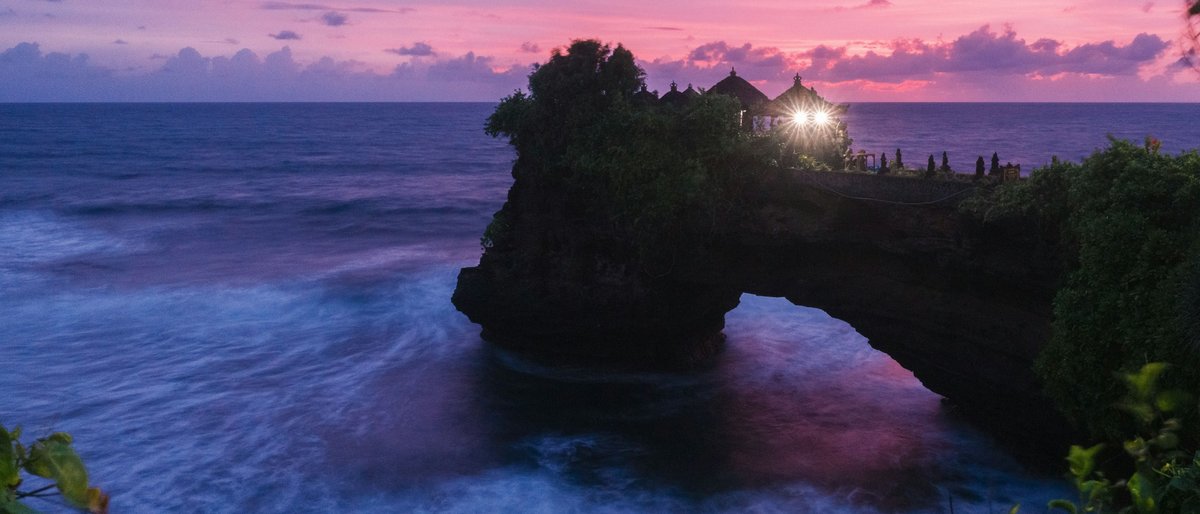
The well-known sea temple itself charges an entrance fee for the main complex, but the coastline around it is accessible and the view of the temple silhouetted against the sunset is visible from multiple free vantage points along the surrounding cliffs. The spray from waves hitting the rocks catches the late light. It's one of those scenes that actually lives up to the photographs. Gets very crowded around golden hour — arriving a bit early helps.
Tabananviewpoint, sunset -
Walk the Canggu Shortcut Rice Paddies
Between Batu Bolong and Berawa in Canggu, a web of narrow paths cuts through rice paddies that are still actively farmed despite the cafes and villas crowding in from all sides. The contrast is actually part of what makes it interesting — traditional irrigation channels running past modern construction. Egrets pick through the wet fields. The paths are uneven in places, so proper shoes help after rain.
Cangguwalking, rice paddies -
Watch the Surfers at Uluwatu Cliff
The limestone cliffs above Uluwatu's surf breaks offer a free view of some of the best surfing in Indonesia. The main breaks — Outside Corner, Racetrack, The Peak — are visible from the cliff edge near the warung area. You can sit for an hour watching experienced surfers navigate the reef break. The scale of the waves from above is deceptive until you spot the tiny figures on them.
Uluwatu / Bukitspectating, viewpoint -
Explore Sukawati Art Market
Older and less polished than Ubud's market, Sukawati has been a center for Balinese arts and crafts for decades. The upper floor has paintings, wood carvings, and ceremonial items at prices noticeably lower than the tourist areas. Even if you're not buying, seeing the range of traditional Balinese craft — the shadow puppets (wayang kulit), the stone carvings, the woven offerings baskets — is an education in itself. The air inside is warm and close, thick with the smell of dried palm leaf and paint.
Sukawatimarket, cultural experience -
Sanur Morning Fish Market
At the northern end of Sanur beach, fishermen bring in the morning catch around dawn. It's a working market, not a tourist attraction, and the pace is fast — buyers negotiating over tuna, mahi-mahi, squid laid out on tarps. The smell is strong, obviously. But if you're up early and want to see a side of Bali that has nothing to do with yoga retreats, this is it. The light at that hour, coming across the water, is beautiful in a raw sort of way.
Sanurmarket, local experience -
Cycle or Walk the Kedewatan to Keliki Route
North of Ubud, the road from Kedewatan through Payangan toward Keliki passes through deep river valleys and traditional villages that see relatively few visitors. The route is hilly — bring water and expect some steep sections. The reward is the quiet and the views: terraced hillsides, distant volcanoes when the clouds cooperate, and village temples with elaborate carved gates. No entrance fees anywhere along the way.
North Ubudwalking, cycling, rural exploration
Free events
-
Ogoh-Ogoh Parade (Nyepi Eve)
Annually, the eve of Nyepi (usually March or April, date varies by Saka calendar)The night before Nyepi — Balinese New Year, based on the Saka calendar — villages across the island parade enormous papier-mâché demon figures called ogoh-ogoh through the streets. The craftsmanship ranges from crude to impressive. Young men carry them on bamboo platforms, spinning and shaking them at intersections while gamelan orchestras play. The energy is chaotic and joyful. Each banjar builds its own, so the style and quality vary wildly from neighborhood to neighborhood. Completely free to watch from the roadside.
Island-wide, every village and neighborhood -
Galungan and Kuningan Street Decorations
Every 210 days per the Balinese Pawukon calendar (roughly twice per Western calendar year)During the Galungan festival cycle, every household and temple erects tall curved bamboo poles called penjor along the roadside, decorated with woven palm leaf, fruit, and offerings. The visual effect of driving down a road lined with hundreds of penjor is striking — they arch overhead like a natural cathedral. Kuningan, ten days after Galungan, marks the end of the cycle. The celebrations happen in family compounds and temples, but the penjor displays are public and visible everywhere.
Island-wide -
Full Moon (Purnama) Temple Ceremonies
Monthly, on the full moon (Purnama)On every full moon, Balinese Hindu temples hold special prayer ceremonies. Pura Jagatnatha in Denpasar is accessible — visitors can observe respectfully from the outer courtyard, properly dressed with sarong and sash. The ceremonies involve offerings, incense, holy water blessings, and gamelan music. The atmosphere after dark, with the temple lit by oil lamps and the sound of chanting carrying across the courtyard, tends to stay with you.
Temples island-wide; Pura Jagatnatha in Denpasar is visitor-accessible -
Ubud Gallery Exhibition Openings
Varies; roughly monthly at major galleries, more frequently during high season (July-August, December)Several galleries along Jalan Raya Ubud and Jalan Hanoman hold free opening nights for new exhibitions, typically with refreshments. Tonyraka Art Gallery and Komaneka Gallery have been consistent about this. The Ubud art scene still has real depth — traditional Balinese painting, contemporary work, and everything between. Exhibition schedules aren't always posted far in advance; checking locally or asking at the Ubud tourist information office near the palace is the most reliable approach.
Ubud, primarily along Jalan Raya Ubud and Jalan Hanoman -
Odalan Temple Anniversary Ceremonies
Continuous cycle; each temple celebrates every 210 days (Pawukon calendar)Every temple in Bali celebrates its anniversary — odalan — on a 210-day cycle. With thousands of temples on the island, there's almost always one happening somewhere nearby. The ceremonies last several days, with processions, offerings, gamelan orchestras, and sometimes traditional dance. Visitors who are properly dressed and respectful are generally welcome to observe. Finding one is partly luck and partly asking around; your guesthouse or homestay host will usually know what's coming up locally.
Individual temples island-wide -
Kecak and Traditional Dance at Temple Ceremonies
During temple ceremonies (odalan) and major Balinese holy days; schedule variesWhile the ticketed Kecak performances at Uluwatu temple and elsewhere are well-known, traditional dance performances also occur as part of genuine temple ceremonies — and those are free. The quality can be extraordinary, performed not for tourists but as devotional practice. These happen during odalan celebrations and major holy days. To be fair, you won't always find one when you want one, and the timing can be unpredictable. But when you do catch one, the experience feels qualitatively different from the commercial shows.
Various temples, in villages around Ubud and Gianyar regency
Temple Etiquette: What to Know Before You Walk In
Bali's temples are active places of worship, not museums, and the etiquette matters. You'll need a sarong and sash (selendang) to enter any temple compound — many temples have loaners available at the entrance, but carrying your own is more reliable. You can pick one up at any market for very little. Women who are menstruating are traditionally asked not to enter temples; signs at the entrance will state this. Remove your shoes before stepping onto raised platforms. Don't stand higher than a priest or the offerings. Photograph respectfully — if a ceremony is happening, ask with a gesture before pointing a camera at people. Most Balinese are welcoming to respectful visitors, but you're entering their sacred space. Act accordingly. That said, don't be so worried about getting something wrong that you avoid temples entirely. People appreciate the effort, and a smile goes a long way if you're unsure about something.
The Donation Question: When Free Isn't Quite Free
Worth being straightforward about this: many nominally free sites in Bali involve some form of donation or fee. Temples might have a donation box. Rice terrace viewpoints often have someone asking for a 'voluntary' contribution. Parking attendants at beaches charge 2,000 to 5,000 rupiah for a scooter. None of these amounts are significant — we're talking pennies to maybe fifty cents — but they add up if you're visiting several places a day. The etiquette is that temple donations are voluntary, while parking fees are expected. For the rice terrace and viewpoint 'donations,' the situation tends to be a bit ambiguous. Some paths are public; others pass through private land where the landowner has set up a de facto toll. If someone asks, paying the small amount is the path of least friction. Budget maybe 20,000 to 50,000 rupiah a day — roughly one to three dollars — for these incidentals, and you won't be caught off guard.
Getting Around Bali Without Spending Much
Transport is often where budget plans fall apart in Bali, because public transit is limited. The Trans Sarbagita bus system connects Denpasar to some southern areas, and it's currently running at around 3,500 rupiah per ride, which is essentially free. But routes are limited and schedules can be unreliable. Walking works well within specific areas — Ubud's center, Sanur's promenade, the Seminyak-to-Canggu beach stretch. Between towns, though, you're looking at either renting a scooter (not free, but cheap) or relying on ride-hailing apps. Gojek and Grab are significantly cheaper than traditional taxis, though not free. The honest truth is that Bali isn't really set up for car-free budget travel the way, say, Bangkok or Tokyo are. Planning your free activities in geographic clusters — a Denpasar day, an Ubud day, a Bukit day — cuts transport costs more effectively than bouncing around the island.
Best Free Beach Circuit on the Bukit Peninsula
The Bukit Peninsula, the limestone headland at Bali's southern tip, has the island's most dramatic coastline. You can string together several free beaches in a single day if you have transport to the area. Start at Balangan — wide crescent of sand, good for morning light. Move south to Dreamland Beach (properly called New Kuta Beach), which sits in a cove with high cliff walls. Then Padang Padang for a swim in the sheltered cove. End at Suluban Beach near Uluwatu, where you descend through a cave opening to reach the sand — the rock formations alone are worth the steep stairs. Each beach has its own character. The sand color shifts from golden at Balangan to whiter at Padang Padang. The water temperature is warm but noticeably cooler than the north coast — the Indian Ocean swells bring deeper water to the surface. Bring reef shoes for the rockier entries and sun protection, because shade is scarce on most of these beaches.
FAQ
Are Bali's beaches really free to visit?
The beaches themselves are public land in Indonesia, so yes, access is free by law. What you'll encounter are parking fees — typically 2,000 to 5,000 rupiah for a motorbike, maybe 10,000 for a car. Some beaches, on the Bukit Peninsula, have access paths through private land where someone might ask for a small contribution. But the sand and water? That's free. Sunbed and umbrella rentals are separate — you can always just lay your own towel down.
Do I need to pay to enter temples in Bali?
It depends on the temple. Major tourist temples like Uluwatu, Besakih, and Tirta Empul charge entrance fees that can range from 30,000 to 50,000 rupiah or more for foreign visitors. However, thousands of smaller neighborhood temples, village temples, and city temples like Pura Jagatnatha in Denpasar are free to visit. You will need a sarong and sash regardless of whether the temple charges. Donations are appreciated but optional at free temples.
Is it safe to walk around Bali on foot?
Within towns and villages, generally yes. Bali has low rates of violent crime affecting visitors. The main hazard is traffic — sidewalks are inconsistent to nonexistent in many areas, and scooter traffic is dense. The Sanur promenade and Campuhan Ridge Walk are both pedestrian-only paths, which makes them pleasant. In rural areas, stray dogs can be a concern; Bali has had rabies cases, so avoid contact with unfamiliar animals. Walking at night on unlit roads requires caution simply because drivers may not see you.
When is the best time of year to visit Bali for free outdoor activities?
The dry season, roughly April through October, is most reliable for outdoor activities. Skies tend to be clearer, trails are less muddy, and the rice paddies cycle through their most photogenic stages. That said, the wet season from November through March has its own appeal — the landscape is at its greenest, waterfalls are at full force, and crowds thin out noticeably. Rain usually comes in heavy afternoon bursts rather than all-day drizzle, so mornings are often fine. Temple ceremonies and cultural events follow the Balinese calendar rather than Western seasons, so those happen year-round.
What should I wear when visiting free attractions in Bali?
For temples, a sarong and sash are non-negotiable — this applies to both men and women. Shoulders should be covered. Outside of temples, Bali is casual. Light, breathable clothing works for the heat and humidity. For rice paddy walks and beach trails, proper footwear matters more than most people expect; flip-flops on wet terrace paths are a recipe for a fall. A light rain jacket is worth carrying in wet season. Sun protection is essential — the equatorial sun here is strong even on overcast days.
Can I watch traditional Balinese dance performances for free?
The commercial dance performances at places like Ubud Palace and Uluwatu temple charge admission, currently around 80,000 to 150,000 rupiah. However, dance performances that happen as part of actual temple ceremonies are free to observe. These occur during odalan celebrations and major holy days. The catch is that you can't schedule them — they happen on the Balinese calendar and you need to ask locally about what's coming up. Your accommodation host is usually the best source. The ceremonial performances tend to feel more authentic, as they're performed as devotion rather than entertainment, though they may run late into the night.
Last verified by automated review (v1.7.1) on May 26, 2026. What is automated review?