Stay in Edinburgh in August
48 hotels in the Trip.com pool for Edinburgh, from US$22 a night.
Opens Trip.com on Fri 6 Aug to Sun 8 Aug 2027; change the dates there.
August in Edinburgh is, quite simply, the biggest cultural event on the planet. The city's population roughly doubles as the Edinburgh Festival Fringe, the Edinburgh International Festival, and the Royal Edinburgh Military Tattoo all collide across the same few weeks. Every church hall, every converted garage, every spare room with a door becomes a performance venue. The Old Town smells of fried food from pop-up stalls and sounds like a wall of competing buskers, comedians hawking flyers, and bagpipes drifting down from the Castle esplanade. Temperatures sit around 18.7°C (66°F) during the day, dropping to about 12.4°C (54°F) at night: pleasant enough, though you'll want layers because Edinburgh's wind has a way of making 15°C feel like 10.
Here's the trade-off you need to understand before booking: this is the single most rewarding month to visit Edinburgh, and also the most expensive, most crowded, and most logistically demanding. Hotel prices in the centre can hit three or four times their February rates. The Royal Mile becomes a slow shuffle of shoulder-to-shoulder foot traffic by mid-morning. Restaurants that normally seat walk-ins need reservations a week out. But the sheer density of things happening (thousands of shows across comedy, theatre, dance, music, spoken word) is unlike anything else in any city, anywhere. If you come prepared for the chaos and the cost, August delivers something no other month can touch.
That said, if you want to see Edinburgh the city rather than Edinburgh the festival, August is a poor choice. The local character gets buried under the event infrastructure. You might prefer June or September for a quieter sense of the place.
Why visit in August
- The Edinburgh Festival Fringe alone runs over 3,000 shows across 300-plus venues: you could see five shows a day for three weeks and barely scratch the surface
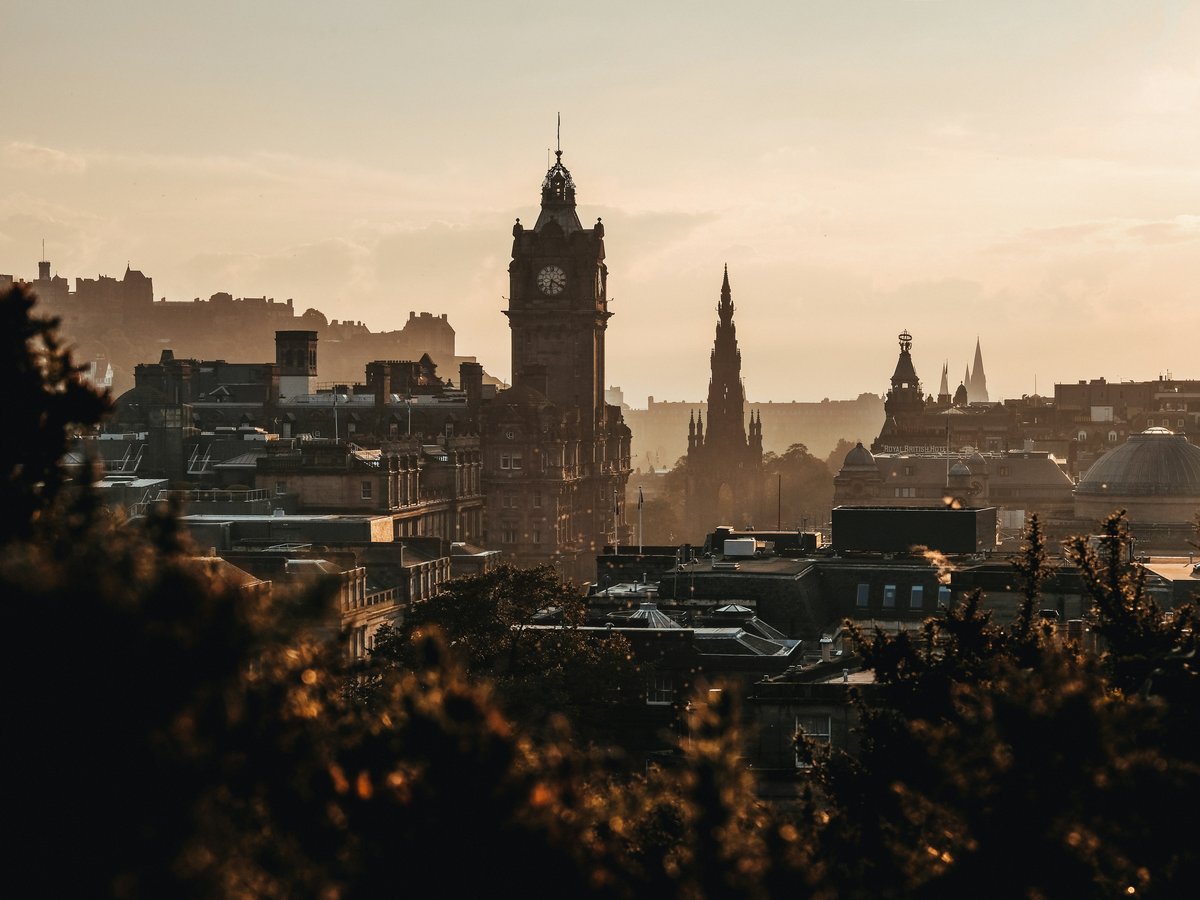
- Edinburgh's longest daylight hours, with the sun not setting until around 9pm, giving you warm golden-hour light on Calton Hill and Arthur's Seat well into the evening
- The Royal Edinburgh Military Tattoo on the Castle esplanade is a genuinely stirring spectacle: pipes, drums, and military precision against the floodlit castle backdrop
- Street performance quality on the Royal Mile reaches a level you won't see at any other time of year, and most of it is free
- Scottish summer produce peaks in August: expect properly ripe Scottish strawberries, raspberries, and fresh seafood from the East Coast boats
Worth knowing
- Accommodation prices in central Edinburgh can run 200-400% above the annual average, and availability within walking distance of the Old Town often sells out by May
- The Royal Mile between St Giles' Cathedral and the Tron Kirk becomes genuinely difficult to walk through between 11am and 7pm: the density of flyerers and foot traffic slows movement to a crawl
- Rain is still a regular companion, with around 12 rainy days and 70mm of rainfall: you'll likely get caught in at least a few showers during a week-long visit
- Dining reservations at popular spots in Leith and New Town need to be made well in advance; spontaneous dinner plans in the centre are difficult
Best for
Think twice if
August shares with July the title of Edinburgh's warmest month, though 'warm' is relative: you're still in Scotland. Daytime highs tend to hover around 18.7°C (66°F), and evenings drop to roughly 12.4°C (54°F). The humidity sits at about 77%, which you'll mostly notice as a kind of damp chill when the wind picks up or after a rain shower. Expect around 12 days with some rain over the month, totalling about 70mm: rarely torrential, more often a fine drizzle or a 20-minute burst that clears to broken cloud. The wind off the Firth of Forth can be surprisingly cutting, even on sunny afternoons. You'll get some genuinely lovely days (clear skies, t-shirt weather in sheltered spots) but betting on an entire dry week would be optimistic.
Year-round climate
Averages from the last 5 years.
| Month | Avg high (°C) | Avg low (°C) | Rainfall (mm) |
|---|---|---|---|
| Jan | 6 | 2 | 74 |
| Feb | 8 | 3 | 74 |
| Mar | 10 | 4 | 69 |
| Apr | 11 | 4 | 60 |
| May | 15 | 8 | 91 |
| Jun | 18 | 11 | 58 |
| Jul | 19 | 13 | 91 |
| Aug | 19 | 12 | 70 |
| Sep | 17 | 11 | 86 |
| Oct | 13 | 9 | 123 |
| Nov | 10 | 5 | 89 |
| Dec | 8 | 4 | 108 |
Holidays and festivals in August
Public holidays
- Summer Bank Holiday(Summer Bank Holiday)30 August 2027
Headline events
Edinburgh Festival Fringe
Throughout August, typically starting the first weekend and running to the last Monday (roughly August 2-25)
The world's largest open-access arts festival, with over 3,000 shows spanning comedy, theatre, dance, music, circus, and spoken word across 300-plus venues. Performers range from unknown first-timers to internationally touring acts testing new material. The Fringe essentially takes over the entire city: every pub back room, church basement, and lecture hall becomes a stage.
Edinburgh International Festival
Mid-August to early September (roughly August 8 to August 31)
The curated counterpart to the Fringe's open-access chaos. World-class orchestras, opera companies, theatre troupes, and dance ensembles perform in Edinburgh's major venues. This is the original festival: it launched in 1947, and the Fringe grew up around it as an unofficial alternative. The programming tends toward high culture, but the quality ceiling is extraordinary.
Royal Edinburgh Military Tattoo
Throughout August, nightly performances (roughly August 1-23)
A military and cultural performance staged nightly on the esplanade of Edinburgh Castle, featuring military bands, pipe-and-drum corps, and cultural performers from around the world. The castle floodlit against the night sky creates a backdrop that's hard to overstate. Tickets regularly sell out months in advance: this is one of the hardest bookings in Edinburgh's August calendar.
Best things to do in August
Catch Free Fringe Shows on the Royal Mile
entertainmentThe Royal Mile transforms into a continuous open-air performance corridor throughout August. Comedians, musicians, acrobats, and theatre troupes perform directly on the street, passing a hat at the end. The quality varies wildly: that's half the charm. You might stumble onto someone who goes on to sell out arenas, or someone who really shouldn't have left their day job.
The street performance ecosystem only exists at this density during the Fringe: the rest of the year the Mile is lively but nothing close to this.Booking tipNo booking needed. Just walk the Mile between noon and early evening and stop where the crowd gathers.
Hike Arthur's Seat at Sunset
outdoorThe 251-metre volcanic peak in Holyrood Park gives you a full panorama of the city, the Firth of Forth, and the Pentland Hills. In August, sunset doesn't come until around 9pm, so you can hike after a full day of festival-going and still catch golden light across the whole city. The air at the top tends to be noticeably cooler and windier than down in the streets.
August's late sunsets mean you can summit in warm evening light rather than in winter darkness, and the long twilight afterwards is worth lingering for.Booking tipFree and open. Start from the Holyrood Palace entrance. Allow about 45 minutes up and 30 down.
Edinburgh International Book Festival
cultureOne of the world's largest public book festivals, hosted in Charlotte Square Gardens. Authors from across the globe give talks, readings, and signings over roughly two weeks. The tented village has a particular atmosphere: the smell of canvas and coffee, the hum of literary conversation between sessions. It tends to draw a slightly different crowd than the Fringe comedy scene.
The Book Festival runs concurrently with the other August festivals, and its programming is specifically curated for this window.Booking tipPopular author events sell out well in advance. Check the programme when it's released in June and book early for headline names.
Explore the Pleasance Courtyard After Dark
nightlifeThe Pleasance becomes the Fringe's unofficial social hub after about 10pm: performers unwinding after shows, audiences comparing notes, impromptu collaborations happening in corners. The courtyard has a sticky-floored, buzzing energy that feels like the festival's living room. You'll hear laughter spilling from the late-night show tents mixed with the clink of plastic pint glasses.
The Pleasance only operates as this kind of gathering space during August's Fringe season: it reverts to university buildings the rest of the year.Booking tipNo booking for the courtyard itself. Late-night shows in the venue tents are worth grabbing tickets for earlier in the day.
Day Trip to the Scottish Borders
day_tripIf the festival crowds become too much (and they might) the Scottish Borders are less than an hour south by car. Rolling green hills, ruined abbeys at Melrose and Jedburgh, and quiet market towns where the pace drops to something close to meditative. The contrast with Edinburgh's August frenzy is striking.
August weather gives you the best chance of dry conditions for walking the Borders, and the escape from festival intensity makes the quiet feel earned.Booking tipA car gives you the most flexibility. Bus services run but are infrequent between smaller towns.
Visit the Scottish National Gallery
cultureThe gallery sits on the Mound between the Old Town and New Town, and in August it offers a quiet counterpoint to the chaos outside. The collection spans Raeburn, Ramsay, and the Scottish Colourists alongside major European works. The building's cool, still interior is a genuine relief when you've been in festival crowds all morning.
The gallery often runs special summer exhibitions timed to coincide with festival season, drawing on loans that aren't available year-round.Booking tipThe permanent collection is free. Special exhibitions may require timed tickets: check ahead during festival weeks.
Evening Walk Through Dean Village
outdoorTucked into the Water of Leith valley just minutes from Princes Street, Dean Village feels like it belongs in a different century. Stone buildings, a millstream, and arched footbridges: all weirdly quiet even during peak festival chaos above. The light through the tree canopy in the early evening has a green, filtered quality that photographers love.
Long August evenings mean you can walk here in soft light well after dinner, and the contrast with the festival noise just above is part of the experience.Booking tipFree and open. Enter from the bridge on Belford Road and follow the Water of Leith Walkway in either direction.
See a Show at a Tiny Fringe Venue
entertainmentThe Fringe's real magic isn't in the big venues: it's in the 50-seat rooms above pubs, the converted storage cupboards, the shows where the audience outnumbers the cast by three to one. The intimacy of a one-person show performed an arm's length from your face, in a room that smells faintly of last night's show and today's damp coats, is something no arena can replicate.
These micro-venues only exist during the Fringe. The rest of the year they're stock rooms, classrooms, and closets.Booking tipBrowse the Fringe programme for venues with fewer than 100 seats. Shows in the first week tend to have more availability than the final weekend.
What to eat in August
In season: fruit
Scottish Raspberries
Perthshire and Angus raspberries hit their absolute peak in August: intensely sweet with a tartness you won't find in supermarket imports. Look for them at farmers' markets and in restaurant desserts across the city.
Scottish Strawberries
Late-season Scottish strawberries tend to be smaller and more flavourful than their English counterparts: the cooler climate concentrates the sweetness. August is the tail end of the season, so grab them while they last.
On menus now
Cullen Skink
This thick, creamy smoked haddock soup is available year-round, but August's festival pop-ups and outdoor food stalls serve it as a warming counterpoint to Edinburgh's damp evenings. The smoky fish flavour cuts through the cream in a way that feels distinctly Scottish.
Cranachan
Scotland's signature summer dessert: layers of whipped cream, toasted oatmeal, whisky, and fresh raspberries. August is when it's made with genuinely seasonal fruit rather than imported, and you'll find versions on menus across the city during festival season.
Street food peaks
Haggis from Festival Street Vendors
Festival food stalls serve haggis in forms you won't find the rest of the year: stuffed into toasties, piled on chips, wrapped in battered parcels. The smell of frying haggis mixed with onions is one of Edinburgh's signature August scents.
In markets
Fresh East Coast Seafood
Langoustines, crab, and lobster from the boats landing along the Firth of Forth are at their best through the summer months. Leith's seafood restaurants lean heavily into the local catch right now.
Regular events in August
Edinburgh Art FestivalFree
A city-wide visual arts festival running alongside the performing arts festivals. Galleries, museums, and pop-up exhibition spaces across Edinburgh host contemporary and historical art shows, many of them free. It tends to fly under the radar compared to the Fringe, but the quality of the exhibitions is consistently strong.
Throughout August, roughly aligned with the Fringe datesEdinburgh MelaFree
A multicultural festival in Leith Links celebrating South Asian and global cultures through music, dance, food, and arts. The atmosphere is markedly different from the Fringe: more family-oriented, more relaxed, and with some of the best festival food you'll find anywhere in the city during August.
Late August or early September weekendFireworks Concert (Edinburgh International Festival Finale)Free
The International Festival closes with a large-scale fireworks display synchronised to live orchestral music, fired from Edinburgh Castle. The best viewing spots are along Princes Street Gardens and Calton Hill. The sound of a full orchestra echoing off the castle rock while fireworks burst overhead is one of Edinburgh's most dramatic annual moments.
Final Saturday of the International Festival (late August)Royal Highland Show AfterglowFree
While the show itself runs in late June, August sees agricultural produce and artisan food makers from the Highlands still circulating through Edinburgh's markets and pop-up food events. Scottish cheeses, cured meats, and small-batch spirits appear at stalls across the city throughout the month.
Throughout August at various marketsBest places this August
Calton Hill
viewpointThe hill at the east end of Princes Street gives you one of Edinburgh's best panoramas: the castle, Arthur's Seat, the Firth of Forth, and the New Town grid all visible from the top. In August, the late-evening light makes this a particularly good sunset spot, and you'll likely share it with other festival-goers decompressing after the day's shows.
New TownGrassmarket
historic squareThis broad square beneath the castle has a complicated history (it was Edinburgh's execution site for centuries) but in August it becomes one of the festival's liveliest outdoor gathering spots. Pubs with outdoor seating fill up early, street performers set up at the edges, and the castle looming overhead gives the whole scene a slightly theatrical quality.
Old TownLeith
neighborhoodEdinburgh's port district, about two miles north of the centre, has its own distinct personality: grittier, more residential, and increasingly home to the city's best restaurants and bars. During August, Leith offers a noticeable step down in crowd density compared to the Old Town. The Shore area along the Water of Leith has a quiet, canalside feel that's a genuine contrast to the Royal Mile.
LeithThe Meadows
parkThis large, flat park south of the Old Town becomes an informal overflow space during August: picnics, frisbee, and festival-goers reading through the programme to plan their evening. On a sunny August afternoon, the grass is covered with people, and the distant sound of a Fringe show drifting from a nearby venue is part of the ambient soundtrack.
SouthsideStockbridge
neighborhoodA village-within-the-city just north of the New Town, with independent shops, cafés, and a popular Sunday farmers' market. The Water of Leith runs through it, and the walkway along the river is one of the most peaceful routes in Edinburgh, even in August, you'll find genuine quiet here. The market stalls sell Scottish produce, baked goods, and street food.
StockbridgeEdinburgh Castle
landmarkYou can see it from half the city, but visiting the interior is worth the time: particularly the view from the ramparts looking down onto the festival-packed streets below. The castle's position on its volcanic plug means you get a bird's-eye perspective on the organised chaos of August. The Great Hall and the Scottish Crown Jewels are the standout interiors.
Old TownPortobello Beach
beachEdinburgh's seaside neighbourhood, about three miles east of the centre. The sandy beach and promenade feel oddly incongruous with the rest of Edinburgh's granite severity. On a warm August day (and there will be a few) locals flock here, and the beach has a slightly retro British seaside quality: ice cream vans, dogs, families, and the occasional hardy swimmer.
PortobelloSurgeons' Hall Museums
museumA genuinely unusual museum on Nicolson Street showcasing the history of surgery and pathology. The collections include anatomical specimens, surgical instruments, and dental history exhibits that range from fascinating to unsettling. It tends to be quieter than the main tourist museums, even during August.
Old Town
Your packing checklist
Tick items off as you pack. Your progress saves in this browser.
All packed — have a great trip.
Insider tips
The first few days of the Fringe tend to be significantly less crowded than the middle and final weekends: performers are still settling in, word-of-mouth hasn't kicked in yet, and you'll have an easier time getting into popular shows without advance booking.
The Half Price Hut on the Mound sells discounted same-day tickets for Fringe and International Festival shows. The queue forms early, but if you're flexible about what you see, it's the best way to catch shows at reduced rates.
Fringe reviews start appearing in The Scotsman and on dedicated review sites within the first few days: use four- and five-star reviews to filter the overwhelming programme down to something manageable, but don't ignore unreviewed shows entirely. Some of the best experiences come from taking a chance on an unknown.
If the Royal Mile crowds are grinding you down, duck into one of the closes: the narrow alleyways running off the Mile. Many of them open into quiet courtyards that feel miles from the chaos just a few steps away.
Leith Walk is a long, straight road connecting the centre to Leith, and it's lined with restaurants, cafés, and pubs that don't inflate their prices for the festival the way Old Town establishments sometimes do.
The festival atmosphere shifts noticeably after about 10pm: the family-friendly daytime acts give way to late-night comedy, cabaret, and experimental shows. If you only experience daytime Edinburgh in August, you're missing a significant dimension of the festival.
Avoid these mistakes
- Trying to book accommodation in May or June for an August visit: by then, anything well-located and reasonably priced is likely gone. Edinburgh regulars book their festival accommodation in January or February, sometimes as soon as the previous year's festival ends.
- Attempting to plan a rigid daily itinerary: the Fringe is inherently chaotic, shows get cancelled or rescheduled, and the best experiences often come from spontaneous choices. Build in flexibility rather than scheduling every hour.
- Ignoring the International Festival in favour of the Fringe: the Fringe gets more media attention, but the International Festival's curated programme often features world-class performances that justify the trip on their own.
- Staying exclusively in the Old Town: the density of festivals makes it tempting, but you'll pay a significant premium and the noise can make sleeping difficult. New Town, Stockbridge, and Leith all offer better value and quieter nights, with easy access to the festival zones.
- Wearing brand-new shoes: this is a city of hills, stairs, and cobblestones, and you'll walk far more than you expect. Break in your shoes before you arrive or you'll regret it by day two.
Practical tips for August
Book accommodation and any must-see shows as early as possible: popular Fringe shows and Military Tattoo tickets sell out months ahead, and hotel availability in central Edinburgh shrinks fast after the new year. Travel by bus or tram within the city rather than driving; parking near the centre during August ranges from difficult to impossible, and many streets close to traffic for festival use. The Lothian Buses day ticket offers unlimited travel and covers the route between Leith, the centre, and Portobello. Carry cash as well as cards: smaller Fringe venues and street food stalls don't always accept contactless payment, particularly the pop-up operations that only exist during August. If you're flying in, Edinburgh Airport is well connected to the city centre by tram, and during August the tram tends to be more reliable than a taxi stuck in festival traffic. Plan your meals: popular restaurants need reservations a week or more out during the festival, and walking into a centre restaurant at 7pm hoping for a table is a gamble you'll usually lose.
FAQ
Is Edinburgh worth visiting in August if I'm not interested in the festivals?
Honestly, probably not, or at least, August wouldn't be your best choice. The festivals dominate the city so thoroughly that avoiding them is essentially impossible. Prices are at their annual peak, crowds are at their densest, and the city's normal rhythm is completely disrupted. If you want Edinburgh's history, architecture, and atmosphere without the festival overlay, June or September offer warm weather, long days, and a fraction of the crowds and cost.
How far in advance should I book accommodation for August in Edinburgh?
As early as you can. Serious festival-goers book in January or February for the following August. By April or May, well-located places at reasonable rates are largely taken. If you're booking late, look at areas like Leith, Stockbridge, or even across the Forth Bridge in South Queensferry: all are reachable by public transport and considerably cheaper than the Old Town or New Town.
Can I enjoy the Edinburgh Fringe on a limited budget?
Yes, but it takes planning. Hundreds of Fringe shows are free: particularly street performances on the Royal Mile and shows listed in the Free Fringe programme, where you pay what you think the show was worth at the end. The Half Price Hut on the Mound sells discounted same-day tickets. Eating away from the Royal Mile (particularly along Leith Walk) keeps food costs down. The biggest budget challenge is accommodation, which is where most of the money goes during August.
What's the weather like in Edinburgh in August?
Unpredictable, which is the honest answer. You might get stretches of sunshine where it genuinely feels like summer: warm enough for a t-shirt in sheltered spots. But you might also get days of drizzle and a biting wind that makes you reach for a fleece. Average highs sit around 18-19°C, but that number disguises a wide range. Pack for everything from mild sunshine to cold rain, and you won't be caught out.
Is Edinburgh walkable during the August festivals?
The city is very walkable in terms of distances: most festival venues are within a 30-minute walk of each other. The challenge is speed: the Old Town becomes extremely congested, particularly the Royal Mile, and what's normally a 10-minute walk can take three times as long. The hills and cobblestones add physical effort. Comfortable shoes matter more in August than any other month, and budgeting extra time between shows is essential.
Should I buy Fringe tickets in advance or just turn up?
Both strategies have merits. Big-name comedians and shows with strong advance reviews will sell out, so book those ahead. But a huge part of the Fringe experience is spontaneity: picking a show based on a flyer someone handed you, ducking into a venue because the queue looked interesting, or following a recommendation from someone you met at a bar. A mix of pre-booked headline shows and day-of discoveries tends to work best.
Things to Do in Edinburgh in August
 Free cancellation
 The World Famous Underground Ghost Tour
City tour: 1.2 hours, free cancellation.
via Viator Free cancellation
 Loch Ness, Scottish Highlands, Glencoe and Pitlochry Tour
Day trip: 12.5 hours, free cancellation.
via Viator Free cancellation
 Edinburgh: Loch Ness, Glencoe and The Highlands
Day trip: 12.5 hours, free cancellation.
via Viator Free cancellation
 Loch Ness & Highlands Small-Group Tour from Edinburgh with Cruise
Day trip: 12 hours, free cancellation.
via Viator Free cancellation
 Edinburgh: Glenfinnan Viaduct, Glencoe & Fort William
Day trip: 12 hours, free cancellation.
via Viator Free cancellation
 1 Day Loch Ness, Glen Coe & the Scottish Highlands from Edinburgh
Day trip: 12 hours, free cancellation.
via ViatorFind a flight to Edinburgh
Live fares to Edinburgh appear here once cookies are accepted.
Last verified by automated review (v1.7.2) on . What is automated review?