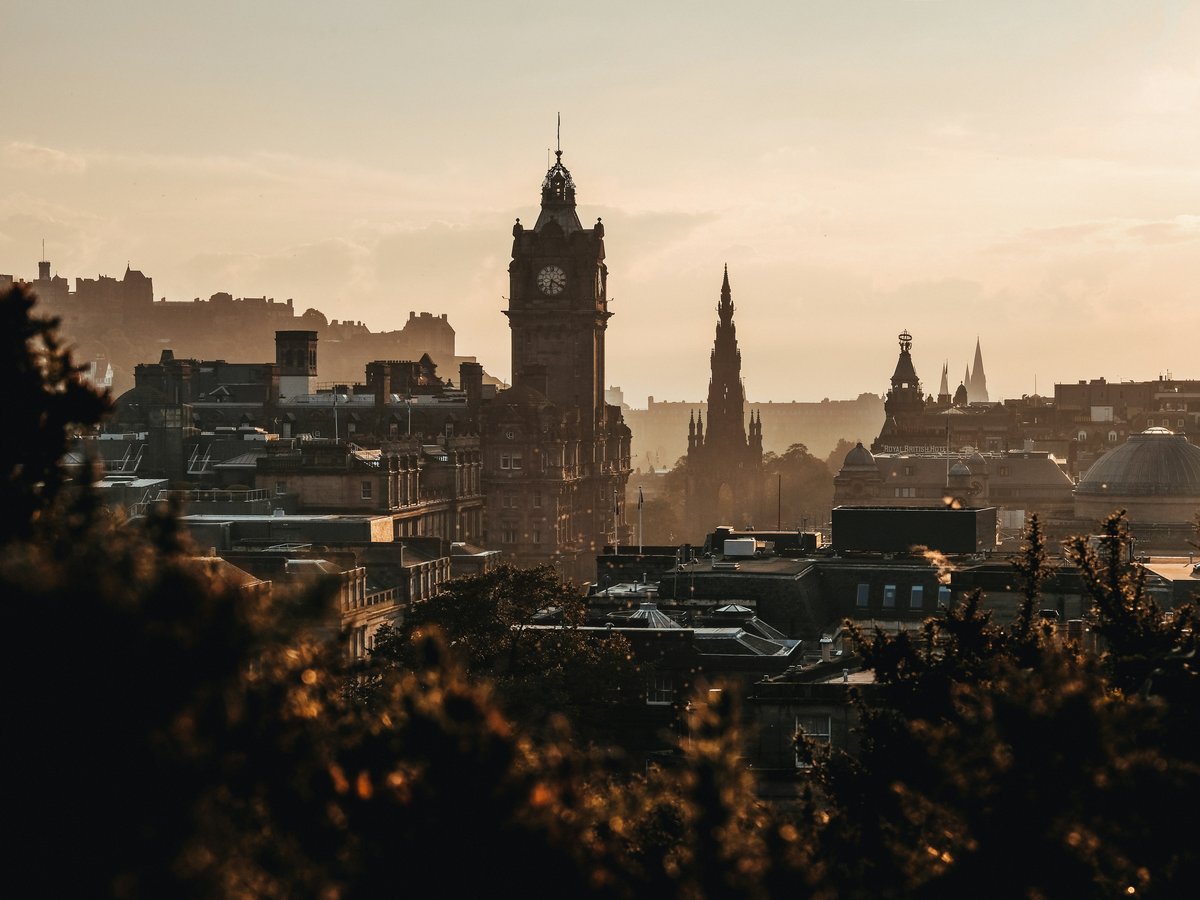
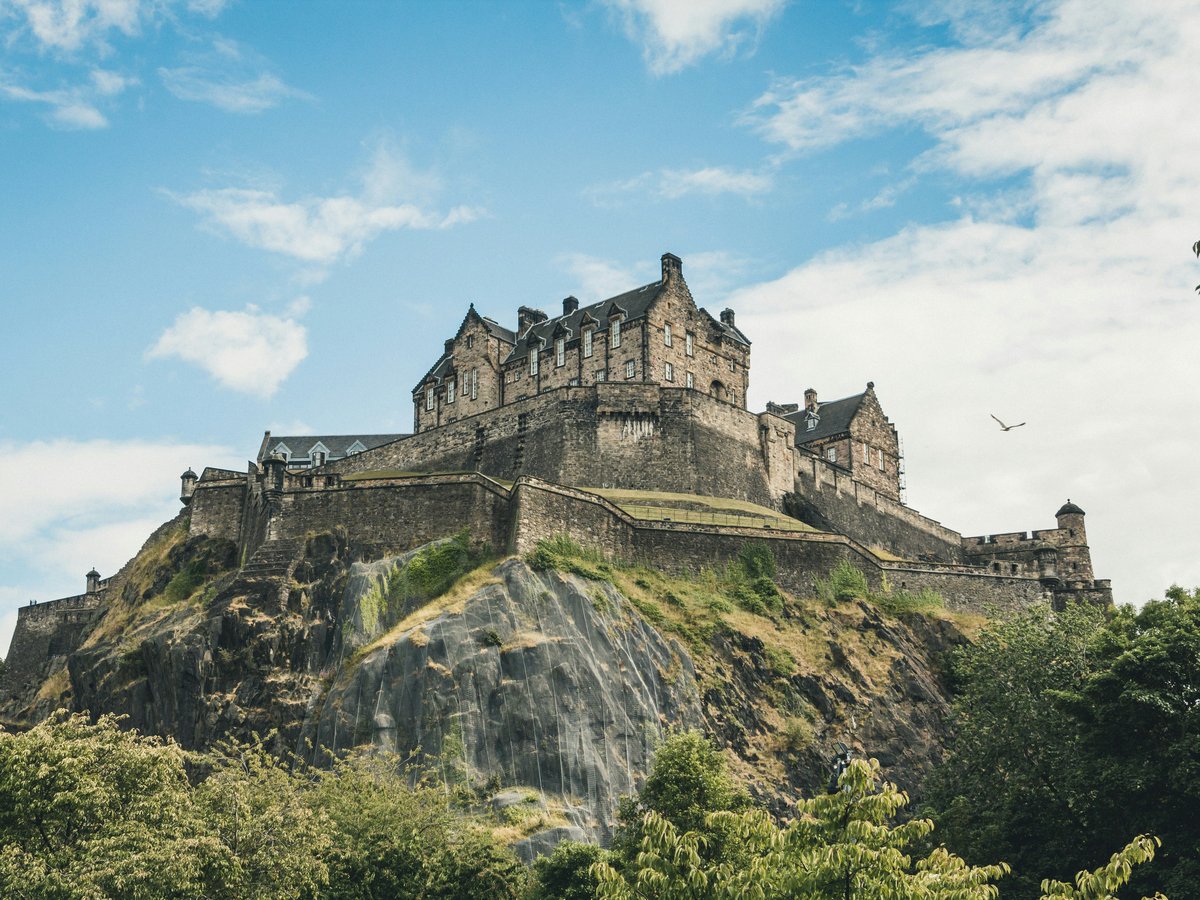
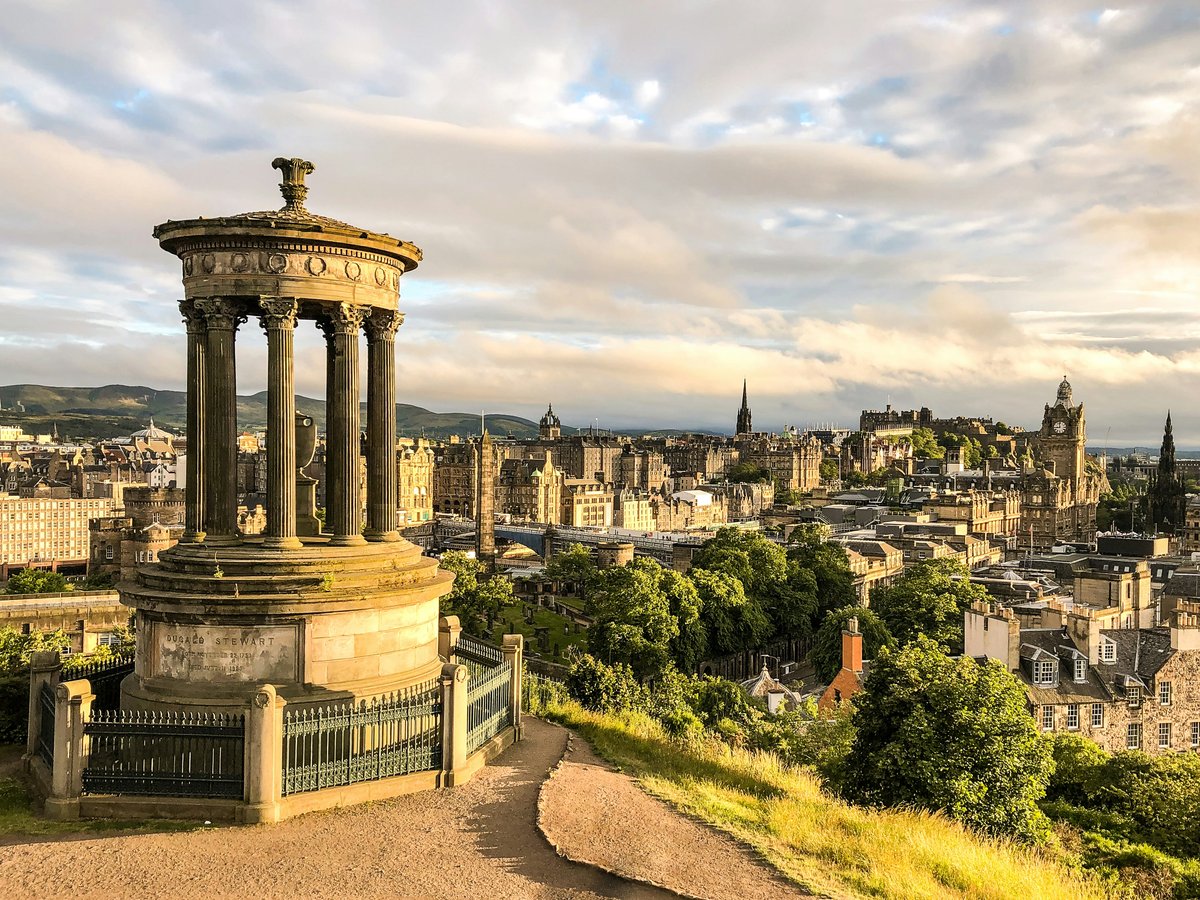
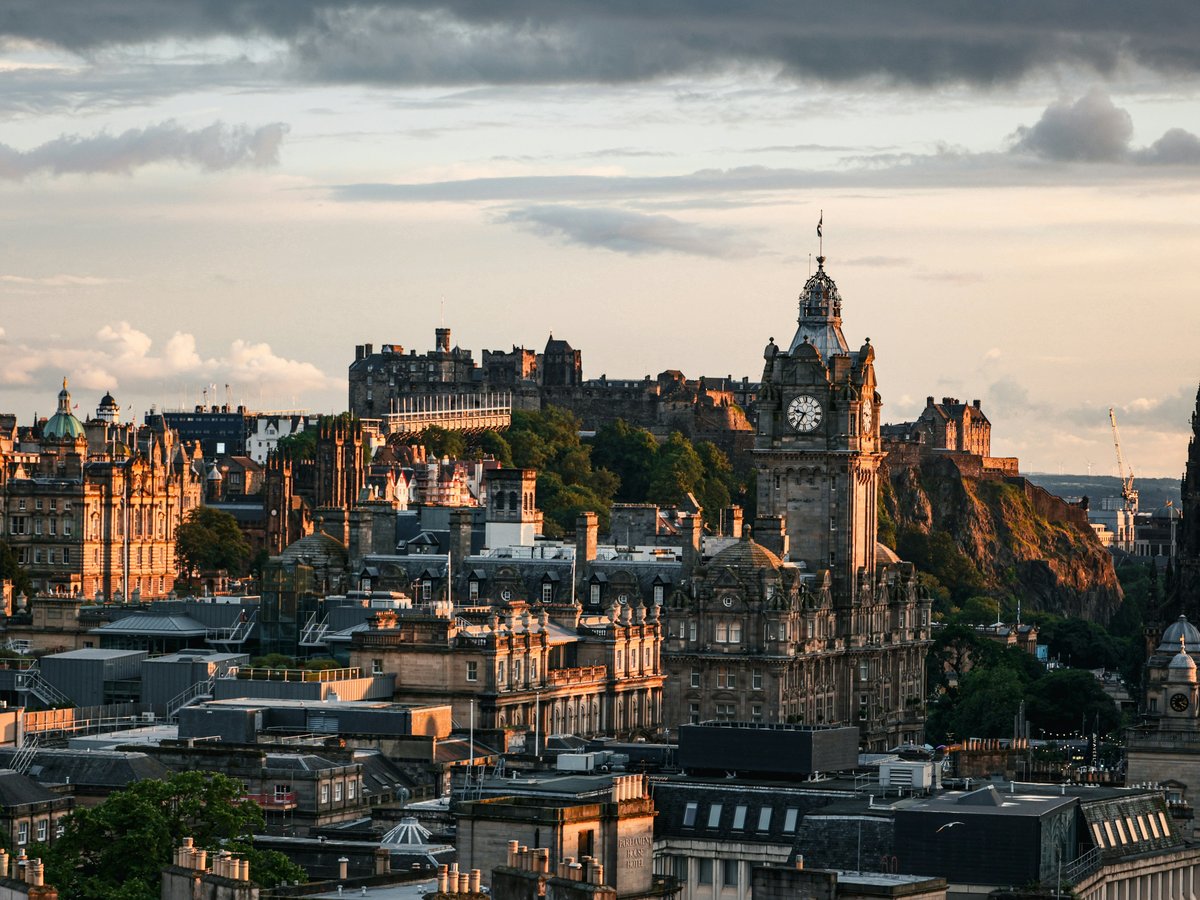
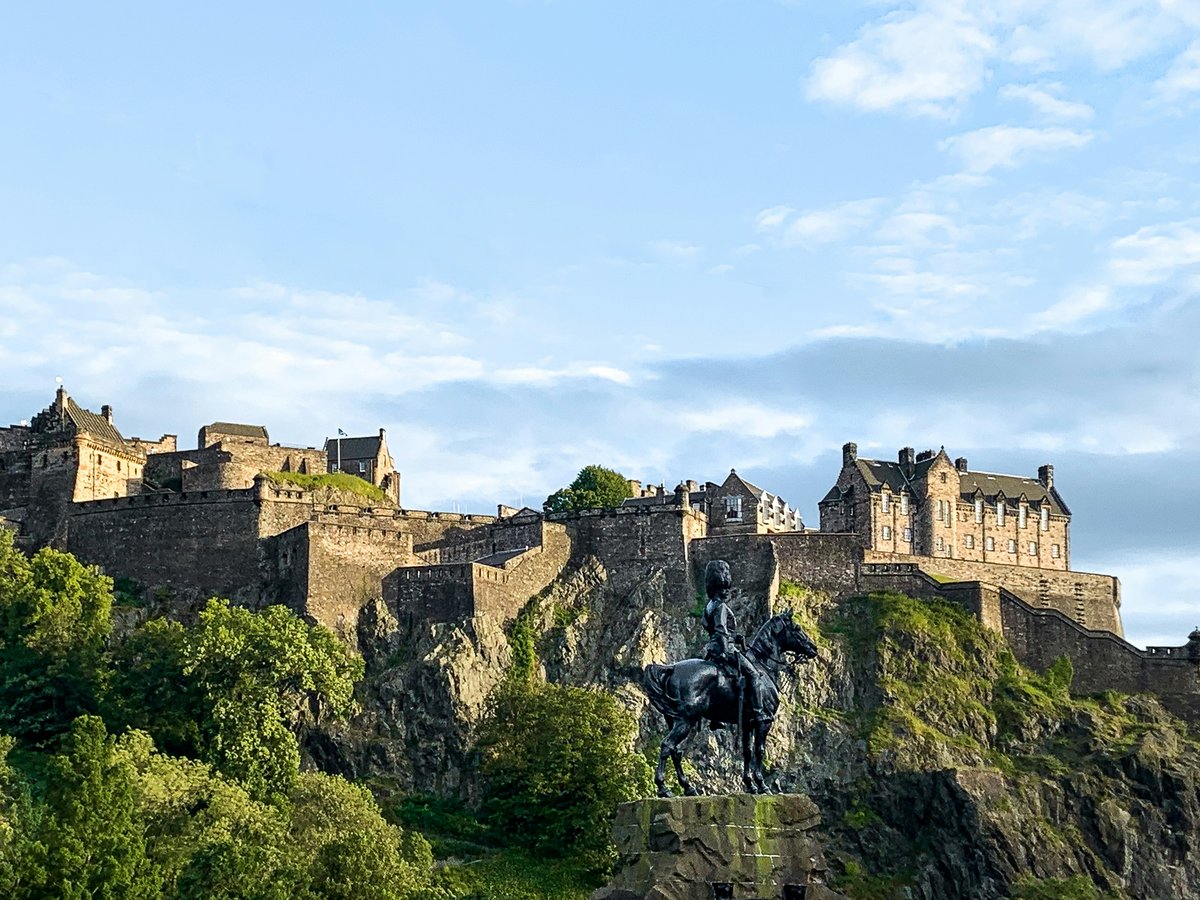
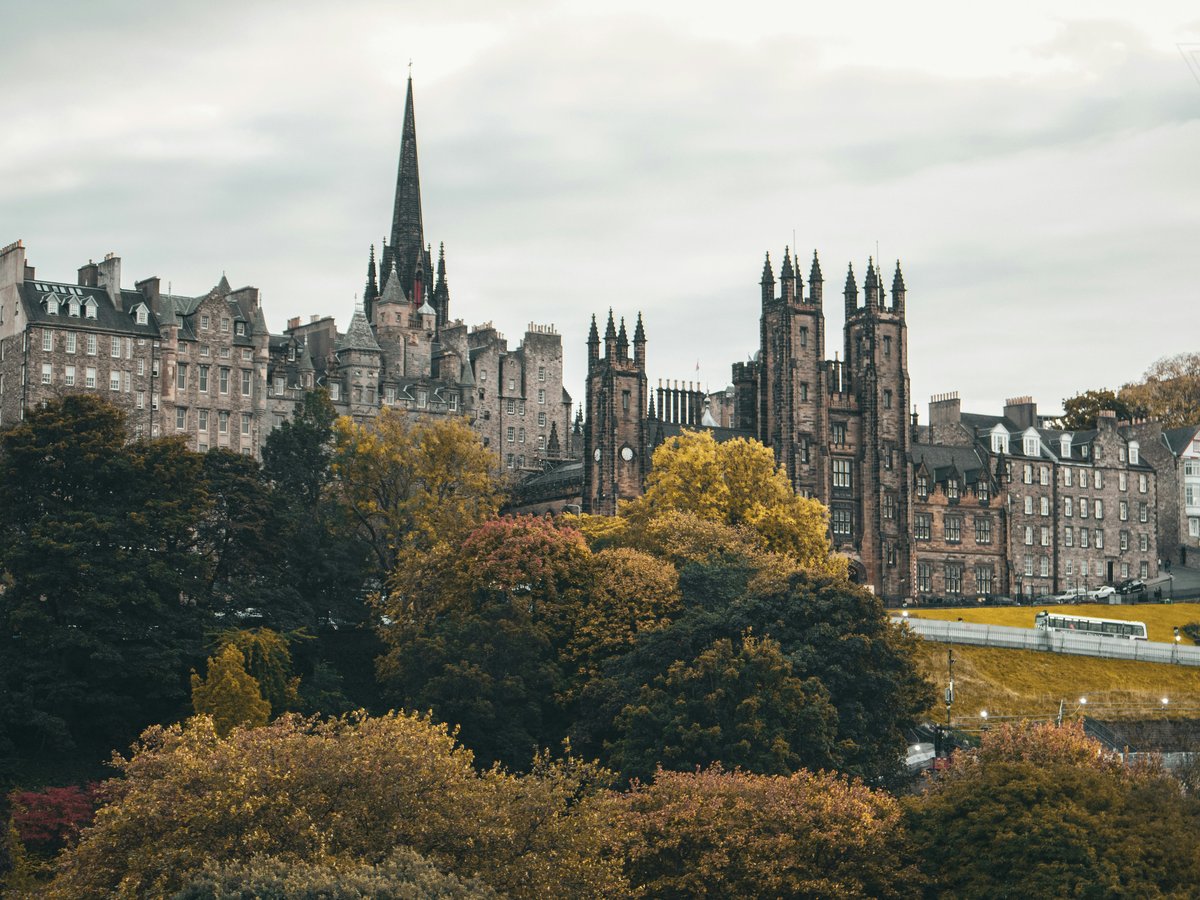
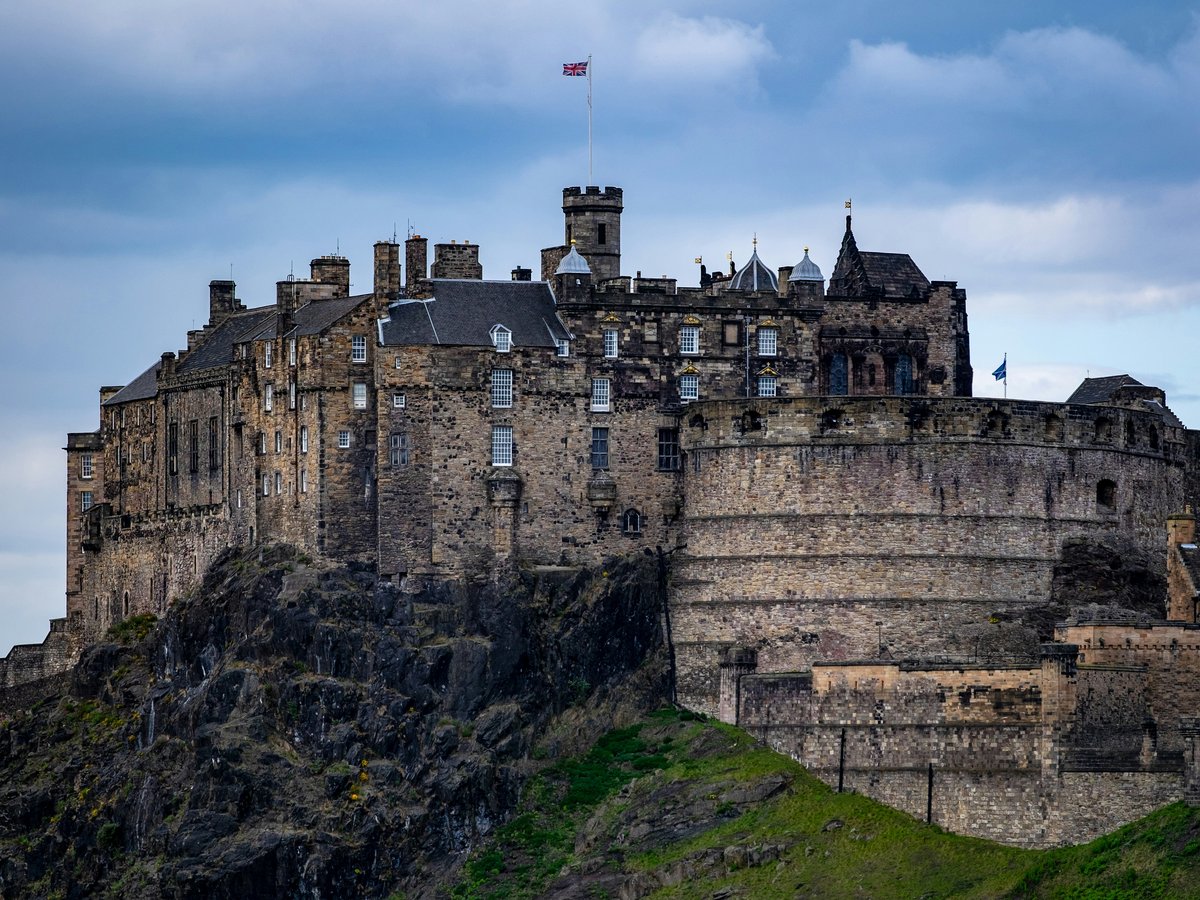
Edinburgh is built on the stumps of extinct volcanoes, and you feel this immediately: the city tilts and climbs in every direction, with stone staircases cutting between levels and streets that dead-end at sheer drops with views across the Firth of Forth. Castle Rock, a 350-million-year-old volcanic plug, anchors the western end of the Old Town, and from its battlements you can see clear to the Pentland Hills on a day when the haar (the cold sea fog that rolls in from the North Sea without warning) hasn't swallowed everything below the spires. The Old Town and the Georgian New Town sit side by side but feel like different centuries, which they are: the medieval closes of the Royal Mile, narrow passageways that plunge downhill between tenement buildings, give way within a ten-minute walk to the wide, rational grid of George Street and Queen Street, where Edinburgh's eighteenth-century planners imposed Enlightenment order on the landscape. Most first-time visitors stay along this spine, but the city's character lives in the neighbourhoods radiating outward: Stockbridge, with its Sunday market and the Water of Leith pathway running through it like a secret corridor; Bruntsfield, where the Links are genuinely used for pitch-and-putt on summer evenings; Leith, the old port two miles north, where the restaurant scene now rivals the city centre's. A typical day here involves more elevation change than you expect and more weather than you planned for; locals dress in layers year-round and treat horizontal rain as background noise. The population of roughly 527,000 swells enormously every August when the Festival (really several overlapping festivals) takes over every church hall, car park, and spare room in the city. But Edinburgh outside August is the better introduction: quieter, colder, the stone buildings darker against low skies, and the city more clearly itself.
Edinburgh in photos
Edinburgh right now
Answers about Edinburgh
-
Airport to city
Take the Edinburgh Tram from Edinburgh Airport (EDI) directly to the city centre: £7.50 ($10), 35 minutes, every 7-10 minutes from 6:15am to 11:30pm. It runs on its own tracks so traffic doesn't matter. After hours, a taxi to central Edinburgh costs £25-35 ($34-47). The Airlink 100 bus is cheaper at £4.50 but sits in traffic on the A8.
Read the full answer → -
Best time to visit
Book May or September: both months bring highs of roughly 15 to 17°C, long evenings, and hotel rates well below the August festival peak. Skip August unless the Edinburgh Festival Fringe is your reason for coming, because rooms near the Royal Mile sell out and prices climb steeply. December suits Hogmanay fans willing to trade daylight for fireworks over the castle.
Read the full answer → -
Cost per day
Edinburgh runs £40-50/day ($54-67) on a tight budget, assuming a hostel dorm in the Cowgate area, supermarket meal deals, and walking the compact city centre. Midrange sits at £95-110 ($128-148) with a private room and one sit-down dinner. The gap between tiers comes down to accommodation and whether you eat at student-area curry spots or Royal Mile tourist restaurants.
Read the full answer → -
Cultural etiquette
Edinburgh runs on understatement: locals consider boasting worse than rudeness. A simple 'hiya' or 'alright?' works as a greeting, no handshake needed. Tipping is 10% at sit-down restaurants but never at pubs. Queue-jumping will get you frozen out faster than any other social mistake you could make.
Read the full answer → -
Best day trips
North Berwick over St Andrews for a single day. A 33-minute ScotRail train from Waverley drops you at a harbour town with Bass Rock gannet colonies, crab rolls on the waterfront, and trains running until 11pm. St Andrews works but needs an early bus: realistic for couples who commit to a 7:30am departure.
Read the full answer → -
Digital nomads
Edinburgh scores 6.2/10 for digital-nomad suitability (sourced from TTDI's editorial rubric). Fibre runs 80-300 Mbps in most residential flats, coworking hot-desks cost £150-250/month, and 2024 UK visitor-visa guidance explicitly permits remote work for an overseas employer on a 6-month stamp. The 6.2 reflects high rent, dark winters, and August's festival price spike.
Read the full answer → -
Family-friendly
Edinburgh is family-friendly: 8/10, with cobblestones and hills as the main asterisk. The National Museum of Scotland is free, superb for kids, and has clean changing facilities on every floor. Edinburgh Zoo and Our Dynamic Earth keep rainy afternoons sorted. The New Town is stroller-manageable; the Royal Mile is not. Pack layers and rain gear year-round.
Read the full answer → -
Food culture
Edinburgh eats in two cities. The Royal Mile feeds tourists haggis at £18; Leith, twenty minutes north by bus, feeds everyone else: smoked haddock soups, hand-dived scallops, and two Michelin-starred restaurants on the same waterfront. Modern Scottish cooking here pulls from cold-water seafood, game, and root vegetables, sharpened by chefs who trained in France and came home.
Read the full answer → -
Getting around
Walking and Lothian Buses handle nearly everything in Edinburgh. The tram connects the airport to the city center via Princes Street: tap contactless for both. Uber and Bolt fill the gaps after midnight. The center is compact but steep, built on volcanic ridges. Comfortable shoes matter more than any transit pass.
Read the full answer → -
How to get there
Edinburgh Airport (EDI) sits 13 km west of the city center, with direct European flights and seasonal US routes from Newark and JFK. From London, skip the flight: LNER trains from King's Cross take 4 hours 20 minutes and drop you at Waverley station, right between Old Town and New Town, with advance fares from £30.
Read the full answer → -
Is it safe?
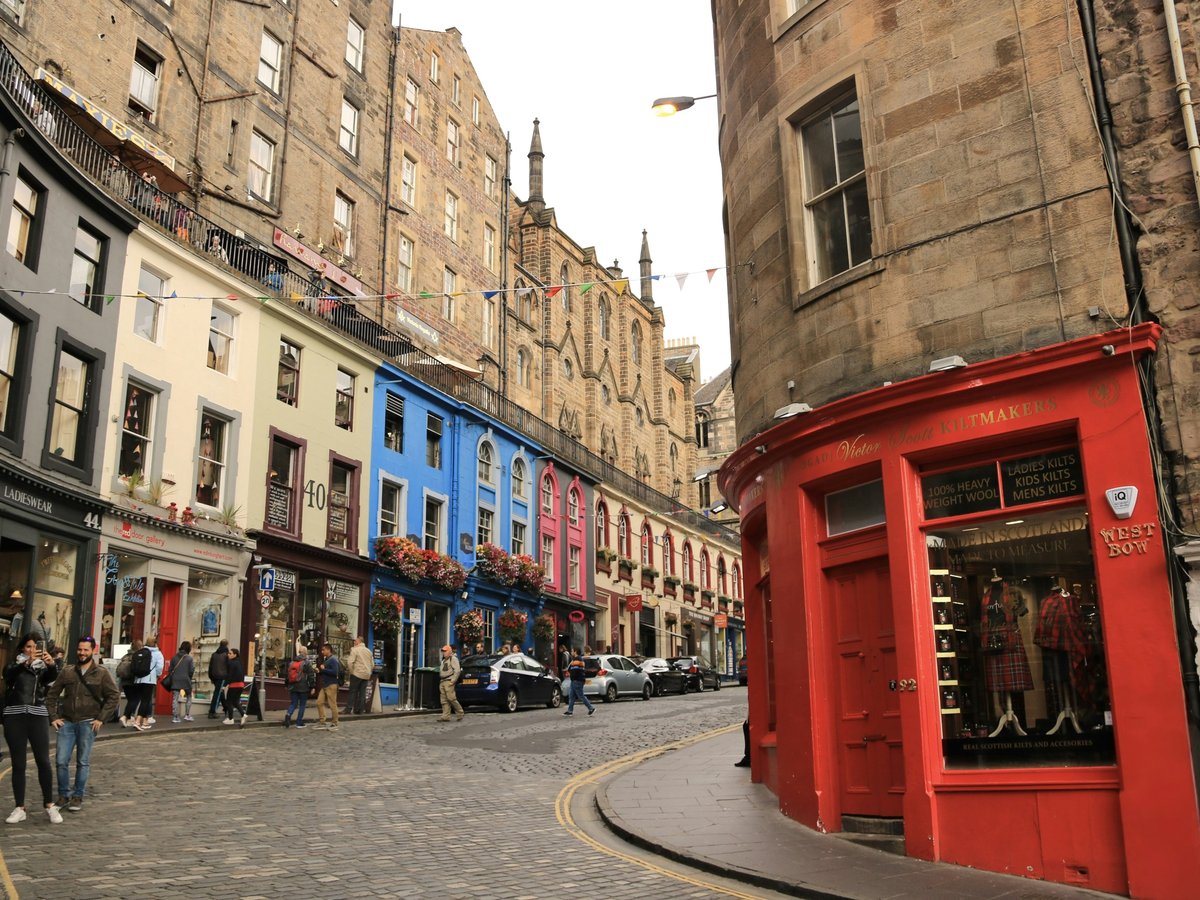
Edinburgh scores 8.2 out of 10 for solo-traveler safety (see the TTDI Solo-Safety Index). Violent crime against visitors is rare. The real risks are wet cobblestones on Victoria Street after dark, opportunistic pickpocketing on the Royal Mile during August's Festival crowds, and Cowgate's weekend rowdiness after 2am. Emergency number: 999.
Read the full answer → -
Layover guide
Edinburgh Airport sits 8 miles west of the Old Town. The Airlink 100 bus reaches Waverley Bridge in 25 minutes for £4.50. Five hours is the practical minimum. After immigration and return security, you get about two hours in the city. Edinburgh Castle, St Giles' Cathedral, and the Scottish National Gallery all sit within walking distance of the bus stop.
Read the full answer → -
LGBTQ-friendly
Edinburgh is one of Europe's most welcoming cities for queer travellers. Scotland legalised same-sex marriage in 2014, and the city's Broughton Street Pink Triangle has anchored a visible queer scene for decades. Same-sex couples hold hands through the Old Town without drawing a second look. CC Blooms on Greenside Place is the anchor nightlife venue. June brings Edinburgh Pride.
Read the full answer → -
Where locals go
Edinburgh residents drink on Leith Walk and The Shore on weeknights, head to Stockbridge Market on Sundays, and drift toward Sandy Bell's on Forrest Road for the folk session once 9.30pm passes. Once the Royal Mile fills, most locals stay north and east of Princes Street. For daytime work, the Central Library on George IV Bridge has free wifi and nobody counting your coffees.
Read the full answer → -
Must-see
Edinburgh Castle at 9:30am opening, before the Royal Mile crowds wake up. The volcanic crag sits 130 metres above the city: from the Argyle Battery you look north across the New Town grid to the Firth of Forth, and the whole city's geography clicks into place. Book timed entry online (£19.50 adult). Arthur's Seat and the Grassmarket fill the rest of your first day.
Read the full answer → -
Solo travel
Edinburgh ranks among the easiest cities in Europe for a first solo trip: compact enough to walk the entire centre in 40 minutes, English-speaking, and socially wired through its pub culture and year-round festival calendar. Single-occupancy guesthouse rates along Minto Street run £55-85 with breakfast included. The Grassmarket hostel cluster is where most solo travellers make their first Edinburgh friends.
Read the full answer → -
This week
Edinburgh's annual festival season opens this week. The Fringe, International Festival, and Royal Military Tattoo converge each year, roughly doubling the city's usual 540,000 population. Expect cool weather and packed restaurants along the Royal Mile. Book dinner reservations 2-3 days ahead and bring a waterproof layer.
Read the full answer → -
3-day itinerary
Day 1: Old Town on foot; Edinburgh Castle at 9:30am, Royal Mile to St Giles', lunch in the Grassmarket, Greyfriars Kirkyard. Day 2: New Town, Scottish National Gallery, Dean Village along the Water of Leith, lunch in Stockbridge, Royal Botanic Garden. Day 3: Arthur's Seat at 8am, Holyrood Palace, bus to Leith for seafood, Calton Hill at sunset. Around 23 kilometres of walking total.
Read the full answer → -
What to avoid
Skip the tartan shops and laminated-menu restaurants on the Royal Mile between Castlehill and the Tron Kirk, the Edinburgh Dungeon on Market Street, and hiring a car. Don't book a bed on the Cowgate or Grassmarket on a Friday or Saturday. Buy your tram ticket at the Edinburgh Airport platform machine, because paying on board costs more.
Read the full answer → -
What to pack
A wind-resistant waterproof shell tops the list: Edinburgh's weather shifts hour to hour, and the wind off the Firth of Forth turns ordinary rain sideways on North Bridge and Calton Hill. Pack walking shoes with grip for the Royal Mile's cobblestones. Leave the umbrella; it'll invert in minutes. UK plugs are Type G, 230V.
Read the full answer → -
Where to stay
New Town between Princes Street and Queen Street for a first trip: you're five minutes from Waverley Station, ten from the Castle, and on flat ground while Old Town climbs. Budget £100–160 for a reliable three-star; £200–300 for the George Street tier. Stockbridge if you've visited before and want the village pace.
Read the full answer →
Deep guides for Edinburgh
Curated lists for Edinburgh
accommodation
-
Best boutique hotels
Edinburgh's accommodation map rewards the traveler who looks past the Royal Mile. The city's hotels spread from the Georgian grid of New Town south and west through residential suburbs, out to the airport corridor, and north to Leith's docklands. Prices track quality more than distance from the centre: suburban neighborhoods like Murrayfield and Corstorphine match or beat city-centre Trip.com scores while asking meaningfully less per night, and the airport belt has moved well beyond its old motorway-lodge reputation. The trade-off is always proximity to Princes Street and the Old Town versus a quieter room, a lower rate, and a shorter ride to the terminal. Trams now run from the airport to York Place in a single line, and buses cover most routes late into the evening, so the real question is what you want outside your door after dark. Queensferry, at the far northwest edge, offers the Forth bridges and a harbour high street in exchange for a bus ride into town. Leith brings dockside restaurants and local pubs at prices the centre cannot touch. The neighborhoods below are grounded in the specific properties that anchor each area, written to help you match a base to your trip rather than default to the first availability near the Castle.
See the picks → -
Best hostels
Edinburgh splits its hostel inventory along a volcanic spine. The Royal Mile ridge, running from the Castle esplanade down to Holyrood, concentrates the densest cluster; the Georgian grid of New Town sits one valley north; and the residential quarters fan outward from there. Price tiers compress in a hostel search: most beds fall between $24 and $65 a night, so the deciding factor is not budget but neighborhood character. The Old Town hostels put you inside the tourist corridor, steps from the Grassmarket pubs and the Cowgate late-night circuit. New Town trades cobblestone noise for broad avenues and better grocery access along Broughton Street. Farther out, Newington and Currie suit travelers who prefer a quieter base and a bus ride over a midnight stumble home. What matters is whether you want to walk out your door onto the Royal Mile or away from it.
See the picks → -
Best luxury hotels
Edinburgh's luxury hotels split between two neighborhoods and two temperaments. New Town holds the grand-facade properties: sandstone, high ceilings, lobbies built to impress at volume. Old Town hosts a newer generation of design-led stays that trade ballroom scale for street-level texture. Some of the twelve below have indoor pools, spas, and massage rooms. Others offer apartment-format suites with underfloor heating. A few lean on their bars and restaurants as the primary draw. The nightly rate spread across the list is wide, and the guest ratings cluster high. What earns a slot here is specificity: each property does something its neighbors do not, and this list is organized to help you find the one that matches your pace.
See the picks → -
Where to stay
Edinburgh splits along a geological fault that shaped its streets, and the accommodation map follows the same divide. The Old Town stacks itself on the volcanic ridge from the Castle down to Holyrood, narrow closes and steep stairs leading to hostels and boutique hotels wedged into medieval footprints. The New Town spreads north across the valley on a Georgian grid, where wide streets and symmetrical facades house the city's densest cluster of mid-range and luxury rooms. West of Princes Street the West End quiets into Victorian crescents. South and east, university halls and residential flats open up budget options for travelers willing to ride a bus. Beyond the city boundary, Queensferry sits on the Firth of Forth shoreline, Corstorphine straddles the airport corridor, and Currie anchors the southwestern edge where prices drop and pub-inns replace hotel chains. The neighborhoods below run from the highest hotel density in the New Town core to the thinnest inventory at the rural fringe. Edinburgh rewards choosing your area before your hotel; the walk from a Royal Mile hostel to a New Town townhouse is short but lands you in a different city.
See the picks →
attractions
-
Best free attractions
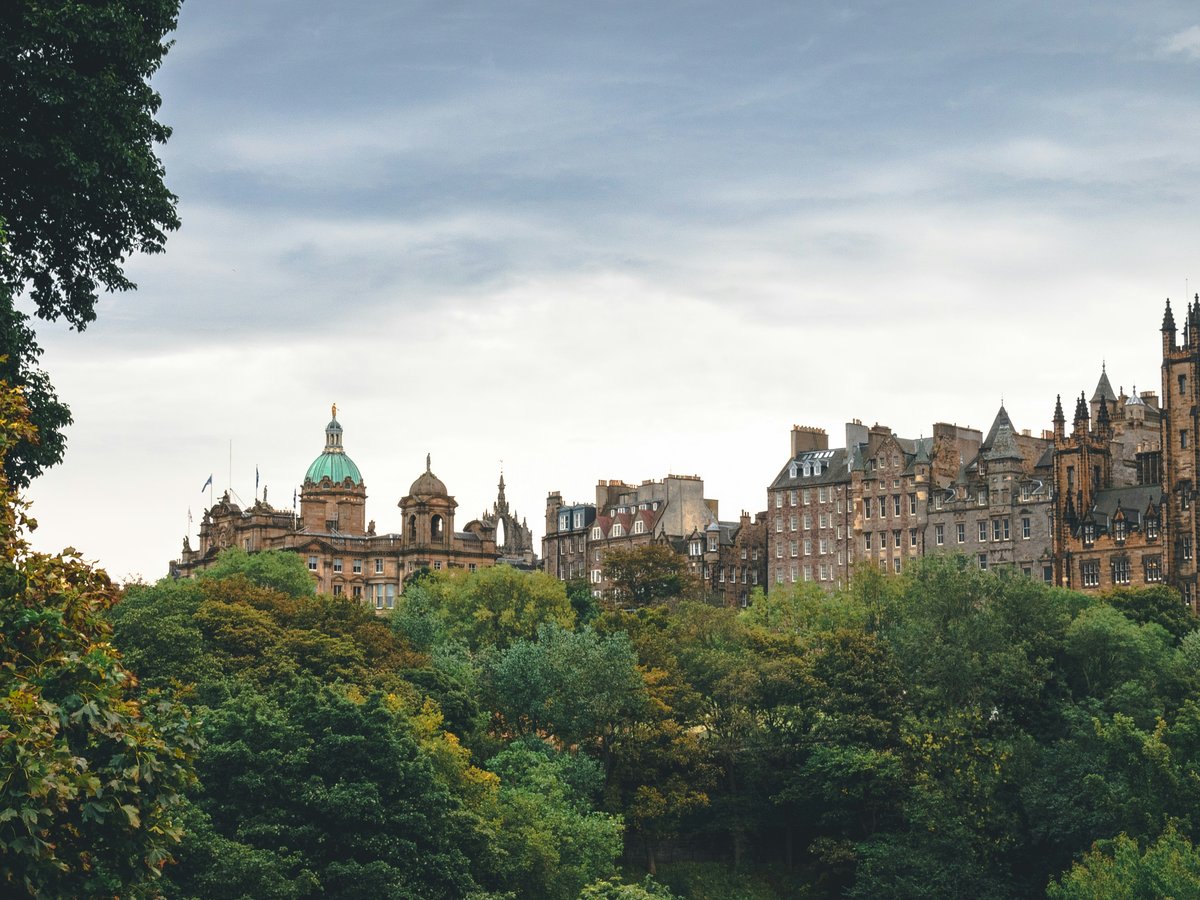
Edinburgh gives its parks, gardens and squares away for nothing, and that is not a small thing in a city this compact. The free layer here is not a consolation prize for travellers avoiding the castle queue; it is the actual grain of the place: botanical collections that predate most of the New Town, market squares that still run as market squares, and quiet garden courtyards set behind Georgian terraces. This list is 12 stops for a visitor who wants to spend a day, or three, without buying a single ticket. It leans on public gardens, city squares and parkland scattered across the centre and the coast, from the botanical collection north of the New Town down to the East Lothian edge. Bring shoes that handle wet grass; skip anything that requires a wristband. The order below is a ranking, not a route: pair two or three by geography and you have an afternoon that costs the price of a coffee.
See the picks → -
Best museums
Edinburgh's museums are better read as a set of buildings than as a set of collections. Several of the twelve below are protected structures in their own right: a scheduled monument, a 16th-century tower house, and a run of Category A listed galleries. The question worth asking before you go is when, not what, because hours differ more than you would expect: some doors close at 17:00, two galleries stay open to 19:00 on Thursdays, and one viewing attraction runs until 22:00. This list is for the traveller with two or three days who would rather see four places properly than tick off ten, and it moves from the national collections through the city's own smaller houses to a royal yacht and a science centre for anyone travelling with children. Each entry says what the address offers and how to time the visit. Where the public record has no hours, we say so.
See the picks → -
Must-see attractions
Edinburgh's essential sights are mostly stone, and they carry dates that reward a reader as much as the views do. The span runs from monastery ruins dating to 1128 and a chapel begun in 1446, through a railway bridge from 1890 now holding UNESCO World Heritage status and a road bridge from 1964 that still earned a Category A listing, to a castle with a Scheduled monument designation, the official residence of the British monarch in Scotland, and a Victorian Gothic tower raised to Sir Walter Scott. This is a list for people who want to see the city's spine before its sideshows, and who are prepared to plan around opening hours rather than arrive at a gate to find a crowd already ahead of them. Several entries are outside the centre, in Roslin and out on the Forth; treat those as half-day trips rather than stops to squeeze into a morning. The order is ours. Wherever opening times are known, we give them.
See the picks →
food
-
Best cafes
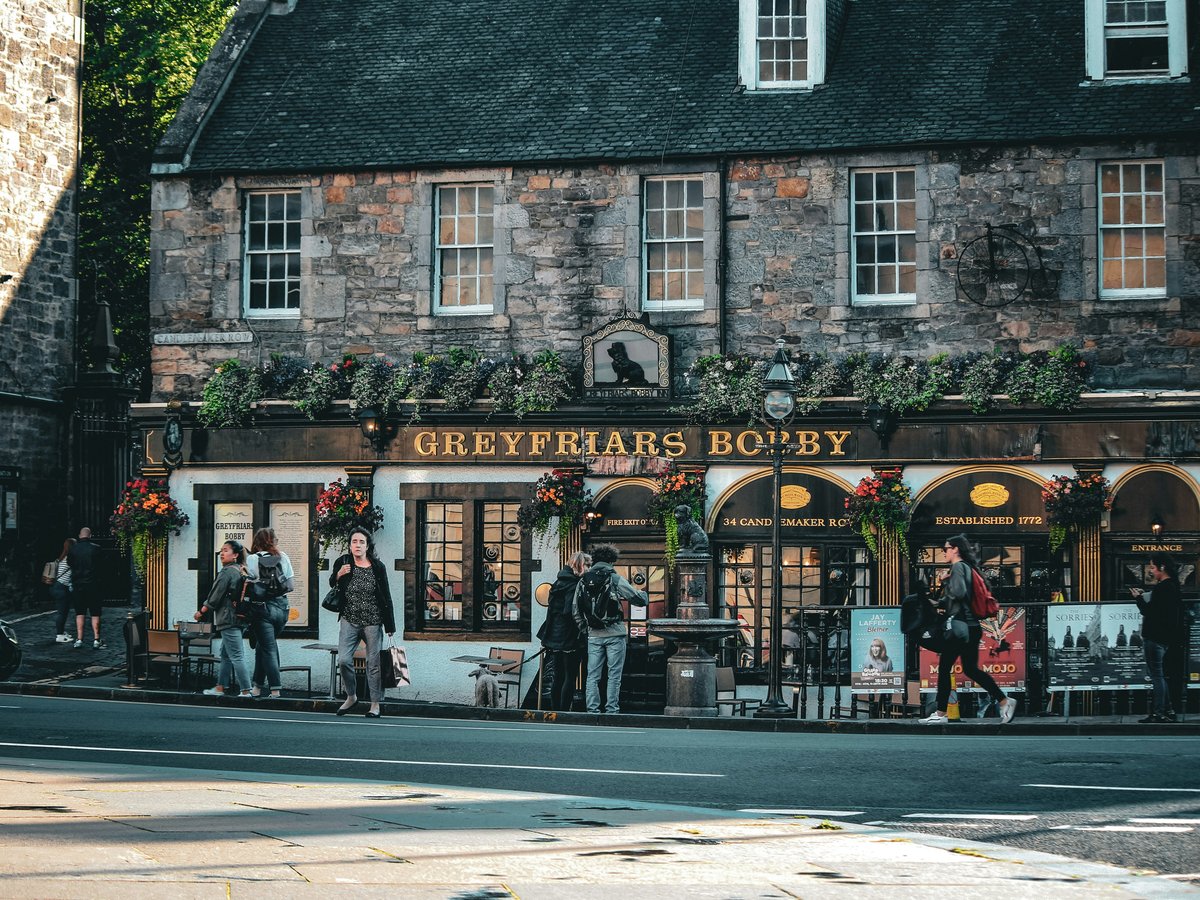
Edinburgh's cafe map runs from the museum foyer to the tenement street corner, and the twelve rooms below are the ones worth planning a morning around. What ties them together is not a house style but a working city: a gallery cafe on Market Street where the coffee is part of the visit, a Royal Mile room that has been feeding stair-climbers for years, an Easter Road deli that closes at 14:30 because it has already done the day's work, a Leith Walk kitchen that reads Hungarian, an African brunch counter off Fountainbridge. Hours matter here more than in most cities: half of these places lock up by 17:00 or 18:00, and the ones that stay late are the ones that expect you to eat. Trust the neighbourhood over the postcard: Lothian Road at dawn, Brougham Street mid-morning, Colinton Road on a Sunday. The list rotates through the Old Town, the New Town, Tollcross, Fountainbridge, Leith Walk, Haymarket and Morningside, so you can pick by where you already are rather than where a guidebook wants you to go. Read the paragraph, note the hours, and go.
See the picks → -
Best restaurants
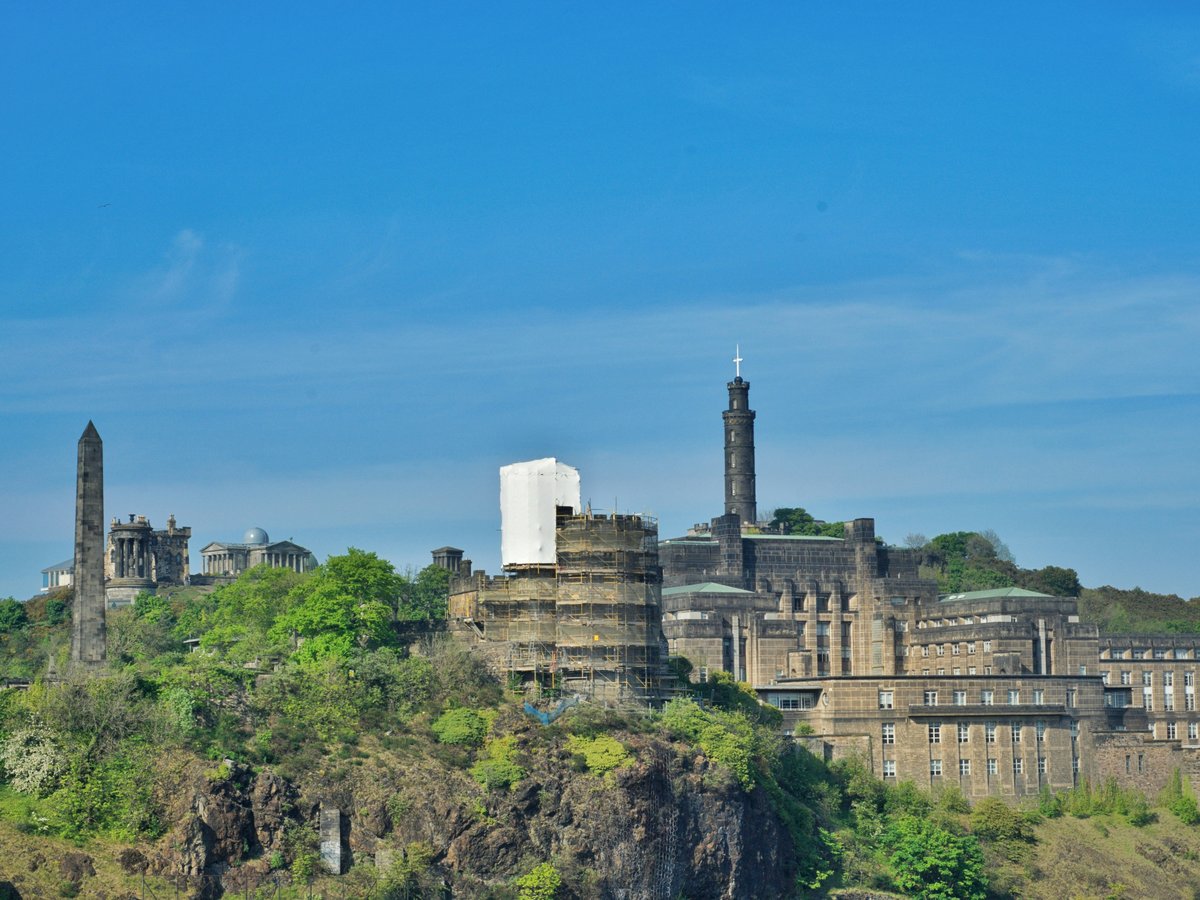
Edinburgh eats along a tight axis. The New Town grid between St Andrew Square and George Street, and the Old Town spine down North Bridge, hold most of the rooms a visitor should bother with, and the walk from one end of this list to the other takes about twenty minutes. What follows is twelve restaurants that reward the trip: a sushi counter with real fish, three arguments about what an Indian menu can be, a pizza room that lets the dough do the talking, a French bar-bistro that keeps late hours, a beef counter, a vegetarian kitchen that treats vegetables as the plot, and an Italian family room on Elm Row that has fed the neighbourhood for years. Skip the tartan-wrapped ceilidh-and-haggis rooms on the Royal Mile; the locals eat in the streets on either side of it. Every address, every phone, every posted service hour below is cited to a mapped source, so you can walk in the door confident the door is where we say it is.
See the picks →
Browse by traveler type
- For foodies
Edinburgh for foodies
- For families with kids
Edinburgh for families
- For digital nomads
Edinburgh for digital nomads
- For solo travelers
Edinburgh for solo travelers
- For couples
Edinburgh for couples
- For budget travelers
Edinburgh on a budget
- For luxury travelers
Edinburgh for luxury travelers
- For first-timers
Edinburgh for first-time visitors
Book experiences in Edinburgh
 Free cancellation
 The World Famous Underground Ghost Tour
City tour: 1.2 hours, free cancellation.
via Viator Free cancellation
 Loch Ness, Scottish Highlands, Glencoe and Pitlochry Tour
Day trip: 12.5 hours, free cancellation.
via Viator Free cancellation
 Edinburgh: Loch Ness, Glencoe and The Highlands
Day trip: 12.5 hours, free cancellation.
via Viator Free cancellation
 Edinburgh: Glenfinnan Viaduct, Glencoe & Fort William
Day trip: 12 hours, free cancellation.
via Viator Free cancellation
 Loch Ness & Highlands Small-Group Tour from Edinburgh with Cruise
Day trip: 12 hours, free cancellation.
via Viator Free cancellation
 1 Day Loch Ness, Glen Coe & the Scottish Highlands from Edinburgh
Day trip: 12 hours, free cancellation.
via Viator Free cancellation
 Edinburgh Darkside Ghost Tour of Mysteries and Murder and Legends
City tour: 2 hours, free cancellation.
via Viator Free cancellation
 Scottish Highlands, Loch Ness and Glencoe Day Trip from Edinburgh
Day trip: 13 hours, free cancellation.
via Viator Free cancellation
 City Sightseeing Edinburgh Hop-On Hop-Off Bus Tour + Kids Go Free
Day trip: 1.2 hours, free cancellation.
via Viator Free cancellation
 Loch Ness, Glencoe, the Highlands Guided Day Tour from Edinburgh
Day trip: 12 hours, free cancellation.
via Viator Free cancellation
 Old Town Walking Tour History and Tales in Edinburgh
City tour: 2 hours, free cancellation.
via Viator Free cancellation
 St Andrews & the Fishing Villages of Fife Small-Group Day Tour from Edinburgh
Day trip: 8.5 hours, free cancellation.
via ViatorBrowse by interest
Compare Edinburgh with
Find a flight to Edinburgh
Live fares to Edinburgh appear here once cookies are accepted.
Last verified by automated review (v1.7.2) on . What is automated review?