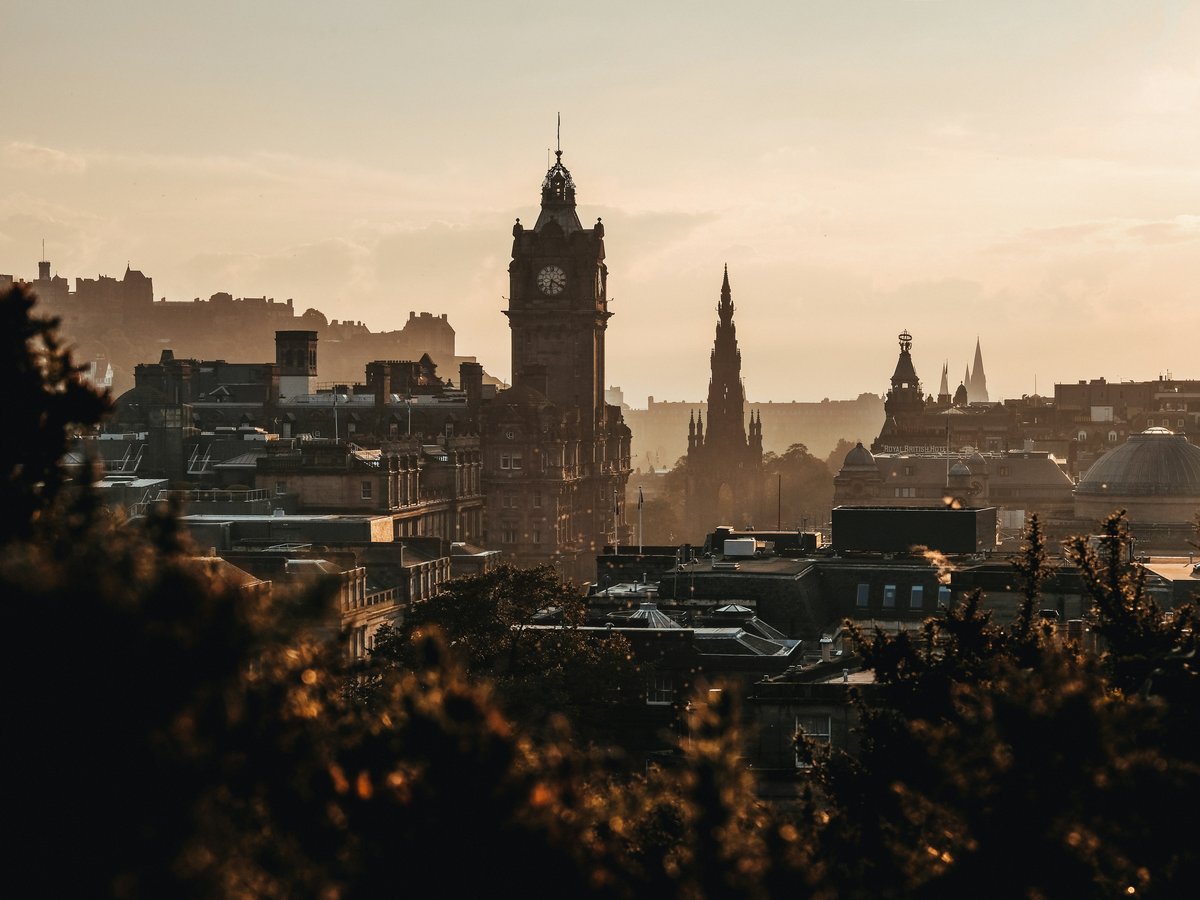
Edinburgh's essential sights are mostly stone, and they carry dates that reward a reader as much as the views do. The span runs from monastery ruins dating to 1128 and a chapel begun in 1446, through a railway bridge from 1890 now holding UNESCO World Heritage status and a road bridge from 1964 that still earned a Category A listing, to a castle with a Scheduled monument designation, the official residence of the British monarch in Scotland, and a Victorian Gothic tower raised to Sir Walter Scott. This is a list for people who want to see the city's spine before its sideshows, and who are prepared to plan around opening hours rather than arrive at a gate to find a crowd already ahead of them. Several entries are outside the centre, in Roslin and out on the Forth; treat those as half-day trips rather than stops to squeeze into a morning. The order is ours. Wherever opening times are known, we give them.
-
1 Edinburgh Castle
Edinburgh Castle, The Esplanade, Edinburgh, EH1 2NGA castle that is a Scheduled monument, open from 09:30 most of the year
Edinburgh Castle sits at The Esplanade, EH1 2NG, and opens at 09:30. From April to September it stays open until 18:00; through most of the colder months, closing time is 17:00. Christmas Eve ends at 16:00, New Year's Day starts at 11:00, and the castle does not open at all on Christmas Day or Boxing Day. Come for the first entry and skip the late-morning crush; the rock is far better without a wall of people on the ramparts. The heritage designation is Scheduled monument, and the site rewards a full, unhurried morning rather than a box ticked between lunch and shopping. Check the official site before you go, because seasonal hours shift more than most visitors expect.
Scheduled monument
-
2 Forth Bridge
A railway bridge from 1890 that is a UNESCO World Heritage Site
The Forth Bridge has carried trains across eastern Scotland since 1890, and it now holds a UNESCO World Heritage Site designation, which almost no working railway structure anywhere can claim. We'd skip the hurried photo stop from a coach window: find a vantage point where the whole span opens up, and give it a few minutes. Hold that 1890 date in your head as you stand there, because this is engineering from another century still doing its job, and up close it makes most modern crossings look unadventurous. Plan it as a half-day out of the city, not something to squeeze between other stops.
Dates from 1890 · UNESCO World Heritage Site
-
3 Holyrood Palace
Canongate, Edinburgh, EH8 8DXThe official residence of the British monarch in Scotland
Holyrood Palace on Canongate, EH8 8DX, opens to visitors at 09:30, and as the official residence of the British monarch in Scotland, it carries that weight while feeling like a house someone uses rather than a hollow set piece. Hours shift with the season: from 31 March to 31 October it closes at 18:00, and from 1 November to 29 March it closes at 16:30. That winter close is earlier than it sounds, and the rooms deserve a proper look, not a hurried last circuit. It is a Category A listed building. Come in the morning, move at your own pace, and leave the gift shop for when you're done.
Category A listed building
-
4 St Giles' Cathedral
Royal Mile, Edinburgh, EH1 1REA Category A listed Church of Scotland cathedral on the Royal Mile
St Giles' Cathedral on the Royal Mile at EH1 1RE opens at 10:00 on weekdays from April to October and closes at 18:00, while Saturdays in those months run 09:00 to 17:00. From November to March, Monday to Saturday hours are 09:00 to 17:00. On Sundays it doesn't open until 13:00, year-round, so don't build an early visit around it that day. A Church of Scotland cathedral and a Category A listed building, it rewards the visitor who sits down for a while more than the one who walks a lap and leaves. The official site carries current details.
Category A listed building
-
5 Rosslyn Chapel, Roslin
Chapel Loan, EH25 9PUA Category A listed chapel dating from 1446
Dating from 1446, Rosslyn Chapel stands on Chapel Loan in the EH25 9PU postcode. It sits in Roslin, Midlothian, so treat it as a proper excursion rather than something to squeeze onto a packed city day. Hours run 09:00 to 17:00 Monday to Saturday and 12:00 to 17:00 on Sunday. Go at 09:00 on a weekday if you can; the stonework deserves your full attention, and the early hour puts you ahead of the crowd. It is a Category A listed building, and the chapel is small enough that the detail is the whole point. Bring patience and let your eyes adjust.
Dates from 1446 · Category A listed building
Hours: Mo-Sa 09:00-17:00; Su 12:00-17:00
-
6 St Mary's Cathedral
York Place, Edinburgh, EH1 3JDA cathedral dating from 1886, Category B listed
On a clear afternoon, the stone of St Mary's Cathedral catches the light along York Place, in EH1 3JD. It dates from 1886 and carries a Category B listing, and to our eye it is no less worth your time for that. It works better than the packed headline sights for a quiet half hour: you can sit down, look up, and think without being steered along by a crowd. This is a cathedral in Edinburgh for anyone who wants the city's sacred architecture without the jostle. We do not have opening times for it, so check the cathedral's own site before you go.
Dates from 1886 · Category B listed building
-
7 Craigmillar Castle
Craigmillar Castle, Craigmillar Castle Rd, Edinburgh EH16 4SYA castle in Edinburgh that is a Scheduled monument
Out at EH16 4SY, on Craigmillar Castle Rd, Craigmillar Castle repays anyone willing to make the journey for it. It is a castle in Edinburgh with Scheduled monument status, and it gets a fraction of the attention it deserves. Skip the tourist crush and the queue-and-audio-guide routine of the headline castles; the locals know that a place like this beats the packed big-ticket sights when you want to wander at your own pace and let the stone do the talking. Put EH16 4SY into your map before you set off, give it a slow afternoon, wear decent shoes, and bring a coat, because Edinburgh weather does not care about your itinerary. Opening details are on the Historic Environment Scotland page for the site, so check them before you go.
Scheduled monument
-
8 Holyrood Abbey
Monastery ruins dating from 1128
Wind rattles through what remains of Holyrood Abbey, the monastery ruins in Holyrood, dating from 1128 and protected as a Scheduled monument. Don't treat it as an afterthought at the end of a long day; ruins this old reward a slow lap and a long look upward. Hold the 1128 date in your head as you stand there, because not much in any city survives that long, and the gaps in the stone say as much as the walls still standing. Come when the light is low and the place is quiet, and stay longer than you planned.
Dates from 1128 · Scheduled monument
-
9 Scott Monument
East Princes Street Gardens, EdinburghA Victorian Gothic monument to Sir Walter Scott, open daily 10:00 to 21:00
Open from 10:00 to 21:00 every day, the Scott Monument rises from East Princes Street Gardens, a Victorian Gothic monument to the Scottish author Sir Walter Scott dating from 1840 and a Category A listed building. Skip the midday slot, when the gardens are at their busiest, and come in the evening; the 21:00 close leaves room for a visit after dinner. Few cities build this extravagantly for a novelist, and that alone tells you something about how Edinburgh sees itself. Look at the carving properly before you decide whether you love it or find it too much.
Dates from 1840 · Category A listed building
Hours: Mo-Su 10:00-21:00
-
10 Holyrood Park
Queens Drive, Edinburgh, EH8 8HGA park in Edinburgh dating from 1541
Holyrood Park, mapped on Queens Drive in EH8 8HG, is a park in Edinburgh that dates from 1541 and is the city's best antidote to too many stone interiors in a row. The locals prefer it at the edges of the day, early or late, when you share the paths with dog walkers rather than tour groups. Bring a layer and water, and don't treat it as a gentle stroll if the weather turns. Practical visitor information is on the Historic Environment Scotland page. Give it a morning, and the rest of your itinerary will feel easier for it.
Dates from 1541
-
11 Greyfriars Kirk
Greyfriars Place, Edinburgh, EH1 2QQA Category A listed church in Edinburgh
Behind its Category A listing, Greyfriars Kirk on Greyfriars Place, EH1 2QQ, is first and foremost a church. Skip the ghost-walk version of this place and come in daylight instead, letting the kirk speak for itself. It is a quieter visit than the big set pieces, and that is exactly why it belongs on this list: you get the weight of old Edinburgh without anyone performing it at you. Walk slowly, read what is carved, and resist the urge to rush on. We don't have opening times for it, so check the kirk's own site before you go.
Category A listed building
-
12 Forth Road Bridge
A 1964 road bridge with a Category A listing
A Category A listing for a 1964 road bridge catches people off guard, and that reaction is worth following: go and look at the Forth Road Bridge properly. It stands in east central Scotland and shows that the twentieth century could build with as much nerve as the Victorians. Skip the blur from a car window. Find a spot where you can take in the whole span and give it the time you would give a cathedral. The 1964 date makes it a young listed building, and that is the interesting part: some modern engineering earns its place among the old stone. Pair it with a day out on the Forth.
Dates from 1964 · Category A listed building
Last verified by automated review (v1.7.2_fame1017d-1015-784-20261017033611) on . What is automated review?