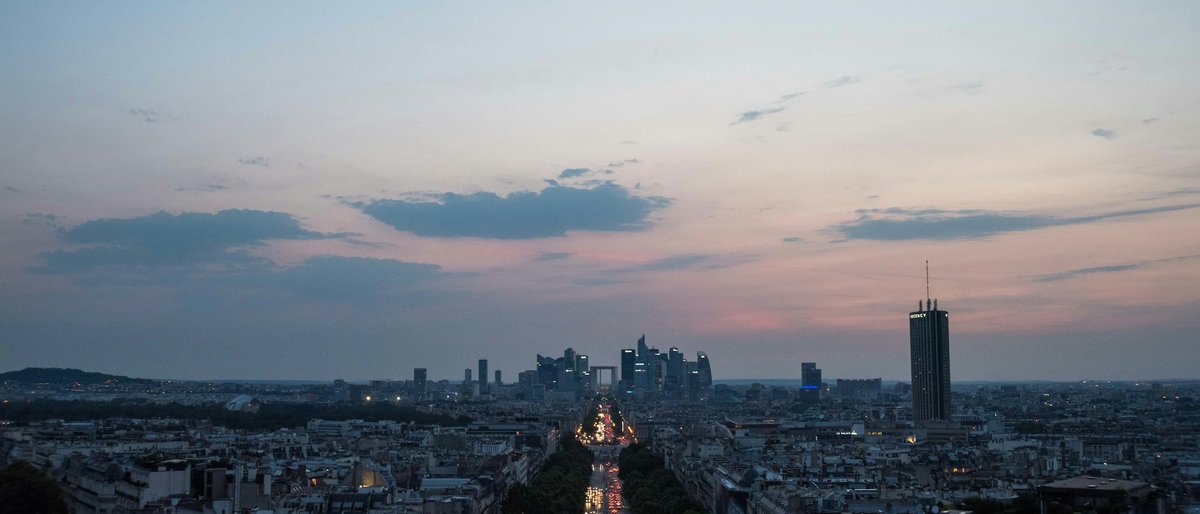
Paris has this reputation as a city that drains wallets, and to be fair, it can. A coffee near the Opéra will set you back five euros without blinking. But here's what most visitors miss: the city itself is essentially a free, open-air museum that never closes. The Seine banks, the architectural drama of every arrondissement, the public parks designed with a level of care that borders on obsessive — none of that costs a cent. Many of the city's most important museums are permanently free. The ones that aren't tend to offer free entry on the first Sunday of each month. Street markets operate daily across dozens of neighborhoods, and you can wander through them for hours without anyone expecting you to buy anything (though the smell of rotisserie chicken at the Marché d'Aligre might test your resolve). Paris was built to be walked, looked at, sat in, and argued about over cheap wine on a canal bank. The zero-budget version of the city is, honestly, not that different from the expensive one. You just skip the tourist-trap brasseries and eat a baguette on a bench instead. Which, mind you, is what most Parisians do anyway.
Free attractions
-
Musée d'Art Moderne de la Ville de Paris
The city's own modern art museum, permanently free for the permanent collection. Housed in a gorgeous Art Deco building near the Trocadéro, it holds major works by Matisse, Dufy, and Delaunay. The Raoul Dufy mural alone — La Fée Électricité — stretches across an entire curved room. Feels like a place that should charge thirty euros but doesn't.
16th arrondissementMuseum -
Petit Palais — Musée des Beaux-Arts de la Ville de Paris
Right on the Champs-Élysées axis, this Belle Époque palace has a permanently free collection spanning Dutch Golden Age paintings, French Impressionists, and Art Nouveau furniture. The interior garden with its mosaic colonnade is reason enough to visit, on a warm afternoon when the light hits the pond just right.
8th arrondissementMuseum -
Musée Carnavalet — Histoire de Paris
Recently renovated and still free, this museum tells the story of Paris from prehistoric times through the present. Spread across two adjoining Marais mansions, it's packed with period rooms, revolutionary artifacts, and Marcel Proust's reconstructed bedroom. The smell of old wood floors is half the experience.
Le Marais, 3rd arrondissementMuseum -
Jardin du Luxembourg
Sixty acres of manicured French garden in central the Left Bank. The metal chairs around the Grand Bassin are possibly the most civilized free seating in any city on earth. Students read, retirees play chess, children push toy sailboats across the pond with sticks. It tends to get crowded on weekends but there's always a quiet corner near the Medici Fountain.
6th arrondissementPark -
Parc des Buttes-Chaumont
Built on a former quarry in the 19th arrondissement, this park has genuine drama: cliffs, a suspension bridge, a waterfall, and a rocky island topped with a small temple. The views of Montmartre and Sacré-Cœur from the upper paths are worth the uphill walk. Far fewer tourists than you'd expect for something this good.
19th arrondissementPark -
Sacré-Cœur Basilica
The basilica itself is free to enter — it's the dome climb that costs money. Inside, the massive gold mosaic of Christ in Majesty is one of the largest in the world. Step outside and the terrace delivers a panoramic view across all of Paris, stretching to the Eiffel Tower and beyond on clear days. The steps below tend to fill with buskers and crowds by late morning.
Montmartre, 18th arrondissementLandmark and viewpoint -
Père Lachaise Cemetery
The largest cemetery in Paris doubles as a sculpture garden spread across hilly, tree-shaded paths. Jim Morrison, Oscar Wilde, Édith Piaf, Chopin — the resident list reads like a cultural history syllabus. Early mornings are best, when the gravel paths are still damp and you might have entire sections to yourself.
20th arrondissementLandmark -
Cathédrale Notre-Dame de Paris
Notre-Dame reopened in late 2024 after the devastating 2019 fire, and entry to the cathedral remains free. The restored interior is striking — the cleaned stonework and new lighting have given the nave a brightness it likely hasn't had in centuries. Expect queues, on weekends, but they move steadily.
Île de la Cité, 4th arrondissementLandmark -
Musée de la Vie Romantique
A small, charming house-museum tucked away on a cobblestone courtyard in the 9th. The permanent collection — focused on the novelist George Sand and her circle — is free. The courtyard garden with its rose bushes and greenhouse café feels like stepping into someone's private estate. Easy to miss if you don't know it's there.
Nouvelle Athènes, 9th arrondissementMuseum -
Coulée Verte René-Dumont (Promenade Plantée)
An elevated park built on a disused railway viaduct — yes, the concept that inspired New York's High Line. Runs from Bastille eastward through the 12th, passing over streets and through tunnels of greenery. Below the viaduct, the Viaduc des Arts houses artisan workshops in the old brick archways.
12th arrondissementPark and walkway -
Berges de Seine
The reclaimed riverbanks on both sides of the Seine, now permanently pedestrianized in several stretches. On the Left Bank between Musée d'Orsay and Pont de l'Alma, you'll find floating gardens, play areas, chalkboard walls, and people sprawled on the wide stone quays reading or napping. The Right Bank stretch near the Hôtel de Ville has a similar feel.
7th and 1st arrondissementsPublic space -
Palais Royal Gardens
An elegant, colonnaded garden right behind the Louvre that most tourists walk past without noticing. Daniel Buren's striped columns fill the southern courtyard — children climb on them, locals sit between them eating lunch. The garden itself has well aligned rows of linden trees, a central fountain, and that particular hush you get in enclosed Parisian spaces.
1st arrondissementPark and public art
Free activities
-
Walking the Canal Saint-Martin
The canal stretches from Bastille up through the 10th arrondissement, lined with iron footbridges, locks, and chestnut trees. On warm evenings the banks fill with locals sharing wine and cheese. The stretch near Quai de Valmy has the densest concentration of good-looking terraces in the city, and you can wander past them without spending anything — though the temptation is real.
10th arrondissementWalking route -
Browsing the Marché d'Aligre
One of Paris's oldest and liveliest markets, running most mornings except Monday. The outdoor section sells produce, flowers, and cheap kitchenware; the covered Marché Beauvau inside has proper butchers, cheese vendors, and fishmongers. You'll smell roasting chicken and North African spices from a block away. Even just looking costs nothing.
12th arrondissementMarket -
Montmartre backstreet walk
Skip the tourist crush around Sacré-Cœur and wander the quiet side streets behind it: Rue Cortot, Rue de l'Abreuvoir, Place Dalida. These lanes still look roughly as they did when Utrillo painted them. Cobblestones underfoot, ivy crawling over shuttered windows, the occasional cat sitting on a ledge watching you pass. The whole neighborhood works as a living gallery.
18th arrondissementWalking route -
Street art in Belleville and Oberkampf
The 20th and upper 11th arrondissements have evolved into one of Europe's most concentrated street art districts. Rue Dénoyez in Belleville is repainted regularly, so it's different every visit. The larger murals along Boulevard du Général Jean Simon and Rue Oberkampf tend to stay longer. No map needed — just walk and look up.
20th and 11th arrondissementsPublic art -
Paris Plages (summer urban beaches)
Each summer, roughly mid-July through mid-August, the city installs sand, deck chairs, palm trees, and misting stations along the Right Bank of the Seine near the Hôtel de Ville and at the Bassin de la Villette. Free to use, open to everyone. The Villette site usually has a swimming pool as well. It's Paris playing at being a seaside town — slightly absurd, completely charming.
4th and 19th arrondissementsSeasonal activity -
Window shopping in the Covered Passages
Paris has a network of 19th-century glass-roofed shopping arcades — Galerie Vivienne, Passage des Panoramas, Passage Jouffroy — that are free to wander through. The tiled floors, ornate ceilings, and old-fashioned shopfronts feel like time capsules. Passage des Panoramas is the oldest, dating to 1799, and has a concentration of stamp dealers and vintage postcard shops alongside bistros.
2nd and 9th arrondissementsWalking route -
Watching the Eiffel Tower sparkle at night
Every evening after dark, the Eiffel Tower puts on a five-minute sparkling light show on the hour. The best free spots to watch are the Trocadéro esplanade, the Champ de Mars, or from the Pont de Bir-Hakeim. The last sparkle currently runs at 11 PM. It's touristy, sure, but seeing it from across the river on a mild night still lands.
7th and 16th arrondissementsSpectacle -
Shakespeare and Company browsing
The legendary English-language bookshop on the Left Bank across from Notre-Dame is free to enter and browse. The upstairs reading library, complete with a battered piano and narrow beds tucked between shelves, has a worn-in warmth that feels almost theatrical. They host free readings and events regularly — check the board by the door.
5th arrondissementCultural experience
Free events
-
Nuit Blanche
One Saturday night in early October (typically first Saturday)Paris's annual all-night contemporary art festival, with free installations, performances, and projections spread across the city. Museums stay open late, churches become sound art venues, and entire neighborhoods transform. The route changes each year, so it's worth checking the program in advance. The atmosphere is electric — half the city seems to be out walking at 3 AM.
Citywide, various arrondissements -
First Sunday free museum entry
First Sunday of every monthOn the first Sunday of each month, several major national museums open their doors for free, including the Musée d'Orsay, the Centre Pompidou, and the Musée de l'Orangerie. The Louvre currently offers free first-Sunday entry from October through March only. Expect longer queues than usual — arriving early helps considerably.
Various national museums -
Fête de la Musique
June 21 each yearMidsummer's night, the entire city fills with live music. Every street corner, courtyard, café terrace, and park becomes a stage. Classical quartets in church courtyards, jazz trios on the Île Saint-Louis, punk bands on the Rue de Lappe, DJs at the Place de la République. Totally free, completely chaotic. The evening doesn't really wind down until sunrise.
Citywide -
Jazz at Parc Floral
Weekend afternoons, approximately late June through SeptemberThe Parc Floral de Paris in the Bois de Vincennes hosts free jazz and classical concerts on weekend afternoons through the summer season, typically late June through September. You can sit on the grass with a picnic while serious musicians play under the bandstand. The park itself has a modest entry fee on weekday mornings, but tends to be free on concert weekends — worth double-checking the current policy.
Parc Floral, Bois de Vincennes, 12th arrondissement -
Journées du Patrimoine (European Heritage Days)
Third weekend of SeptemberFor one weekend each September, buildings that are normally closed to the public swing open their doors. The Élysée Palace, Hôtel de Matignon, embassies, private mansions, corporate headquarters — places you'd never otherwise see. The Élysée queue stretches for hours, but smaller sites like the Crédit Municipal or the Mairie du 10e have shorter waits and equally interesting interiors.
Citywide — government buildings, private estates, historic sites -
Cinéma en Plein Air at Parc de la Villette
Select evenings in July and AugustFree outdoor film screenings on a large inflatable screen in the park, running through July and August. The program usually mixes French classics, international cinema, and the occasional recent release. People start claiming spots with blankets from late afternoon. Bring layers — the temperature drops sharply once the sun goes down and the damp grass starts to cool.
Parc de la Villette, 19th arrondissement -
Marché aux Fleurs et aux Oiseaux
Daily for flowers; Sundays historically for birds (currently reduced)The flower market on the Île de la Cité has been running since 1808, making it one of the oldest in the city. Open daily, it's a sensory overload of orchids, roses, herbs, and potted plants crammed into iron-and-glass pavilions. On Sundays, bird sellers join in — though this portion has been scaled back in recent years. The scent of jasmine and wet earth hangs in the covered stalls.
Place Louis Lépine, Île de la Cité, 4th arrondissement
Free-on-certain-days vs. always free — knowing the difference
This trips people up constantly. Paris has two categories of free museums, and they work differently. City-owned museums — Musée d'Art Moderne, Petit Palais, Musée Carnavalet, Musée Cognacq-Jay, Maison de Victor Hugo — are permanently free for their permanent collections. You can walk in any day of the week during opening hours and pay nothing. Temporary exhibitions typically have a separate ticket. National museums are a different story. The Louvre, Musée d'Orsay, Centre Pompidou, Musée de l'Orangerie, Musée Picasso, Musée Rodin — these normally charge admission but become free on the first Sunday of the month. The Louvre restricts this to October through March only. The Musée du Quai Branly follows the same first-Sunday pattern. Worth noting: if you're under 26 and a resident of the European Economic Area, you get free entry to national museums on any day, not just Sundays. That policy has been in place for years and appears stable, though it's always smart to carry ID as proof.
The best free viewpoints across Paris
Everyone knows the Sacré-Cœur steps, and they deliver — the panorama across central Paris from that elevation is hard to argue with. But it's also packed by mid-morning. For something quieter, try the terrace at the top of Parc de Belleville, which faces west toward the Eiffel Tower and gives you a slightly grittier, more honest perspective on the city's roofline. The Galeries Lafayette rooftop terrace on Boulevard Haussmann is free and has a close-up view of the Opéra Garnier's copper dome, with the Eiffel Tower in the background. The Institut du Monde Arabe has a free rooftop terrace looking across to Notre-Dame and the Seine — the geometric window screens cast patterned shadows that shift throughout the day. And if you don't mind a walk, the pedestrian bridge Passerelle Simone-de-Beauvoir near the Bibliothèque Nationale gives you a sweeping river view that feels oddly cinematic, around sunset when the light turns the stone facades gold.
Eating well on no budget (or close to it)
free food in Paris is hard to come by — this isn't a city with a strong free-sample culture. That said, you can eat remarkably well on almost nothing. A fresh baguette from a good boulangerie runs about one euro thirty. Some fromageries and charcuteries near closing time will let you taste before buying, and a few are generous about it. The Marché d'Aligre's flea market section sometimes has vendors clearing produce at reduced prices late in the morning. If you're comfortable with it, several organizations distribute free meals. The Restos du Cœur operates throughout Paris during winter. Some Sikh gurdwaras offer free communal meals (langar) open to anyone regardless of faith — the one near Gare du Nord has been doing this for years. For drinking water, Paris has over a thousand public drinking fountains, including the ornate Wallace Fountains you'll spot on street corners across the city. There are also a few sparkling water fountains — the one at Jardin de Reuilly in the 12th is a favorite. Fill a bottle there and you've got free fizzy water in one of the most expensive cities in Europe. Not bad.
Free Paris with children
Paris is more child-friendly than its reputation suggests, at no cost. The Jardin du Luxembourg has a large fenced playground (there's a small fee for that section, currently a couple of euros), but the toy sailboat pond and puppet shows nearby are free to watch from outside the theatre enclosure. The Jardin des Tuileries has a free playground area near the Rue de Rivoli side. The Muséum National d'Histoire Naturelle's Jardin des Plantes is free to enter — the outdoor gardens, the alpine garden, and the menagerie grounds are all open, though the buildings inside charge admission. Kids tend to love the dinosaur skeletons visible through the Grande Galerie windows. The Canal de l'Ourcq in the 19th has a long, flat towpath that's good for cycling or scootering, and the Bassin de la Villette sometimes has free activities set up for families on weekends during summer. Parc de la Villette itself has the enormous dragon slide — a proper steel structure shaped like a dragon that you can climb through — free and strangely thrilling even for adults.
FAQ
Are the major Paris museums ever completely free to enter?
City-owned museums like the Petit Palais, Musée d'Art Moderne de la Ville de Paris, and Musée Carnavalet are permanently free for their permanent collections. National museums — the Louvre, Musée d'Orsay, Centre Pompidou — become free on the first Sunday of each month, though the Louvre currently limits this to October through March. If you're under 26 and an EU/EEA resident, you get free national museum access on any day with valid ID.
Is it really free to go inside Notre-Dame Cathedral?
Yes. Notre-Dame has always been free to enter — it's an active place of worship. Since reopening in late 2024 after restoration, entry remains free. There may be a charge for the tower climb when it becomes available again, but walking into the cathedral itself costs nothing. Arrive early if you want to avoid the longer midday queues.
When does Paris Plages run and is it free?
Paris Plages typically operates from mid-July to mid-August, though exact dates shift slightly each year. The sand beaches, deck chairs, misting stations, and most activities are completely free. The swimming area at the Bassin de la Villette site is also free but can reach capacity on hot days. No tickets, no reservations — just show up.
Can I visit the Eiffel Tower area without paying anything?
You cannot go up the Eiffel Tower itself without a ticket, but the surrounding area — the Champ de Mars park, the Trocadéro esplanade across the river, and the quays along the Seine — are all free and offer excellent views of the tower. The hourly sparkling light display after dark is visible from these public spaces and is worth seeing at least once.
What is Nuit Blanche and do I need tickets?
Nuit Blanche is Paris's annual all-night art festival, typically held on the first Saturday in October. All installations, exhibitions, and performances are free and no tickets are needed. Museums and cultural sites stay open late or all night. The event runs roughly from sundown to sunrise, and the whole city has a festival atmosphere. Check the official program a few days before to plan a route.
Are there free walking tours in Paris?
Several companies offer tip-based walking tours where the tour itself is free and you pay what you feel it was worth at the end. These tend to depart from central meeting points like the Saint-Michel fountain or the Hôtel de Ville. Quality varies — some guides are excellent local historians, others recite scripts. Beyond organized tours, Paris is one of the best cities in the world for self-guided walking. Pick a neighborhood, get slightly lost, and you'll likely see more than any guided route would show you.
Last verified by automated review (v1.7.1) on May 26, 2026. What is automated review?