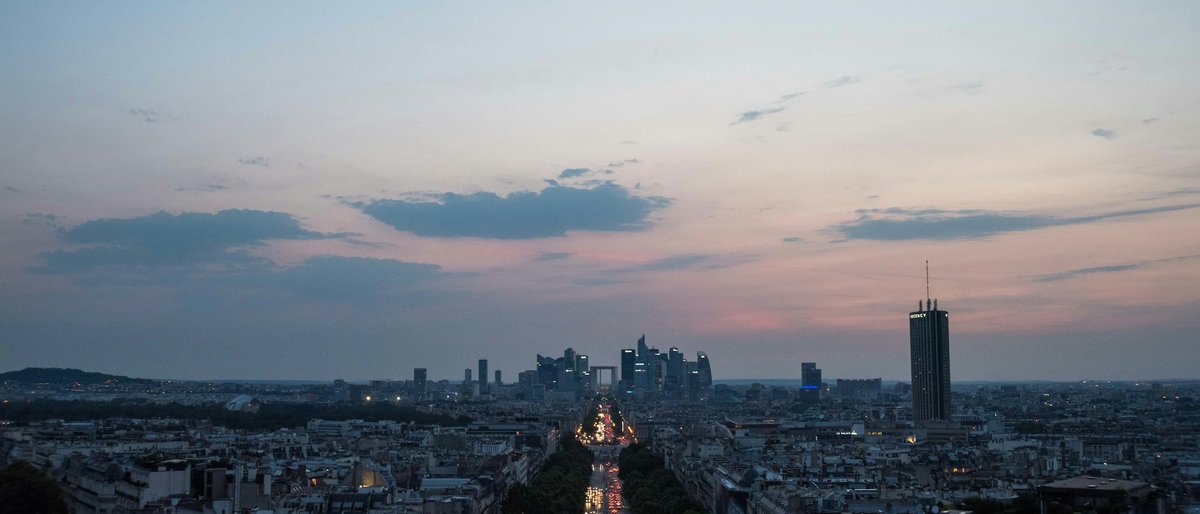
Paris doesn't really do nightlife the way London or Berlin does. There's no single dominant scene, no one neighborhood where everything happens at once. Instead, the city scatters its after-dark energy across dozens of quartiers, each with its own rhythm and crowd. The French capital tends to run late but not excessively so: most bars close between 2 and 4 AM, clubs wind down around 5 or 6, and the all-night ragers that define Berlin simply aren't part of the culture here. What Paris does better than almost anywhere is the slow evening. Dinner at 9, drinks at 11, maybe a club at 1. Nobody rushes. The aperitif matters. A glass of natural wine at a zinc counter, conversation spilling onto the sidewalk, cigarette smoke curling under café awnings: that's still the backbone of Parisian nightlife, even as the cocktail and club scenes have grown more sophisticated. Worth noting: the French drinking culture centers on wine and conversation, not on getting hammered. You'll see locals nursing a single glass for an hour. Shots are rare outside tourist traps. The whole pace is different. And the city is beautiful after dark: the limestone buildings glow under streetlights, the Seine reflects everything, and even a walk home at 3 AM feels cinematic in a way that's hard to replicate elsewhere.
The Bar Scene: From Natural Wine to Speakeasies
Paris has been in the middle of a cocktail renaissance for the better part of a decade now, and the results are good. The Marais and the area around Oberkampf have the highest concentration of craft cocktail spots, though they've spread into the 10th and 11th arrondissements too. Expect to pay somewhere around 14 to 18 euros for a well-made cocktail in these places, not cheap, but comparable to other major European capitals. The wine bar scene, though, is where Paris still feels most like itself. Natural wine bars have taken over entire streets in neighborhoods like the 11th and parts of Belleville. You sit on mismatched chairs, the bartender pours you something cloudy and funky from a small producer in the Loire or Jura, and you eat charcuterie off a wooden board. It's unpretentious in a way that feels earned rather than performed. The older-style wine bars (the ones with zinc counters and regulars who've been coming for decades) are harder to find now but still exist, in the 5th and 6th. Dive bars cluster around Oberkampf, Ménilmontant, and parts of Pigalle. Sticky floors, cheap pints, and crowds that skew young and local. These tend to get packed on Thursday and Friday nights starting around 10 PM. Rooftop bars exist but they're largely a hotel thing in Paris. The views can be spectacular: the city's relatively flat skyline means even a sixth-floor terrace gives you something, but the drinks are often overpriced for what you get. They're best treated as a one-off experience rather than a regular spot. That said, the ones in the eastern arrondissements tend to be less tourist-heavy than those near the Champs-Élysées.
Clubbing in Paris: A Scene That's Still Finding Its Shape
The Paris club scene has had a complicated couple of decades. It's never quite reached the scale or consistency of Berlin or London, but it's developed a personality of its own: around electronic music. The city leans toward house and techno, with a strong French touch that still carries traces of the French touch era. Disco-influenced house does well here. So does darker, harder techno, at the spots in the northeast of the city. Dress codes vary but tend to be less strict than you might expect from Paris's fashion reputation. At most electronic clubs, clean streetwear is fine. The velvet-rope, bottle-service scene exists (around the Champs-Élysées) but locals largely avoid those spots. They're expensive, the music is generic, and the door policies seem designed to make you feel bad about yourself. The clubs that matter are mostly in the 11th, 12th, 13th, and along the canal in the 19th. Some operate in converted warehouses or under railway arches. Things don't really get going until 1 AM at the earliest, and the real crowd arrives closer to 2. If you show up at midnight, you'll be standing in a half-empty room wondering what you did wrong. Entry typically runs between 10 and 20 euros, sometimes more for bigger names on the decks. Some spots use online pre-sale tickets through Resident Advisor or Shotgun, which is often cheaper and guarantees entry. Door selection still happens at some venues: showing up in a big group of guys without women can be a problem, and being visibly drunk will get you turned away. One thing to know: the French smoking ban pushed a lot of social energy onto the sidewalk outside clubs. Expect to spend a good chunk of your night in the fumoir or on the curb. It's where you meet people.
Live Music: Jazz Roots, Chanson Ghosts, and a Thriving Underground
Paris has a legitimate claim as a jazz capital, and the tradition is still alive. The clubs in Saint-Germain-des-Prés and around the Latin Quarter have been hosting jazz since the postwar era. Some of these rooms are tiny (we're talking 40, 50 people max) which creates an intensity you won't find in larger venues. The music ranges from traditional bop to more experimental stuff, and the audiences tend to be knowledgeable and quiet during sets. Cover charges at the smaller joints might be 10 to 15 euros, sometimes with a drink included. Chanson has faded from the mainstream but hasn't disappeared entirely. You'll still find small rooms in Montmartre and the Marais where singers perform in the tradition, though the audiences skew older. It's worth seeking out at least once: there's something about hearing French chanson in a small Parisian room that recordings can't capture. The rock and indie scene is centered around the 11th, near Oberkampf and Charonne. Mid-size venues host touring acts and local bands most nights of the week. The French indie scene tends toward post-punk and synth-influenced pop, though hip-hop and rap have arguably become the dominant popular music in France over the past decade. Rap shows draw massive crowds, for artists from the banlieues. For bigger concerts, the venues in the 18th and 19th arrondissements handle larger touring acts. Check listings on sites like Paris Bouge or the Officiel des Spectacles: the latter has been the go-to listings guide for decades and still publishes weekly. Best nights for live music tend to be Thursday through Saturday, though Tuesday and Wednesday can surprise you at the jazz clubs.
Nightlife neighborhoods
-
Oberkampf & Ménilmontant (11th)
This is where the young, slightly scruffy side of Paris goes out. The rue Oberkampf itself gets packed on weekends, with bar-hoppers spilling between venues. Ménilmontant, just uphill, is a bit rougher around the edges and more local. Cheap drinks, loud music, and crowds that peak around midnight.
- Best for
- Bar crawls, dive bars, indie music, affordable nights out
- Standouts
- The strip along rue Oberkampf and rue Jean-Pierre Timbaud has the densest concentration of bars in the city
-
Pigalle & South Pigalle (SoPi) (9th/18th)
Pigalle spent decades as the red-light district and still carries some of that edge, though the southern end (what locals now call SoPi) has gentrified into a cocktail bar and late-night dining destination. The neon signs still glow, but now they're next to natural wine bars. North Pigalle remains grittier, with a few legendary music venues and the old cabarets.
- Best for
- Cocktail bars, late-night dining, a mix of gritty and polished
- Standouts
- The area around rue des Martyrs and rue Frochot has become a cocktail corridor
-
Le Marais (3rd/4th)
Historically the center of Paris's LGBTQ+ nightlife, the Marais has broadened into a general going-out destination. The streets are narrow, the buildings are old, and the crowd is mixed: tourists, locals, fashion people, everyone. It gets busy early by Paris standards, with bars filling up by 9 PM. Tends to quiet down earlier than the eastern neighborhoods.
- Best for
- LGBTQ+ nightlife, early evening drinks, wine bars, stylish crowds
- Standouts
- Rue des Archives and the surrounding streets have the highest concentration of LGBTQ+ venues
-
Bastille & Charonne (11th/12th)
Bastille used to be the nightlife center of Paris in the 1990s. It's calmed down since then but still draws crowds, around the rue de Lappe and rue de la Roquette. Charonne, further east, is quieter and more residential, with a handful of bars and venues that attract a slightly older, less touristy crowd.
- Best for
- Dancing, mid-size music venues, a slightly older crowd
- Standouts
- Rue de Lappe remains a strip of bars and small clubs, though it's lost some of its former edge
-
Canal Saint-Martin & Quai de Loire (10th/19th)
The canal banks have become a warm-weather gathering spot: in summer, people sit along the water with bottles of wine and takeaway food until well after midnight. It's the most casual nightlife in Paris. The area around the canal also has a growing cluster of clubs and concert venues, along the quai de la Loire in the 19th.
- Best for
- Outdoor drinking in summer, waterside clubs, relaxed atmosphere
- Standouts
- The stretch of quai de la Loire near the Bassin de la Villette hosts several major nightlife venues
-
Saint-Germain-des-Prés (6th)
The Left Bank's legendary café culture is still here, though it's become expensive and somewhat tourist-oriented. The jazz clubs remain genuine, though: small rooms with serious musicians playing to attentive audiences. The neighborhood quiets down earlier than the Right Bank, and the crowd tends to be older and more moneyed.
- Best for
- Jazz, wine, literary café atmosphere, a quieter evening
- Standouts
- The jazz cellars along rue de la Huchette and in the surrounding streets have operated for decades
Safety after dark
Paris is generally a safe city at night, but it's still a major metropolis and the usual urban awareness applies. The Métro runs until about 1:15 AM on weekdays and roughly 2:15 AM on Friday and Saturday nights; after that, you're looking at night buses (the Noctilien network) or taxis and rideshares. Uber works fine in Paris, though increase pricing after 2 AM can sting.
Pickpocketing is the most common issue, and it tends to happen in crowded bars and on late-night transit rather than on empty streets. Keep your phone in a front pocket or zipped bag. The classic scams (petition signers, bracelet sellers, shell games) mostly operate during daytime around tourist sites, but some persist near Pigalle and Montmartre after dark.
Drink spiking happens, as it does in every major city. Watch your glass, don't accept drinks from strangers, and look out for your friends. If someone in your group seems suddenly far more intoxicated than they should be, take it seriously.
The neighborhoods around Gare du Nord, Château d'Eau, and parts of Stalingrad can feel sketchy late at night. They're not necessarily dangerous, but they're not where you want to wander alone at 4 AM if you don't know the area. Stick to well-lit streets and don't flash expensive items.
One Paris-specific thing: the streets after bar closing time can be chaotic. Glass on the sidewalk, people arguing, the occasional scuffle outside a club. It's usually more noise than danger, but give aggressive situations space rather than engaging.
Practical tips
- Tipping at bars
- Tipping is not expected at bars in Paris the way it is in the US. Service is included in the price. That said, rounding up or leaving a euro or two for good service at a cocktail bar is appreciated. Nobody will be offended if you don't tip, and nobody will chase you down the street.
- When to go out
- The Parisian evening starts late by North American standards. Dinner reservations at 9 or 9:30 PM are normal. Bars start filling up around 10 or 11. Clubs are empty before 1 AM. If you're used to eating at 6 and going out at 8, you'll need to adjust your internal clock or you'll spend the first half of every evening alone in an empty room.
- Cover charges and door policies
- Most bars don't charge a cover. Clubs typically charge between 10 and 20 euros at the door, sometimes including a drink. Pre-sale tickets through Resident Advisor or Shotgun are often cheaper and skip the queue. Some venues are free before a certain hour: check their social media or website for details.
- What locals drink
- Wine is still the default social drink: natural wine, which has gone from niche to mainstream in Paris over the past decade. Beer is popular too, and the craft beer scene has grown considerably. Cocktails have their place but tend to be more of a destination choice than an everyday drink. Pastis appears in summer. Hard liquor shots are mostly a tourist thing.
- Language at the bar
- A basic 'bonsoir' when you walk in and 'l'addition, s'il vous plaît' when you want the bill will go further than you might think. Most bartenders in central Paris speak some English, but starting in French (even badly) tends to get you warmer service. In the outer arrondissements, less English is spoken.
- Smoking culture
- France banned indoor smoking years ago, but smoking culture is still very much alive on terraces and outside bars. If smoke bothers you, sit inside, which is the opposite of what most people prefer. The terrace is where the social energy is, but it comes with a cloud of tobacco and, increasingly, the sweet smell of vapes.
FAQ
What time do bars and clubs close in Paris?
Most bars close between 2 and 4 AM, depending on the venue and the night. Clubs typically run until 5 or 6 AM, sometimes later on weekends. A few after-hours spots push into the morning, but they're not as common as in Berlin. The city has been gradually relaxing its nightlife regulations, so hours have been creeping later in recent years.
Is Paris nightlife expensive compared to other European cities?
It's on the pricier side, yes. A beer in a bar runs 6 to 8 euros, a cocktail 14 to 18, and a glass of wine 5 to 10 depending on the spot. Club entry is 10 to 20 euros. It's cheaper than London or Stockholm but more expensive than Berlin, Lisbon, or most Eastern European capitals. You can keep costs down by drinking wine at canal-side spots or sticking to the dive bars in the 11th.
Do I need to dress up to go out in Paris?
For most bars and music venues, no: clean casual is fine. Parisians tend to look easily put-together rather than dressed up, so dark jeans and a decent jacket will work almost everywhere. The exception is the high-end clubs around the Champs-Élysées, which enforce strict dress codes. At electronic music clubs, the crowd often leans toward dark, minimal streetwear.
Is the Paris Métro safe late at night?
Generally, yes. The Métro is well-lit and has security cameras. That said, some stations: the larger interchange hubs like Châtelet-Les Halles, Gare du Nord, and Strasbourg-Saint-Denis: can feel uncomfortable late at night. Pickpocketing is the main risk rather than violent crime. After the Métro closes, the Noctilien night bus network covers most routes, though service is less frequent.
What nights are best for going out in Paris?
Thursday through Saturday is the main window. Thursday tends to be the locals' big night out: it's when you'll find the most authentic crowd and the least tourist density. Friday and Saturday are busier and more mixed. Tuesday and Wednesday can be surprisingly good for jazz and smaller music venues. Sunday and Monday are quiet at most spots, though a handful of clubs run Sunday afternoon sessions that have become popular.
Are there after-hours spots in Paris?
They exist, but they're more underground than in cities like Berlin or New York. A few clubs run legal after-hours sessions on weekend mornings, and there are semi-private events that circulate through word of mouth and social media. The canal banks in summer function as an informal after-hours gathering spot: people sit along the water with wine until the sun comes up. It's technically not legal to drink in public after 4 AM in some arrondissements, but enforcement is inconsistent.
Last verified by automated review (v1.7.1) on . What is automated review?