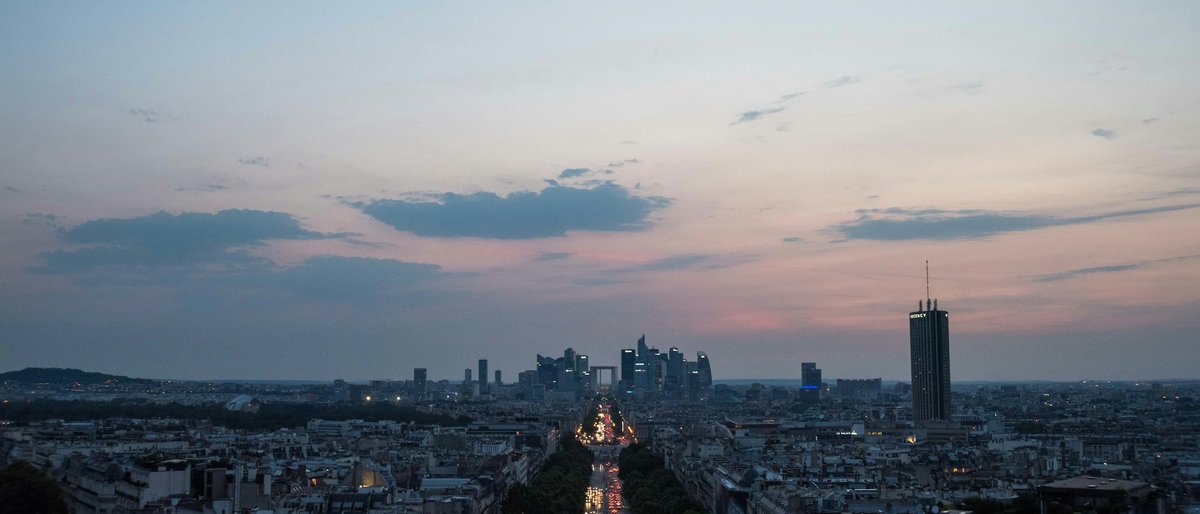
Paris does not lack for lists, and it does not lack for opinions about which stops on those lists still earn the visitor's afternoon. This is a working editor's twelve, weighted toward the addresses that survive their own postcards: a cathedral on the Seine, an iron tower on the Champ de Mars, a cemetery on a hillside in the 75020 that has been quietly rearranging the tourist map for two centuries. Some are unavoidable and worth being unavoidable; others are here because a first-time visitor who skips them will hear about it for the rest of the trip. What ties them together is not grandeur, though there is plenty, but the fact that each one is anchored to a specific patch of ground, a specific address, a specific set of coordinates the city has been building around. Read the list in order if you want the canonical sequence; read it out of order if you already know Paris and want the argument for why these twelve, and not the other twelve, hold up.
-
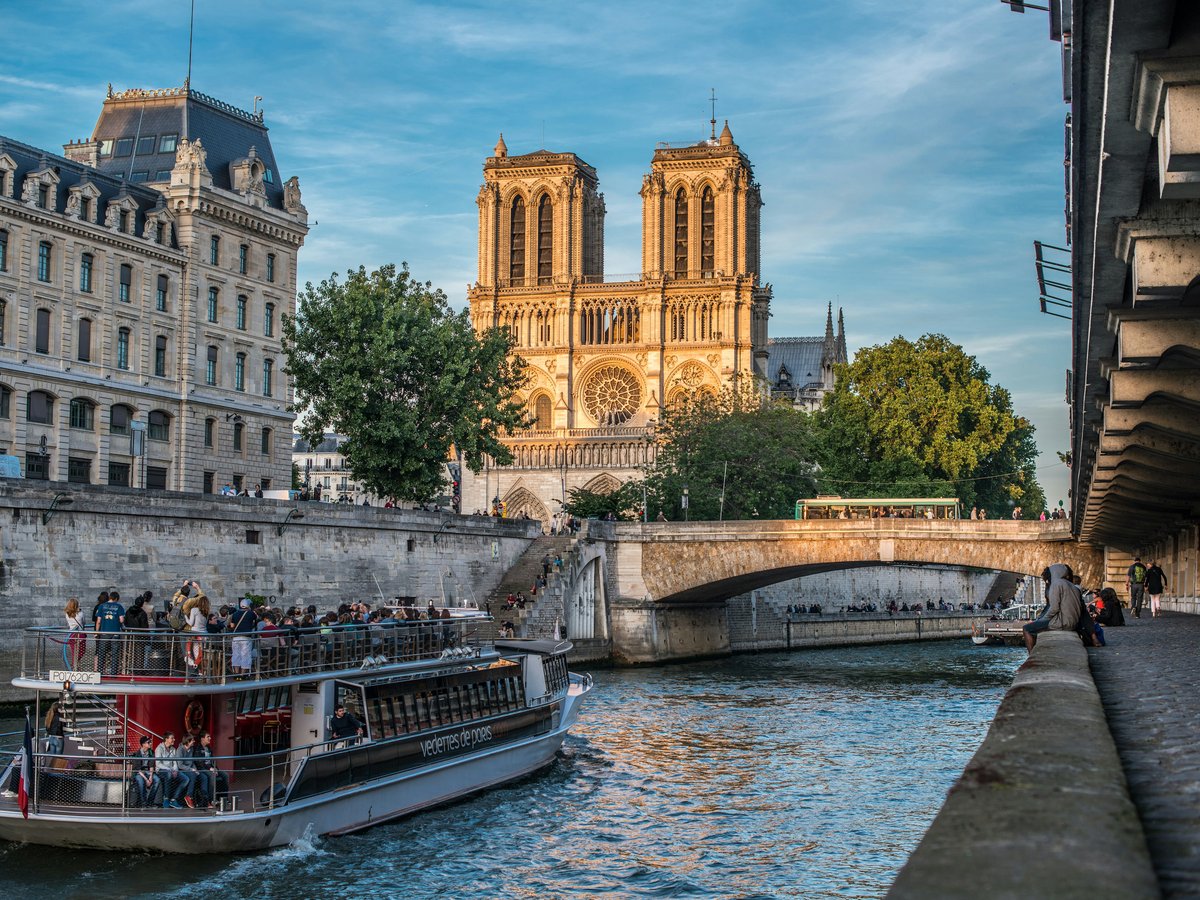
1 Notre-Dame de Paris
Place du Parvis de Notre-Dame 6The cathedral on the Île de la Cité that anchors the whole city's map
At Place du Parvis de Notre-Dame 6, Notre-Dame de Paris sits at 48.8530, 2.3498, the point Paris has organised its distances around for centuries. Skip the souvenir stalls creeping toward the parvis and walk the exterior first, slowly, from the west front to the flying buttresses at the apse. The cathedral pulls the surrounding streets toward it; that gravitational quality is easier to feel from outside than inside. Official visiting information, current reopening details and any timed-entry rules are at https://www.notredamedeparis.fr/, and it is worth checking before you arrive, not after you have queued. Come at first light, before the coach tours, and give the facade twenty minutes before you look at anything else.
-
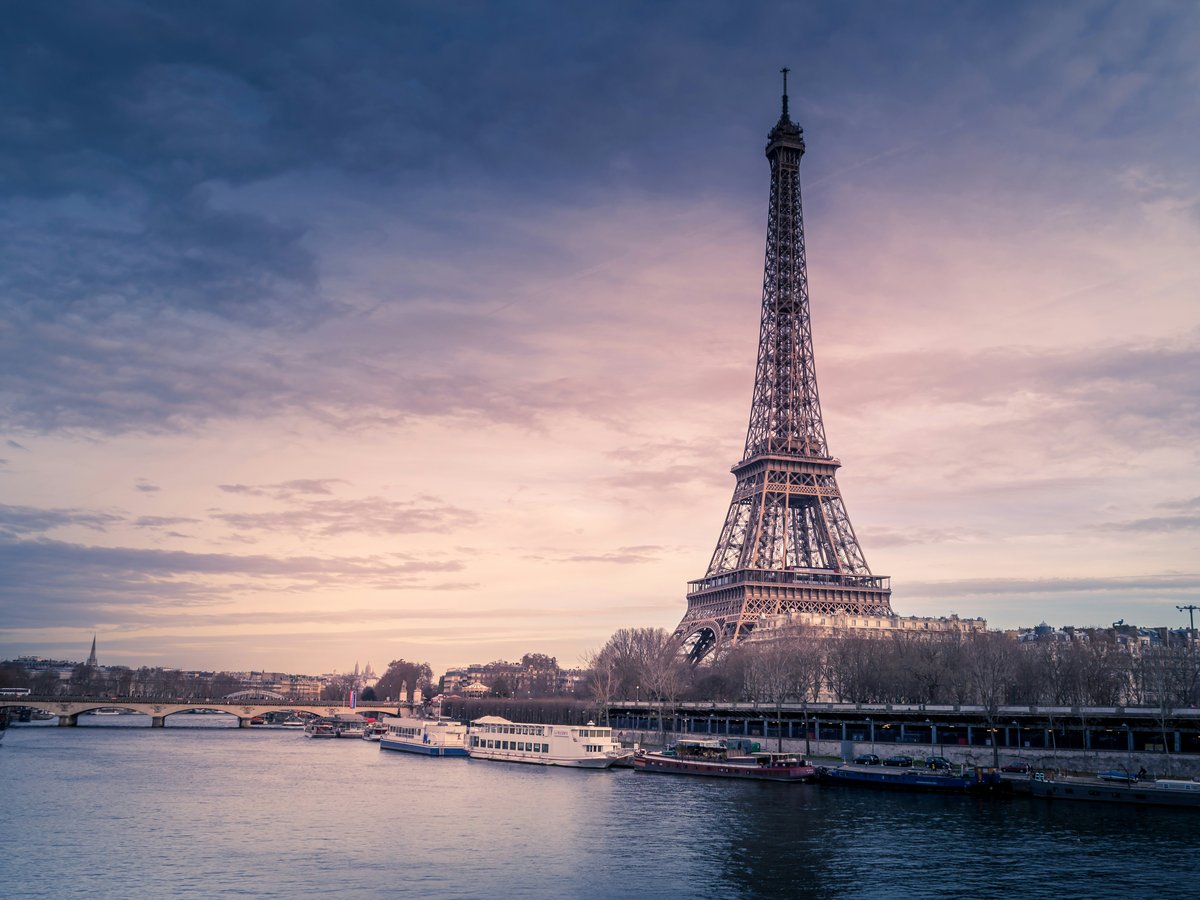
2 Eiffel Tower
Champ de MarsThe iron silhouette every Paris skyline is measured against
Visible from 48.8583, 2.2945, the Eiffel Tower rises above the Champ de Mars with the kind of familiarity that makes visitors forget how strange it is up close. Don't bother with the ground-level photographers hawking selfie frames; walk past them and get under the tower itself, where the ironwork stops being a postcard and becomes engineering. Ticketing calendar, lift schedules and summit access are at https://www.toureiffel.paris. Book your slot before you leave the hotel, arrive fifteen minutes early, and take the stairs to the second level at least once if your knees allow it. The best view of the tower is not from the tower; it is from the Trocadéro side of the river, an hour before sunset, when the metal catches the last of the light.
-
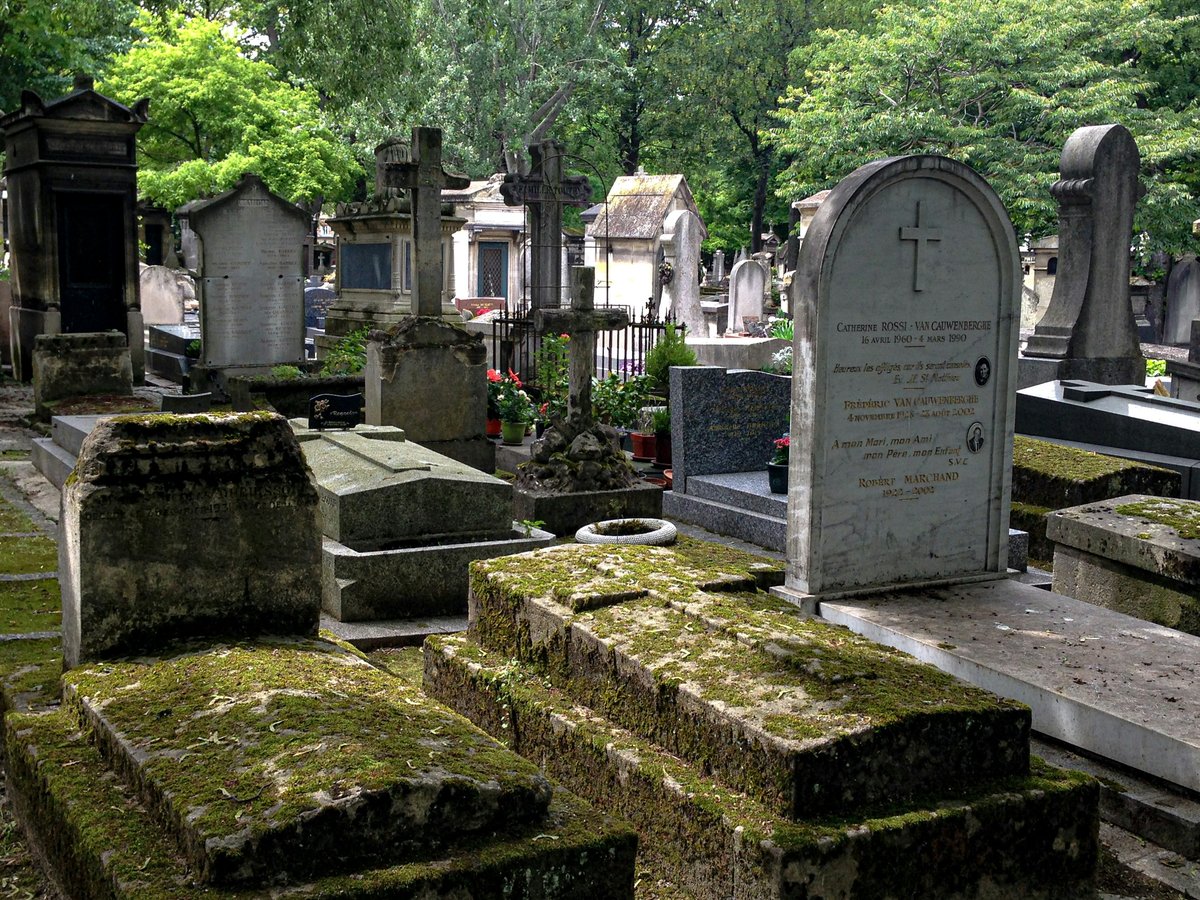
3 Père Lachaise Cemetery
16, rue du Repos 75020 ParisThe hillside necropolis where Paris keeps its most-visited residents
At 16, rue du Repos in the 75020, Père Lachaise Cemetery covers a hillside that most first-time visitors underestimate by an hour. The locals head straight for the older avenues around 48.8611, 2.3942 and let the marked pilgrimage routes to the celebrity graves thin themselves out. It is also a garden, a sculpture park and a working municipal cemetery: the cemetery label barely covers what the place is. Practical information, opening hours and the current map are at https://www.paris.fr/perelachaise, and the office is reachable at +33-1-55-25-82-10 if you need to confirm access before a long detour. Bring flat shoes, a paper map, and at least two hours.
-
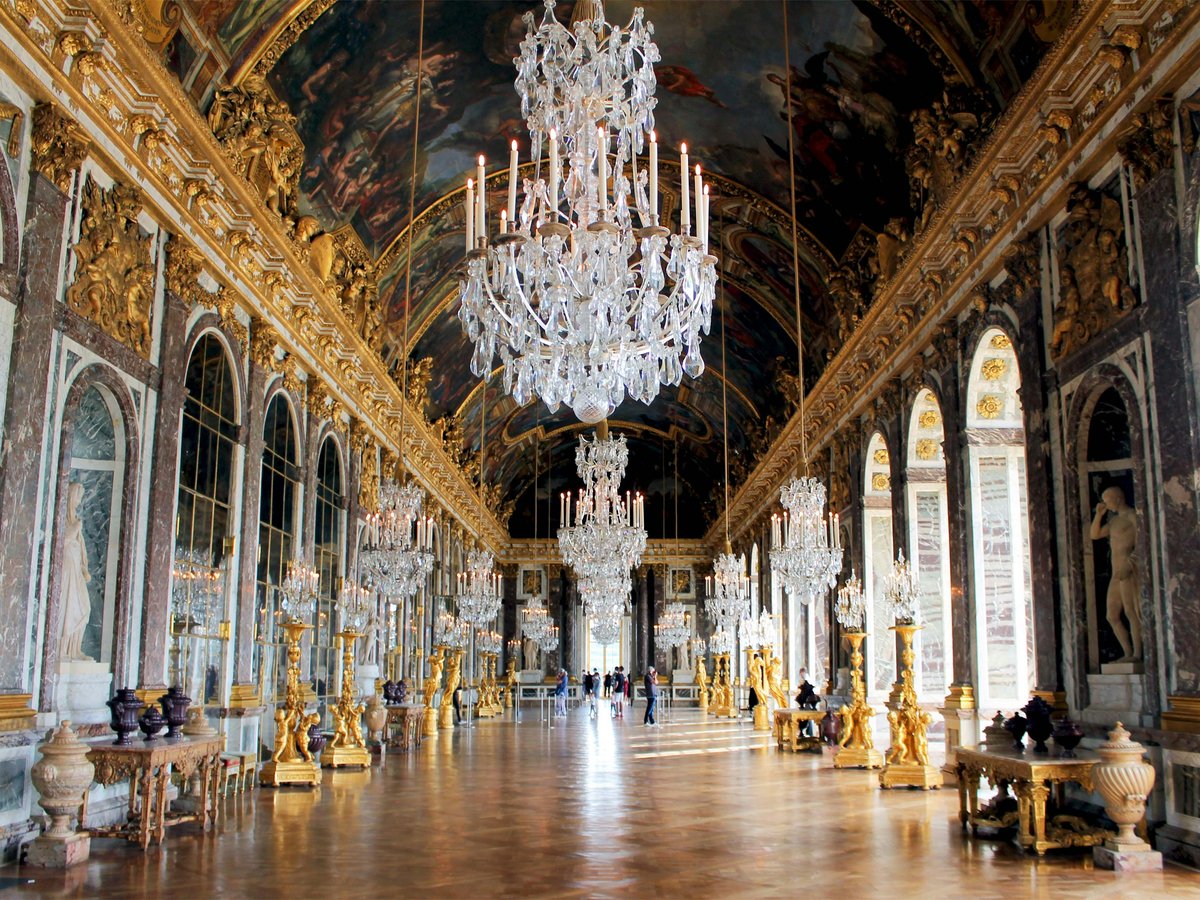
4 Palais Garnier
Place de l'Opéra, 75009 Paris, FranceThe 19th-century opera house that still sets the terms for Parisian stagecraft
From the steps at Place de l'Opéra in the 75009, the Palais Garnier reads as a stage set for the boulevard around it, which is exactly what it was designed to be. Skip the daytime facade selfie and buy a self-guided visit, or better a scheduled tour: the grand staircase, the auditorium and the Chagall ceiling are the argument. The building is as much a museum of Second Empire ambition as a working theatre; the plain opera-house label undersells it by a considerable margin. Coordinates 48.8719, 2.3317 put you a short walk from any of the surrounding métro lines. Programme, visit slots and evening performance listings are at https://www.operadeparis.fr/; the cheap upper-level seats for a live performance are the honest way to see the room used the way it was built to be used.
-
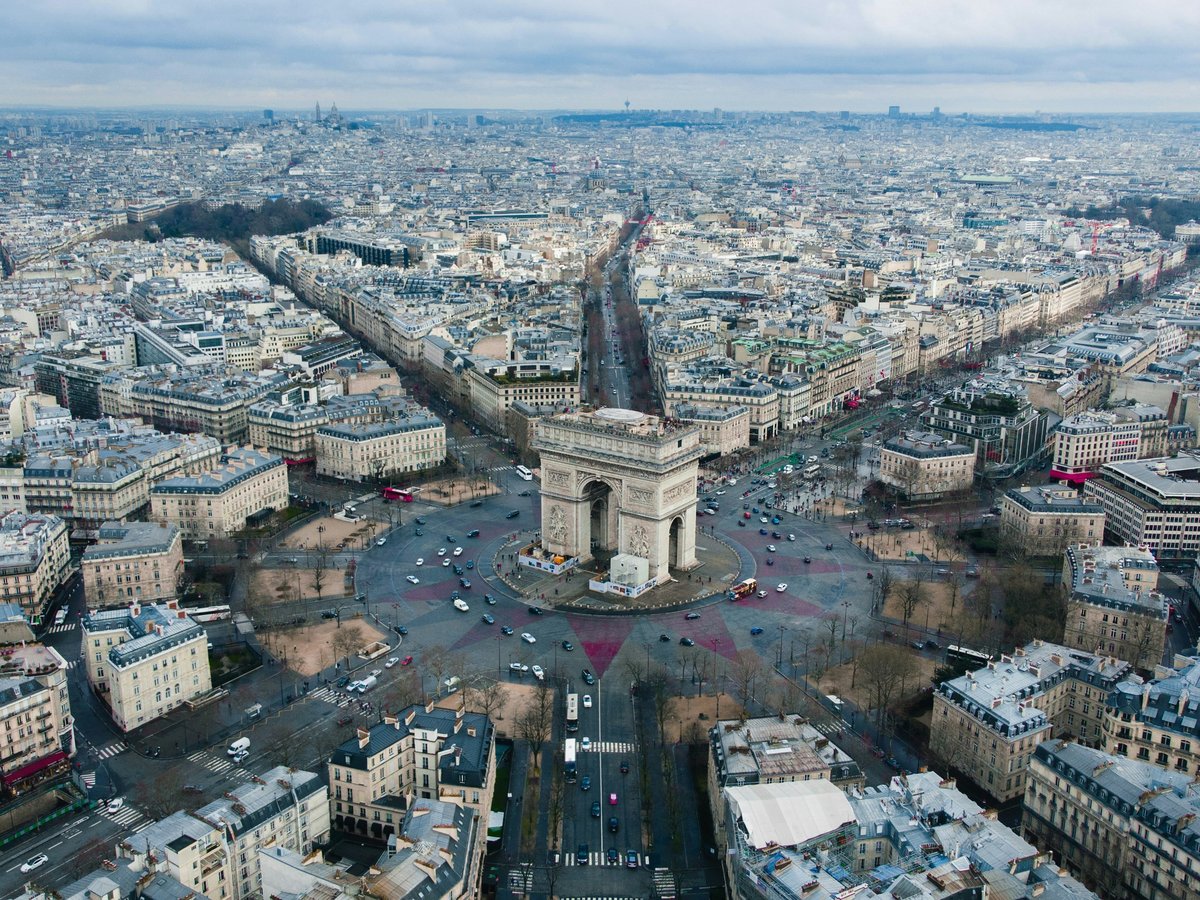
5 Arc de Triomphe
Place Charles de Gaulle, at coordinates 48.8738, 2.2950The rooftop viewing platform that reads the city's twelve-avenue star from above
At 48.8738, 2.2950, the Arc de Triomphe stands at the head of a traffic circle that first-time visitors instinctively try to cross on foot. Don't; the pedestrian underpass is the point. The reason to climb it is the view down the twelve avenues that radiate from the star, a piece of urban design that only makes sense from the terrace. Skip the ground-level photo scrum and go straight to the ticket desk for roof access; the queue moves faster than it looks and the reward is the best free-standing reading of Baron Haussmann's Paris you can get without a helicopter. Timed tickets and current hours are at https://www.paris-arc-de-triomphe.fr; late afternoon, with the light coming up the Champs-Élysées, is the moment worth booking around.
-
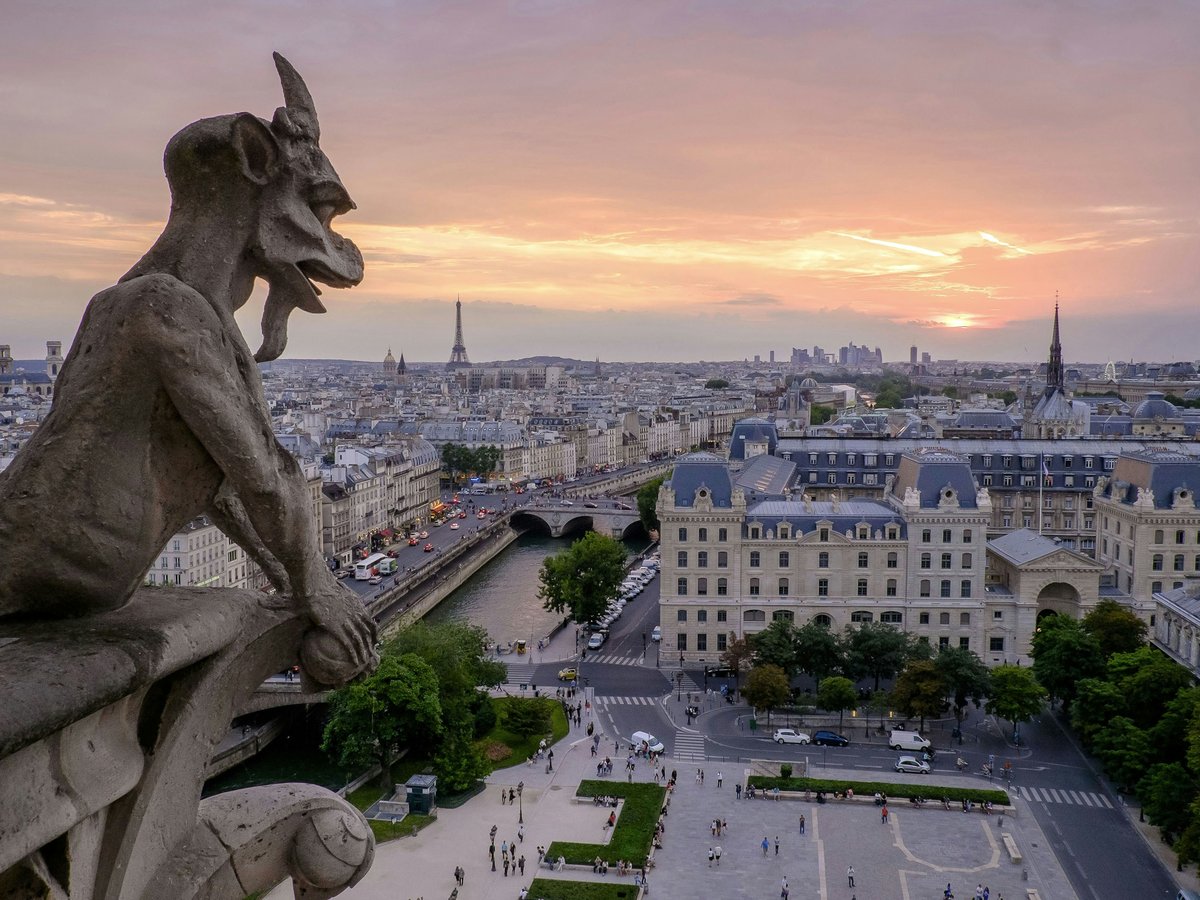
6 La Défense
West of Paris at 48.8917, 2.2408The purpose-built high-rise district that gives Paris its counter-skyline
West of the périphérique at 48.8917, 2.2408, La Défense is a dedicated business district that most visitors write off before setting foot in it. Skip the reflex to dismiss it as an office park; the axial view back down through the Grande Arche toward the Arc de Triomphe is one of the great planned sightlines in Europe, and it costs nothing but a métro ticket. Come on a weekday around lunchtime when the plazas are populated and the public sculpture programme reads as intended, rather than on a Sunday when the whole quarter goes quiet. Practical information, event listings and the current cultural programme are at https://parisladefense.com. Give it an hour: enough to walk the esplanade, look back at the city, and understand what modern Paris looks like when it stops preserving itself.
-
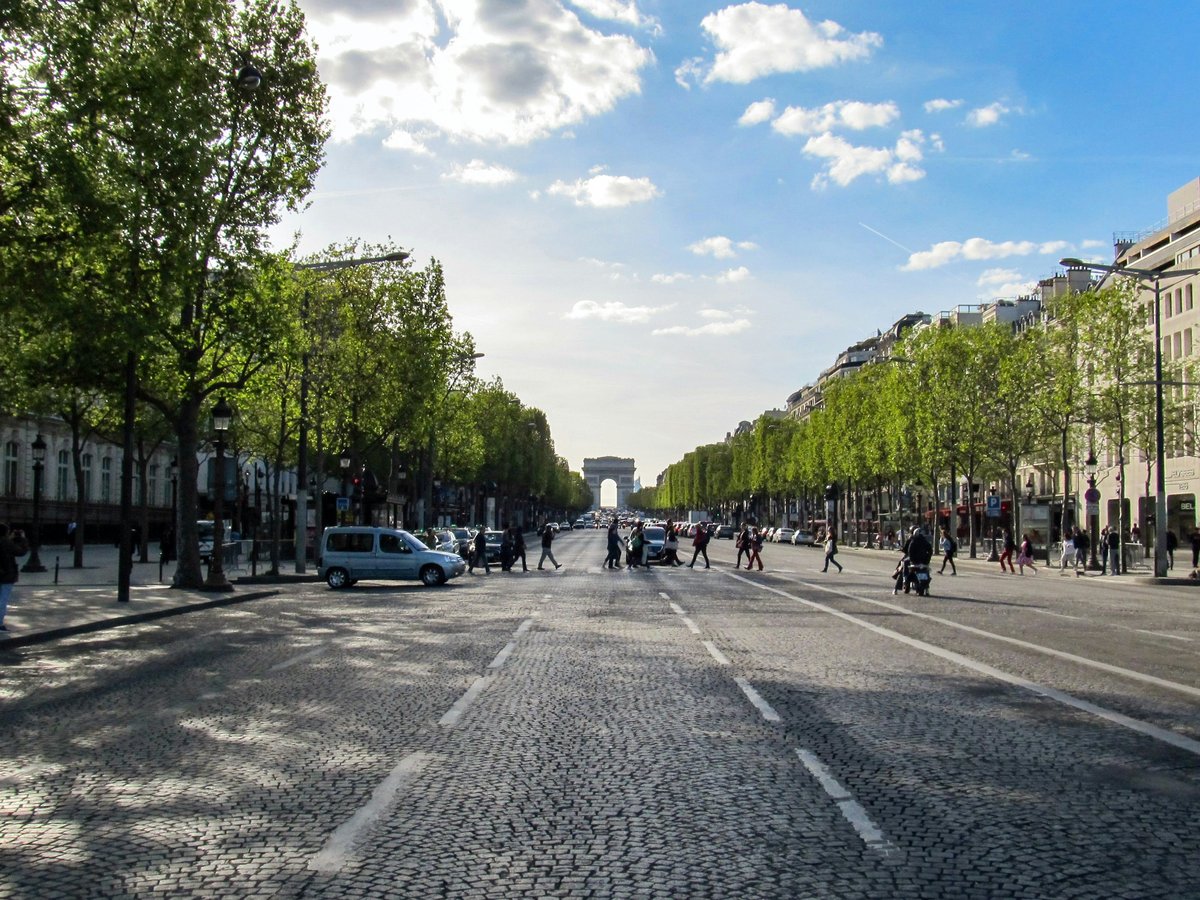
7 avenue des Champs-Élysées
Between Place de la Concorde and the Arc de Triomphe, centred on 48.8697, 2.3079The ceremonial avenue that still functions as the city's parade route
Anchored at 48.8697, 2.3079, the avenue des Champs-Élysées has been steadily colonised by international flagships and airline offices. Don't bother eating on it; side streets one block off the axis still have kitchens that the rents have not yet priced out of using butter. What still works is walking it end to end, once, from Place de la Concorde up to the arch and back, ideally at dusk when the shopfronts light up and the traffic noise softens. Treat it as a promenade rather than a destination: it is the spine that connects several other stops on this list, and the pace of the walk tells you more about how Paris is used than any single storefront on it will.
-
8 Élysée Palace
Coordinates 48.8703, 2.3164The presidential residence you view from the street, not the inside
Approached from 48.8703, 2.3164, the Élysée Palace is the official residence of the President of France, and unlike most of the addresses on this list it is not a place you casually walk into. Skip the expectation of a public tour: the palace opens its doors only on rare heritage weekends, and even then the queue is measured in hours. What you can do any day is walk the perimeter, note the Garde Républicaine at the gates, and understand the geography of French power in the space of a fifteen-minute detour off the rue du Faubourg-Saint-Honoré. The presidency's history and heritage pages, including detail on the building, are at https://www.elysee.fr/exposition/patrimoine#palais-evreux; read them before you go so the closed front gate reads as context rather than disappointment.
-
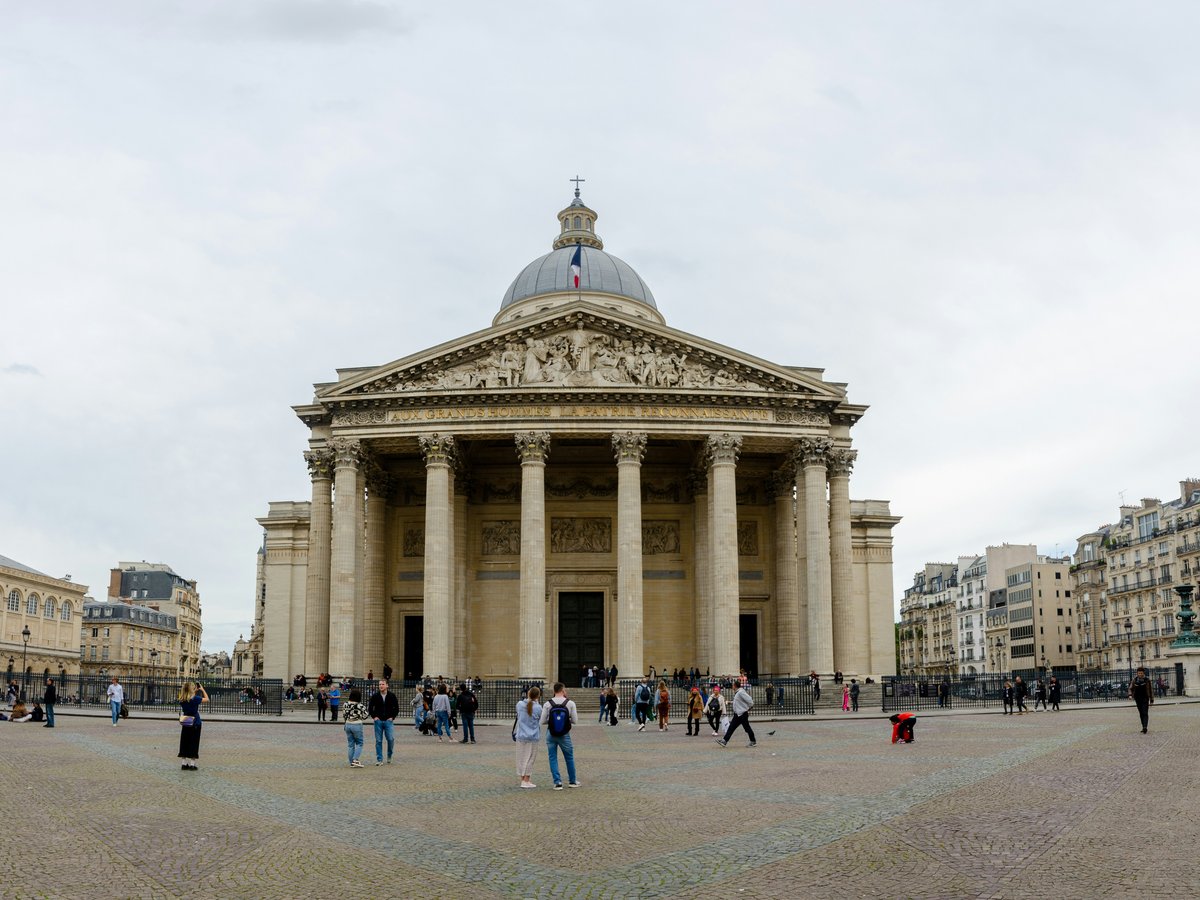
9 Panthéon
Coordinates 48.8462, 2.3461The domed mausoleum where the Republic keeps its heroes
Sited at 48.8462, 2.3461 on the hill above the Latin Quarter, the Panthéon is Paris's mausoleum for the most distinguished French people, and the crypt is the reason to go, not the dome. Don't rush through the nave; take the stairs down and give the tombs of Voltaire, Rousseau and the rest the time they were designed to demand. Foucault's pendulum still swings in the central space and still does the thing the physics textbooks promise, which is a small marvel to catch in person. Current visiting hours, temporary exhibitions and the seasonal roof-access windows are at http://www.paris-pantheon.fr/; book the dome climb in advance if it is open during your dates, because the view over the Left Bank is worth the extra ticket and the extra flights.
-
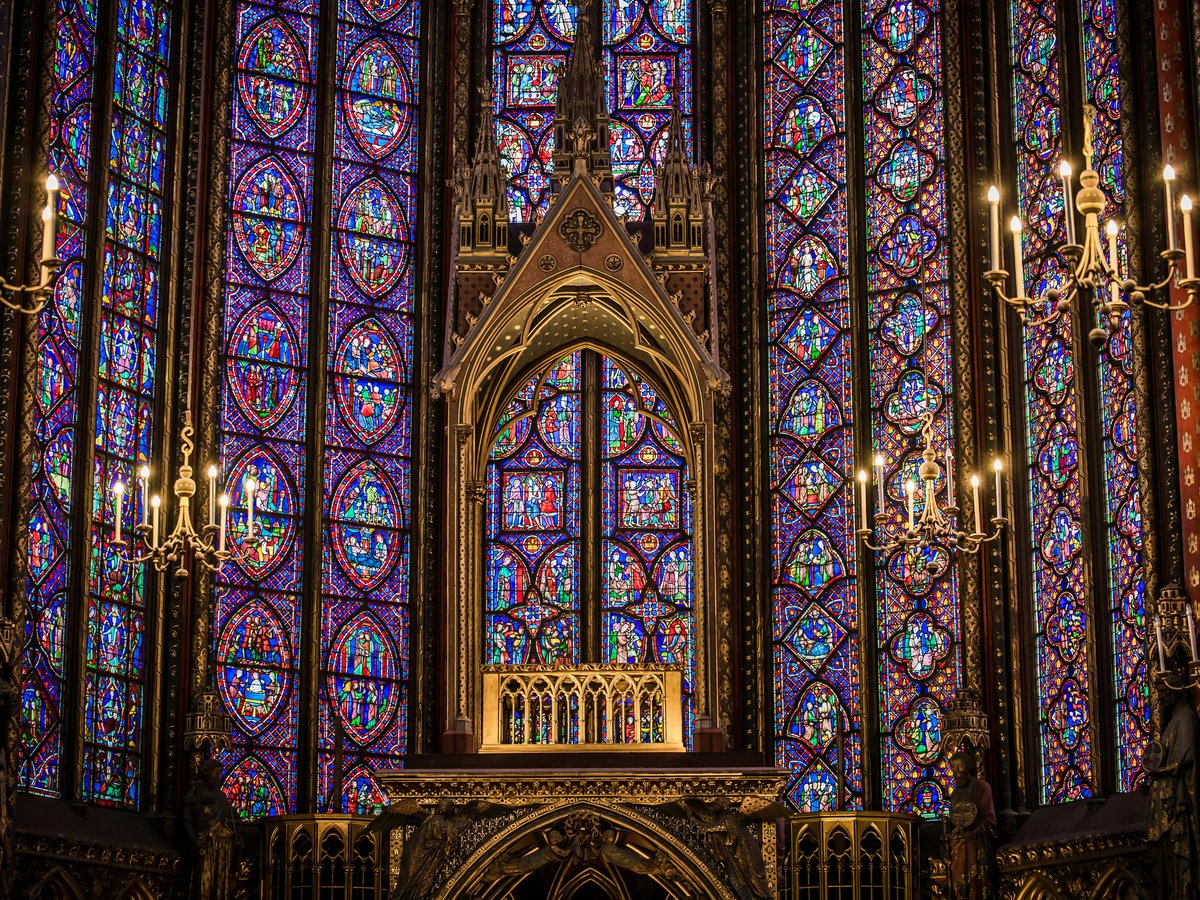
10 Sainte Chapelle
Coordinates 48.8554, 2.3450, inside the Palais de la Cité complexThe 13th-century glass box whose upper chapel is mostly window
Reached through the security queue at the Palais de la Cité and located at 48.8554, 2.3450, Sainte Chapelle is a room that its museum-label description (a chapel in Paris) does nothing to prepare you for: it is essentially made of coloured light. Skip the ground-floor lower chapel after a polite glance and go straight up the narrow stairs to the upper chapel; the stained glass is the argument. Come mid-morning on a bright day when the eastern windows are lit and the room fills with the specific bruised-blue-and-red glow that no photograph reproduces. Timed tickets, evening concert programming and the current visiting rules are at https://www.sainte-chapelle.fr/. Combine it with a walk across the Île de la Cité rather than treating it as a standalone stop; the surrounding island is the setting the architecture was built into.
-
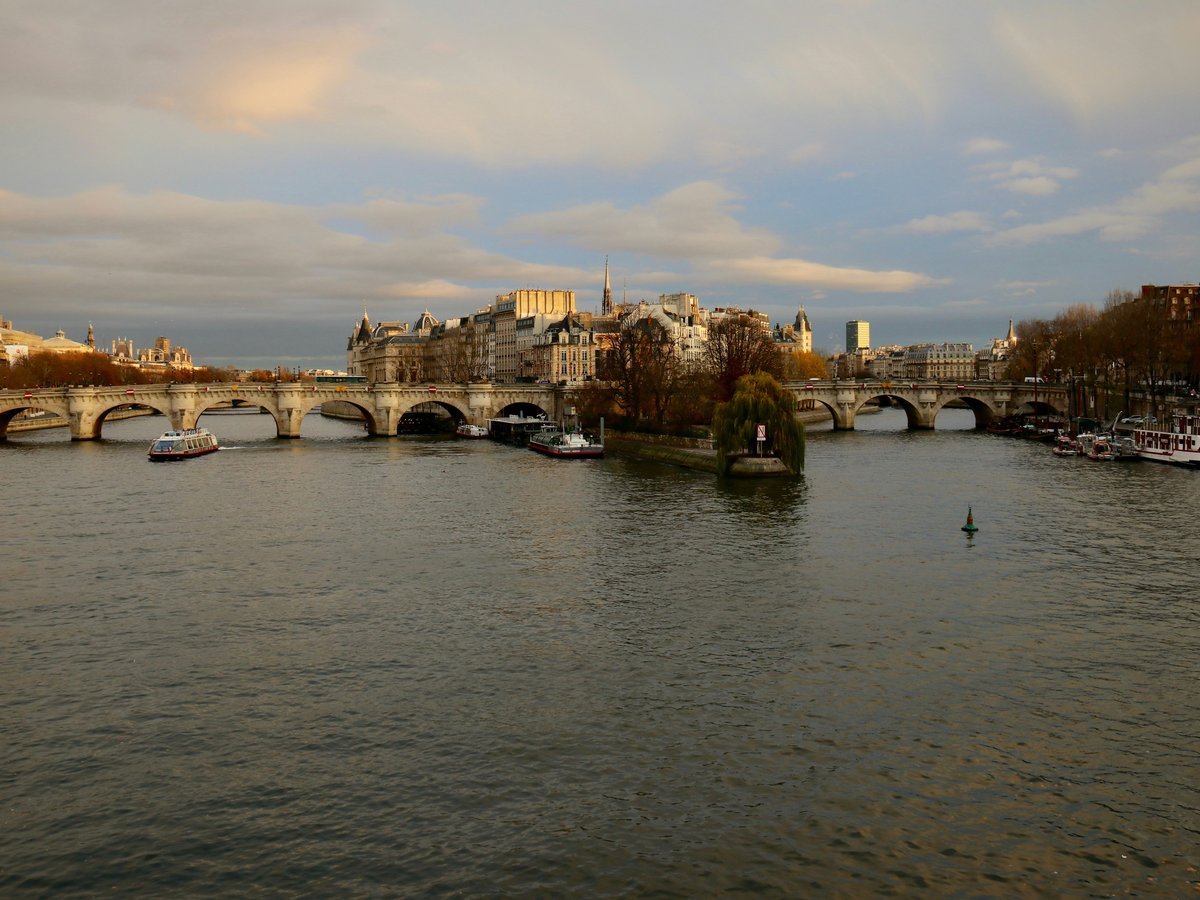
11 île de la Cité
Centred on 48.8547, 2.3475 in the middle of the SeineThe river island the city was founded on and still radiates from
Centred on 48.8547, 2.3475, the Île de la Cité is an island in the river Seine that the rest of the city has been organising itself around for two thousand years. Skip the reflex to treat it as a checklist of monuments; walk it as an island. Cross one of the older bridges on foot, follow the quays around the perimeter, and cut through the flower market before you commit to any single interior. Notre-Dame at one end and the Palais de la Cité complex at the other define the walk, but the reason to give this whole entry a slot is the space between them: the narrow streets, the river views back at the Left Bank and Right Bank, the sense that you are standing on the seed of Paris. Give it a full morning; it repays the time.
-
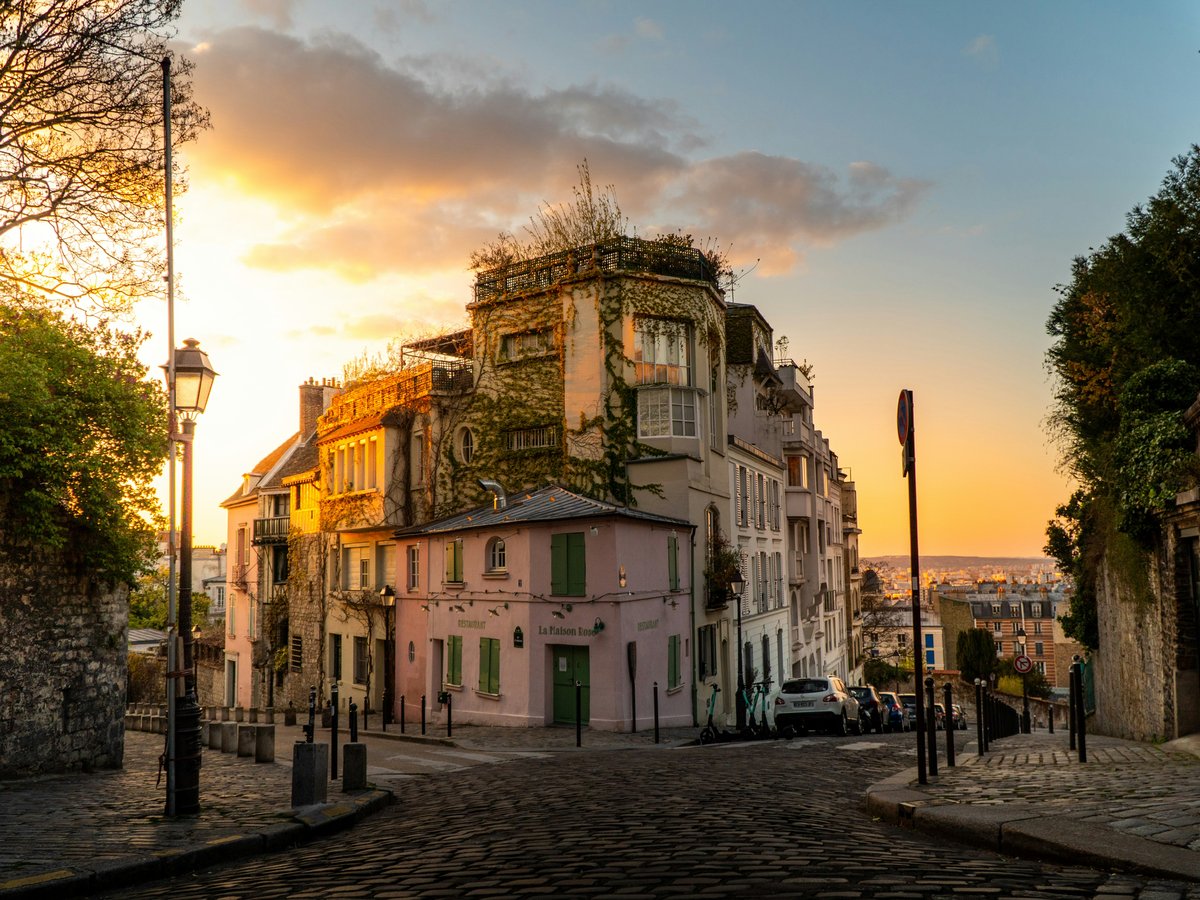
12 Montmartre
The large hill centred on 48.8869, 2.3411 in the 18th arrondissementThe steep-street quartier north of the boulevards, best walked from the bottom up
Sitting at 48.8869, 2.3411, Montmartre is a large hill in Paris's northern 18th arrondissement, and the way to see it is to approach on foot from below rather than being deposited at the top by the funicular. Skip the caricature artists on the Place du Tertre after a quick loop; the quieter streets on the north slope still hold vineyards and working-neighbourhood cafés that haven't turned over yet. Give the climb an hour and stop often: the staircase views back over the rooftops are the reason to walk rather than ride, and they are best in the last hour of light when the tiles turn the specific colour that painters spent a century trying to reproduce. Come down a different way than you went up; the descent through the eastern staircases lands you back on the boulevards at a bar-hour that feels earned.
Last verified by automated review (v1.7.2_accom-wave-149-20260903041243) on . What is automated review?