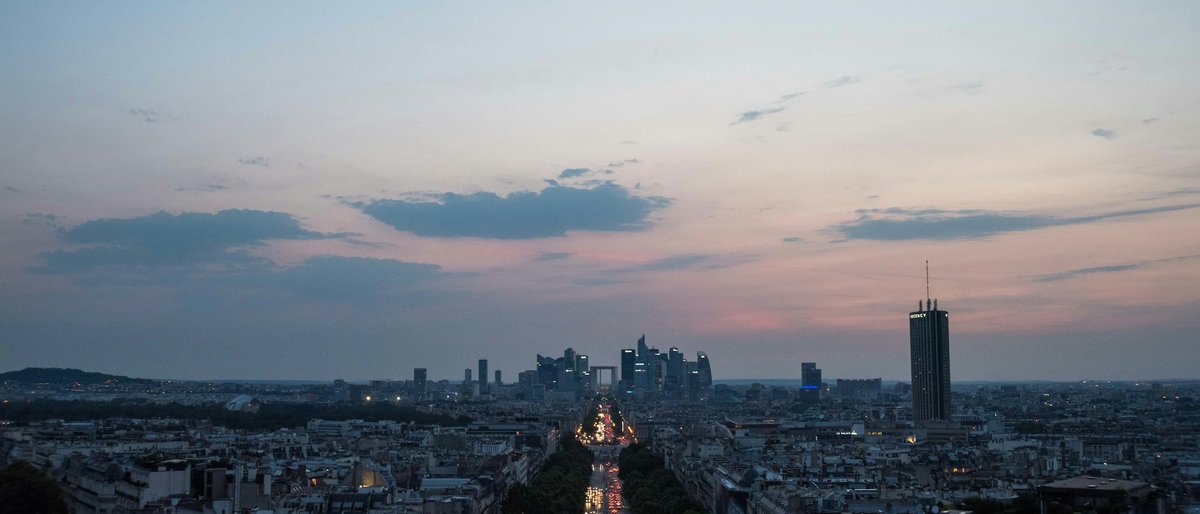
Paris is built in a spiral. The arrondissements (twenty of them) curl outward from the center like a snail shell, starting at the Louvre and winding clockwise. The Seine cuts through the middle, and that river is your best compass: the Right Bank (north) tends to be grander, louder, more commercial; the Left Bank (south) still carries that literary, slightly slower energy, though the distinction blurs more each year. The center (1st through 6th) is dense with history and tourists, which is not a criticism: those tourists are there for a reason. As you move outward, the neighborhoods get rougher around the edges, more residential, and often more interesting for it. What catches most first-timers off guard is how compact the city is. You can walk from the Eiffel Tower to Le Marais in about an hour, crossing half a dozen distinct worlds along the way. Each arrondissement folds into the next, but the shifts in atmosphere can be sudden: you'll turn a corner from a wide Haussmann boulevard onto a medieval lane barely wide enough for two people. The Métro connects everything efficiently, but honestly, walking is how you read the city. You hear the differences before you see them: the clatter of café chairs being set up in Saint-Germain at dawn, the low bass thump leaking out of bars near Oberkampf at midnight, the eerie quiet of the Île Saint-Louis at any hour.
Neighborhoods
-
Le Marais (3rd & 4th arrondissements)
Le Marais is one of the few neighborhoods that survived Haussmann's 19th-century demolition campaign, so the streets are still medieval: narrow, twisting, paved with old stones that get slippery when wet. The architecture runs to 17th-century hôtels particuliers with heavy wooden doors and interior courtyards you can sometimes glimpse through half-open gates. It's the historic Jewish quarter and the center of LGBTQ+ life in Paris, and those identities coexist with high-end fashion boutiques and concept stores. Rue des Rosiers still smells of falafel from L'As du Fallafel and Mi-Va-Mi, and there's usually a line snaking down the sidewalk around lunchtime. The pace is a deliberate stroll: people come here to browse, eat, and sit in the Place des Vosges, which is arguably the most beautiful square in the city. Weekends get crowded. Really crowded.
- Best for
- First-time visitors who want walkable sightseeing, couples, anyone who wants to eat and shop without a plan, LGBTQ+ travelers looking for a welcoming home base
- Key streets
- Rue des Francs-Bourgeois for boutiques and the Carnavalet Museum, Rue de Turenne for galleries, Rue des Rosiers for the old Jewish quarter, Rue de Bretagne for the covered Marché des Enfants Rouges: likely the oldest food market in Paris. Place des Vosges is the anchor.
-
Saint-Germain-des-Prés (6th arrondissement)
This is the neighborhood people picture when they imagine literary Paris: Sartre at Café de Flore, Hemingway at Brasserie Lipp, that sort of thing. The reality in the 2020s is more polished than bohemian. The old bookshops and jazz clubs are still here, but so are Dior, Louis Vuitton, and rents that have pushed out most working artists. That said, the bones are gorgeous. Cream-colored Haussmann buildings, wide sidewalks shaded by plane trees, the quiet gardens behind Saint-Sulpice church. The light along Rue de Seine in the late afternoon does something particular: warm and golden against the old storefronts. It smells of butter and espresso in the mornings. The pace is measured, almost self-consciously elegant.
- Best for
- Couples on a splurge, architecture lovers, older travelers who want a calm and beautiful base, anyone making a pilgrimage to Shakespeare and Company (technically just across the river in the 5th, but close enough)
- Key streets
- Boulevard Saint-Germain is the main artery but the side streets are better: Rue de Buci for its small market and wine bars, Rue Jacob for antique dealers, Rue de Seine for galleries. The Jardin du Luxembourg is at the southern edge and is the neighborhood's backyard.
-
Montmartre (18th arrondissement)
Montmartre operates on two levels, and I mean that. Up top, around Sacré-Cœur and Place du Tertre, it's a tourist zone: portrait artists, overpriced crêpe stands, accordion music that you'll either find endearing or maddening. But walk ten minutes downhill in almost any direction and you hit the real neighborhood: steep residential streets where older buildings lean slightly, tiny wine bars with six tables, bakeries that don't bother with English menus. Rue Lepic winds down through both worlds. The area still feels like a village in patches, with its own vineyard (yes, a working vineyard) on Rue des Saules. At night the streets are quiet except near Pigalle at the southern foot, where things get considerably louder and looser.
- Best for
- Romantic types willing to climb stairs (there are so many stairs) photographers, people who want the classic Paris postcard view but also real neighborhood life a few blocks away
- Key streets
- Rue Lepic from top to bottom (stop at the Café des Deux Moulins of Amélie fame, which is a real working café), Rue des Abbesses for local shops and restaurants, Place du Tertre if you want the full tourist experience at least once, Rue des Martyrs heading south into the 9th for one of the best food streets in the city
-
Bastille & Oberkampf (11th arrondissement)
The 11th is where young Parisians go out. It's not pretty in the way Saint-Germain is pretty: the buildings are plainer, the streets wider and scruffier, the energy louder. Rue Oberkampf and Rue Jean-Pierre Timbaud are lined with bars that spill onto the sidewalk every night of the week. The food scene leans casual and international: good ramen on Rue Sedaine, natural wine bars on nearly every block, North African spots where the merguez is properly spicy and the portions don't shrink after midnight. The area around Place de la Bastille itself is more of a transit hub than a destination, but once you're a few streets north or east, the neighborhood finds its rhythm. Daytime is calmer: coffee shops, record stores, the odd vintage furniture dealer.
- Best for
- Travelers in their 20s and 30s who want nightlife without the velvet-rope scene, food explorers, anyone who finds central Paris too manicured
- Key streets
- Rue Oberkampf and Rue Jean-Pierre Timbaud for bars and restaurants, Rue de Charonne heading east for a mellower stretch, Rue de la Roquette connecting Bastille to Père Lachaise, Boulevard Richard-Lenoir for the twice-weekly market (Thursday and Sunday mornings)
-
Canal Saint-Martin (10th arrondissement)
The canal itself is the draw: a narrow waterway with iron footbridges and double locks, lined with chestnut trees that turn the towpath into a green tunnel in summer. The neighborhood on both sides has been slowly gentrifying for two decades now, and at this point the balance tips toward comfortable rather than gritty. Coffee roasters, independent bookshops, a few tattoo parlors, organic grocery stores. The architecture is mixed: some Haussmann, some older, some frankly ugly 1970s blocks. It doesn't try to charm you the way the center does, and that's part of the appeal. In warm weather, people sit along the canal banks with wine and cheese in the evening, and the atmosphere is relaxed: closer to Amsterdam than the Paris of movies.
- Best for
- Younger travelers and couples who want a neighborhood feel without the intensity of the 11th, people who prefer independent coffee shops to formal cafés, anyone staying more than a few days who wants to feel like a temporary local
- Key streets
- Quai de Valmy and Quai de Jemmapes along both sides of the canal, Rue de Marseille and Rue Beaurepaire for shops, Rue du Faubourg Saint-Denis heading south for some of the best cheap food in Paris: Indian, Kurdish, African, all packed into a few blocks
-
Latin Quarter (5th arrondissement)
The Latin Quarter gets a mixed reputation and, to be fair, it deserves some of it. Rue de la Huchette near Notre-Dame is a tourist trap: Greek restaurants with aggressive touts, crêpe shops playing the same accordion playlist. But step a few blocks south and the neighborhood changes completely. Around the Panthéon and Rue Mouffetard, the 5th becomes a genuine residential area with a university town feel: the Sorbonne is right there, after all. The streets are narrow and medieval in places, around Rue de la Montagne Sainte-Geneviève where the cobblestones are worn smooth. Old bookshops, tiny cinemas showing art films, the Jardin des Plantes at the eastern edge with its greenhouses and natural history museum. The food has improved in recent years as the tourist-trap places get competed out by actual restaurants.
- Best for
- Students, budget travelers, readers and film lovers, families with older kids who'd enjoy the natural history museum and botanical garden, anyone who wants central Paris without central Paris prices
- Key streets
- Rue Mouffetard for the daily market and café-hopping, Place de la Contrescarpe as a sitting spot, Rue de la Montagne Sainte-Geneviève for the old academic atmosphere, the quays along the Seine near the Institut du Monde Arabe for views and booksellers
-
South Pigalle: SoPi (9th arrondissement)
SoPi is what happens when a red-light district gentrifies but keeps some of its edge. Ten years ago, the southern end of Pigalle was mostly sex shops and peep shows. Some of those are still around, but they're now sandwiched between natural wine bars, third-wave coffee roasters, and restaurants run by young chefs who couldn't afford the Left Bank. Rue des Martyrs, which runs from Montmartre down through the 9th, might be the best food street in Paris: butchers, fishmongers, cheese shops, pastry shops, all functioning as a real market street, not a showpiece. The buildings are tall Haussmann with iron balconies, and the streets feel distinctly Parisian in a way that some gentrified neighborhoods in the east don't quite manage. It's noisy. There's traffic. But the energy is real.
- Best for
- Foodies above all else, couples who want nightlife that's more wine bar than nightclub, travelers who like neighborhoods in transition and don't mind a bit of roughness mixed in
- Key streets
- Rue des Martyrs from top to bottom: every single block has something worth stopping for. Rue Henry Monnier for restaurants and bars. Rue de Navarin for a quieter residential feel. Place Gustave Toudouze for outdoor dining.
-
Belleville & Ménilmontant (19th & 20th arrondissements)
This is the Paris that doesn't appear on postcards, and some visitors prefer it that way. Belleville is historically a working-class, immigrant neighborhood: large Chinese and North African communities have been here for generations, and that shows in the food. The streets climb steeply from the Belleville Métro station up toward the Parc de Belleville, and the views from the top of that park rival Montmartre without any of the crowds. The buildings are a patchwork: crumbling 19th-century facades next to social housing blocks next to street art covering entire walls. Ménilmontant, running along the ridge to the south, has a similar gritty energy but with more of the bar and live-music scene. It feels like a neighborhood that's still making up its mind about what it wants to be.
- Best for
- Adventurous travelers comfortable less touristy, budget-conscious visitors, street art enthusiasts, anyone chasing authentic Chinese, Tunisian, or Vietnamese cooking
- Key streets
- Rue de Belleville for Chinese restaurants and Vietnamese phở shops, Rue Dénoyez for street art (an entire alley covered in murals), Rue des Envierges for the approach to Parc de Belleville and its viewpoint, Rue Oberkampf's eastern end where it climbs into Ménilmontant
-
Île Saint-Louis & Île de la Cité (1st & 4th arrondissements)
Two islands sitting in the middle of the Seine, connected by bridges to both banks. Île de la Cité is where Paris started: Notre-Dame is here, currently still being restored, along with Sainte-Chapelle and its stained glass that stops people mid-sentence. It's heavily touristed during the day, naturally. Île Saint-Louis, the smaller island just behind, is its opposite: a hushed residential enclave of 17th-century townhouses where the loudest sound tends to be your own footsteps. There's one main street, Rue Saint-Louis en l'Île, with ice cream shops (Berthillon, the famous one), a few small restaurants, and not much else. The whole island takes fifteen minutes to walk around. At night it goes completely silent. Staying here is like staying in a museum: beautiful, a bit eerie, not lively.
- Best for
- History-focused travelers, couples seeking a quiet and distinctive base, anyone who wants to say they slept on an island in the middle of the Seine, though options are limited and pricey
- Key streets
- Rue Saint-Louis en l'Île is essentially the only commercial street. The quays circling both islands are the real attraction: walk the full perimeter of Île Saint-Louis at sunset for uninterrupted views of the river, the Left Bank, and the back of Notre-Dame.
-
Batignolles (17th arrondissement)
Batignolles is what gentrified neighborhoods look like when the gentrification is gentle and French rather than Instagram-driven. It's a former village that got absorbed into Paris in the 1860s and still carries a bit of that small-town feel: an organic market on Saturday mornings in the square, neighborhood restaurants where the server knows the regulars, a renovated park with a pond. The Martin Luther King park on the northwestern edge is modern and well-designed, built over old rail yards. The streets are calm, residential, and distinctly un-touristy. You'll hear more French here in an hour than you might all day in Le Marais. The food scene is solid and priced for locals, not visitors: good bistros doing proper prix fixe lunch menus for fifteen to eighteen euros.
- Best for
- Travelers who've been to Paris before and want a local residential experience, families, long-stay visitors, anyone trying to eat well without overpaying
- Key streets
- Rue des Batignolles and Rue Legendre for shops and restaurants, Place du Docteur Félix Lobligeois for the organic market, Avenue de Clichy for the louder, busier edge of the neighborhood
FAQ
Which Paris neighborhood is best for first-time visitors?
Le Marais or Saint-Germain-des-Prés tend to work best as a first-time base. Both are central, walkable, and close to major sights without feeling like you're sleeping in a theme park. Le Marais has more going on at street level: food, shops, nightlife. Saint-Germain is calmer and more classically pretty. Budget matters too: the 11th (Bastille area) and 10th (Canal Saint-Martin) give you real neighborhood life at noticeably lower hotel prices, with easy Métro access to everything.
Is it safe to stay in the outer arrondissements like the 18th, 19th, or 20th?
Generally, yes, with normal city awareness. Parts of northern Montmartre (above Sacré-Cœur near Porte de Clignancourt) and areas around Gare du Nord can feel rough at night, for solo travelers. Belleville and Ménilmontant are working-class but not dangerous, just pay attention to your surroundings as you would in any large city. The 20th near Père Lachaise is quietly residential. Avoid poorly lit streets late at night in any arrondissement, honestly. Paris is statistically quite safe but pickpocketing on the Métro and around tourist sites is common.
How important is it to stay near a Métro station in Paris?
Quite important, practically speaking. The Métro is fast, cheap, and runs until about 1:15 AM on weeknights (2:15 AM on Fridays and Saturdays). Being within a five-minute walk of a station opens up the whole city. That said, Paris is compact enough that many neighborhoods are walkable to major sights. Staying in the 6th or 4th, you might barely use the Métro at all. The further out you stay (Belleville, Batignolles) the more you'll rely on it. Buy a Navigo Easy card at any station and load it with ten-trip carnets rather than buying singles.
What is the best area in Paris for food without spending a fortune?
The 10th and 11th arrondissements are currently the sweet spot. Rue du Faubourg Saint-Denis in the 10th has some of the cheapest and most varied food in the city: proper meals for eight to twelve euros. The 11th around Oberkampf and Charonne has a strong natural wine bar scene where you can eat well for twenty to twenty-five euros including drinks. Rue des Martyrs in the 9th is more curated and slightly pricier but the quality is consistently high. Avoid eating within a two-block radius of any major monument: the markup is brutal and the food is almost always worse.
Should I stay on the Left Bank or the Right Bank?
The Left Bank (south of the Seine: 5th, 6th, 7th) is traditionally quieter, more intellectual, and architecturally consistent. Saint-Germain and the Latin Quarter are here. The Right Bank (north: 1st through 4th, then outward) has more range: Le Marais's old streets, the grandeur of the Champs-Élysées area, the raw energy of the 11th. For a first visit, the distinction matters less than people think: a bridge takes you across in three minutes. If you want calm and pretty, lean Left Bank. If you want energy and variety, lean Right Bank. The 4th arrondissement on the Right Bank is probably the single most versatile location in the city.
How walkable is Paris compared to other major European cities?
Extremely walkable: more so than London, comparable to Barcelona's old town. The central arrondissements (1st through 6th) are flat and compact. You can cross the whole historic center in about forty-five minutes on foot. Montmartre and Belleville have serious hills, so factor that in if mobility is a concern. Sidewalks are mostly good, though narrow in older neighborhoods, and cobblestones are common: comfortable shoes matter more than style here. Bike-sharing through Vélib' stations is everywhere and cycling infrastructure has improved significantly since 2020, with dedicated lanes along most major routes.
Last verified by automated review (v1.7.1) on . What is automated review?