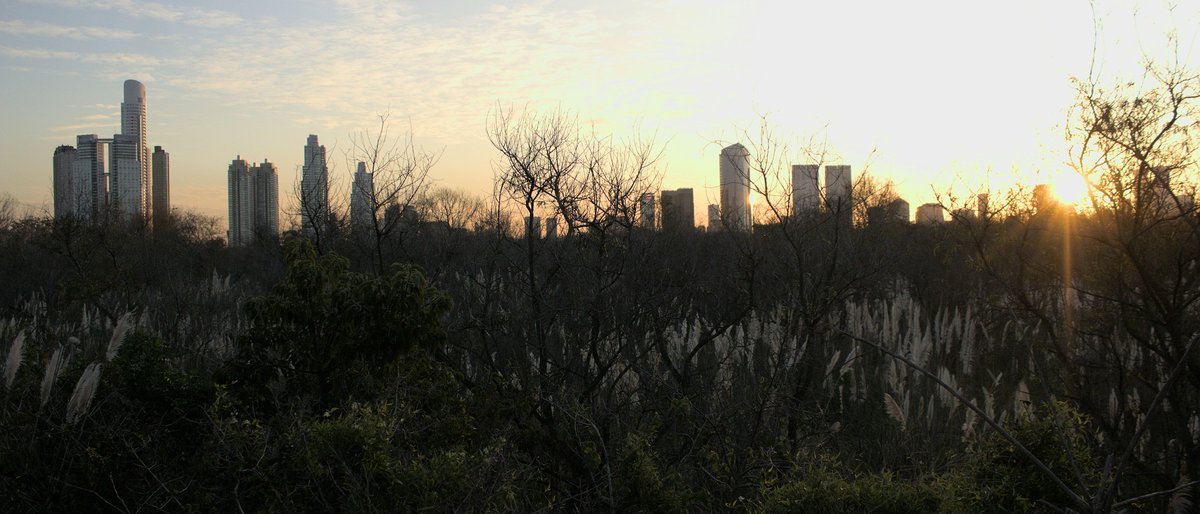
Buenos Aires sits on the western shore of the Río de la Plata, which is less a river and more a muddy brown estuary so wide you can't see Uruguay on the other side. The city itself is flat (relentlessly flat) which means the outdoor scene here leans more toward cycling, rowing, and long riverside walks than mountain scrambling. That said, the Paraná Delta is just an hour north by train, and it completely changes the equation. Suddenly you're in a labyrinth of channels, islands, and subtropical vegetation that feels like a different country. The climate tends toward humid subtropical, so summers (December through February) get properly sticky: 35°C with thick humidity that sits on your chest. Autumn (March through May) is when the city really shines for outdoor pursuits: warm days, cool evenings, the trees in Palermo turning golden. Winter is mild by South American standards, rarely dropping below 5°C, though the damp cold off the river has a way of getting into your bones. Spring brings jacarandas and unpredictable rain. Worth noting that porteños have a strong park culture: weekends in Bosques de Palermo feel like half the city showed up with mate thermoses and folding chairs. You might not come to Buenos Aires specifically for outdoor adventure, but the options are more varied than most visitors expect, and the delta alone is worth rearranging a day for.
Outdoor activities
-
Cycling the Costanera Sur and Puerto Madero Loop
The Costanera Sur path runs along the eastern edge of the city, skirting the Reserva Ecológica before looping through the redeveloped Puerto Madero waterfront. It's flat tarmac the whole way, so the challenge is more about distance and wind off the river than elevation. You'll pass old port cranes repurposed as public art, the Puente de la Mujer, and stretches where the path narrows and you're dodging joggers. Bike rentals are easy to find near Dock 3 in Puerto Madero, or you can use the city's public Ecobici system if you register in advance. On weekends, the path gets crowded by mid-morning: early starts help. The whole loop is roughly 15 km if you include the reserve perimeter.
- Difficulty
- Easy
- Duration
- 1.5 to 3 hours depending on stops
- Best season
- March through May (autumn) or September through November (spring): summer heat and humidity make midday rides unpleasant
-
Rowing on the Tigre River Channels
Several rowing clubs along the Río Luján and the canals near Tigre offer single and double scull rentals, plus introductory lessons for those who haven't rowed before. The water is generally calm in the narrower channels, though the main river picks up chop when motorboats pass. You'll paddle past wooden houses on stilts, fruit trees hanging over the water, and the occasional nutria swimming alongside. The Club de Regatas de Tigre has been operating since the late 1800s and still runs programs. Expect to smell river mud, wet wood, and the sweet rot of fallen fruit. Mornings tend to be calmer and cooler. Getting there takes about an hour from Retiro station on the Tren de la Costa or Mitre line.
- Difficulty
- Beginner to Intermediate
- Duration
- 2 to 4 hours on the water
- Best season
- March through May and September through November: summer mornings work too if you start early
-
Rock Climbing at Urban Walls
Buenos Aires doesn't have natural rock faces nearby, but the indoor climbing scene has grown considerably. Muro. and La Maza are two of the more established climbing gyms in the city, with bouldering walls and lead routes that draw a dedicated community. If you're visiting and want to keep your fingers strong between Patagonia legs, these are solid options. Some offer day passes without membership. The vibe tends to be welcoming to foreigners: climbers are climbers everywhere. Worth calling ahead as hours can shift, around holidays.
- Difficulty
- Varies by route: V0 to V8+ bouldering, 5.8 to 5.12 lead
- Duration
- 1.5 to 3 hours per session
- Best season
- Year-round (indoor)
-
Running in Bosques de Palermo
The network of paths through Bosques de Palermo (around the lake, past the Rosedal, through the Jardín Japonés perimeter) forms the de facto running circuit for half the city. The main loop around the lake is about 3.5 km on a mix of packed dirt and paved path. Serious runners extend out toward the Hipódromo Argentino and back, which can push a session to 10 km or more. The surface is mostly forgiving, though tree roots buckle the path in spots. You'll share the route with dog walkers, mate circles, and the occasional parilla vendor setting up for the day. The smell of eucalyptus and grilling meat coexisting is peak Buenos Aires.
- Difficulty
- Easy to Moderate depending on distance
- Duration
- 30 minutes to 1.5 hours
- Best season
- Year-round, though summer runs should happen before 8 AM or after 6 PM
-
Kitesurfing at San Clemente del Tuyú
About four hours south of Buenos Aires on the Atlantic coast, San Clemente del Tuyú catches consistent winds off the bay. The beach is wide and sandy, the water shallow for a good stretch offshore: good conditions for learning. Several schools operate from November through March. The wind tends to pick up in the afternoon, so morning lessons work well for beginners before conditions get stronger. Mind you, the water stays cool even in summer: a 3/2 wetsuit is standard. It's a proper day trip if you leave early, or better as an overnight.
- Difficulty
- Beginner to Advanced depending on conditions
- Duration
- Full day trip or overnight
- Best season
- November through March (summer wind season)
-
Horseback Riding in San Antonio de Areco
About two hours northwest of Buenos Aires, San Antonio de Areco is gaucho country. Several estancias offer trail rides through flat pampa grassland: don't expect mountains, but the openness of the landscape has its own draw. The grass stretches to the horizon, broken by the occasional ombú tree. Some estancias include an asado lunch, which tends to be the real highlight: beef cooked slowly over wood embers, empanadas, and wine. Rides range from one-hour introductions to full-day outings. The horses are criollo breed, stocky and calm. The smell of leather tack and wood smoke is strong enough to stick to your clothes.
- Difficulty
- Easy to Moderate: prior riding experience helpful but not required for introductory rides
- Duration
- Half-day to full-day excursion
- Best season
- March through May and September through November: summer heat is hard on both rider and horse
Day hikes
-
Paraná Delta Island Trails from Tigre
Take the Mitre line from Retiro to Tigre (about an hour), then a lancha colectiva (water bus) to one of the delta islands. The Río Carapachay and Arroyo Angostura areas have informal walking paths along the riverbanks and through gallery forest. These aren't marked trails in the alpine sense: you're walking along raised paths between houses and through patches of jungle-like vegetation. The ground can be muddy and uneven after rain. Mosquitoes are relentless in summer. But the delta is atmospheric in a way that repays the discomfort: green light filtering through willows, the smell of wet earth and river, the sound of birds you can't identify. Some islands have small almacenes (general stores) where you can buy drinks and simple food.
- Difficulty
- Easy to Moderate: flat but potentially muddy, navigation can be confusing
- Duration
- Full day including transit: 3 to 5 hours walking
- Best season
- March through May (autumn): fewer mosquitoes, cooler temperatures, golden light through the willows
-
Walking the Barrancas in Vicente López and San Isidro
North along the river, the suburbs of Vicente López and San Isidro have riverside barrancas: bluffs that rise above the Río de la Plata. A walking path traces the edge from the Paseo de la Costa in Vicente López through to San Isidro's historic center. The elevation change is modest (maybe 15 to 20 meters) but after the flatness of Buenos Aires proper, it feels like terrain. You pass through manicured parks, past colonial-era buildings in San Isidro's casco histórico, and along stretches where the river views open up. The Catedral de San Isidro and the surrounding cobblestone streets make a natural endpoint. Accessible via the Tren de la Costa or Mitre line.
- Difficulty
- Easy: paved paths, gentle slopes
- Duration
- 2 to 3 hours walking, plus transit time
- Best season
- Year-round, though autumn and spring are most comfortable
-
Reserva Natural Otamendi
About 70 km northwest of Buenos Aires near the town of Campana, Otamendi is a national nature reserve protecting a section of Paraná Delta wetland and pampa grassland. There are marked trails (the Sendero Guaraní and Sendero de la Laguna are the main ones) winding through tall pampas grass, past lagoons, and into gallery forest. Birdwatching is the primary draw: you might spot southern screamers, roseate spoonbills, or capybaras grazing near the water. The trails are flat but can be soggy. Bring rubber boots in wet season. There's a small visitor center with maps. Getting there without a car requires a bus to Campana and then a taxi or long walk, so a rental car simplifies logistics considerably.
- Difficulty
- Easy to Moderate: flat terrain, but wet conditions and distance from Buenos Aires add complexity
- Duration
- Full day including travel: 2 to 4 hours walking the trails
- Best season
- April through October (drier months): summer flooding can close trails
-
Punta Indio Coastal Walk
About two hours south of Buenos Aires, the Bahía Samborombón area near Punta Indio has coastal trails through tala forest: a rare ecosystem found only along this stretch of the Río de la Plata's southern shore. The Reserva Natural Punta Indio protects some of this forest. Walking here is flat and exposed in sections, with the estuary stretching out grey-brown to the horizon. Shorebirds gather in large numbers during migration season (September through November). The forest sections smell of damp wood and wild herbs. Access is easiest by car. Trails aren't always well-maintained, so ask locally about current conditions before heading out.
- Difficulty
- Easy: flat walking, though trail conditions vary
- Duration
- Half-day including driving: 1.5 to 3 hours walking
- Best season
- September through November for migratory shorebirds; autumn for comfortable temperatures
Water activities
-
Kayaking the Paraná Delta Channels
This is the signature water activity near Buenos Aires and it delivers. Multiple operators run guided kayak trips from Tigre into the delta's narrower channels: the Arroyo Rama Negra, Río Carapachay, and surrounding waterways. You paddle through corridors of willow and ceibo trees, past wooden houses with their own docks, and through sections where the vegetation closes overhead. The water is tannin-dark and slow-moving in the smaller channels. You'll hear kingfishers, see nutria slipping off banks, and smell the particular sweetness of subtropical decay. Half-day trips are common; full-day trips push deeper into quieter areas. No prior experience needed for the guided options, but you will get wet.
- Difficulty
- Beginner to Intermediate: calm water but sustained paddling
- Duration
- 3 to 6 hours on the water
- Best season
- March through May and September through November: summer is possible but hot and mosquito-heavy
-
Sailing on the Río de la Plata
Several yacht clubs and sailing schools operate out of Puerto Madero and the Dársena Norte. The Río de la Plata is wide and windy: conditions can shift quickly, and the water has a distinctive chop that's different from ocean sailing. Introductory classes and day sails are available for visitors. The Club Náutico Buenos Aires has historically offered courses. The water itself is brown and opaque: the sediment load from the Paraná and Uruguay rivers ensures you never see below the surface. Sunset sails looking back at the Buenos Aires skyline are atmospheric, with the city lights switching on as the sky turns copper.
- Difficulty
- Beginner courses available; open water conditions can challenge intermediate sailors
- Duration
- 2 to 4 hours for a day sail
- Best season
- October through April: more consistent wind, warmer temperatures
-
Stand-Up Paddleboarding in Tigre
Several rental shops in Tigre's waterfront area offer SUP boards for exploring the calmer channels near town. The water is flat enough for beginners in the protected areas, though passing motorboats create wake you'll need to handle. It's a good way to cover more water than kayaking without the commitment of a guided trip. Early mornings on weekdays are the calmest: weekend boat traffic picks up by mid-morning. The water temperature is warm enough from November through March that falling in is merely inconvenient rather than dangerous.
- Difficulty
- Beginner: calm water in protected channels
- Duration
- 1.5 to 3 hours
- Best season
- November through March for water temperature; autumn mornings for calm conditions
-
Swimming at the Atlantic Coast Beaches
Buenos Aires doesn't have swimmable beaches within the city: the Río de la Plata's water quality rules that out. But the Atlantic coast is reachable for a long day trip or overnight. Mar del Plata is the classic destination, about 5 hours by bus, with wide sandy beaches and cold water. Closer options include San Clemente del Tuyú (3.5 to 4 hours) and Pinamar (4.5 hours). The water is cold even in summer: 18 to 22°C typically. Currents can be strong, at Mar del Plata's less-protected beaches. Lifeguards are present at popular beaches from December through February. The sand at Pinamar is fine and golden; Mar del Plata's is coarser and darker.
- Difficulty
- Varies: sheltered beaches are family-friendly; open water requires swimming competence
- Duration
- Full day trip or overnight
- Best season
- December through February (summer): water is still cold but tolerable
Parks & gardens
-
Reserva Ecológica Costanera Sur
FreeBuilt on landfill from a failed highway project, this 350-hectare reserve sits right against Puerto Madero and feels improbably wild for its location. Tall grasses, lagoons, and dense scrub shelter over 300 bird species: herons, coots, and the occasional caiman have been spotted. The trails are flat dirt paths, some of which flood after heavy rain. Birders come with serious optics at dawn. The rest of the day it fills with joggers and families. The sound shifts from city traffic to frogs and rustling reeds within about five minutes of entering. Free entry, though the gates close at sundown.
Highlights: Birdwatching at dawn, lagoon walks, views of the Río de la Plata from the eastern shore, free guided walks on weekends
-
Jardín Botánico Carlos Thays
FreeTucked into Palermo near the intersection of Santa Fe and Las Heras, the Jardín Botánico covers about 7 hectares with over 5,000 plant species grouped by region. The greenhouses (the art nouveau one designed by Thays himself) are worth lingering in. Stray cats have colonized the garden and locals feed them devotedly. The paths wind past Roman and French-style sculpture, a butterfly garden, and quiet benches where you might be the only person for a few minutes. It's small enough to see in an hour but pleasant enough to stay for two.
Highlights: Art nouveau greenhouse, regional plant collections, butterfly garden, stray cat colony, quiet benches throughout
-
Bosques de Palermo (Parque Tres de Febrero)
FreeThis is the big one: the green lung of Buenos Aires. The park sprawls across several hundred hectares and includes the Rosedal (rose garden), the artificial lake, wide cycling paths, and open lawns that fill with picnickers on any decent weekend. The Rosedal peaks in October and November when over 18,000 rose bushes are in bloom: the scent is thick in the air. The lake has pedal boats for rent, though the water itself is murky green. Old trees (tipas, jacarandas, eucalyptus) provide shade that feels essential in summer. Street vendors sell choripán and cold drinks along the main paths.
Highlights: Rosedal in spring bloom, pedal boats on the lake, choripán vendors, wide cycling and running paths, jacaranda canopy in November
-
Parque Lezama
FreeIn San Telmo, Parque Lezama sits on a bluff overlooking the old port area. It's rougher around the edges than Palermo's parks: cracked paths, old statues with moss growing over them, a Russian Orthodox church looming at one corner. But that worn quality is part of the appeal. On Sundays it connects to the San Telmo antiques market energy. Local artists set up easels, and you'll hear tango practice drifting from somewhere. The Museo Histórico Nacional sits at the park's northern end. It's the kind of place where you sit on a bench, drink mate, and watch the neighborhood happen around you.
Highlights: Bluff views, proximity to San Telmo market on Sundays, Museo Histórico Nacional, street artists and tango practice
-
Jardín Japonés
Located within the Palermo park system, the Jardín Japonés is one of the largest Japanese gardens outside Japan. A red curved bridge over a koi pond is the signature image, but the bonsai collection and the carefully raked gravel areas reward slower attention. There's a tea house serving matcha and Japanese sweets. The sound design is deliberate: water features placed to mask traffic noise from nearby Avenida Casares. It's a paid entry, but the fee is modest and the maintenance quality shows. Go on a weekday morning if you want any sense of calm; weekends draw crowds.
Highlights: Koi pond and red bridge, bonsai collection, matcha tea house, designed water features for ambient sound
-
Parque Centenario
FreeCentered around a small lake in the Caballito neighborhood, Parque Centenario feels more local than the Palermo parks. A weekend feria (market) sets up around the perimeter selling books, crafts, and street food. The Museo de Ciencias Naturales sits on the edge. Families, musicians, and mate-drinking circles fill the grass. You can hear cumbia from portable speakers competing with someone practicing guitar. The amphitheater hosts free concerts and community events. It's not a destination park for most visitors, but if you want to see how porteños use their green space, this is a more honest picture than the Rosedal.
Highlights: Weekend feria with books and crafts, Museo de Ciencias Naturales, amphitheater with free events, authentic neighborhood atmosphere
Practical tips
- Sun Protection
- The UV index in Buenos Aires peaks between October and March, and the flat terrain means there's rarely natural shade outside the parks. Wear SPF 50+, reapply after sweating, and bring a hat with a brim: baseball caps leave your ears and neck exposed. Sunglasses with UV protection are worth the investment. The midday sun between noon and 3 PM in January is fierce; if you're doing any extended outdoor activity, plan around it. The reflected glare off the Río de la Plata adds to exposure on waterfront paths.
- Water and Hydration
- Tap water in Buenos Aires city is safe to drink, though many locals prefer bottled. Carry at least 1.5 liters for any activity over two hours, more in summer. In the delta and rural areas outside the city, bring your own supply: don't count on finding potable water. The humidity in summer means you'll sweat more than you think, if you're not acclimatized. Electrolyte packets (sold at any farmacia) are cheap and worth carrying.
- Mosquito Protection in the Delta
- The Paraná Delta has serious mosquitoes from November through March. Bring DEET-based repellent (at least 30%) or picaridin. Long sleeves and pants help, even in heat. Dawn and dusk are worst, but in the delta's shaded channels, mosquitoes are active throughout the day. If you're kayaking, apply repellent to your hands and face before launching: you can't reapply easily on the water. Dengue is present in the region; take mosquito protection seriously rather than treating it as optional comfort.
- Footwear and Trail Conditions
- For city parks and the Costanera, running shoes or comfortable walking shoes are fine. For the delta, waterproof hiking shoes or rubber boots are worth bringing: paths flood regularly and the mud is slippery clay that ruins leather. At Reserva Otamendi, rubber boots are close to essential in the wet season. For the Atlantic coast, bring sandals that can handle sand and rocky sections. In general, the terrain around Buenos Aires doesn't demand heavy hiking boots, but waterproofing matters more than ankle support.
- Getting to Outdoor Areas
- The Tren Mitre line from Retiro to Tigre is cheap, frequent, and the main artery for delta access. Buy a SUBE card (transit card) at any kiosko: you need it for trains and buses. For the Atlantic coast and Otamendi, long-distance buses depart from Retiro bus terminal; book through the terminal or Plataforma 10. A rental car opens up Otamendi, Punta Indio, and the estancias more easily than public transit. Uber and Cabify work in Buenos Aires but availability drops sharply outside the metro area. Weekend trains to Tigre get crowded: go early.
- Seasonal Planning
- Autumn (March through May) is the sweet spot for outdoor activities around Buenos Aires. Temperatures hover between 15 and 25°C, humidity drops, mosquitoes taper off, and the delta's willows turn golden. Spring (September through November) is also strong, though rain is less predictable and October can swing between hot and cold within the same week. Summer works for water activities if you start early, but the humidity makes sustained effort uncomfortable. Winter is mild but short days and occasional cold spells limit options. Plan water activities for the warmer months and walking or cycling for autumn and spring.
FAQ
Is Buenos Aires a good city for outdoor activities?
It depends on what you're after. The city itself is flat and urban, so you won't find mountain trails or wilderness within city limits. But the park system is extensive: Bosques de Palermo alone can absorb a full morning of running, cycling, or walking. The real outdoor potential lies just outside the city: the Paraná Delta for kayaking and walking, the pampa for horseback riding, and the Atlantic coast for surfing and swimming. Think of Buenos Aires as a base camp with good day-trip options rather than an outdoor destination in its own right.
When is the best time of year for outdoor activities near Buenos Aires?
Autumn, from March through May, is likely the best overall window. The summer heat and humidity have broken, mosquitoes are fading, and the light through the delta willows is golden. Spring (September through November) is a close second, October and November when the jacarandas and roses are blooming. Summer works for beach trips and water sports if you can handle the heat, but extended hiking or cycling in January and February humidity gets unpleasant fast.
Do I need a car to access outdoor areas from Buenos Aires?
Not for the delta: the Mitre train to Tigre is straightforward and cheap, and water taxis run regularly from there. For Reserva Otamendi, Punta Indio, and the estancias near San Antonio de Areco, a car makes things significantly easier. Public buses can get you to Campana for Otamendi, but the last stretch is awkward without wheels. Atlantic coast towns are well-served by long-distance buses from Retiro terminal, so a car isn't necessary for beach trips unless you want flexibility.
Is it safe to kayak or swim in the Río de la Plata?
Swimming in the Río de la Plata within Buenos Aires is not recommended: water quality is poor due to runoff and industrial discharge. Kayaking on the main river is possible but conditions are challenging: strong currents, commercial shipping traffic, and murky water that makes it hard to judge depth. The delta channels near Tigre are a different story: calmer water, no shipping, and guided kayak trips run there regularly with good safety records. For swimming, head to the Atlantic coast beaches where water quality is monitored during summer.
What should I pack for a day trip to the Paraná Delta?
Waterproof shoes or sandals you don't mind getting muddy, mosquito repellent with DEET or picaridin, sunscreen, a hat, at least 1.5 liters of water, and snacks: options for buying food on the islands exist but are scattered and unreliable. A light rain jacket is worth having since delta weather can shift. Bring a dry bag or ziplock bags for your phone and wallet. If you're kayaking, wear quick-dry clothing rather than cotton, which stays wet and heavy. A spare shirt for the train ride home is a small luxury that feels essential.
Are there guided outdoor tours available in English?
Yes, though the selection is smaller than in more tourist-heavy cities. Several operators in Tigre run English-language kayak trips, and most estancias near San Antonio de Areco have bilingual guides for horseback riding. For birdwatching at Otamendi or the Reserva Ecológica, a few specialized birding guides operate in English: booking ahead is usually necessary. In the city parks, you generally don't need a guide. For the Atlantic coast, English-language services are more common in Pinamar and Cariló than in the larger, more local beach towns.
Outdoor experiences in Buenos Aires
 Free cancellation
 Polo Match, BBQ and Lesson Day-Trip from Buenos Aires
Outdoor experience: 9 hours, free cancellation.
via Viator
Private Full-Day Iguazu Falls Tour with Airfare from Buenos Aires
Outdoor experience: 1 day.
via Viator Free cancellation
 Half-Day Recoleta and Palermo Bike Tour in Buenos Aires
Outdoor experience: 4 hours, free cancellation.
via Viator Free cancellation
 Private Tour to San Antonio de Areco: Gaucho town & Estancia from Buenos Aires
Outdoor experience: 10 hours, free cancellation.
via Viator Free cancellation
 E-Bike Tour through Buenos Aires City Center & Puerto Madero
Outdoor experience: 3.5 hours, free cancellation.
via Viator Free cancellation
 Tigre Speedboat - The Delta s Captain - CITYSAILING TIGRE
Outdoor experience: 3 hours, free cancellation.
via Viator Free cancellation
 Polo Under the Stars and Argentine BBQ Evening Venue from Buenos Aires
Outdoor experience: 6 hours, free cancellation.
via Viator
2-Day Iguazu Falls with Optional Airfare from Buenos Aires
Outdoor experience: 2 days.
via Viator
Iguazú Falls Private Full Day Tour
Outdoor experience: 14 hours.
via Viator Free cancellation
 Safari náutico en tigre
Outdoor experience: free cancellation.
via Viator Free cancellation
 Tailor-made Day Tour to San Antonio de Areco & Estancia El Ombu
Outdoor experience: 9 hours, free cancellation.
via ViatorLast verified by automated review (v1.7.1) on . What is automated review?