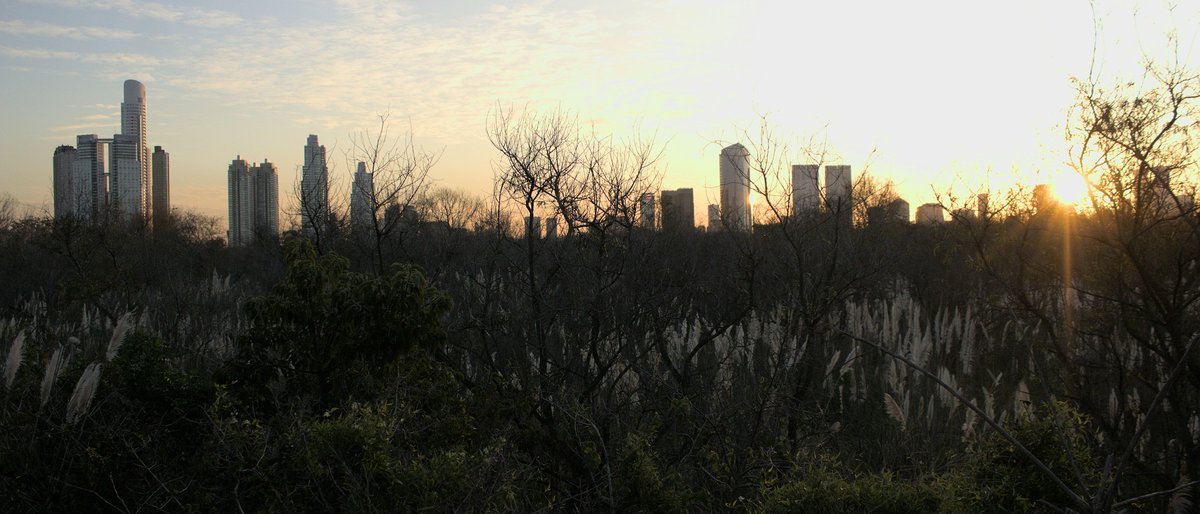
Buenos Aires sprawls out from the Río de la Plata in a rough grid that runs roughly northwest from the waterfront. The city is flat (pancake flat) which means neighborhoods bleed into each other without any natural boundaries to speak of. You'll cross from one barrio to the next and only notice because the architecture shifted or the sidewalk cafés suddenly got more expensive. The mental map most visitors need is simple: the old colonial core sits near the river at the eastern edge, with Plaza de Mayo as the anchor. South of that you get San Telmo and La Boca. North and west, things get progressively more residential and leafy: Recoleta, then Palermo, then Belgrano. The subte (subway) covers the central axis reasonably well along Line D and Line B, but you'll rely on buses and taxis for anything off those corridors. One thing that catches people off guard: distances between neighborhoods feel short on a map but can take a while by car, during rush hour on Avenida Libertador or Santa Fe. The city tends to eat late, stay up late, and wake up slow. That rhythm shapes everything: neighborhood cafés that don't fill until 10 AM, restaurants where 9 PM is early, and a nightlife scene that doesn't start until 1 or 2 AM. Where you base yourself determines which version of Buenos Aires you'll experience, so it's worth thinking through.
Neighborhoods
-
San Telmo
San Telmo feels lived-in, in the best possible way. The buildings are old: 19th-century townhouses with crumbling plasterwork and wrought-iron balconies that sag a little. The streets are narrow, paved with adoquines (cobblestones) that make your suitcase wheels useless. There's a persistent smell of espresso and grilled meat drifting out of doorways. On weekdays it's quiet, almost sleepy. On Sundays, the Feria de San Telmo along Defensa street turns the whole neighborhood into a slow-moving river of people, antique stalls, and street musicians playing bandoneón. The tango here isn't performative: you'll hear it leaking out of milongas on weeknights, the floors creaking under dancers who've been at it for decades.
- Best for
- First-time visitors who want to feel Buenos Aires in their bones. Couples. Anyone who'd rather stumble into a hidden bar than follow an itinerary.
- Key streets
- Defensa is the spine: walk it end to end. Plaza Dorrego is the heart of the Sunday market and worth seeing even on quiet weekdays when old men sit reading newspapers. Estados Unidos and Carlos Calvo have some of the better restaurants. Balcarce, closer to the highway, has a string of tango venues.
-
Recoleta
Recoleta is where Buenos Aires puts on its Paris costume, and to be fair, the resemblance is real. Haussmann-style apartment buildings line broad avenues. The trees are old and enormous: tipas and jacarandás that canopy entire blocks in purple during October and November. Everything here is a bit more polished, a bit more expensive, a bit more quiet. The famous cemetery is worth the visit: it's less morbid than it sounds, more like a miniature city of ornate mausoleums where you can wander for an hour. The restaurant scene skews traditional: proper steakhouses, old-school confiterías with mirrored walls and marble counters.
- Best for
- Travelers who want a calm, walkable base with good restaurants and proximity to museums. Older couples. Anyone who values feeling safe walking at night.
- Key streets
- Avenida Alvear is the grand boulevard: French-style mansions, high-end hotels, and the Alvear Palace. The area around Plaza Francia fills up on weekends with a crafts fair and buskers. Junín and Vicente López have a cluster of good restaurants. Avenida Callao connects Recoleta south toward Congreso.
-
Palermo Soho
Palermo Soho is where the city's creative energy seems to concentrate. Low-rise buildings covered in street art. Independent clothing boutiques in converted houses. Restaurants that change their menus weekly. The pace during the day is relaxed: people working from laptops in courtyard cafés, dogs everywhere, the occasional thump of music from a yoga studio. At night, Thursday through Saturday, the area around Plaza Serrano (officially Plaza Cortázar) gets loud and packed, with bars spilling onto sidewalks. The architecture is mostly one- and two-story houses, which keeps the light open and the streets feeling wide even when they're not.
- Best for
- Younger travelers, solo visitors, anyone who wants walkable restaurants, nightlife, and shopping all within a few blocks. Design and food people.
- Key streets
- Armenia and Thames are the main north-south strips packed with shops and restaurants. Honduras runs east-west through the middle of it all. Plaza Serrano is the obvious gathering point. Gurruchaga and Jorge Luis Borges (yes, named after him) have some of the better independent boutiques.
-
Palermo Hollywood
Palermo Hollywood sits just northwest of Palermo Soho, across the train tracks at Juan B. Justo. It got its name from the TV production studios that set up here in the early 2000s, and that media-industry influence still shows: the bars are a bit more scene-y, the restaurants a touch more experimental. It's less polished than Soho, with more auto repair shops mixed in between cocktail bars, which gives it a grittier, more honest texture. The food scene here might be better than Soho's, partly because rents are slightly lower and chefs can take more risks.
- Best for
- Foodies, nightlife seekers, people who want the Palermo energy without quite as many tourists. Good for a slightly lower-budget stay compared to Soho.
- Key streets
- Fitz Roy and Humboldt run parallel and have some of the best restaurants in the city. Niceto Vega is the nightlife artery: Club Niceto (Niceto Club) hosts the Thursday-night Zizek party that's been a fixture for years. Costa Rica and Cabrera cross through with additional restaurant clusters.
-
La Boca
La Boca is complicated. The part tourists see (Caminito with its painted corrugated-metal houses) is essentially an open-air museum, two blocks long, surrounded by souvenir shops and tango dancers posing for photos. It's worth seeing once,, because the colors against the industrial port backdrop are striking. But beyond Caminito, La Boca is a working-class neighborhood with real poverty, and wandering too far off the tourist path isn't advised, at night. The other magnet is La Bombonera, the stadium where Boca Juniors play. On match days the surrounding blocks shake with drums and chanting. The smell of choripán (chorizo sandwich) from street vendors is thick enough to taste.
- Best for
- A day visit, not a base. Football fans should absolutely catch a Boca Juniors match if timing allows: it's one of the most intense sporting experiences in the world.
- Key streets
- Caminito is the obvious draw: it's short, and you'll see it in 20 minutes. The Museo de Bellas Artes de La Boca (Quinquela Martín museum) on Pedro de Mendoza is good and usually uncrowded. Brandsen leads to the stadium.
-
Microcentro
Microcentro is the financial and commercial heart of the city, and it feels like it. During weekday business hours, the sidewalks are packed with people in office clothes walking fast. Florida, the pedestrian shopping street, is a wall of noise: promoters handing out flyers, money changers whispering 'cambio, cambio,' stores blasting music. At night and on weekends, though, Microcentro empties out in a way that can feel slightly eerie. The architecture is a dense mix: grand Beaux-Arts banks from the early 1900s crammed next to ugly 1970s office towers. Plaza de Mayo anchors the eastern end, with the Casa Rosada (the pink presidential palace) and the cathedral where Pope Francis served as archbishop.
- Best for
- Budget travelers: hotels here tend to be cheaper precisely because it's not the most atmospheric place to stay. Convenient for anyone who wants to be near the subte hub at Plaza de Mayo or Obelisco.
- Key streets
- Florida is the main pedestrian artery: hectic but useful for cheap shopping. Avenida de Mayo is the ceremonial boulevard running from Plaza de Mayo to Congreso, lined with gorgeous early-20th-century buildings and traditional cafés. Lavalle, the parallel pedestrian street, has theatres and pizza spots. Corrientes is the theatre district: think of it as a scruffy, more democratic Broadway.
-
Puerto Madero
Puerto Madero is the newest and most polished barrio: former port warehouses converted into loft restaurants and office buildings in the 1990s and 2000s. It's clean, it's wide, it has a pleasant waterfront promenade along the old docks. It also feels a bit sterile compared to the rest of Buenos Aires. The restaurants tend to be expensive and geared toward business lunches. Santiago Calatrava's Puente de la Mujer bridge is photogenic. The Reserva Ecológica behind the development is a surprisingly wild chunk of marshland and walking trails right on the river: one of the better spots for birdwatching in the city.
- Best for
- Business travelers, anyone who wants modern hotel amenities and doesn't mind trading neighborhood character for comfort. Runners will appreciate the waterfront path.
- Key streets
- The numbered diques (docks) organize the area: Dock 3 and Dock 4 have most of the restaurants. Juana Manso runs through the middle. The Reserva Ecológica entrance is at the southern end of the development.
-
Villa Crespo
Villa Crespo has been quietly becoming one of the more interesting neighborhoods in the city, largely because Palermo rents pushed restaurants and bars westward across Avenida Scalabrini Ortiz. It still has a slightly rough-around-the-edges feel: the streetscape is a mix of leather outlet stores (a remnant of the old tanning industry), auto parts shops, and suddenly a natural wine bar that opened last year. The residential blocks are calm. The restaurant scene is younger and more experimental than Palermo, with lower prices.
- Best for
- Repeat visitors looking for something less polished. Budget-conscious travelers who still want access to good food and nightlife: you're a short walk or bus ride from Palermo.
- Key streets
- Murillo between Scalabrini Ortiz and Malabia is the famous outlet strip: leather jackets, bags, and shoes at factory prices. Aguirre has emerged as a dining street with new openings every few months. Thames continues from Palermo Soho into Villa Crespo and the shift in character is noticeable: less curated, more real.
-
Belgrano
Belgrano feels like a separate small city within Buenos Aires. It has its own commercial center along Avenida Cabildo, its own park (Barrancas de Belgrano, with actual hills: rare in this city), and a distinct residential calm. The streets are wide, the buildings mostly mid-rise apartments with balconies full of plants. The Barrio Chino (Chinatown) on Arribeños street is small (basically two blocks) but packed with Asian supermarkets and restaurants that are useful if you're missing rice dishes and dumpling soup. The neighborhood attracts families and professionals; it's not where the party is, and that's the point.
- Best for
- Families with children, long-term visitors who want a residential feel, anyone who values quiet evenings and green space over nightlife.
- Key streets
- Avenida Cabildo is the main commercial strip: busy, loud, full of chain stores and small shops. Barrancas de Belgrano park is the green anchor. Arribeños between Juramento and Mendoza is the Chinatown strip. Echeverría has some good independent restaurants.
-
Almagro
Almagro is tango territory, not the show-tango of San Telmo tourist venues, but the real milongas where porteños go to dance. The neighborhood itself is residential and unpolished, with low buildings, small plazas, and bars that haven't changed their decor since the 1980s. It has a strong Argentine middle-class character: pizza joints, corner kioscos, laundry hanging from balconies. In the last few years, a cluster of independent theatres and cultural spaces has opened around the Medrano area, giving it a slight bohemian undertone without the gentrified pricing.
- Best for
- Tango enthusiasts who want to dance, not just watch. Travelers seeking an authentic residential Buenos Aires experience far from the tourist circuit.
- Key streets
- Medrano and Avenida Rivadavia intersect at the neighborhood's commercial core. Humahuaca has several small theatres and cultural venues. Sánchez de Bustamante connects south toward Boedo. Avenida Corrientes runs through the northern edge with pizza places and bookshops.
-
Colegiales
Colegiales is one of those neighborhoods that most visitors never hear about, which is part of its appeal. It sits between Palermo and Belgrano, with a quiet residential grid of low buildings, small plazas, and an increasing number of specialty coffee shops and bakeries that have opened in the last few years. The Mercado de las Pulgas (flea market) on Dorrego and Álvarez Thomas is a proper antiques market in a covered warehouse: furniture, old signs, vintage lighting. The pace is slow. Dogs outnumber tourists by a wide margin.
- Best for
- Travelers looking for a quiet, affordable base within walking distance of Palermo. Digital nomads who want decent coffee and calm streets for working.
- Key streets
- Álvarez Thomas is the main avenue, connecting to the subte at Federico Lacroze station. The blocks around Maure and Conde have the best café cluster. Dorrego leads to the flea market. Crámer has a few good restaurants.
FAQ
What is the safest neighborhood to stay in Buenos Aires?
Recoleta and Palermo are generally considered the safest areas for visitors, with well-lit streets and a visible police presence. Puerto Madero is also safe but can feel deserted at night, which creates its own discomfort. That said, Buenos Aires is a big city and petty theft happens everywhere: keep your phone in your pocket, don't flash expensive cameras, and use common sense. San Telmo is fine during the day but some blocks get quiet after dark. Avoid wandering into La Boca beyond the Caminito tourist area, at night.
Where should I stay if I want to be near restaurants and nightlife?
Palermo Soho and Palermo Hollywood are the obvious answers: the highest density of restaurants and bars in the city, all walkable. Villa Crespo is a good budget alternative that's a short walk from the same scene. San Telmo works too, if you prefer a more laid-back, wine-bar atmosphere over cocktail lounges. Microcentro has restaurants but empties out at night, so it tends to feel dead compared to Palermo.
Is Buenos Aires walkable or do I need taxis and buses?
Within neighborhoods, Buenos Aires is very walkable: flat terrain, grid streets, and most barrios have their restaurants and shops concentrated in a small area. Between neighborhoods, you'll likely need transport. The subte is useful but limited in coverage: Line D runs through Palermo and Recoleta, Line B through Almagro. Buses (colectivos) go everywhere but the route system takes some learning. Taxis are cheap compared to European or North American cities. Ride-hailing apps like Cabify work well; Uber exists but operates in a legal gray area and some drivers prefer cash.
When is the best time of year to visit Buenos Aires?
March through May (autumn) and September through November (spring) tend to be the most comfortable: warm days, cool nights, jacarandá trees blooming purple in November. January and February are summer, and the city empties as locals flee to the coast; temperatures hit 35°C with humidity that makes the air feel thick. July and August are winter: it rarely freezes, but the damp cold seeps through apartment walls that weren't built for insulation. December is pleasant weather-wise but the city runs on holiday mode, with some restaurants closing for vacation.
How much should I budget per day in Buenos Aires?
Buenos Aires is currently much cheaper for visitors holding US dollars or euros, though the economic situation shifts frequently so this could change. At the moment, a mid-range day (decent hotel, two restaurant meals, a few coffees, transport) might run $80-120 USD. Budget travelers staying in hostels and eating at bodegones can manage on $40-50. High-end dining at places like Don Julio or Tegui will run $60-100 per person for dinner with wine, which is still a fraction of what equivalent restaurants cost in New York or London. Always check the current exchange rate situation before you go: the gap between official and parallel rates has historically been significant.
Do I need to speak Spanish to get around Buenos Aires?
Having some Spanish helps enormously. In Palermo and Recoleta, many restaurant staff and hotel workers speak some English. Outside those areas, English is much less common. Porteños are generally patient and willing to work through a language barrier, but taxi drivers, bus drivers, and shopkeepers in residential neighborhoods will likely speak only Spanish. Learn the basics (por favor, gracias, la cuenta (the bill), cuánto cuesta (how much)) and download a translation app. The effort to speak even bad Spanish is appreciated and tends to result in better service and warmer interactions.
Last verified by automated review (v1.7.1) on . What is automated review?