Is Buenos Aires family-friendly?
Buenos Aires scores 7.5/10 for family friendliness (see the TTDI Family-Friendliness Index). Porteño culture includes children everywhere by default. Restaurants seat kids at 10 pm without fuss. Palermo's parks are flat and stroller-friendly, and the food (milanesas, empanadas, pizza) reads like a picky-eater wish list. The Subte has almost no elevators, so budget for taxis.
Porteño culture doesn't segregate children into designated family zones. Restaurants in Palermo seat 4-year-olds at 10 pm without a raised eyebrow. Buenos Aires scores 7.5/10 for family friendliness (see the TTDI Family-Friendliness Index), with the Subte's near-total lack of elevators as the main asterisk. Winter visits (June through August) bring temperatures around 5-10°C, so pack fleece layers and expect outdoor playgrounds in Bosques de Palermo to empty by 4 pm. Summer (December through February) flips the problem. Humidity sits above 70%, and the smart rhythm becomes morning adventure before 10 am, lunch plus nap at the apartment, then a gentler park outing after 5 pm when the sidewalks stop radiating stored heat.
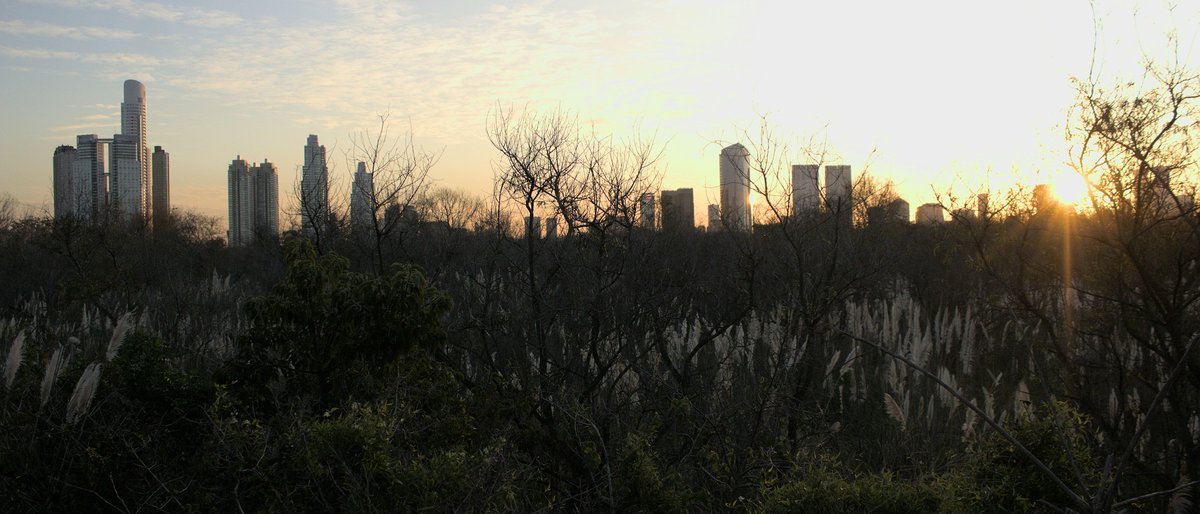
The Museo de los Niños in Abasto Shopping (Av. Corrientes 3247) is the clear winner for ages 2-10, at roughly 8,000 ARS per person. Kids run a miniature supermarket, a TV studio, and a hospital ward. The building is fully air-conditioned, which matters more than the exhibits in a February visit. The Planetario Galileo Galilei in Palermo runs 45-minute shows in Spanish only, around 1,500 ARS, best for ages 5 and up. Under-5s will squirm. Jardín Japonés sits 200 meters north of the Planetario, costs about 4,000 ARS for adults, and lets children under 12 in free. The koi are enormous, orange and white. They drift through shallow ponds that hold toddler attention for a solid 20 minutes. Fish food costs 500 ARS at the entrance gate. Reserva Ecológica Costanera Sur is free, flat, and stroller-ready on its main gravel paths. Bring binoculars. The coypus, rodents the size of small dogs, appear near the lagoons around 4 pm.
Strollers work well in Palermo, Recoleta, and Puerto Madero, where sidewalks are wide concrete with curb ramps at most corners. San Telmo's cobblestones will rattle a lightweight umbrella stroller until the wheels bend. La Boca is worse. Skip it with wheels entirely. The Subte is the real obstacle. Only Line H has elevators at every station. Lines A through E mean carrying the stroller down steep staircases, sometimes two flights, in stations that smell like diesel and old rubber. Taxis and Uber cost 5,000-8,000 ARS from Palermo to Puerto Madero. Shopping malls (Abasto, Alto Palermo, Paseo Alcorta) have clean changing tables in dedicated family restrooms. Most Buenos Aires restaurants lack changing facilities. Public park bathrooms, even in Palermo, range from passable to genuinely grim.
Buenos Aires might be the easiest city in South America for picky eaters. Milanesa con papas fritas (breaded cutlet with fries) appears on every menu and runs 8,000-12,000 ARS at a neighborhood parrilla. Empanadas cost 1,500-2,500 ARS each. Pizza by the slice at Güerrín (Av. Corrientes 1368) or El Cuartito (Talcahuano 937) runs 2,000-4,000 ARS. Try fugazzeta, the thick onion-and-cheese style that tends to win kids over more than plain mozzarella. For the truly cautious eater, any restaurant will make fideos con manteca (noodles with butter) for about 6,000 ARS. Peanuts turn up in some facturas, the flaky pastries that fill bakeries along Av. Córdoba before 9 am with the smell of warm butter and sugar. Gluten-free options exist at most Palermo restaurants but require asking. Dairy is in nearly everything, including most bread and pastry doughs.
Keep phones in front pockets at the San Telmo Sunday market and along Florida street. Bag-snatching is the primary risk for tourist families. La Boca beyond the painted Caminito strip is not somewhere to walk with children. Stay on Caminito's colored blocks, take photos, leave. Drivers in Buenos Aires treat red lights as optional at certain intersections, and right-turning vehicles rarely yield to pedestrians. Hold hands at every crossing south of Av. Santa Fe. Tap water is safe throughout the city. The Puente de la Mujer in Puerto Madero, the Santiago Calatrava pedestrian bridge completed in 2001, marks the center of what is likely the safest walking neighborhood for families with young children.
Stroller-friendly streets and tourist sites.
Kid-friendly attractions
- Museo de los Niños (Abasto Shopping, Av. Corrientes 3247)
- Planetario Galileo Galilei (Palermo)
- Jardín Japonés (Palermo)
- Reserva Ecológica Costanera Sur
- Bosques de Palermo playgrounds
- Puente de la Mujer (Puerto Madero waterfront)
- Museo Participativo de Ciencias (Centro Cultural Recoleta)
- Parque de la Costa (Tigre, 30 km north)
- Temaikèn Biopark (Escobar, 50 km north)
- Plaza de Mayo
Child safety notes
Bag-snatching near San Telmo Sunday market and Florida street is the primary risk. Avoid La Boca beyond Caminito. Drivers treat red lights as optional at certain intersections. Hold children's hands at all crossings. Tap water is safe citywide.
Last verified by automated review (v1.7.2) on . What is automated review?