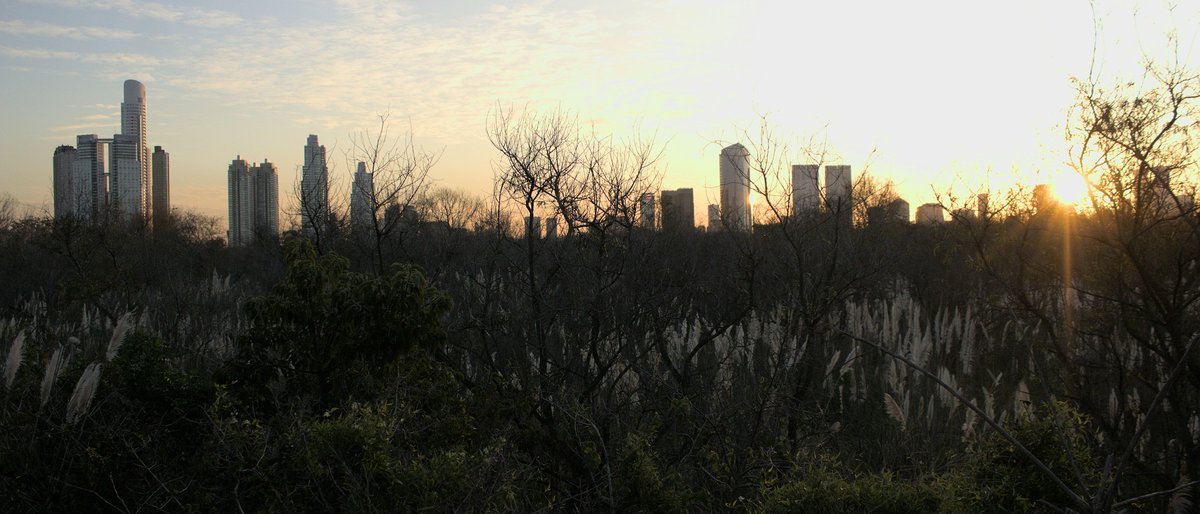
Buenos Aires does its must-see roster in three registers: the stage-and-book palaces of Recoleta and the Microcentro, the civic monuments strung along Avenida 9 de Julio and the Plaza de Mayo, and a quieter waterfront modernism out at Puerto Madero. What follows is 12 addresses that hold up on a second visit, not a first Instagram. A former theatre in Recoleta reopened as a bookshop, a national opera house, a cathedral, a palace on Arenales, and a pedestrian bridge out over the old docks give you the range of the city in a single week. They are for visitors who want their sightseeing to double as a reading of how Buenos Aires argues with itself: a European stage grammar poured over a South American capital, then argued back into something recognisably porteño. Cite the coordinates to your driver, walk the block, and give each place the hour it earns.
-
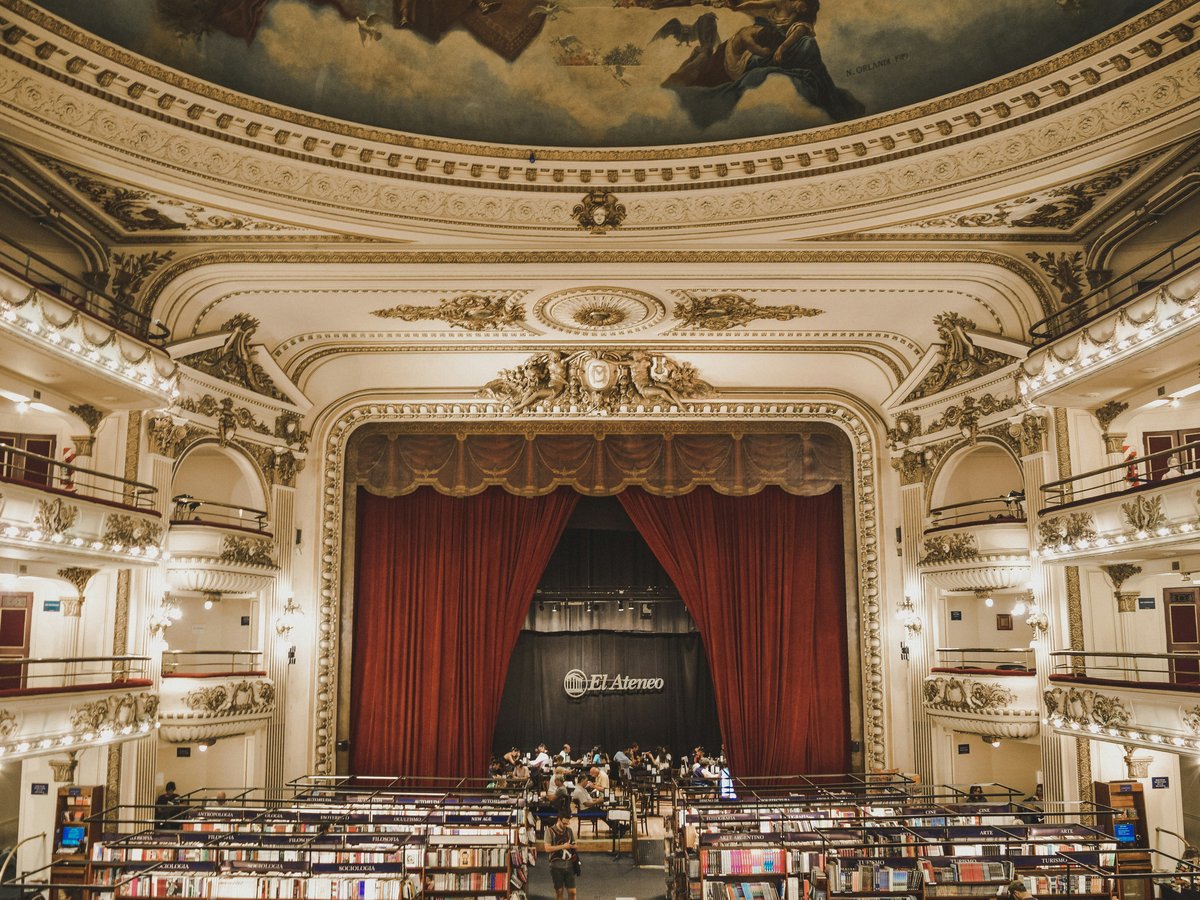
1 El Ateneo Grand Splendid
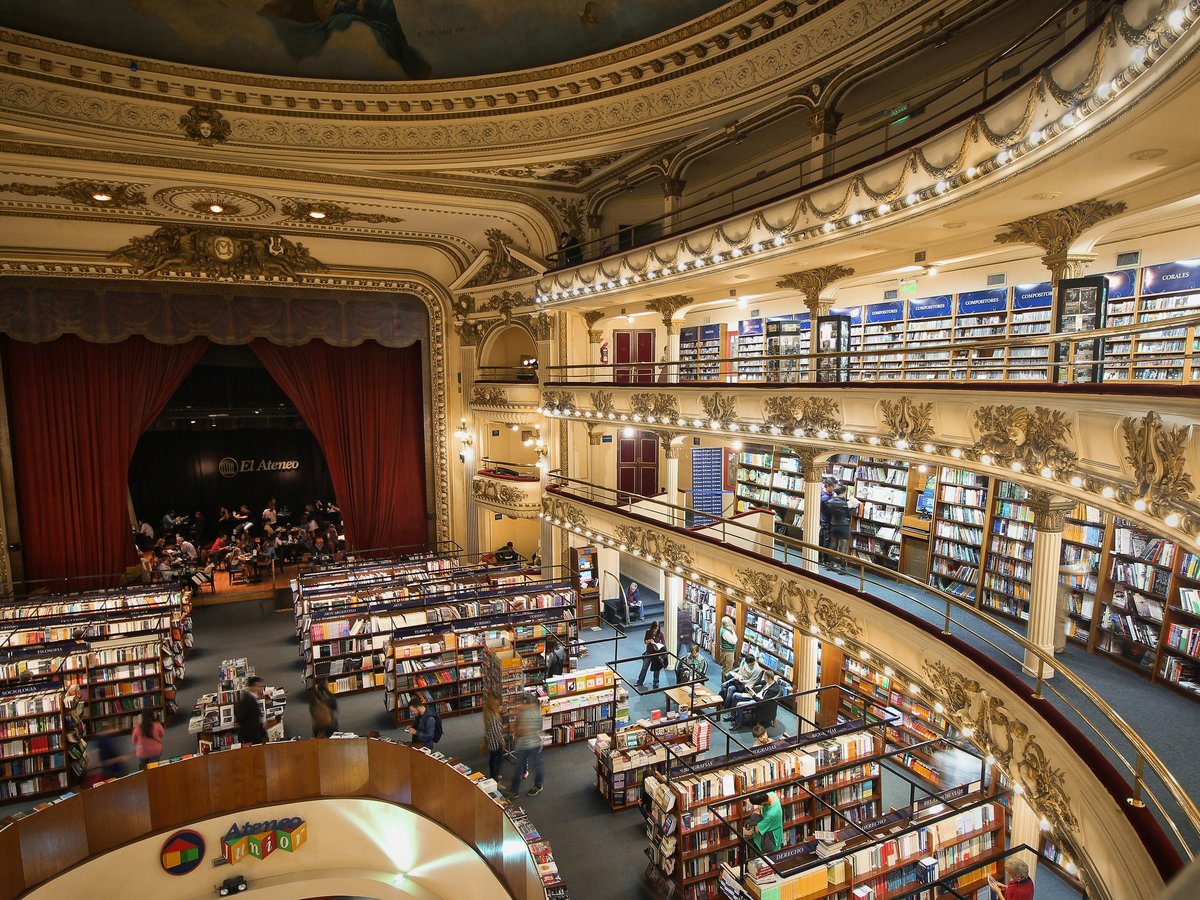
Avenida Sante Fe 1860, Recoleta, 1123 Buenos AiresA former theatre in Recoleta reopened as a bookshop, its stage now a cafe and its balconies now reading galleries.
At Avenida Sante Fe 1860 in the 1123 postal area of Recoleta, the room that is now El Ateneo Grand Splendid was once a theatre and is now a bookshop. Walk past the tourist queue at the front door and go straight to the old stage, which reads better from the upper balconies than from the aisle. The locals treat it as a reading room, not a photo op: pull a book, take a balcony seat, and let the ceiling do the work. The catalogue is Spanish-language first and deep enough to justify an hour, which is what the room is really for. The house site is yenny-elateneo.com, useful for events; on the ground, the 1860 address is the only number you need.
-

2 Argentine
Libertad 815, Ciudad Autónoma de Buenos AiresThe national theatre on Libertad, a working stage rather than a museum piece.
At Libertad 815, the Teatro Nacional Cervantes, listed here as Argentine, is a working theatre, not a monument you photograph and leave. The locals go for the programme, not the facade: check teatrocervantes.gob.ar before you cross town, because a dark night here is a wasted trip and a first-run night is one of the better tickets in the city. Skip the sidewalk selfie and buy the cheapest upper-balcony seat you can; the sightlines are honest and the acoustics reward the climb. The address puts you a short walk from the Colón, so a full theatre evening in this quarter is entirely possible on foot. Two hours inside is the point, not two minutes outside.
-
3 Colón Theater
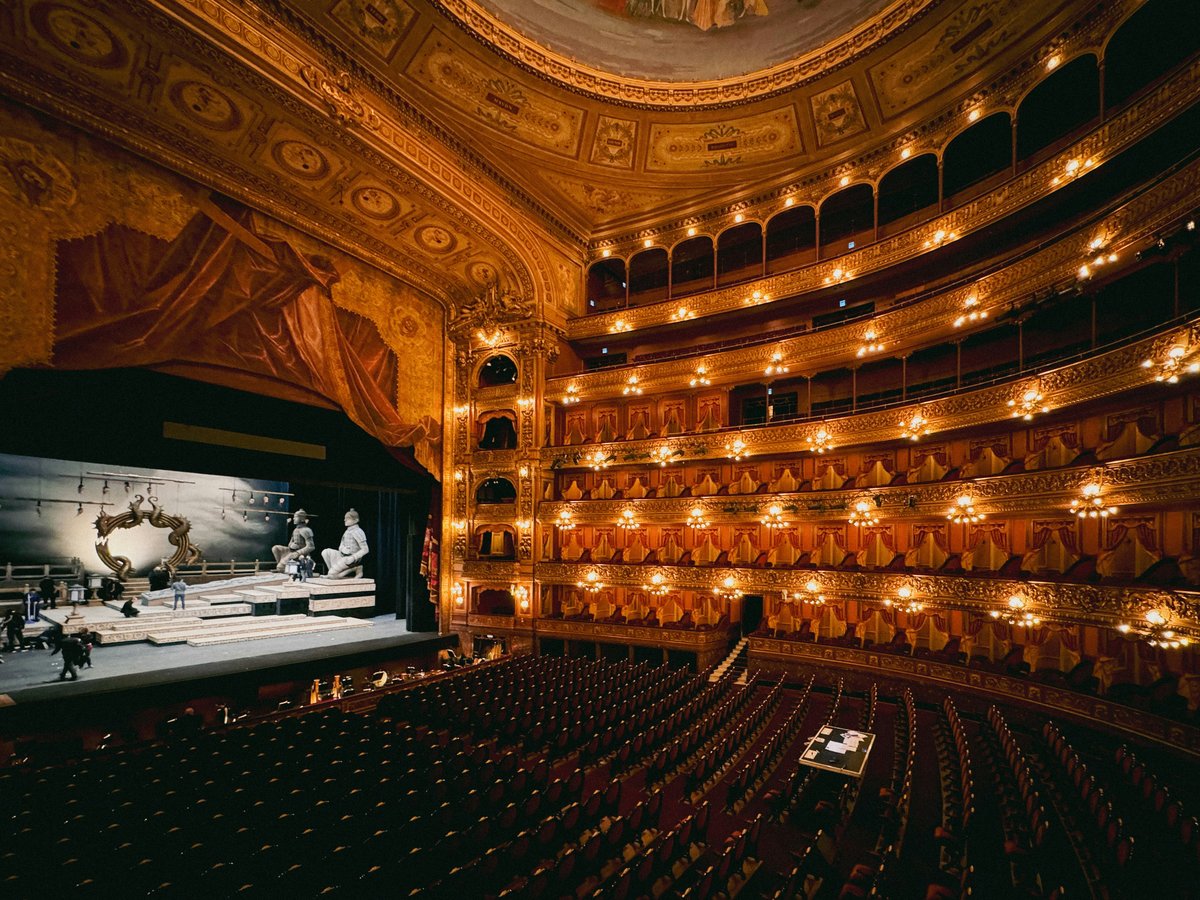
Buenos Aires (coordinates -34.6011, -58.3831)The city's opera house, and the one stage on this list that non-opera visitors still buy a ticket for.
The Colón Theater sits at -34.6011, -58.3831, a block off the Obelisco, and it is the opera house of Buenos Aires rather than a museum of one. Skip the daytime tour if a real performance is on the calendar the same week: the tour tells you what the building is, a ticket tells you what it does. The house site is teatrocolon.org.ar, and the cheap seats are, honestly, the ones to buy: the acoustics were engineered for the whole room, not the parterre. Dress is neat rather than formal on most nights; the audience is a working porteño mix, not a costume drama. Give it a full evening, not an hour, and let the interval do half the tour work for you.
-
4 Buenos Aires Cathedral
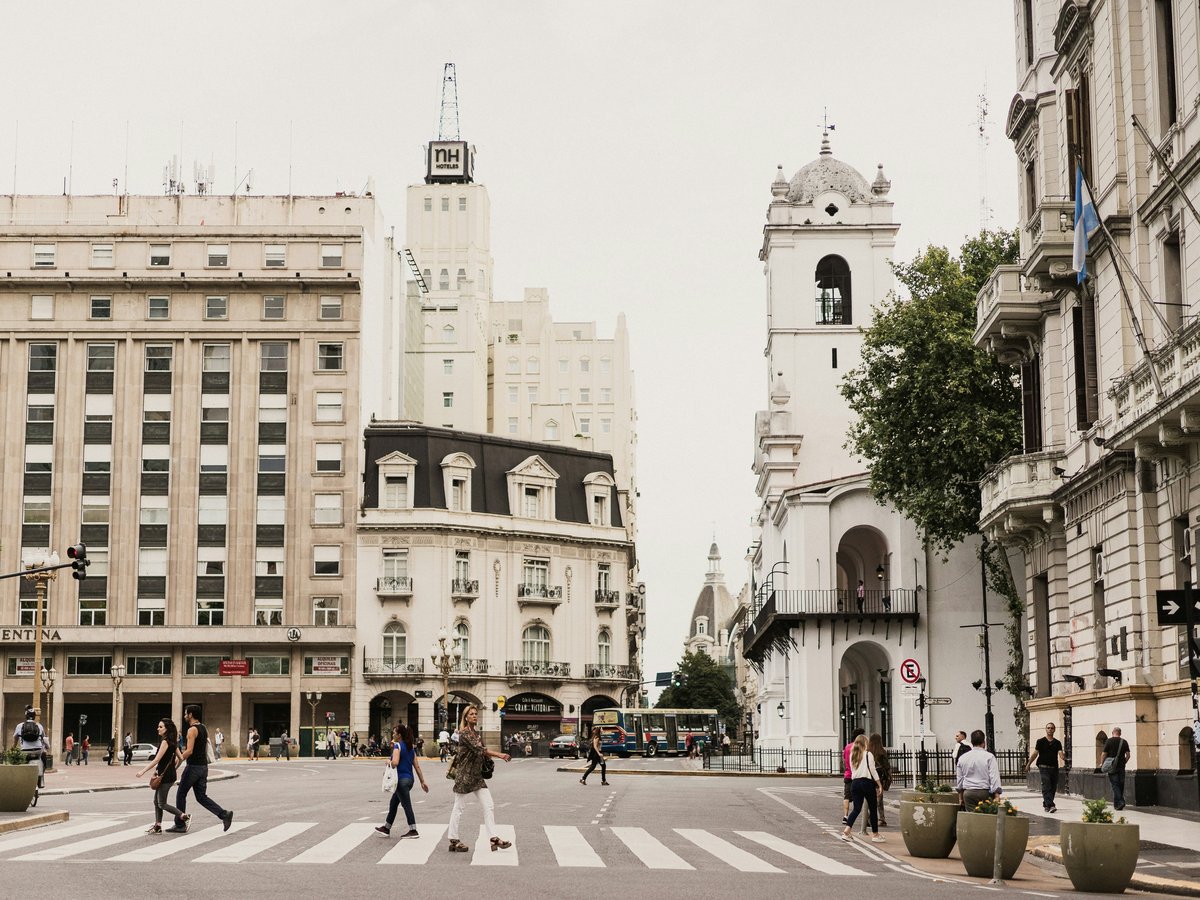
Buenos Aires (coordinates -34.6074, -58.3733)The city's cathedral on the Plaza de Mayo, a working parish rather than a set piece.
The Buenos Aires Cathedral stands at -34.6074, -58.3733 on the north side of the Plaza de Mayo, and it is a cathedral in current use, not a decommissioned monument. Skip the plaza-selfie loop and step inside: the nave is quiet in a way the square outside never is, and the side chapels reward a slow walk more than the facade rewards a fast photo. The parish site is catedralprimadabue.wixsite.com/buenosaires, where the mass schedule is the useful thing; showing up during a service and standing at the back is the honest way to see the room. Give it 30 minutes at most, then walk the plaza while the light is still low.
-
5 San Martín Palace
Arenales 761A palace on Arenales that reads better from the outside than most palace-tour queues justify from the inside.
At Arenales 761, the San Martín Palace is a palace in Buenos Aires that the average visitor overlooks on the way to Recoleta. Skip the guided-tour urge unless the diplomatic-reception calendar happens to open the doors during your week; the facade is the honest half of the visit, and the block is the one to walk. The locals treat this stretch of Arenales as an ordinary Retiro street, which is precisely why the palace lands harder than a fenced-off monument would. Come on foot from Plaza San Martín, take the 761 side rather than the corner for the cleaner elevation, and give it 15 minutes before you push on. The coordinates -34.5939, -58.3783 put a driver right at the door.
-
6 Teatro Opera
Avenida Corrientes 860, 1043 Buenos AiresA theatre and cinema on Corrientes, a working room on the city's most stubborn theatre street.
The Teatro Opera sits at Avenida Corrientes 860 in the 1043 postal area and works as both theatre and cinema. Skip the tourist stretches of Florida and walk this block of Corrientes instead: it is the axis the locals still associate with the city's stage-and-screen habit, and 860 puts you in the middle of it. Buy a ticket to whatever is on rather than a coffee at the corner; the room is the point and it reads best full. The coordinates -34.6038, -58.3789 land a driver on the marquee, which is close enough to the Obelisco to combine on foot. Go at night, not in the afternoon; the street was built for the marquees to be lit.
-
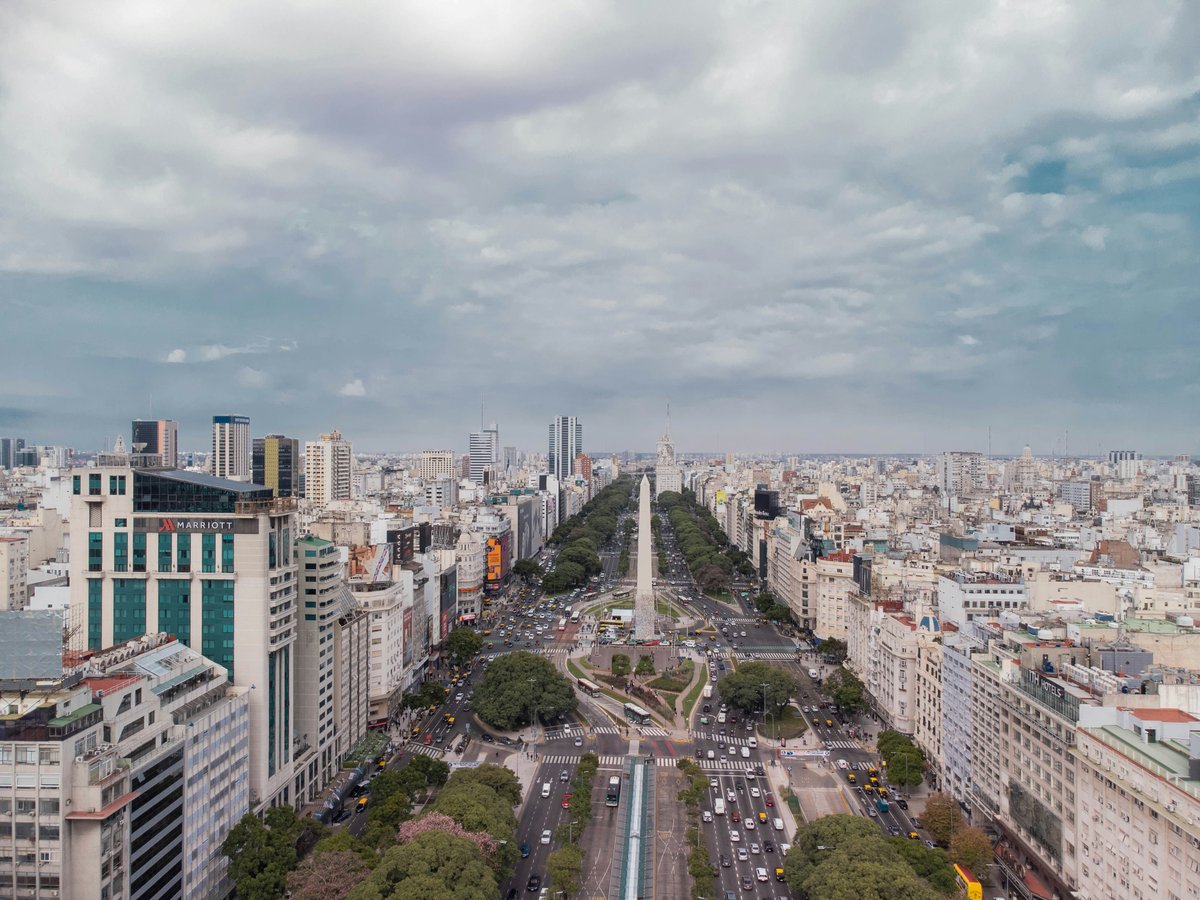
7 Obelisco de Buenos Aires
Buenos Aires (coordinates -34.6038, -58.3816)The city's central monument on 9 de Julio, best treated as a compass point rather than a destination.
The Obelisco de Buenos Aires stands at -34.6038, -58.3816, mid-Avenida 9 de Julio, and it is the monument the city uses to locate itself. Skip the traffic-island photo attempt: the interesting thing about the Obelisco is not the base but the axis, and the honest view is from a block back on the diagonal, not from the safety island. The locals use it as a meeting point, not a stop, and you should too: line up a bar or a theatre within a five-minute walk, then treat the monument as the pivot between them. It reads best at dusk, when the lit avenue does more of the work than the stone does. Ten minutes is enough; the surrounding blocks are the visit.
-
8 Recoleta Cemetery
Buenos Aires (coordinates -34.5881, -58.3931)The city cemetery in Recoleta, a walkable grid of mausoleums that rewards a map more than a guide.
The Recoleta Cemetery lies at -34.5881, -58.3931 and is a working cemetery rather than a monument park. Skip the guided caravan at the gate and pick up the printed map instead: the grid rewards a slow, self-directed hour more than a scripted 40 minutes trailing a flag. The locals treat the outer avenues as ordinary Recoleta paths, which is why the mausoleum blocks feel less staged than their reputation. Come in the late morning, when the light between the mausoleums has enough angle to shape the marble, and leave before the tour buses collect at midday. Pair the visit with the Ateneo bookshop up on Sante Fe; both are in Recoleta and both reward walking rather than driving between them.
-
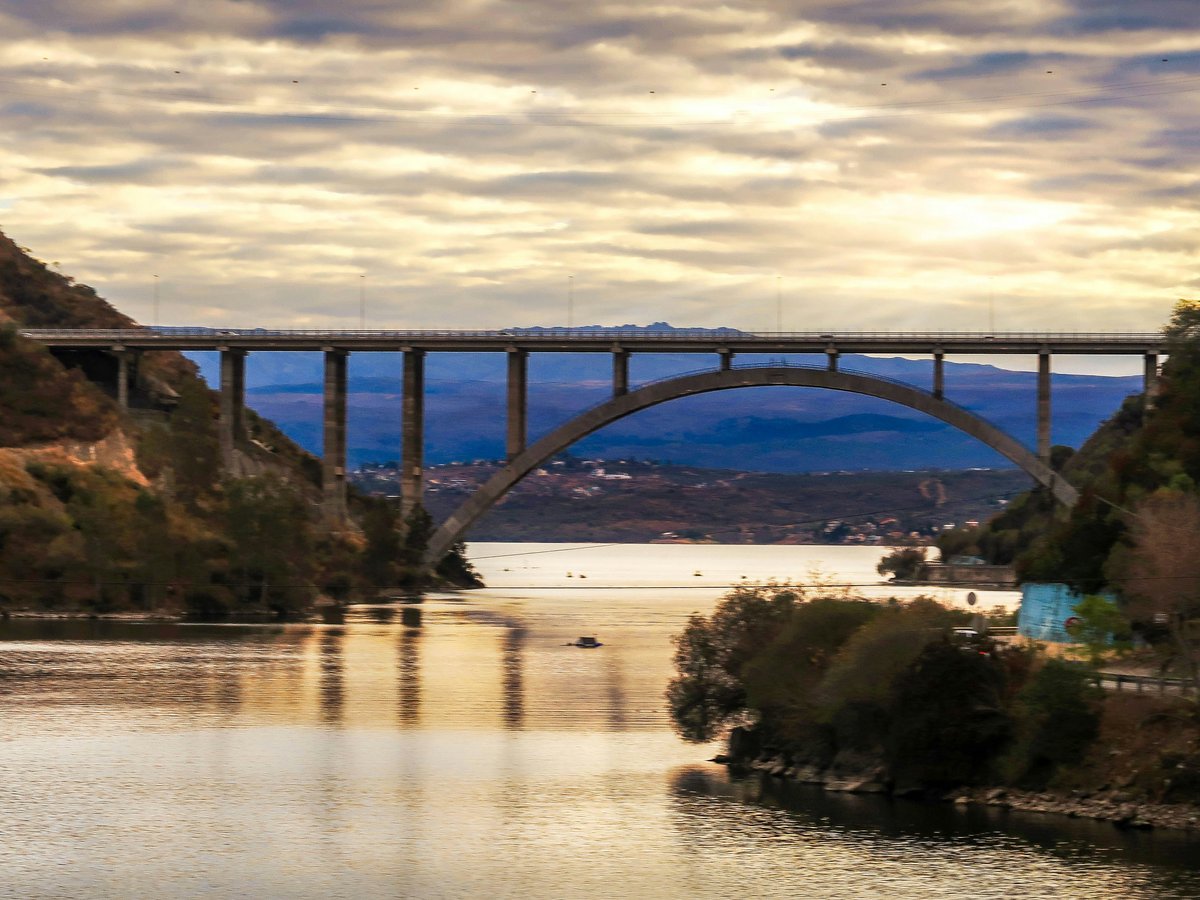
9 Puente de la Mujer
Puerto Madero, Buenos Aires (coordinates -34.6079, -58.3649)A pedestrian bridge over the old docks in Puerto Madero, best crossed on foot with the light at your back.
At -34.6079, -58.3649, the Puente de la Mujer is a pedestrian bridge across one of Puerto Madero's rehabilitated dock basins. Skip the tour-boat photo-op and walk the bridge in both directions instead: the geometry reads differently going west than going east, and 10 minutes on foot pays back the walk from the Microcentro. The locals treat Puerto Madero as a weekend loop rather than a nightlife district, and the bridge is the pivot of the loop. Come late afternoon so the low sun catches the cable, then keep walking the east bank for the ecological reserve rather than turning back for a restaurant on the west. It is one of the few pieces of new-build in the city that has aged into the skyline honestly.
-
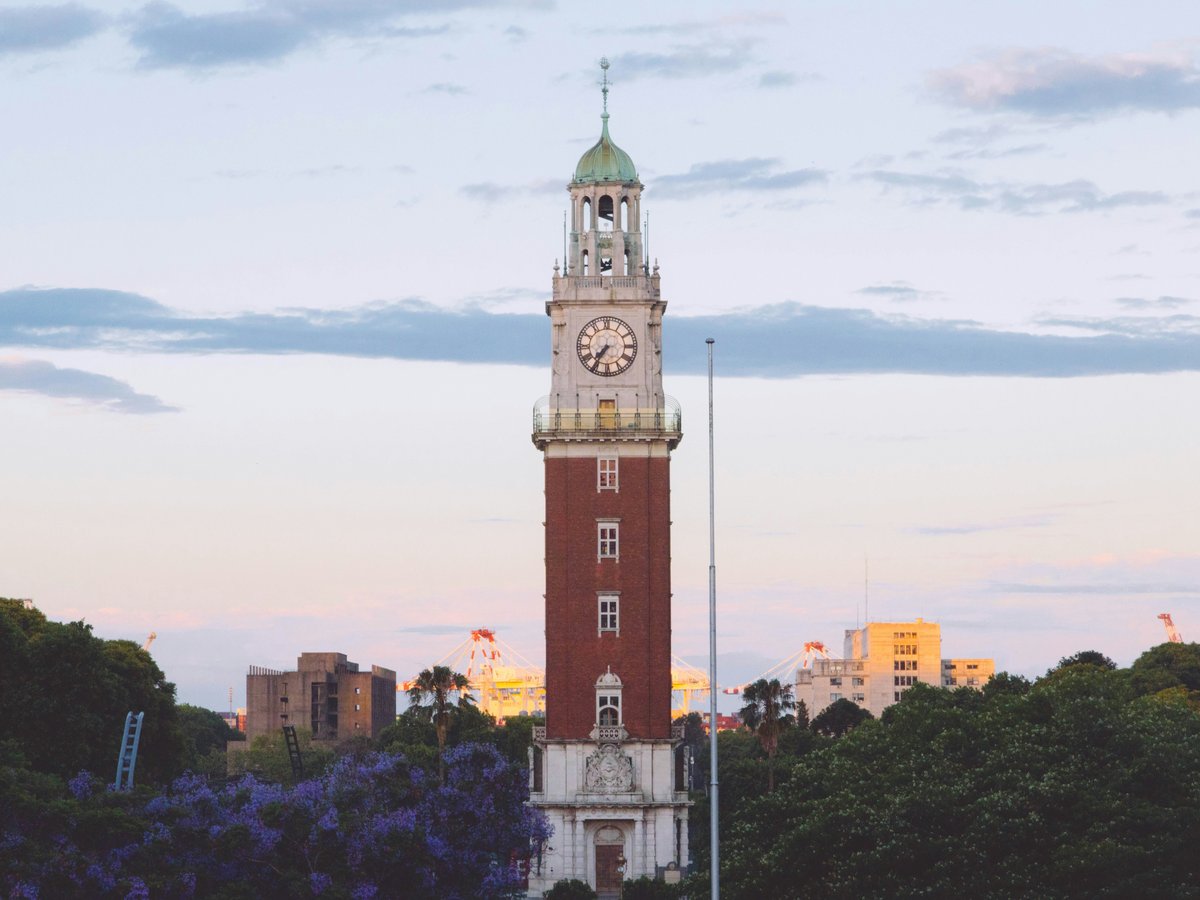
10 Torre Monumental
Retiro, Buenos Aires (coordinates -34.5930, -58.3732)A clock tower in Retiro, at the seam between the terminal station and Plaza San Martín.
The Torre Monumental at -34.5930, -58.3732 is a clock tower in Buenos Aires, set at the awkward but useful seam between Retiro station and the green of Plaza San Martín. Skip the front-of-tower selfie and cross into the plaza first: the tower reads as a piece of the skyline from the lawn, not as a monument from its own base, and the plaza-side view is the one the city was built to give you. The locals use this corner as a transit anchor rather than a destination, and 15 minutes here is honest. Combine the stop with the San Martín Palace at Arenales 761, which is a short walk uphill, so a single Retiro loop covers both without a taxi.
-
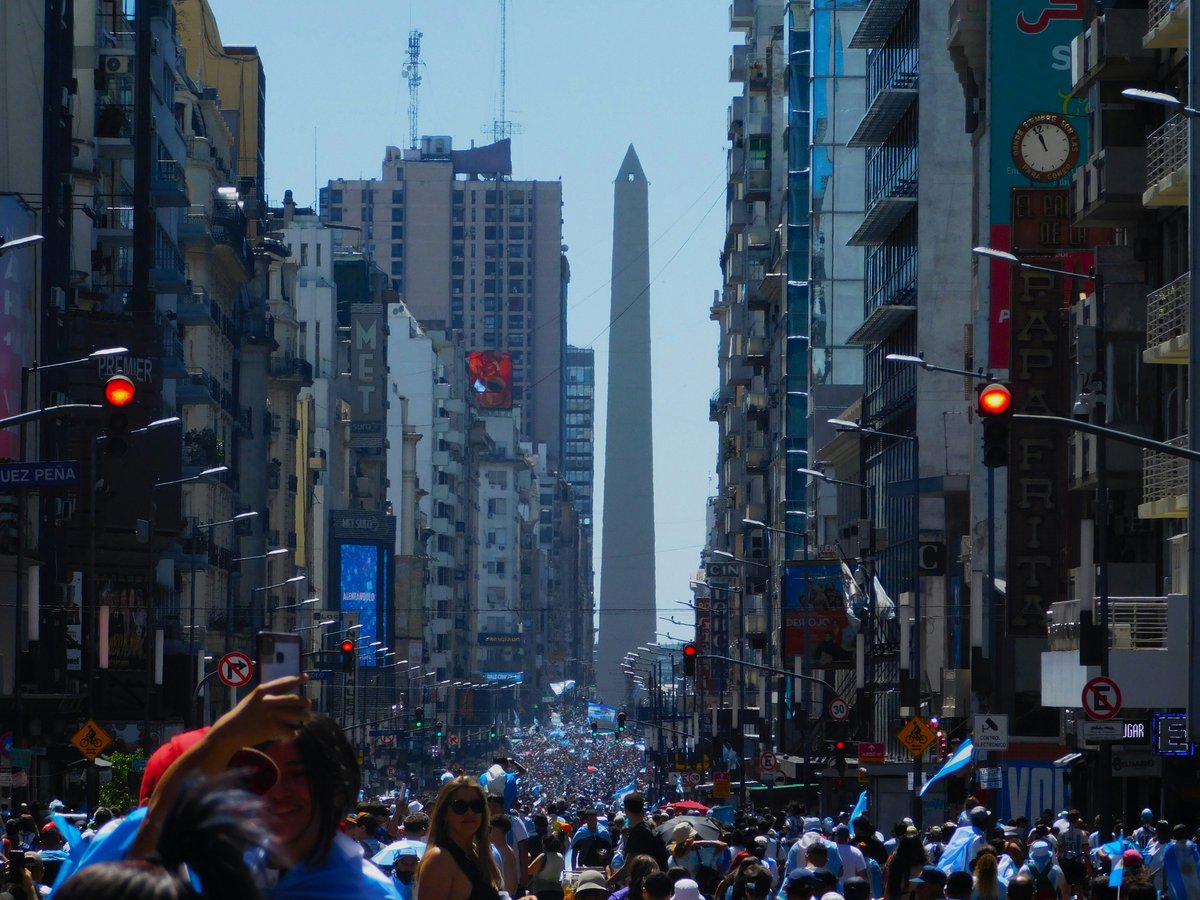
11 Pirámide de Mayo
Plaza de Mayo, Buenos Aires (coordinates -34.6089, -58.3722)The oldest monument on the Plaza de Mayo, the pivot around which the square's civic ritual still turns.
At -34.6089, -58.3722, in the middle of the Plaza de Mayo, the Pirámide de Mayo is a monument that the square was arranged around, not the other way round. Skip the perimeter-lap most tour groups do and stand at the base for a minute: the way the Casa Rosada, the cathedral, and the Cabildo line up from here is the reading the plaza was designed for. The locals treat the Plaza de Mayo as a working civic square, which is why demonstrations still orbit the pyramid on Thursdays and why the paving around the base is worn in a specific pattern. Combine with the cathedral one block north at -34.6074, -58.3733 for a single half-hour civic loop on foot.
-
12 El Faro Towers
Puerto Madero, Buenos Aires (coordinates -34.6123, -58.3594)A residential tower out past the eastern dock basin, useful as a skyline marker on a Puerto Madero walk.
At -34.6123, -58.3594, El Faro Towers is a tower that anchors the far eastern edge of the Puerto Madero rebuild. Skip the attempt to visit at close range: this is a residential address, not a viewing platform, and the honest way to include it is as the terminus of the Puerto Madero walk that starts at the Puente de la Mujer at -34.6079, -58.3649. The locals treat this stretch as a weekend jog, which is the pace to match. Come at last light so the tower reads against the river rather than the sky, then double back through the dock-side promenade rather than the six-lane inland avenue. It is a 20-minute detour that finishes the eastern quarter honestly rather than pretending Puerto Madero ends at the bridge.
Last verified by automated review (v1.7.2_accom-wave-215-20260903065457) on . What is automated review?