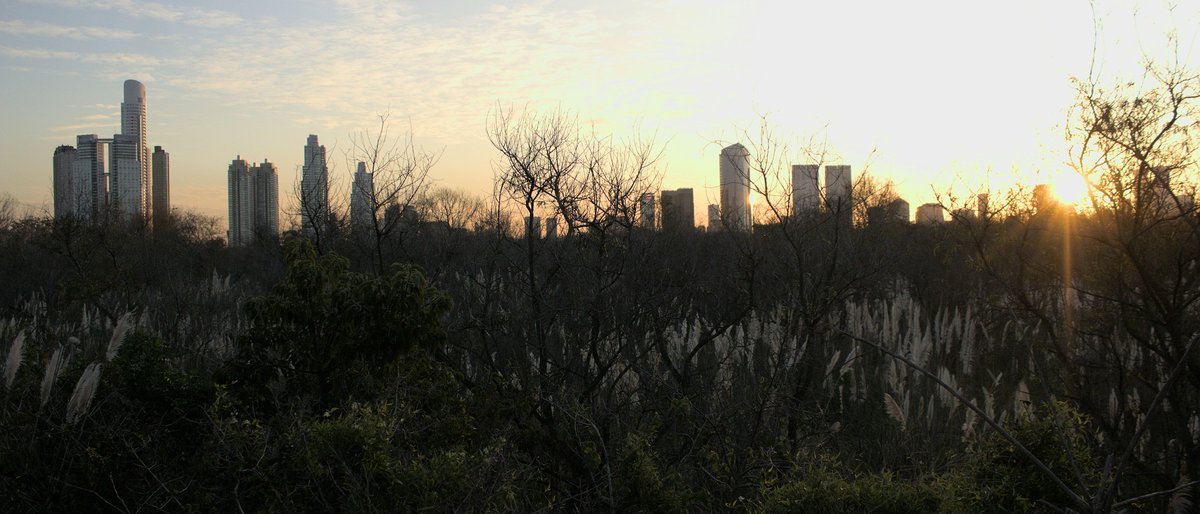
Buenos Aires Restaurants: What's Worth It
Buenos Aires eats late, argues loudly about where to eat, and changes its mind every season. This guide sorts twelve kitchens into two tiers: five destination restaurants worth rearranging your evening for and five everyday anchors that earn loyalty through schedule and consistency: then delivers a verdict on the six that reward the closest attention.
Published · Updated
1 Five Kitchens Worth Planning Around: Güerrín, Mr. Ho, Murasaki, Rapanui, and Gran Bar Danzón
The smell hits first. At Güerrín on Avenida Corrientes, it is dough charring at speed behind a counter that has fed the city since before you were born. At Rapanui on Avenida Santa Fe, it is cacao: heavy, warm, filling the room from 10:00 until midnight. At Gran Bar Danzón on Libertad, it is something sharper: wine glasses, citrus from a cocktail programme that pulls people past the dining room and into the bar before they have even sat down. These five kitchens are the ones you rearrange your evening for.
Güerrín runs from 11:00 to 01:00 on weekdays, 02:00 on weekends; a fifteen-hour pizza operation on Corrientes that does not pause. Mr. Ho at 884 Paraguay does the opposite: a Korean kitchen that opens for lunch at 12:00, closes at 15:00, reopens at 18:00, and shuts again by 22:00 on weeknights, 23:00 on Fridays and Saturdays. The scarcity is deliberate. Murasaki at 971 Florida is tighter still: Japanese cooking in a window that opens at 12:00 and closes at 16:00, dark on Sundays. If Güerrín trusts volume, Mr. Ho and Murasaki trust restraint.
Rapanui at 772 Avenida Santa Fe is not a restaurant in any conventional sense. It is a dedicated chocolate operation that runs from 10:00 to midnight on weeknights, 01:00 on weekends. The commitment to a single ingredient makes it an outlier in this tier, but the seriousness of execution puts it here. Gran Bar Danzón at 1161 Libertad leans the other way: international and sushi from 19:00, pushing to 04:00 on Fridays, a late start on Saturdays at 20:00. The drinks programme is what earns the booking; the food keeps pace.
What ties them together is not price or cuisine. Murasaki is Japanese, Mr. Ho is Korean, Rapanui is chocolate, Gran Bar Danzón is international with a cocktail spine. The common thread is intention. Each kitchen has decided what it is and stopped explaining itself.
These five kitchens are the ones you rearrange your evening for.
2 The Everyday Five: La Martona de Arenales, Centro Asturiano, Brasserie Petanque, Piegari Carnes, and TGI Friday's
The clatter of a weekday morning at La Martona de Arenales, 820 Arenales: plates landing by 08:00, regulars already seated, the kitchen running a fifteen-hour shift through to 23:00, Monday to Friday. No weekends. That silence on Saturday is the first signal: this tier is not chasing discovery. It feeds people who already know where they eat.
Centro Asturiano at 475 Solís splits its day into two services: lunch from 12:00 to 15:30, dinner from 20:00 to 23:30, Tuesday through Saturday. Sundays are lunch only; Mondays dark. Spanish cooking in the regional, seafood-forward sense, not the tapas-bar export version. Brasserie Petanque at 596 Defensa works a similar rhythm: lunch from 12:30 to 15:30, dinner from 20:00 to midnight, Tuesday to Sunday, Monday closed. French cooking that does not wink or translate itself. Centro Asturiano and Brasserie Petanque both carry the split-service DNA of European kitchens that believe in a proper afternoon rest. For sheer Spanish endurance without the split, Casal de Catalunya at 863 Chacabuco runs from 12:00 to midnight, seven days straight, no rest day at all.
Then the marathon end. Piegari Carnes at 1089 Posadas runs continuously from 12:00 to 01:00, seven days a week, no split, no gap between lunch and dinner. The steakhouse tradition does not need explaining because Piegari Carnes is the tradition. Pulpería Quilapán at 1344 Defensa outdoes even that: 09:00 to 02:00, regional Argentine cooking across a seventeen-hour span. TGI Friday's at 1010 Avenida Alicia Moreau de Justo holds weeknight service to midnight, pushing to 01:00 on Fridays and Saturdays; predictable American dining when nearby kitchens have gone dark. TGI Friday's earns its place not by ambition but by reliability at awkward hours.
La Martona de Arenales is the neighbourhood anchor: weekday Argentine cooking, dark on weekends, the kind of kitchen that stopped explaining itself because the regulars already know.
This tier is not chasing discovery. It feeds people who already know where they eat.
3 Güerrín Burns Through Fifteen Hours of Pizza and Never Flinches
The heat from the ovens at Güerrín reaches you before the line does. Standing outside 1368 Avenida Corrientes at noon, you catch the char first (flour scorching on steel, the faint sweetness of mozzarella going golden) and then the noise: shouted orders, trays landing, the clatter of a kitchen that started at 11:00 and will not stop until 01:00 on a weeknight or 02:00 on weekends. Güerrín does not have a quiet hour. It has hours that are slightly less loud.
Skip the pizzerias near your hotel that print bilingual menus and offer wine pairings with margherita. Güerrín does pizza the way Buenos Aires does pizza: standing up, fast, direct. The room was not designed for lingering, and nobody lingers. You eat, you nod at the quality, you leave. If you want a more considered sit-down experience with cloth napkins and a sommelier, that is a different meal in a different neighbourhood entirely. Güerrín is for the meal you eat because you are hungry and you know exactly what good pizza tastes like.
What makes Güerrín worth a full verdict rather than a passing mention is the schedule. A kitchen that runs from 11:00 to 01:00 or 02:00 is not just cooking pizza; it is staffing, prepping, and turning dough for fifteen hours without a service break. Most restaurants split their day. Güerrín does not. That continuous run means you arrive at 14:00 or 23:30 and get the same thing: fast, undecorated, confident. The pizza at Güerrín is not the best in the world. It might not even be the best in Buenos Aires on a given night. But it is the most reliable, and at an hour when the fancy places have closed and the late-night options are thinning, reliability is worth more than ambition.
The verdict: go to Güerrín when you want pizza that does not perform. The line at 1368 Avenida Corrientes moves fast. Trust it.
Güerrín is for the meal you eat because you are hungry and you know exactly what good pizza tastes like.
4 Mr. Ho Runs the Tightest Lunch Window in Buenos Aires, and Fills It
The door at Mr. Ho opens at 12:00 and by 12:20 the small room at 884 Paraguay is already working. Steam from the kitchen carries the weight of fermented paste and sesame: Korean cooking that has not been softened for a city still learning to tell it apart from Japanese or Chinese. Mr. Ho does not help you with that confusion. It just cooks.
Lunch runs to 15:00. Three hours. Dinner reopens at 18:00 and closes at 22:00 on weeknights, 23:00 on Fridays and Saturdays. Those windows are not a quirk: they are a position. The fusion spots around Palermo blur every Asian cuisine into one menu, pile on the sriracha mayo, and stay open all afternoon hoping someone wanders in. Mr. Ho does the opposite: specific food, short hours, no compromise on what Korean cooking looks like when it is done with care. If you want the all-day pan-Asian buffet, Buenos Aires has plenty. Mr. Ho is not competing with them.
Worth noting who this is right for. If you have eaten Korean food before and you miss the clean heat, the texture play between crisp and soft, the dishes that taste fermented rather than sweet: Mr. Ho is the answer in Buenos Aires. If Korean cooking is new to you and you want an honest entry point, this is also the right place, because the kitchen at Mr. Ho does not dilute. You get the real version first. The room at 884 Paraguay is small enough that you hear the next table's conversation, which is either a drawback or a sign that the kitchen fills because people talk about it.
The verdict: Mr. Ho earns its tight window. Skip the fusion menus. Arrive before 12:30 for lunch without a wait.
The kitchen at Mr. Ho does not dilute. You get the real version first.
5 Murasaki Closes at 16:00 Because the Kitchen Has Nothing Left to Prove
You smell the dashi before you see the menu. At Murasaki, 971 Florida, the lunch service opens at 12:00 and the room fills with the quiet confidence of a kitchen that knows it will close in four hours. There is no dinner shift. No weekend marathon. Murasaki works a short day (12:00 to 16:00, dark on Sundays) and the restraint is structural, not accidental.
Skip the all-you-can-eat Japanese buffets that promise forty rolls for a set price. Murasaki does not compete on volume. It competes on the quality of a compressed service: fewer hours, fewer covers, more care per plate. The tourists head for the conveyor-belt operations; the people who have eaten real Japanese food head for Murasaki at 971 Florida and accept the four-hour window as the cost of precision.
To be fair, the short schedule is also a limitation. If your flight lands at 17:00 or you keep a Spanish dinner schedule, Murasaki is closed before your day begins. That is the trade-off and the kitchen has decided it is worth making. The pace inside is unhurried once you are seated: the scarcity of hours concentrates the room rather than rushing it. People come on purpose. Nobody stumbles in because the door happened to be open.
Who is this for? Anyone who has eaten mediocre sushi in Buenos Aires (and if you have spent more than two days here, you likely have) and wants to know whether the city can do Japanese cooking with genuine care. Murasaki is the proof that it can, served in a window short enough that you have to want it. The verdict: plan around the kitchen's schedule, not yours.
The scarcity of hours concentrates the room rather than rushing it. People come on purpose.
6 Rapanui Is Not a Restaurant: It Is a Chocolate Argument Settled Daily
The scent of cacao at Rapanui wraps around you from the doorway at 772 Avenida Santa Fe, dense and warm before you have taken a step inside. This is not a patisserie that also does chocolate. Rapanui is a dedicated chocolate operation, and the air in the room makes that distinction for you within seconds.
Doors open at 10:00 and Rapanui holds service until midnight on weeknights, 01:00 on Fridays and Saturdays. Fourteen to fifteen hours of chocolate. The schedule alone should tell you this is not a casual sideline: it is a commitment to a single ingredient maintained with a seriousness that most savoury kitchens would envy. Skip the generic dulce de leche stands that cluster around every tourist corridor in San Telmo and Recoleta; what comes out of this kitchen at 772 Avenida Santa Fe is built on cacao and conviction, not sugar and nostalgia.
Mind you, Rapanui is not a meal replacement. You do not eat dinner here. You come for the thing it does (chocolate in several forms, each executed with the focus of a specialist) and you will buy more than you intended. That is not a warning; it is a forecast based on everyone who has walked in with a plan and walked out with a bag. The value is not in the price per piece but in the seriousness of the product. Rapanui at 772 Avenida Santa Fe competes with the best chocolate shops in South America, and it does so from a room that smells the way you hope it will.
The verdict: go to Rapanui for chocolate and nothing else. That nothing else is deliberate, and it is the reason the chocolate is this good.
It is a dedicated chocolate operation, and the air in the room makes that distinction for you within seconds.
7 Gran Bar Danzón Starts Late Because the Drinking Is the Point
The first sound at Gran Bar Danzón is not the kitchen: it is ice. By 19:00 at 1161 Libertad, the bar is already working while the dining room fills behind it. Glasses clink, a shaker rattles, and the cocktail programme announces itself before a single plate has left the pass. Gran Bar Danzón is a drinking restaurant, not a restaurant with drinks, and the distinction matters more than any single dish on the menu.
The kitchen runs international and sushi, and the food is genuinely strong enough to hold its ground against a wine list and cocktail programme that would headline anywhere else in the city. Fridays push the bar to 04:00. Saturdays open at 20:00; later than most Buenos Aires restaurants, deliberately later, because Gran Bar Danzón filters out the early-dinner tourist circuit by simply not being open when they are looking. The room that fills after 21:00 is a room of people who planned to be there. That curation-by-schedule is worth more than any velvet rope.
Avoid the hotel bars in Recoleta and Puerto Madero that charge double for half the intention. Gran Bar Danzón at 1161 Libertad takes its drinks as seriously as its food, and the wine programme alone justifies a visit even if you never open the dinner menu. That said, open the dinner menu: the sushi is reliable and the international plates keep pace with whatever is in your glass. The kitchen understands that a drinking restaurant still needs to feed you properly, and it does.
Who is this right for? Couples who want a late evening built around drinking and eating in equal measure. Solo diners who want to sit at the bar and trust the bartender. Not families, not early risers, not anyone who needs to be home by 22:00. Gran Bar Danzón starts late, runs long, and earns the hours it keeps.
Gran Bar Danzón is a drinking restaurant, not a restaurant with drinks, and the distinction matters.
8 La Martona de Arenales Feeds the Neighbourhood Five Days and Ignores the Weekend
Coffee steam and the low murmur of weekday regulars: that is what greets you at La Martona de Arenales, 820 Arenales, when the kitchen opens at 08:00 on a Monday morning. The room is not staged for photographs or reviews. It is staged for breakfast, lunch, and dinner, Monday to Friday, and then it goes dark. La Martona de Arenales does not work weekends. The silence on Saturday and Sunday is not a limitation: it is the defining feature.
The kitchen runs Argentine cooking from 08:00 to 23:00, a fifteen-hour span that covers every meal a weekday can hold. La Martona de Arenales calibrates for regulars: the people who live on the surrounding blocks, who eat here Tuesday the way they eat here Thursday, who do not need to check the hours because the hours have not changed. The food arrives without performance. The service is direct. Skip the overlit brunch spots that advertise on travel blogs and charge for the aesthetic of a meal rather than the meal itself; La Martona de Arenales charges for the food, and the food earns its keep through consistency rather than spectacle.
The no-weekend schedule narrows the audience and that is the point. If you are visiting Buenos Aires for a Saturday-to-Saturday holiday, La Martona de Arenales may not make your itinerary, or rather, it makes it only on the weekdays you likely spend wandering Recoleta or San Telmo between sights. Slot it into a Tuesday lunch. The neighbourhood crowd will be there at 820 Arenales, the kitchen will be running, and the meal will be the kind of honest, undecorated Argentine cooking that the city does better than anywhere else on the continent.
The verdict: La Martona de Arenales is the restaurant you eat at when you stop being a tourist and start being a person who lives here, even temporarily.
La Martona de Arenales is the restaurant you eat at when you stop being a tourist and start being a person who lives here.
Last verified by automated review (v1.7.0_2026-05-20-s17-v2-batch) on . What is automated review?