Best Time to Visit Miami, by Season
Miami's 12-month climate record reveals a clear winner for each kind of traveller. The trade-off between temperature, crowds, and hotel pricing shifts sharply across seasons, with a single best window named for budget visitors, beach purists, families, nightlife seekers, and heat lovers.
Published · Updated
1 January's 23.9°C Highs Explain Why Half of New York Relocates to Miami Each Winter
The breeze off Biscayne Bay in January carries a dry coolness that people north of Virginia spend the rest of the year chasing. Miami's average high in January sits at 23.9°C, the lowest on the entire calendar. Overnight lows drop to 16.8°C. That is light-jacket weather by South Florida standards, cool enough to walk the Venetian Causeway after dinner without breaking a sweat.
February warms to 25.4°C highs with 19.2°C lows. December, the opening month of peak season, averages 25.1°C highs and 19.2°C lows, nearly identical to February. This 3-month stretch from December through February is Miami's dry season, and the rest of the Eastern Seaboard seems to know it. Compare that to March's 26.7°C or April's 27.4°C, and the gap is under 4 degrees, but the crowd and pricing difference between peak and shoulder season in Miami tends to be far more dramatic than the temperature shift.
Hotel rates in South Beach and Brickell tend to double during this window. Art Basel arrives in Miami Beach each December. The event lifts early-December pricing higher still. Ocean Drive fills from Thanksgiving onward, and the wait for a sidewalk table on a Saturday evening in January runs long. Restaurants and bars along Española Way stay busy through February, and Friday evenings in Wynwood draw some of the longest wait times of the year.
The trade-off in Miami is direct. January's 23.9°C highs are 7.7 degrees cooler than August's 31.6°C. January lows of 16.8°C allow sleep-with-the-window-open conditions, while July never drops below 25.5°C. You are paying South Beach peak rates for that relief, and sharing the sand with the largest crowds of the year.
For visitors who can absorb the cost, January tends to run slightly cheaper than Art Basel week in early December. January's 23.9°C highs and 16.8°C lows make it the mildest month on Miami's calendar. February at 25.4°C and December at 25.1°C both run warmer by roughly a degree, so January's 23.9°C remains the coolest average high in the 12-month record.
January's 23.9°C highs are 7.7 degrees cooler than August's 31.6°C. You are paying for that comfort, and sharing it with the largest crowds of the year.
2 March at 26.7°C and April at 27.4°C Deliver Beach Weather Without the Winter Markup
The sand on Virginia Key in late March holds warmth long after the afternoon clouds drift south. Miami's average high in March reaches 26.7°C, up from February's 25.4°C but still 3 degrees below May's 29.7°C. This puts Miami at a thermodynamic sweet spot on the calendar.
April nudges higher to 27.4°C average highs with 21.4°C overnight lows. March lows sit at 20.1°C. Both months fall in the gap between Miami's peak-season pricing through February and the wet season that starts around late May. Spring break brings a temporary crowd to South Beach in mid-March, but the overall volume stays lower than the January crush at 23.9°C highs.
The comparison to peak season is telling. March's 26.7°C is only 1.3 degrees warmer than February's 25.4°C, yet hotel rates in Mid-Beach and Sunny Isles tend to drop noticeably after Presidents' Day. April at 27.4°C is still 2.3 degrees cooler than May's 29.7°C. Neither month carries the humidity that makes June through September in South Florida feel heavier than the raw numbers suggest.
Mind you, April has trade-offs. The 21.4°C overnight lows are warm enough that air conditioning starts running through the night in most Brickell apartments. March lows of 20.1°C are milder. Both months see occasional afternoon rain, though nothing like the daily pattern of July at 31.0°C highs and 25.5°C lows.
For the budget-conscious visitor who still wants reliable beach weather in Miami, March and April represent the strongest value. March at 26.7°C highs and 20.1°C lows offers the more temperate window. April at 27.4°C and 21.4°C runs slightly warmer and often slightly cheaper once spring break passes. Ultra Music Festival draws crowds to Bayfront Park each March, so late April tends to draw fewer visitors. April's 27.4°C highs and 21.4°C lows with relatively thin crowds make that particular stretch hard to beat on the Miami calendar.
3 May's 29.7°C Average High Marks the Last Month Before Miami's Wet Season
You feel the shift on Key Biscayne by mid-May. The morning air already carries weight, and the sand stings bare feet before noon. Miami's average high in May reaches 29.7°C, up 2.3 degrees from April's 27.4°C. Overnight lows climb to 23.4°C, a full 2 degrees above April's 21.4°C. The city is crossing a line.
May is Miami's transition month. The 29.7°C highs are nearly identical to June's 29.6°C, a difference of 0.1 degrees that feels negligible on a thermometer. But June brings the formal start of Atlantic hurricane season on June 1, and the afternoon storms that might appear a few times a week in May become a near-daily event across South Florida by late June.
The pricing works in May's favor. South Beach hotels that charged peak rates through February at 25.4°C highs tend to soften. Lincoln Road restaurants that required reservations in January at 23.9°C highs often have open tables. Wynwood galleries that were packed for Art Basel in December see steady but manageable foot traffic.
To be fair, May's 23.4°C overnight lows mean Miami never fully cools down. January's 16.8°C lows feel like a different city by comparison. The humidity in May runs noticeably higher than in March at 20.1°C lows or April at 21.4°C lows. Visitors from dry climates like Denver or Phoenix might find May in Miami uncomfortable in a way the temperature alone does not predict.
The case for May rests on one comparison. It offers June-level warmth, 29.7°C versus June's 29.6°C, with lower hotel rates, fewer crowds, and a full month before hurricane season's June 1 start. By June, you are gambling on daily storms and carrying the uncertainty of tropical weather along the South Florida coast. May's 29.7°C highs and 23.4°C lows are warm but workable, and the gap between May's pricing and January's pricing at 23.9°C tends to be significant.
4 June Through August Belongs to Locals at 31.6°C, and the Savings Might Not Compensate
The first thing you notice stepping outside in Coconut Grove during a July afternoon is the wall of heat. It is not a figure of speech in South Florida. Miami's average high in July reaches 31.0°C with overnight lows of 25.5°C. August is the warmest month on the calendar at 31.6°C highs and 25.7°C lows. June opens the stretch at 29.6°C highs and 24.4°C lows, fractionally cooler than May's 29.7°C but with the wet season fully underway.
Miami becomes a local's city during these 3 months. Hotel rates in South Beach and Mid-Beach drop to their annual lows. Ocean Drive thins out. Afternoon thunderstorms roll in from the Everglades on most days. The storms drop heavy rain over South Beach and Brickell, and they pass as quickly as they arrive. Miami residents plan around that rhythm, favoring mornings on Key Biscayne and evenings once the skies clear.
The overnight temperatures reveal the real cost of a Miami summer. July's lows of 25.5°C and August's lows of 25.7°C mean the city never reaches the comfortable evening conditions that make January at 16.8°C lows or April at 21.4°C lows so appealing for outdoor dining along Española Way or in the Design District. The air stays thick and warm through midnight in Wynwood.
Hurricane season runs June 1 through November 30, and August through October is the statistical peak along the South Florida coast. Visitors in August at 31.6°C highs face both the year's highest temperatures and elevated storm probability. September's average high drops to 30.3°C with 24.5°C lows, but that month carries even greater hurricane risk.
Who should come to Miami in summer? Budget travelers from humid climates. June at 29.6°C is manageable for visitors from Houston or Singapore. July at 31.0°C and August at 31.6°C are harder sells. The savings on Brickell hotels and the absence of South Beach winter crowds might offset the discomfort, but August's 25.7°C overnight lows mean even midnight along the Miami River feels warm compared to December's 19.2°C.
August's 25.7°C overnight lows mean even midnight along the Miami River feels warm compared to December's 19.2°C.
5 September at 30.3°C Sits at Hurricane Peak, but October at 28.8°C Starts the Recovery
The light in Miami changes around late September. The angle drops, the afternoon glare off the Atlantic softens, and the average high falls from August's 31.6°C to September's 30.3°C. Overnight lows dip to 24.5°C from August's 25.7°C. The numbers suggest Miami is improving. September's hurricane calendar says otherwise.
September is historically the peak month for Atlantic hurricanes along the South Florida coast. Miami's 30.3°C average high comes with the highest probability of a named storm closing causeways and shuttering hotels on Miami Beach. The 30.3°C is cooler than August's 31.6°C, but few travelers come to South Beach to track tropical weather advisories.
October shifts the equation. The average high drops to 28.8°C, a 1.5-degree fall from September's 30.3°C. Overnight lows reach 23.2°C, down from September's 24.5°C. Hurricane risk along the South Florida coast fades as October progresses, and by late October the threat has largely passed in most years.
October pricing tends to sit among Miami's lowest. Brickell and Design District hotels that charge peak rates in January at 23.9°C highs often run promotions. The 28.8°C highs are warm enough for Crandon Park and North Beach, but cool enough that walking Wynwood's outdoor murals does not feel punishing. October's 23.2°C overnight lows make dinner on a Calle Ocho patio in Little Havana pleasant in a way that August's 25.7°C does not. The smell of garlic and roast pork drifting from the ventanitas on SW 8th Street is easier to linger around when the evening air sits at 23.2°C instead of 25.7°C.
The gap between September and October is one of the sharpest risk-reward transitions on Miami's calendar. September at 30.3°C runs 5.2 degrees warmer than December's 25.1°C, with humidity and full hurricane exposure. October at 28.8°C is 4.9 degrees above January's 23.9°C, but the storm risk fades and the crowds have not yet returned. For risk-tolerant budget travelers, late October offers some of the lowest rates of the year at 28.8°C highs and 23.2°C lows.
6 November at 26.9°C Is Nearly Identical to March at 26.7°C, and Nobody Seems to Notice
The wind off the water at Bal Harbour in early November carries something that March visitors would recognize immediately. Miami's average high in November is 26.9°C, within 0.2 degrees of March's 26.7°C. The overnight lows track close too. November drops to 20.9°C, compared to March's 20.1°C. The ocean along North Beach still holds summer warmth in early November, and the overall feel on the sand is nearly identical to a late-March afternoon.
The difference is in the crowds and the cost. March in Miami coincides with spring break, Ultra Music Festival at Bayfront Park, and the tail end of snowbird season. November sits in a lull. Hurricane season does not officially end until November 30, which keeps cautious travelers away from South Florida. Art Basel does not arrive in Miami Beach until early December. The result is a window where the weather matches spring but the demand does not.
November's 26.9°C highs sit in a comfortable middle of Miami's calendar. The month is 4.1 degrees cooler than July's 31.0°C and 3.0 degrees warmer than January's 23.9°C. The 20.9°C overnight lows land close to February's 19.2°C, low enough for comfortable sleep without heavy air conditioning in most Brickell and Coconut Grove apartments. Compare that to August's 25.7°C lows, and the difference is plain.
Miami's hurricane risk in November is real but fading. Late-season storms along the South Florida coast are uncommon, and by mid-November the threat has passed in most years. The first two weeks of the month carry slightly more uncertainty than the last two.
For families with young children, November in Miami works particularly well. The 26.9°C highs and 20.9°C lows are mild enough for kids who tire in the heat. North Beach and Surfside are quiet compared to their January and February crowds. Thanksgiving brings a brief domestic spike in the final week, but the first 3 weeks of November tend to be calm. November's 26.9°C average high, within a fraction of March's 26.7°C but at lower rates and with fewer visitors, makes early-to-mid November one of Miami's most overlooked windows.
November's 26.9°C average high sits within 0.2 degrees of March's 26.7°C, but the crowds and pricing rarely match.
7 The Single Best Window for Five Kinds of Miami Traveller
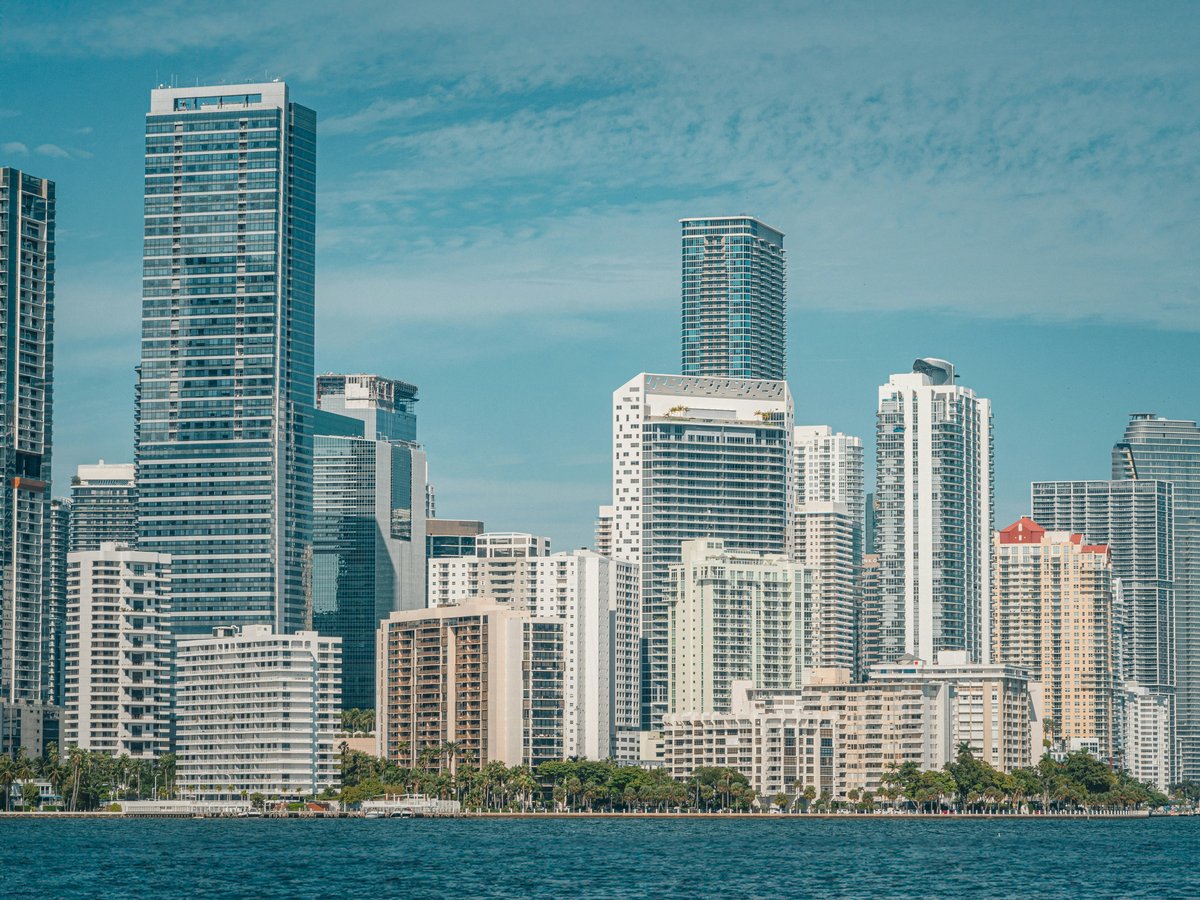
Stand on the MacArthur Causeway at sunset in any month and the view is the same. Downtown Brickell's glass towers catch the last light, a cruise ship moves through Government Cut, and palm fronds tick in the salt breeze. Miami delivers year-round. The question is when Miami delivers for you.
The budget traveller should target late October. The average high of 28.8°C and overnight low of 23.2°C are warm enough for Crandon Park and cool enough for a walk through Wynwood. Hurricane risk has faded by the final week. Hotel rates across South Beach and Brickell tend to sit near annual lows. The runner-up is May at 29.7°C highs and 23.4°C lows, with similar pricing and one fewer weather variable, but May's humidity in Miami runs higher.
The beach purist should book March. The 26.7°C highs and 20.1°C lows deliver reliable shore weather on Virginia Key and Key Biscayne without the humidity that sets in by June at 24.4°C lows. The runner-up is April at 27.4°C highs and 21.4°C lows, slightly warmer, often slightly cheaper, and with thinner crowds once spring break ends on South Beach.
The nightlife and culture seeker should aim for January. The 23.9°C highs and 16.8°C lows make for comfortable evenings in Wynwood, the Design District, and Little Havana. Art Basel in Miami Beach each December is the bigger event, but January offers the same venues at lower rates. February at 25.4°C highs and 19.2°C lows is the fallback.
The family with children should consider early November. The 26.9°C highs and 20.9°C lows are gentle enough for kids at North Beach and Surfside, the beaches are uncrowded, and hotel pricing sits well below the December-through-February peak.
The heat seeker who wants an empty Miami should come in August. The 31.6°C highs and 25.7°C lows keep most visitors away from South Beach. That is the month's entire appeal, and it is honest about the trade-off. July at 31.0°C highs and 25.5°C lows is nearly as hot with marginally lower humidity, while September at 30.3°C adds hurricane risk that makes it a harder recommendation despite the lower temperatures.
The beach purist should book March. The 26.7°C highs and 20.1°C lows deliver reliable shore weather without the humidity that arrives by June.
Last verified by automated review (v1.7.0_onboard-miami-flagship-2026-06-22) on . What is automated review?