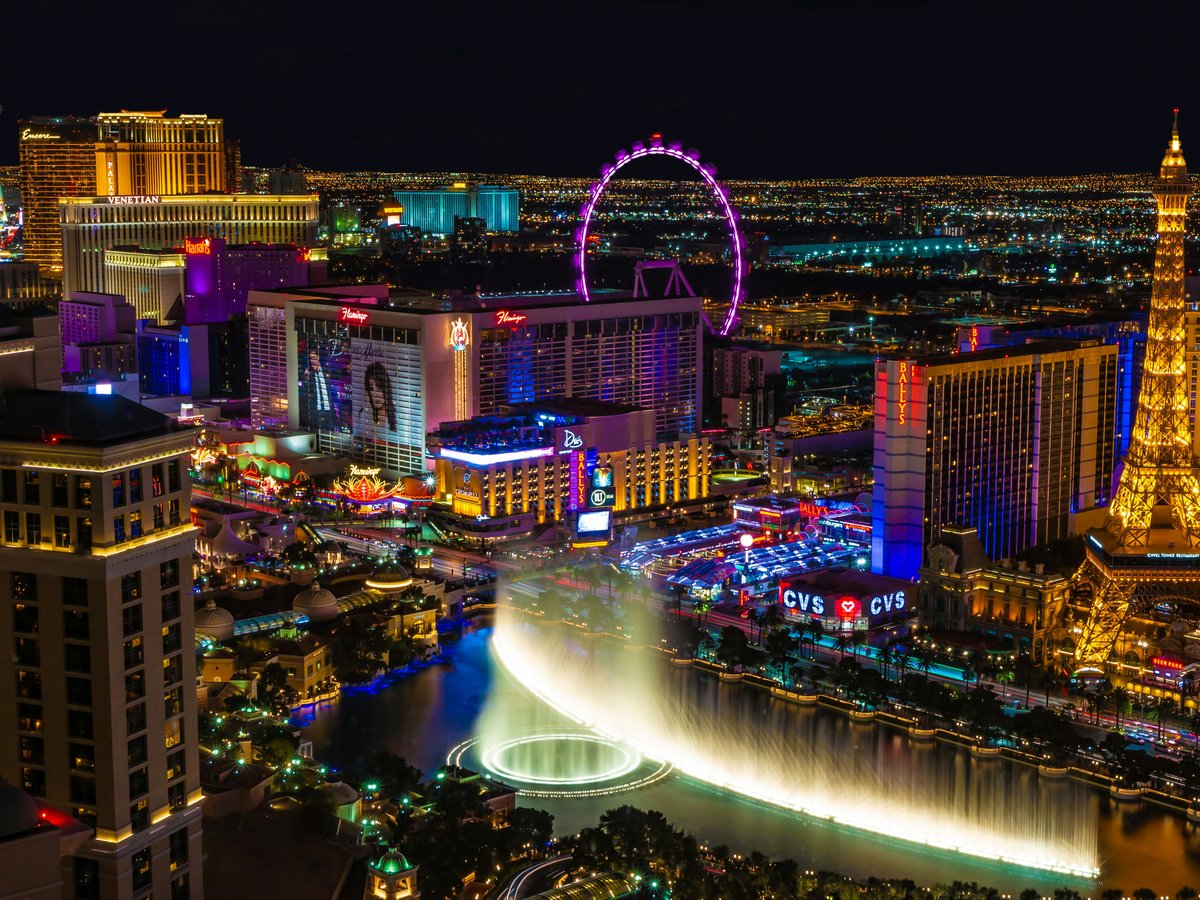
Las Vegas built its reputation on getting people through the door. The casinos figured out decades ago that free spectacles pull foot traffic, and foot traffic converts to revenue somewhere down the line. The result is a city where billions of dollars in architecture, engineering, and art sit in plain view, no ticket required. The Bellagio alone invested around $40 million in its fountain system, and you can watch the whole show from the sidewalk every 15 minutes after dark. Fremont Street's Viva Vision canopy stretches 1,500 feet overhead, running free light shows on the hour. Beyond the casino corridor, Clark County maintains over 60 parks, and the Mojave Desert starts about 20 minutes west on State Route 159. You might find Las Vegas is one of the few cities on earth where the free entertainment was specifically engineered to outshine most cities' paid attractions. The catch, of course, is that casinos are betting you'll wander inside and spend money at a table. But nobody actually checks.
Free attractions
-
Bellagio Conservatory & Botanical Gardens
A 14,000-square-foot atrium behind the Bellagio lobby, replanted five times a year for seasonal themes. The displays use real trees, flowers, and water features, with the holiday installation typically running late November through early January. Open 24 hours, always free. The air inside tends to be noticeably cooler and more humid than the casino floor, thick with the scent of whatever is blooming that month. Worth noting, each seasonal changeover reportedly costs the resort somewhere between $1 million and $2 million, and you are walking through it for nothing.
The StripBotanical garden -
Fountains of Bellagio
Over 1,200 nozzles in an 8.5-acre lake choreographed to music, visible from the Las Vegas Boulevard sidewalk. Afternoon shows run every 30 minutes starting at 3 PM on weekdays or noon on weekends and holidays. Evening shows shift to every 15 minutes from 8 PM until midnight. The system can shoot water up to 460 feet, and on still desert nights you can feel the mist from 50 feet back on the sidewalk railing. No ticket, no reservation.
The StripWater show -
Wildlife Habitat at Flamingo Las Vegas
A 15-acre tropical garden tucked behind the Flamingo hotel, home to Chilean flamingos, brown pelicans, ringed teal ducks, sacred ibis, and koi ponds. Open daily from dawn to dusk, always free. The flamingos tend to be most active in the early morning before the desert heat sets in. You will hear the birds before you spot them through the palms and bougainvillea. The whole space feels oddly removed from the Strip despite sitting about 200 feet from the casino entrance on Flamingo Road.
The StripWildlife garden -
Fremont Street Experience
A 1,500-foot-long LED canopy covering five blocks of old downtown Las Vegas between Main Street and 4th Street. The Viva Vision screen runs free light-and-sound shows on the hour from dusk until midnight or later. A 2019 renovation upgraded the display to 16.4 million pixels. Three performance stages along the pedestrian mall host free live music most nights. Neon buzzes overhead, cover bands compete from opposite ends of the corridor, and the smell of frozen daiquiris drifts out of every other doorway. Total sensory overload by design.
DowntownEntertainment district -
Marjorie Barrick Museum of Art
On the UNLV campus at 4505 S Maryland Parkway, this contemporary art museum is always free. Rotating exhibitions lean toward Southwestern and Latin American work, with roughly 2,000 pieces in the permanent collection. The building sits about 2 miles east of the Strip in a quiet university setting. Hours are Tuesday through Saturday, 10 AM to 5 PM, with Thursday hours currently extending to 8 PM. It feels like a different planet from the casino corridor.
University DistrictArt museum -
Seven Magic Mountains
Swiss artist Ugo Rondinone stacked 35 fluorescent-painted boulders into seven towers, each around 30 feet tall, in the desert flats near Jean Dry Lake south of Las Vegas. Originally a 2016 temporary installation, it has been extended multiple times and still stands as of recent years. Free to visit. No gate, no posted hours. The drive is about 20 minutes south of Mandalay Bay on I-15. The colors have faded somewhat since 2016, but the scale still registers from the highway before you even pull over.
Jean (south of Las Vegas)Public art installation -
ARIA Fine Art Collection
Scattered through the ARIA Resort's public spaces on CityCenter Drive, this collection includes permanent works by Maya Lin, Jenny Holzer, Claes Oldenburg, Henry Moore, and Frank Stella. The pieces occupy lobbies, corridors, and outdoor plazas, all accessible without a room key or admission fee. Maya Lin's Silver River flows across the front desk wall in reclaimed silver. Jenny Holzer's LED columns scroll text near the lobby entrance. You can walk the full collection in about 45 minutes.
The StripPublic art collection -
Clark County Wetlands Park
Over 210 acres of developed nature preserve about 15 minutes east of the Strip, at the terminus of the Las Vegas Wash where urban runoff drains toward Lake Mead. More than 9 miles of trails wind through riparian habitat supporting over 200 documented bird species. The Nature Center is open daily and free. Mornings are best for birding, before the midday heat pushes everything into shade. The contrast with the Strip is abrupt. One moment you are in the desert's version of a marshland, hearing red-winged blackbirds, and a 15-minute drive later you could be in a casino.
East Las VegasNature preserve -
Sunset Park
At 324 acres, Sunset Park is one of the largest green spaces in the Las Vegas Valley, located on Eastern Avenue south of the Strip near McCarran (now Harry Reid) International Airport. A 13-acre lake stocked by the Nevada Department of Wildlife for fishing (license required), basketball courts, a disc golf course, and wide paved loops for walking or cycling. Free entry, free parking. On weekend mornings the paths fill with runners taking advantage of relatively flat, partly shaded terrain. Planes descend low overhead toward the nearby runway, which is either distracting or oddly photogenic.
South Las VegasUrban park -
Atomic Testing Museum
A Smithsonian-affiliated museum at 755 E Flamingo Road covering the history of the Nevada Test Site, where the United States conducted 928 nuclear tests between 1951 and 1992. Standard admission currently sits around $25 for adults, so this is not a permanently free attraction. However, the museum offers free entry on Smithsonian Magazine Museum Day, typically held on a Saturday in September. Military veterans with valid ID are admitted free year-round. The Ground Zero Theater simulates a nuclear detonation with seat vibration, a blast of heat, and a rush of pressurized air. Worth planning around if the free day lines up with your trip.
East of StripHistory museum (free on select days)
Free activities
-
Walking the Las Vegas Strip
The stretch of Las Vegas Boulevard from Mandalay Bay at the south end to the STRAT tower at the north covers roughly 4.2 miles. Most casino lobbies, shopping arcades, and connector walkways are air-conditioned and open to anyone, which makes it possible to walk the full corridor in summer without prolonged sun exposure. Highlights on foot include the Forum Shops' painted sky ceiling at Caesars Palace, the Venetian's Grand Canal with its singing gondoliers (listening is free, riding costs around $30), the tropical atrium at the Palazzo, and the conservatory at Wynn. Budget 3 to 4 hours if you duck into the lobbies and linger. The pedestrian overpasses between Bellagio and Caesars Palace alone add a quarter mile to the walk.
The StripWalking route -
18b Arts District Gallery Walk
The 18b Arts District sits south of Fremont Street between Las Vegas Boulevard and Commerce Street, centered on South Main Street. Independent galleries like the Arts Factory at 107 E Charleston Blvd and numerous smaller studios keep regular free hours. The neighborhood is walkable within about 6 blocks. Murals cover most of the building facades along Main Street and Arts Way, constantly rotating as new commissions go up. You will find coffee roasters and vintage shops between the galleries. The area is quieter than the Strip by an order of magnitude, and the street art alone is worth the detour from downtown.
Downtown / Arts DistrictArt and culture walk -
Fremont East District
East of the Fremont Street Experience canopy, Fremont East runs from Las Vegas Boulevard to around 8th Street. The neighborhood transitioned over the past decade from old-school dive bars into a mix of cocktail lounges, restaurants, and the Downtown Container Park. Container Park at 707 Fremont Street has a free outdoor courtyard anchored by a 40-foot praying mantis sculpture that shoots propane flames from its antennae after dark. The walking here is more relaxed than under the Viva Vision canopy, with vintage neon signs restored and displayed along the block.
DowntownWalking route -
Tule Springs Fossil Beds National Monument
About 25 minutes north of downtown Las Vegas off US-95, this 22,650-acre national monument preserves Ice Age fossil sites where Columbian mammoths, American lions, and giant ground sloths roamed roughly 100,000 to 12,000 years ago. Established in 2014, it currently has no developed visitor center and no entrance fee. Trails are largely unmarked desert paths through Mojave scrubland. Bring at least 2 liters of water per person, sun protection, and a GPS device. The landscape is sparse, but knowing you are walking over Pleistocene fossil beds changes the character of every step.
North Las VegasNature and history -
Downtown Container Park
An open-air shopping and entertainment complex at 707 Fremont Street built from repurposed shipping containers and modular cubes. Free to enter, free to wander. The centerpiece is a 40-foot praying mantis sculpture by artist Kirk Jellum, originally built for Burning Man, which shoots propane flames from its antennae after dark every few minutes. Live music plays on the small stage most weekends. A children's play area with a 33-foot treehouse slide sits in the center. After 9 PM, entry is restricted to ages 21 and older. The container architecture makes for distinctive photos at any hour.
DowntownEntertainment venue -
Sloan Canyon Petroglyph Trail
Sloan Canyon National Conservation Area in Henderson, about 20 minutes south of the Strip, contains one of the largest known petroglyph sites in North America. Over 1,700 individual rock art panels spread across approximately 300 recording sites in a narrow sandstone canyon. The main trail to the petroglyph area is a roughly 6-mile round trip through open desert wash terrain. Access is free, managed by the Bureau of Land Management. Bring at least 2 liters of water per person. The petroglyphs appear to date from several thousand years ago to the historic period. No shade, no facilities. Worth every step of the walk.
HendersonHiking and archaeology
Free events
-
First Friday Las Vegas
First Friday of each month, 5 PM to 11 PMThe largest recurring free event in Las Vegas, drawing an estimated 20,000 to 30,000 people to the 18b Arts District on the first Friday of every month from 5 PM to 11 PM. Galleries along South Main Street open their doors, food trucks line the blocks, and local musicians perform on outdoor stages. The crowd is a mix of locals, UNLV students, and tourists who found their way off the Strip. The atmosphere has a block-party looseness that the casino corridor never quite manages. October through March tends to draw the biggest turnouts, when evening temperatures in Las Vegas sit around 55 to 70°F.
18b Arts District, South Main Street -
Fremont Street Experience Live Concerts
Most evenings, typically from 6 PM onwardThree stages along the Fremont Street pedestrian mall host free live performances most evenings, typically starting around 6 PM. Acts range from local cover bands to touring musicians booked by the Fremont Street Experience management. The 1st Street Stage and 3rd Street Stage see the heaviest programming. Sound bleeds between the stages on crowded Saturday nights, which adds to the atmosphere of mild, cheerful chaos. No ticket, no cover charge. The performance schedule updates weekly on the Fremont Street Experience website.
Fremont Street Experience stages, Downtown -
Bellagio Conservatory Seasonal Reveal
Five times yearly, aligned with seasonal and holiday themesFive times a year the Bellagio Conservatory swaps its entire installation for a new seasonal theme. The changeovers follow Chinese New Year (January or February), spring (March through May), summer (June through September), fall (October through November), and winter holidays (late November through early January). Each reveal draws crowds on opening day. The holiday installation tends to be the most elaborate, sometimes featuring 30-foot decorated trees and a model train running through the display. Always free. The transition periods between installations last roughly one to two weeks, during which the conservatory is closed.
Bellagio Resort, Las Vegas Strip -
Movies in the Park
Various dates, October through April, at duskClark County Parks and Recreation screens free outdoor movies at rotating park locations throughout the cooler months, typically October through April. Screenings start at dusk, usually around 6 to 7 PM depending on the season. Sunset Park, Craig Ranch Regional Park, and Desert Breeze Park are common host venues. Bring blankets or low chairs. Las Vegas evening temperatures in fall and winter tend to hover between 45°F and 65°F, comfortable for outdoor seating with a light jacket. The schedule publishes monthly on the Clark County Parks website.
Rotating Clark County parks (Sunset Park, Craig Ranch Regional Park, Desert Breeze Park) -
Ethel M Holiday Cactus Garden Lights
Mid-November through early January, eveningsA free holiday lighting event at the Ethel M Chocolate Factory and Botanical Cactus Garden in Henderson, about 20 minutes southeast of the Strip. The garden's 3-acre collection of over 300 species of desert plants is draped in holiday lights from mid-November through early January. The garden is free to visit year-round during daylight hours, but the evening holiday display draws the biggest crowds. Wait times on December weekends can reach 30 to 45 minutes at the entrance. There is a free chocolate sample at the factory door.
Ethel M Botanical Cactus Garden, 2 Cactus Garden Drive, Henderson -
Summer Concert Series on Fremont Street
Saturday nights, approximately June through SeptemberDuring the hotter months, roughly June through September, Fremont Street Experience books larger touring acts for Saturday night concerts on the main stages. Past lineups have included bands like Smash Mouth, Gin Blossoms, and Sugar Ray. All performances are free, no ticket needed. Shows typically start around 9 PM, after Las Vegas daytime highs of 105°F to 115°F have dropped to a still-warm but more tolerable 95°F. Bring water. The concrete and neon radiate stored heat well into the night.
Fremont Street Experience, Downtown
Free Things on the Strip That Most Visitors Walk Right Past
The Strip is designed to funnel you into casinos, but the connective spaces between them hold some of the best free experiences in Las Vegas. The Wynn resort maintains a lakeside light show called the Lake of Dreams, visible from the atrium and the Parasol Down bar area, with a roughly 40-foot waterfall and puppet-stage projections. You do not need to buy a drink to watch, though you might feel conspicuous standing there empty-handed. The Palazzo lobby opens onto a sunlit atrium with rotating floral displays that rival the Bellagio Conservatory in craftsmanship, if not in scale. At the Cosmopolitan of Las Vegas, the Chandelier Bar's installation of roughly 2 million crystals spans three floors and is visible from the escalators without ordering anything. The Forum Shops at Caesars Palace maintain a painted sky ceiling that cycles from dawn to dusk every hour, a detail many visitors never look up to notice. Mind you, all of this exists to steer you toward a blackjack table. But nobody actually verifies that you sit down.
Desert Day Trips That Cost Nothing
Las Vegas sits in the Mojave Desert, and the city's edges dissolve into public land faster than most visitors expect. Red Rock Canyon's 13-mile Scenic Drive charges $15 per vehicle, but the BLM land surrounding the conservation area has free pulloffs and informal trails accessible from State Route 159 west of the fee station. Sloan Canyon National Conservation Area in Henderson holds over 1,700 petroglyph panels across 300 recording sites, free to hike and explore on BLM trails. The Historic Railroad Trail near Hoover Dam follows a 3.7-mile paved path through five old railway tunnels built in the 1930s for dam construction. Access from the trailhead parking area has traditionally been free, though Lake Mead National Recreation Area's entrance fee applies at the main gates, so verify current access before driving out. Valley of Fire State Park, 50 miles northeast of the Strip on I-15 and Valley of Fire Road, charges $10 per vehicle but offers some of the most photogenic red sandstone formations in the American Southwest, with petroglyphs at Mouse's Tank dating back over 3,000 years.
Practical Tips for a Zero-Budget Day in Las Vegas
Timing matters more in Las Vegas than planning. The Strip's indoor attractions, from the Bellagio Conservatory to the Venetian's canal walk, are air-conditioned and accessible around the clock, making them ideal for the 2 PM to 5 PM window when outdoor temperatures peak above 100°F from June through September. First Friday in the Arts District runs best during the cooler months between October and March. The RTC Deuce bus covers the full Strip from the South Strip Transit Terminal to the Downtown Transportation Center for $6 per 2-hour pass or $8 for 24 hours, currently the cheapest way to travel the 4-mile corridor without walking. The monorail runs a parallel route behind the east-side casinos from MGM Grand to the SAHARA for $5 per single ride or $13 per day pass. Most casino food courts price meals lower than you might expect given the real estate. The Excalibur and New York-New York food courts typically have options in the $10 to $14 range. Tap water in Las Vegas is safe to drink. It comes from Lake Mead via the Southern Nevada Water Authority. Fill a reusable bottle at any casino water fountain rather than paying $4 to $6 per bottle on the Strip.
FAQ
Is it really possible to visit Las Vegas without spending money on attractions?
More than almost any other city, yes. The casino business model subsidizes free entertainment to generate foot traffic. The Bellagio Conservatory, Fountains of Bellagio, Fremont Street Experience, Wildlife Habitat at Flamingo, and the ARIA Fine Art Collection are all permanently free with no strings attached. You will still need to pay for food and lodging, but the attraction spending can genuinely be zero if you stick to the free offerings. The volume of high-production-value free entertainment in Las Vegas likely exceeds any other city in the United States.
When is the best time of year to enjoy free outdoor activities in Las Vegas?
October through April. Summer daytime temperatures in Las Vegas routinely reach 105°F to 115°F, which makes extended outdoor walks uncomfortable and potentially dangerous without serious hydration planning. Spring and fall months sit around 70°F to 85°F during the day with almost no rain. Las Vegas averages only about 4.2 inches of rainfall per year, so weather cancellations are rare. December and January nights can drop to 35°F to 45°F, so bring a jacket for evening events like First Friday or the Ethel M holiday lights in Henderson.
Are the Bellagio Fountains really free, and is there a good viewing spot?
Completely free, no reservation or hotel stay needed. The fountains face Las Vegas Boulevard, and the best viewing is from the public sidewalk along the boulevard railing. Shows run every 30 minutes from 3 PM on weekdays (noon on weekends and holidays) and every 15 minutes from 8 PM to midnight. The sidewalk holds thousands of viewers and rarely feels uncomfortably packed except on peak nights like New Year's Eve. The viewing terrace at the Bellagio's front entrance offers a slightly elevated angle. The Eiffel Tower viewing deck at Paris Las Vegas gives an aerial perspective but costs about $25.
What free museums exist in Las Vegas?
The Marjorie Barrick Museum of Art on the UNLV campus at 4505 S Maryland Parkway is always free, open Tuesday through Saturday. The ARIA Fine Art Collection at the ARIA Resort is free to walk through anytime the resort is open. The Atomic Testing Museum at 755 E Flamingo Road is a Smithsonian affiliate that normally charges around $25 but offers free entry on Smithsonian Magazine Museum Day, typically a Saturday in September, and free year-round admission for military veterans with valid ID. Several galleries in the 18b Arts District maintain free regular hours and open widely during monthly First Friday events.
Is the Las Vegas Strip safe to walk at night?
The main Strip corridor from Mandalay Bay north to the STRAT is heavily surveilled, well-lit, and patrolled by both Las Vegas Metropolitan Police and private casino security around the clock. The pedestrian overpasses at major intersections like Tropicana Avenue and Flamingo Road are the safest crossings. Fremont Street is similarly monitored during Viva Vision operating hours. Side streets a block or two off either corridor tend to be less patrolled and less well-lit. Standard urban awareness applies. Staying on the main pedestrian routes, you will likely feel comfortable at any hour.
How do I reach free attractions outside the Strip without a car?
The RTC Deuce bus runs the full Strip to the Downtown Transportation Center for $8 per 24-hour pass. The Las Vegas Monorail parallels the Strip's east side from MGM Grand to the SAHARA for $5 per ride or $13 per day pass. Both cover nearly all Strip-based and downtown free attractions. For destinations farther out, like Seven Magic Mountains on I-15 south or Sloan Canyon in Henderson, you will realistically need a car or rideshare. Clark County Wetlands Park is accessible via bus route 120 from the Downtown Transportation Center, though service frequency is limited. Tule Springs Fossil Beds north of the city currently has no public transit access.
Last verified by automated review (v1.7.2) on June 10, 2026. What is automated review?