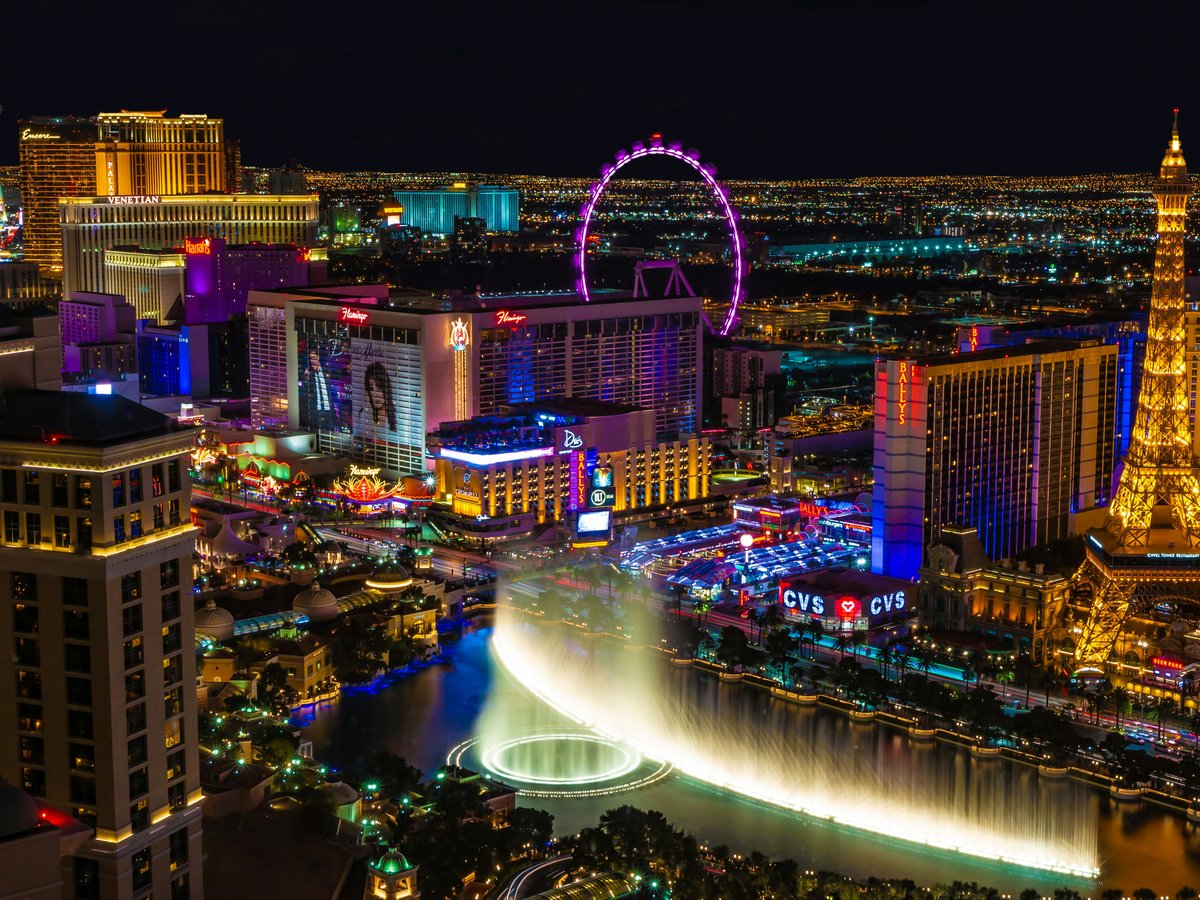
Las Vegas stays up later than anywhere else in the United States. The bars on the Strip never close, and plenty of spots downtown follow the same 24-hour logic. But the city's nightlife personality is more layered than the casino-floor stereotype suggests. On any given Friday, you'll find an upscale craft cocktail crowd at the Wynn alongside a budget beer-and-shot crowd on Fremont Street, with a thriving locals' scene scattered across Spring Valley and Henderson that most visitors never discover. The big-name DJ residencies at clubs like XS and Hakkasan pull 3,000 to 4,000 people on peak nights, but some of the best evenings happen in 80-seat lounges where bartenders remember your order. Weekends tend to peak between 1 AM and 3 AM on the Strip, which feels disorienting if you're used to a city that winds down at midnight. To be fair, even locals still get surprised by how packed things can get at 4 AM on a Saturday. The desert heat keeps people indoors during summer evenings until around 10 PM, when temperatures finally drop below 100°F and the rooftop pools transition into nightclub mode. Winter months, roughly November through February, bring cooler air and shorter wait times at the door. Las Vegas recorded over 40 million visitors in 2023, and a significant share of that foot traffic funnels directly into the nightlife economy.
The Bar Scene in Las Vegas
The cocktail bar movement has been building in Las Vegas since the mid-2010s, and it currently sits alongside cities like New York and Chicago in terms of quality. The Parasol Down lounge at the Wynn is a good entry point for visitors. It overlooks a small lake and the drinks tend to run on the higher side, depending on complexity. Worth noting, the bartenders there have been known to adjust sweetness levels without being asked, which is a small thing that separates a real program from a menu-driven operation. For something with more edge, the downtown corridor along East Fremont Street has shifted considerably since 2015. The area between 6th Street and 11th Street now holds a handful of independently operated bars that feel closer to Brooklyn than the Strip. You might notice the crowd skews younger, late 20s to mid-30s, and drink prices drop noticeably compared to the Strip for a well-made cocktail. The Container Park area anchors one end of this stretch. Dive bars still exist, though they're harder to find on the Strip itself. The locals' circuit runs through places scattered along Spring Mountain Road and in older shopping plazas near the intersection of Sahara Avenue and Maryland Parkway. These spots tend to serve cheap domestics and well drinks at a fraction of Strip prices, and the clientele is largely service-industry workers finishing shifts at 2 or 3 AM. The sound of slot machines tucked into a corner bar is a distinctly Las Vegas texture you won't find elsewhere. Rooftop bars have multiplied since 2019. Several of the newer hotel properties on the south end of the Strip feature open-air spaces 30 to 50 floors up, where the desert wind carries the faint smell of chlorine from the pool decks below. Drinks at elevation carry a steep premium over ground-level bars, and the sunset views looking west toward Red Rock Canyon are genuinely worth the markup. That said, rooftop spaces in Las Vegas often convert to a club format after 11 PM, so arrive earlier if you want a calmer experience. Wine bars remain a niche category. A few have opened in the Summerlin area on the west side of the valley, catering to residents who'd rather not drive 25 minutes to the Strip for a glass of Barolo. Expect bottles at a range of price points and a quieter crowd that tends to clear out by midnight.
The Club Scene in Las Vegas
The megaclub format that Las Vegas pioneered in the early 2000s still dominates. Venues inside the major casino-hotels on the Strip operate on a scale that most cities cannot replicate, with capacities ranging from 2,000 to over 4,000 and production budgets for lighting and sound that regularly reach seven figures per year. EDM remains the primary genre. House, tech house, and bass music rotate through the DJ booths, with the occasional hip-hop or open-format night filling a weekday slot. Dress codes at Strip clubs are enforced, sometimes strictly. Collared shirts and closed-toe shoes for men is the baseline. Athletic wear, shorts, and sandals will get you turned away at the door, even on a 110°F night in July. Women face less scrutiny on footwear but the general expectation is nightclub attire. Mind you, enforcement varies by venue and by how busy the night is. A slow Tuesday at one club might wave through what a packed Saturday at another would reject. Entry norms follow a tiered system. General admission lines can stretch 45 minutes to an hour on Friday and Saturday nights between 11:30 PM and 1 AM. Guest list sign-ups, available through promoter contacts or venue websites, typically offer free entry for women and reduced cover for men before a cutoff time, often midnight. Table service bypasses the line entirely and carries a minimum spend that varies by venue, night, and table position, with prime locations near the DJ booth at a significant premium over standard tables. Bottle prices inside tend to run 3 to 5 times retail. Peak hours on Friday and Saturday currently run from about 12:30 AM to 3 AM. The headlining DJ typically takes the booth around 1 AM and plays a 90-minute to 2-hour set. Things thin out after 3:30 AM, though some venues stay open until 4 or 5 AM. Thursday is the unofficial start of the weekend on the Strip, and Sunday has become a strong night as well, partly driven by the pool-party-to-nightclub pipeline where dayclubs like Encore Beach Club transition guests into the evening venues. Smaller club spaces off the Strip have gained ground since 2020. A few venues in the Arts District and along Fremont East run nights focused on house, techno, and disco, with cover charges well below what the Strip demands and a capacity closer to 300 to 500. The sound systems in these rooms tend to be thoughtfully tuned rather than loud for the sake of it, and the crowd dresses down compared to the Strip. These nights usually wrap by 3 or 4 AM.
Live Music in Las Vegas
Las Vegas has always been a live-music city, though the format has shifted considerably since the Rat Pack era. The current landscape divides roughly into three tiers. The arena-scale residencies at venues like the Colosseum at Caesars Palace (4,300 seats) and Dolby Live at Park MGM (5,200 seats) host legacy and A-list acts on multi-year contracts. Ticket prices for these shows vary widely depending on the artist and seat location, with the most popular residencies commanding a steep premium. The mid-tier sits in theater-format venues with capacities between 800 and 2,000. Several of these rooms book touring rock, indie, and R&B acts on the off-nights between residency shows. The House of Blues at Mandalay Bay and Brooklyn Bowl at the LINQ are two of the more active rooms in this range. Tickets at these mid-tier rooms run well below the arena residencies. Brooklyn Bowl in particular has carved out a niche for jam bands, funk, and Americana, and it serves bowling alongside the music, which creates an odd but effective atmosphere. The local underground scene operates out of smaller venues scattered across the valley. The Arts District, roughly bounded by Charleston Boulevard to the north and Colorado Avenue to the south, hosts a few rooms that book punk, metal, indie rock, and experimental acts on weekends. Cover charges at these spots stay modest. The smell of cheap beer and the crackle of a PA system pushed a little too hard are part of the deal. These shows typically start between 8 and 9 PM and wrap by midnight or 1 AM. Jazz still has a foothold in Las Vegas, though it lives mostly in hotel lounges and a few dedicated rooms off the main casino floors. The Bellagio and Venetian both run regular evening programming with small combos, and the sound of a muted trumpet drifting across a half-empty lounge at 11 PM on a Wednesday is one of those distinctly Vegas textures. Sets typically run from 8 or 9 PM until midnight. Country music has expanded its Las Vegas presence considerably since the mid-2010s. The National Finals Rodeo, held each December at the Thomas & Mack Center, temporarily reshapes the city's nightlife personality toward western wear and two-stepping. Several bars on Fremont East and the south Strip run honky-tonk nights with live bands year-round, drawing a mix of tourists and locals.
Nightlife neighborhoods
-
The Strip
Neon-saturated and relentless, with 24-hour casino-hotel megaclubs, celebrity DJ residencies, and crowds that peak well after midnight along Las Vegas Boulevard South between Mandalay Bay and the STRAT.
- Best for
- First-time visitors, bachelor and bachelorette groups, EDM fans, anyone wanting the full production-scale Vegas experience
- Standouts
- XS at Encore, Hakkasan at MGM Grand, Omnia at Caesars Palace, Marquee Nightclub at The Cosmopolitan
-
Fremont East
A walkable corridor of independently operated bars between 6th and 11th Streets downtown, where the crowd skews late 20s to mid-30s and drink prices sit well below Strip levels. Street art covers every surface, and the neon from the older Fremont Street signs still flickers overhead.
- Best for
- Bar-hoppers, craft cocktail enthusiasts, anyone looking for a less polished and more neighborhood-feeling night out
- Standouts
- Commonwealth, Atomic Liquors, The Griffin, Container Park
-
Arts District
Converted warehouses and gallery spaces south of downtown hosting underground DJ nights, techno events, and First Friday art walks that spill into after-dark parties. The concrete floors and exposed ductwork give these rooms a raw, industrial feel that contrasts sharply with the Strip.
- Best for
- House and techno fans, the creative and art-adjacent crowd, anyone drawn to smaller rooms with carefully tuned sound
- Standouts
- Rotating pop-up events in warehouse spaces, with a few permanent rooms booking weekend DJ sets
-
Spring Mountain Road
Las Vegas's Chinatown corridor, lined with strip-mall plazas that stay lit well past 2 AM. Late-night Korean BBQ spots, karaoke rooms with private booths, and dive bars where the clientele is largely service-industry workers finishing their shifts. The smell of grilled meat and the muffled thump of karaoke bass leak out through propped-open doors.
- Best for
- Night owls, service-industry locals, anyone wanting food and drinks in the small hours after the clubs close
- Standouts
- Multiple karaoke lounges and late-night restaurants clustered between Valley View Boulevard and Decatur Boulevard
-
Summerlin
Quieter and more residential, with wine bars and gastropubs catering to west-side locals who prefer not to make the 25-minute drive to the Strip. The pace is slower, the volume is lower, and most places clear out by midnight.
- Best for
- Wine enthusiasts, couples, anyone wanting a mellow evening with a west-valley crowd
- Standouts
- Downtown Summerlin dining cluster, with a handful of wine bars and lounges within walking distance
Safety after dark
Las Vegas Boulevard stays well-lit and heavily surveilled between Mandalay Bay and the STRAT, with Metro Police bike patrols visible most nights. Rideshare pickup zones at each major casino-hotel are clearly marked and generally safer than flagging a car from the sidewalk. The blocks immediately east and west of the Strip thin out quickly. Lighting drops off within 2 to 3 blocks, so stick to well-traveled routes if walking. Drink spiking remains a concern at crowded nightclubs and pool parties. Keep your glass in hand, and order a fresh one if you step away. Street-level promoters on the Strip will hand you flyers and club cards constantly, and while they're mostly harmless, some steer visitors toward overpriced arrangements with hidden fees. The Las Vegas Monorail runs along the east side of the Strip until around 2 AM on weekends, covering the stretch from the Convention Center to MGM Grand. After it stops, rideshare demand spikes between 1 and 3 AM on Friday and Saturday nights, and wait times can stretch during that window.
Practical tips
- Guest lists
- Most Strip nightclubs offer free guest list sign-ups through their websites or through promoter contacts on Instagram. Signing up typically grants free or reduced entry before a cutoff, often around midnight on weekends. Without a guest list on a Friday or Saturday, expect a considerably longer wait in the general admission line.
- Peak hours
- Strip clubs tend to fill between midnight and 1 AM on weekends, with headlining DJs taking the booth around 1 AM. Arriving before 11:30 PM generally means shorter lines. Downtown and Arts District venues peak a bit earlier, closer to 11 PM to 1 AM, and wind down by 3 AM.
- Getting around at night
- Walking the Strip end to end takes roughly 45 minutes at a steady pace, and the distance between casino entrances is deceptive from the road. Rideshare is the most practical option for moving between the Strip, Fremont East, and the Arts District. Taxis within Clark County are required to run on the meter.
- Summer heat after dark
- Temperatures in Las Vegas regularly exceed 110°F between June and September, and the heat lingers past sunset. Rooftop bars and outdoor pools can still feel warm at 10 PM during peak summer months. Hydrate between drinks, especially if moving between air-conditioned venues and outdoor spaces.
- Tipping norms
- Bartenders on the Strip expect a tip per drink, and service tends to speed up noticeably when you tip on the first round. At table service venues, gratuity is often included in the final bill, so check before adding more. Casino cocktail servers bringing complimentary drinks to the gaming floor also expect a tip per round.
FAQ
What time do nightclubs open and close in Las Vegas?
Most Strip nightclubs open around 10:30 PM on Friday and Saturday, though the crowd doesn't fill in until after midnight. Many stay open until 4 or 5 AM. Weeknight hours tend to be shorter. Bars in Nevada are legally permitted to serve alcohol 24 hours a day, so hotel bars and casino lounges never technically close.
Do I need table service to get into a Las Vegas nightclub?
No. General admission and guest list entry are both available at most venues. Table service lets you skip the line and guarantees seating, but it carries a minimum spend that varies by venue and night. For a first visit, signing up for the guest list through the club's website is a reasonable starting point.
Is the Las Vegas Strip safe to walk at night?
The Strip between Mandalay Bay and the STRAT is heavily patrolled by Metro Police and private casino security. The main boulevard stays crowded and well-lit through the early morning hours on weekends. The side streets one or two blocks east and west are quieter and less illuminated, so most visitors stick to Las Vegas Boulevard and the pedestrian bridges connecting the major properties.
What should I wear to a Las Vegas nightclub?
Collared shirts and closed-toe shoes are the minimum for men at most Strip nightclubs. Athletic wear, jerseys, cargo shorts, and sandals will get turned away at the door. Women face less scrutiny on footwear but the general expectation is nightclub attire. Enforcement relaxes considerably at downtown bars and Arts District venues, where casual streetwear is the norm.
Are there nightlife options in Las Vegas besides the Strip?
Fremont East downtown has a strong independent bar scene between 6th and 11th Streets. The Arts District hosts underground DJ nights and live music in converted warehouses. Spring Mountain Road in the Chinatown area has late-night karaoke and restaurants open past 2 AM. The locals' scene across Spring Valley and Henderson offers neighborhood bars where off-shift workers gather after 2 or 3 AM.
Last verified by automated review (v1.7.2) on . What is automated review?