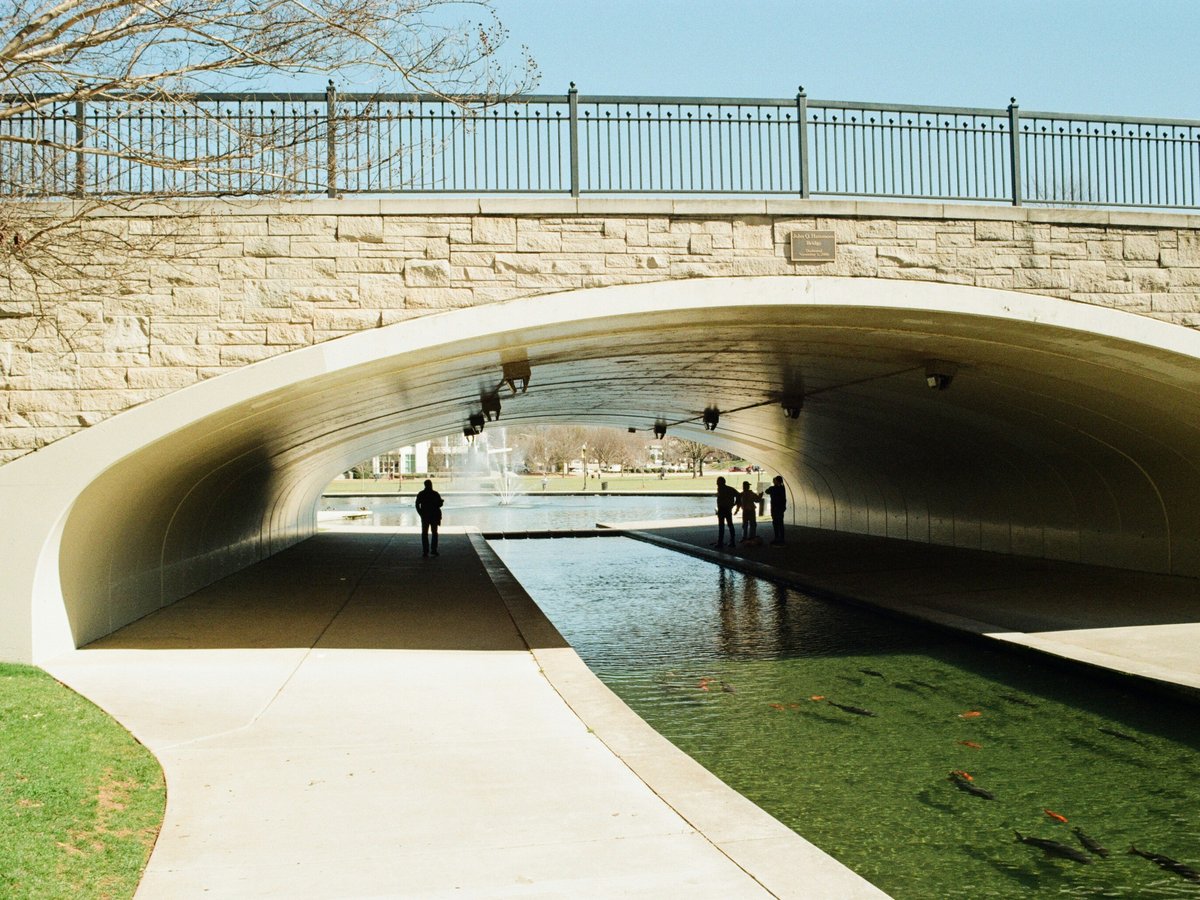
Huntsville sprawls across the floor of the Tennessee Valley with Monte Sano rising 1,600 feet to the east. The city grew outward from a limestone spring that still feeds Big Spring Park downtown. Most of the neighborhoods visitors care about sit within a 4-mile radius of the Madison County Courthouse on the square. Memorial Parkway, a north-south divided highway, splits the city roughly in half and tends to define how locals give directions. West of the Parkway you'll find Research Park and the newer MidCity development. East of it, the older residential districts climb toward the mountain. Huntsville's population crossed 220,000 around 2023, but the metro area pulls in closer to 500,000 when you count Madison and Decatur. The city still feels mid-sized, though. Traffic gets thick on University Drive and the Parkway during rush hour, but nothing like Atlanta or Nashville. You can cross town in 20 minutes most of the day.
Neighborhoods
-
Downtown
The courthouse square anchors everything. Cotton-era commercial buildings line the streets around it, most of them 2 or 3 stories, now holding restaurants and small shops. Big Spring Park sits a block south, and on weekday lunches you'll see Redstone Arsenal engineers eating sandwiches by the lagoon. The pace is unhurried even at noon. After 5 pm on weekdays the sidewalks thin out considerably, though weekends bring more foot traffic, especially around Clinton Avenue.
- Best for
- First-time visitors who want walkable restaurants, the Early Works children's museum, and proximity to the Von Braun Center
- Key streets
- Clinton Avenue West for restaurants and bars, Washington Street for the courthouse square, Gates Avenue leading to Twickenham, and the Big Spring Park loop trail that circles the lagoon for about half a mile
-
Twickenham Historic District
Twickenham is likely the oldest residential neighborhood in Alabama, platted in 1818 before statehood. The houses range from Federal-style brick from the 1820s to late Victorian frame homes from the 1890s. Sidewalks are uneven in places, cracked by oak roots. It is quiet. Almost eerily quiet for a neighborhood this close to a downtown. You might hear a screen door or someone's piano practice. Most homes here are owner-occupied, and residents tend to be protective of the district's character.
- Best for
- Architecture fans, couples who prefer a quiet residential stay over hotel bustle, and anyone who wants to walk to downtown in 10 minutes
- Key streets
- Adams Street and Williams Street have the heaviest concentration of antebellum homes. Gates Avenue connects the district to Big Spring Park. McClung Avenue runs along the southern edge.
-
Five Points
Five Points sits about a mile southeast of the courthouse, centered on the intersection where Andrew Jackson Way, Pratt Avenue, and Holmes Avenue meet. It has been Huntsville's closest thing to a bohemian district since at least the 1990s. The buildings are small-scale. Bungalows from the 1920s and 1930s sit next to converted commercial spaces. Toybox Bistro, Domaine South, and a handful of other restaurants cluster near the intersection. You'll hear live music bleeding out of bars on weekend nights. The neighborhood skews younger than Twickenham but older than the MidCity crowd.
- Best for
- Visitors who want walkable food and drink options without the corporate feel, especially couples and solo travelers in their 30s and 40s
- Key streets
- Andrew Jackson Way between Holmes and Pratt is the core. Pratt Avenue heading east leads toward more residential blocks. Holmes Avenue heads west toward downtown and passes the Von Braun Center.
-
Lowe Mill and Dallas Mill
Lowe Mill ARTS and Entertainment, at 2211 Seminole Drive, is a converted 1901 cotton mill that now holds over 150 artist studios, galleries, and small shops across 171,000 square feet. It is reportedly the largest privately owned arts facility in the United States. The surrounding Dallas Mill neighborhood is working-class residential, with small frame houses from the mill-village era. The contrast is part of the appeal. You walk out of a contemporary sculpture gallery and you're on a street with chain-link fences and pickup trucks. It feels honest, not curated.
- Best for
- Art buyers, photographers, families on a rainy Saturday afternoon, and anyone who finds shopping-district galleries sterile
- Key streets
- Seminole Drive for the mill complex itself. Dallas Avenue runs through the historic mill village. Ninth Avenue connects the area to downtown in about a mile and a half.
-
Campus 805
A former public school building on Meridian Street, converted around 2017 into a food and beverage hub. Straight to Ale and Yellowhammer Brewing both have taprooms here. The hallways still have the institutional tile and lockers in places. It sounds gimmicky, but it works. The ceilings are high, the spaces are well-lit, and on a Friday evening the outdoor area fills up with families letting kids run on the grass while parents drink local IPAs. The surrounding blocks along Meridian Street have seen new restaurant openings steadily since 2019.
- Best for
- Beer enthusiasts, groups who can't agree on one restaurant, and families who need space for kids to move around
- Key streets
- Meridian Street North between Bob Wallace Avenue and Governors Drive is the active corridor. Bob Wallace Avenue heads west into residential Blossomwood.
-
Monte Sano
Monte Sano rises east of downtown and tops out around 1,600 feet. Monte Sano State Park covers about 2,140 acres on the plateau. The residential area along Monte Sano Boulevard has homes tucked into hardwood forest, and in October the leaf color is genuinely striking. The drive up the mountain takes about 10 minutes from Five Points. At the top, the air temperature drops a few degrees and the noise of the valley disappears. Burritt on the Mountain, a 1930s mansion turned museum, sits on the bluff edge and offers a clear view north across the Tennessee Valley.
- Best for
- Hikers, mountain bikers, families with older kids who can handle trail distances, and anyone who wants to sleep somewhere cool and quiet during Alabama's humid summer months
- Key streets
- Monte Sano Boulevard is the main road up the mountain. Bankhead Parkway offers an alternate route from the north side. Inside the state park, the North Plateau Loop and Stone Cuts Trail are the most popular paths.
-
MidCity District
MidCity is Huntsville's newest mixed-use development, anchored by a Top Golf and a Dave and Buster's on the west side of Research Park Boulevard. It opened in phases starting around 2020. The architecture is contemporary retail. Apartment blocks with ground-floor commercial, parking garages, wide sidewalks. It is clean and new and a little generic, which is fine if that's what you want. The Stovehouse food hall sits at the eastern end, inside a converted Dixie Ceramics factory, and that part has more character. Multiple food vendors under one roof, outdoor seating, string lights.
- Best for
- Families with teenagers, business travelers near Cummings Research Park, and visitors who want chain-adjacent reliability with a few local options mixed in
- Key streets
- Research Park Boulevard runs north-south through the district. University Drive borders it to the south. Stovehouse is at 3414 Governors Drive.
-
South Huntsville and Jones Valley
South Huntsville stretches along South Memorial Parkway past the commercial strip into more residential territory around Weatherly Road and Bailey Cove Road. It is suburban. Strip malls, chain restaurants, big parking lots. That said, this is where a lot of Huntsville families live, and the access to grocery stores, schools, and medical offices is better than in the historic districts. Jones Valley, further south toward Hampton Cove, pushes up against the base of the mountains and gets quieter. Chapman Mountain is visible to the southeast. The housing stock is mostly 1990s and 2000s subdivisions.
- Best for
- Families on a budget who need space, visitors staying more than a few days who want a rental with a kitchen, and anyone whose primary destination is the U.S. Space and Rocket Center on the north end of the Parkway
- Key streets
- South Memorial Parkway is the main commercial spine. Weatherly Road and Bailey Cove Road head east into residential areas. Carl T. Jones Drive connects to Hampton Cove and US-431.
FAQ
Where should I stay if I want to walk to restaurants and bars?
Downtown along Clinton Avenue or Five Points near Andrew Jackson Way are your best options. Both have restaurants and bars within a 5 to 10 minute walk. Five Points has more of a neighborhood feel. Downtown has more hotel options, including the 106 Jefferson hotel and a few others near the Von Braun Center. MidCity and Stovehouse are also walkable within their own zones but feel more like outdoor malls than neighborhoods.
Is Huntsville safe for walking around at night?
Downtown and Five Points are generally fine for walking at night, though sidewalk lighting varies block to block. Twickenham is residential and quiet after dark with very little foot traffic. South Memorial Parkway is car-oriented and not designed for pedestrians at any hour. As with most mid-sized Southern cities, use normal awareness and you'll likely have no issues in the visitor-heavy areas.
How do I get around without a car in Huntsville?
Honestly, it is tough. Huntsville's public transit system is limited, and the city was built around car travel. Rideshare services like Uber and Lyft operate here, but wait times can run 10 to 15 minutes outside of downtown. If you stay downtown or in Five Points, you can walk to enough restaurants and attractions to fill 2 or 3 days. Beyond that, you'll want a rental car, especially to reach Monte Sano State Park or the U.S. Space and Rocket Center.
When is the best time of year to visit Huntsville?
Late September through early November tends to be the sweet spot. Summer humidity in north Alabama runs 80 to 90 percent and daytime temperatures sit around 90 to 95 degrees Fahrenheit from June through August. Fall brings relief, usually dropping to the mid-70s by October, and the hardwood forests on Monte Sano turn color. Spring is also pleasant but wetter. March and April average about 5 inches of rain per month.
What neighborhood is closest to the U.S. Space and Rocket Center?
The Space and Rocket Center sits on Tranquility Base Drive, off Interstate 565 near the Research Park area. MidCity District is the closest walkable neighborhood, about a mile south. Most visitors drive to the center regardless of where they stay. There are several chain hotels within a half-mile on University Drive, which is convenient if the center is your primary reason for visiting.
Are there good food options outside of downtown Huntsville?
Absolutely. Five Points has Domaine South and Toybox Bistro. Campus 805 on Meridian Street has multiple options in one building. Stovehouse at MidCity has about a dozen food stalls under one roof. South Huntsville has Viet Huong for Vietnamese and a cluster of Korean and Mexican restaurants along South Memorial Parkway near Weatherly Road. The best food in Huntsville is not concentrated in one area.
Last verified by automated review (v1.7.2) on . What is automated review?