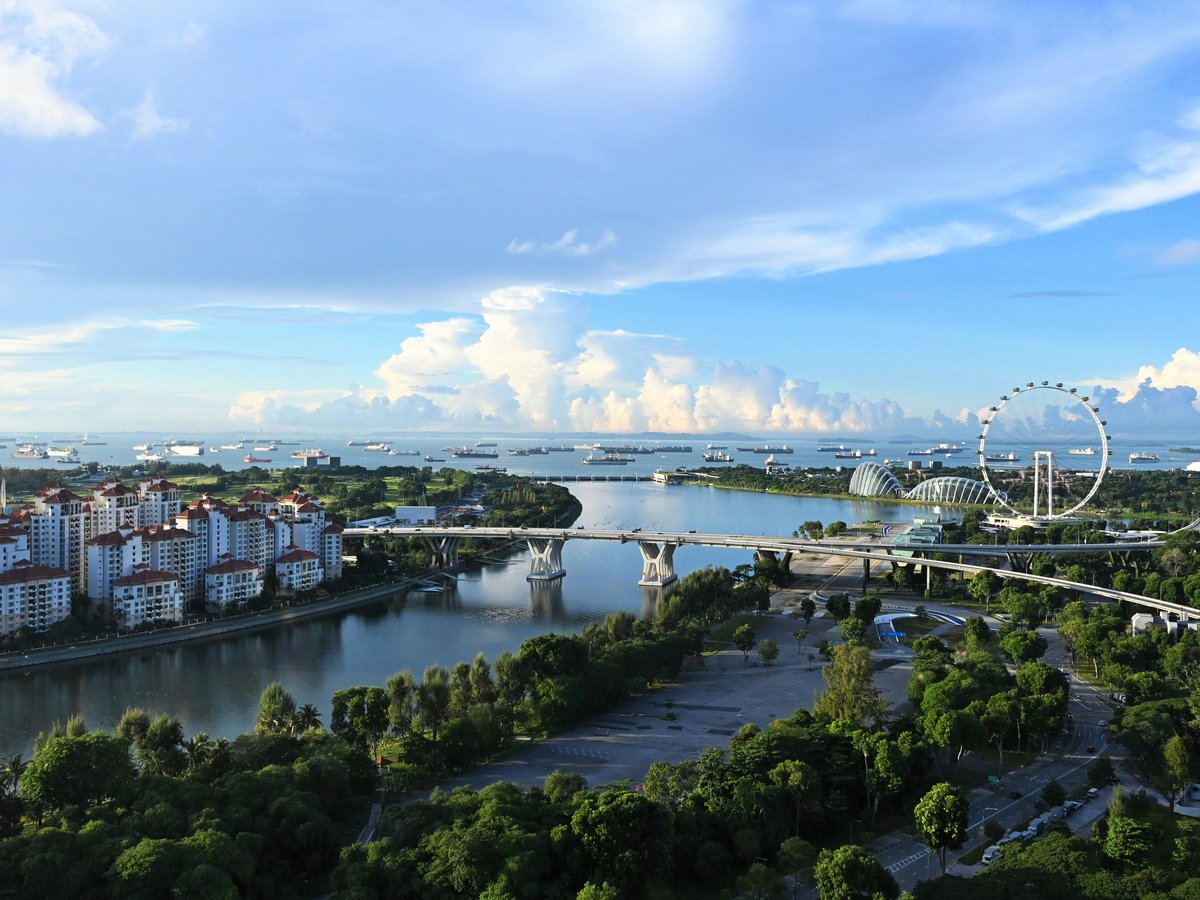
Singapore With Kids: What Works
Singapore's verified 9.5 family-friendly score is infrastructure, not marketing. Here's the itinerary shape that works with toddlers, which marquee attraction is a meltdown factory, which free garden wins the day, and why the hawker centre beats every hotel kids' menu.
Published · Updated
1 Singapore's 9.5 Family Score Isn't a Slogan: It's Plumbing, Lifts, and Air Conditioning
The sliding glass doors at Changi Airport Terminal 3 open and the humidity hits you like a warm towel. Then you step onto the MRT platform and the air conditioning kicks in. That transition (thirty seconds from tropical heat to climate-controlled transit) is Singapore's family proposition in miniature.
The verified family-friendly score here is 9.5 out of 10, and the temptation is to read that as a tourism board number. It isn't. Singapore earns it through infrastructure that most cities simply don't have. The MRT puts lifts at every single station. Not most stations. Every station. Covered walkways connect major transit hubs to shopping centres and attractions, so the equatorial rain that arrives most afternoons around 3 PM doesn't strand you with a stroller and a screaming toddler. Public restrooms in malls and transit stations are clean by a standard that would surprise anyone arriving from Bangkok or Jakarta.
What the 9.5 means in practice: you can push a double stroller from Changi Airport to a hawker centre dinner in Chinatown without once having to fold it, carry it up stairs, or stand in the rain deciding what to do next. The footpath coverage across the central districts (Orchard Road, Marina Bay, Bugis, Tiong Bahru) is near-complete and mostly shaded or sheltered.
Mind you, the score doesn't mean Singapore is effortless with children. The heat is real. Midday outdoor exposure in June or December will drain a toddler in 20 minutes flat. The distances between attractions on Sentosa are longer than the map suggests. And the famous hawker centres have almost no highchairs. But the city's response to each of these problems is structural: indoor alternatives within walking distance, free water play areas at Gardens by the Bay, and an MRT system that functions as mobile air conditioning between stops. The 9.5 is earned infrastructure. The rest of this guide is how to use it.
You can push a double stroller from Changi Airport to a hawker centre dinner in Chinatown without once having to fold it, carry it up stairs, or stand in the rain.
2 Gardens by the Bay's Children's Garden Is Free, And Better Than the Domes for Anyone Under Seven
The water jets at the Children's Garden come up to about knee-height on a four-year-old, and when they arc unpredictably the shrieking carries across the whole south lawn. This is the sound of a Singapore family day going right.
Gardens by the Bay is the headliner attraction, and most visitors make straight for the Cloud Forest dome or the Supertree Grove. With small children, that's the wrong entry point. The Cloud Forest: with its 35-metre indoor waterfall and temperature sitting around 23 degrees Celsius: looks like it should work. An adult could spend an hour there. A four-year-old lasts about 12 minutes before tugging toward the exit. The Flower Dome is even trickier: plants behind glass, a keep-your-hands-to-yourself environment that runs counter to everything a toddler wants to do with their morning.
The Children's Garden is tucked behind the main attractions on the Bay East side, and it's free. No ticket, no queue. Open Tuesday to Sunday, 10 AM to 7 PM. The water play area has interactive fountains that shoot at random intervals, a treehouse trail with suspension bridges, and a wading stream shallow enough for a two-year-old. Bring a change of clothes and a towel. Most kids are genuinely tired after 45 minutes here, which is the strategic point: a tired child is a child who sits through lunch without a fight.
The Supertree Grove is worth the walk at dusk. The Garden Rhapsody light show runs nightly at 7:45 PM and 8:45 PM, it's free, and children can lie on the grass and watch the trees light up in sequence. The OCBC Skyway (the elevated walkway between Supertrees) has queues that build to 20 minutes by evening. Skip it with anyone under 6. The show looks better from the ground anyway. The runner-up for a Gardens day with older kids, say 8 and above: the Cloud Forest dome is legitimately worth the ticket then, because they'll look up at the waterfall and stay for the full loop.
Most kids are genuinely tired after 45 minutes at the Children's Garden. That's the strategic point: a tired child is a child who sits through lunch.
3 The Singapore Zoo Works, But Only If You Arrive Before 9 AM
The first thing you hear at Singapore Zoo's Fragile Forest is the rustle of something overhead. A flying fox, probably. The dome is warm and damp, thick with the green smell of tropical canopy, and the animals are close enough that your child will freeze and point rather than scream. This is what the open-concept design does right.
Singapore Zoo sits in the Mandai district, roughly 30 minutes from the city centre by taxi. The open enclosures (moats and vegetation instead of bars) have been the model since the zoo opened in 1973, and the approach still holds up. Orangutans free-range in the canopy above the walkways. That moment tends to land with every age group.
Timing is everything. The zoo opens at 8:30 AM, and the equatorial sun turns the open-air paths uncomfortable by about 10:30 AM. Arrive for opening, head straight to the Fragile Forest and the orangutan platform, then loop through the African zone while the shade still holds. The Jungle Breakfast with Wildlife at Ah Meng Restaurant runs from 9 AM to 10:30 AM; you eat a buffet breakfast while orangutans sit about 3 metres away on the other side of a low barrier. It's popular enough that booking the day before is worth the effort.
The Mandai precinct currently has four parks side by side: Singapore Zoo, Night Safari, River Wonders, and the newer Bird Paradise. Do not attempt more than two in one day with children under 7. The heat compounds. River Wonders is mostly shaded and partly indoors, which makes it the better midday option if the zoo morning went well and nobody has melted down yet. Night Safari opens at 7:15 PM and works for children over 5 who can stay awake through the tram ride; the darkened enclosures are genuinely atmospheric, but a tired three-year-old will sleep through the whole thing. Pick two parks. Book around the heat. Call it done.
The zoo opens at 8:30 AM, and the equatorial sun turns the open-air paths uncomfortable by about 10:30 AM. Arrive for opening and get the best of it.
4 Universal Studios Singapore Is the Meltdown Trap: Sentosa's Palawan Beach Wins the Day
The sand at Palawan Beach is warm but not burning at 9 AM, and the water is calm enough that a three-year-old can wade to knee depth without anyone panicking. The suspension bridge to the small island: technically the southernmost point of continental Asia, which is a fact children enjoy announcing: takes about 4 minutes to cross, and they treat it like an expedition.
This is the Sentosa day that works. Universal Studios Singapore, the island's marquee attraction, is the one that doesn't: at least not with children under 7. Queue times for popular rides like Transformers: The Ride and Battlestar Galactica run 30 to 60 minutes on weekends. The kiddie zone in Far Far Away has shorter waits, but it's a 10-minute walk from the entrance through largely uncovered pathways in full equatorial sun. The meltdown pattern is predictable: hot walk, long queue, 90-second ride, repeat until someone cries. Adults might tolerate that rhythm. Small children cannot.
Palawan Beach is free. Siloso Beach, the next cove over, has the same calm water and more food stalls. Both are reachable from Beach Station on the Sentosa Express monorail: a 4-minute ride from VivoCity mall at HarbourFront MRT, which means you can be on sand within 20 minutes of leaving your hotel in the city centre.
The S.E.A. Aquarium at Resorts World Sentosa is the strong afternoon alternative: air-conditioned, stroller-friendly, and the 36-metre panoramic viewing panel holds attention across all ages. It sits right next to Universal Studios, which means you can walk past the theme park entrance without going in and feel entirely fine about it. That said, if your children are over 8 and ride-obsessed, Universal Studios does have the Jurassic Park rapids ride and the Revenge of the Mummy coaster. Just know the wait-to-ride ratio going in, and go on a weekday if you can.
The meltdown pattern at Universal Studios is predictable: hot walk, long queue, 90-second ride, repeat until someone cries.
5 Hawker Centres Beat Every Hotel Kids' Menu: Maxwell, Lau Pa Sat, and the Relay Eating Strategy
The smell at Maxwell Food Centre hits before you see the stalls: char kway teow crackling in a wok, the sweet coconut warmth of nasi lemak, and underneath it all the particular trapped heat of a concrete building holding the afternoon sun. A child will either love this or look alarmed. Both reactions settle within about two minutes.
Singapore's hawker centres are the best family dining option in the city, and at SGD 3 to 6 per plate they cost roughly a tenth of what the Marina Bay Sands hotel restaurants charge for a kids' pasta. The challenge is logistics, not food quality.
Maxwell Food Centre sits a 5-minute walk from Chinatown MRT and is the easiest entry point for families. Single storey, wider aisles than most, and the Tian Tian Hainanese Chicken Rice stall (the one Anthony Bourdain put on the map) serves poached chicken and rice that most children will eat without negotiation. The queue at Tian Tian runs 15 to 25 minutes at lunch peak. Worth knowing: the stall two doors down, Ah Tai, serves nearly identical chicken rice with a 5-minute wait. Locals go to both without ceremony.
Lau Pa Sat, near Telok Ayer MRT, has a partially air-conditioned Victorian-era interior and runs satay stalls along Boon Tat Street after 7 PM: the smoky charcoal smell drifts across the whole block. Chinatown Complex Food Centre is the largest hawker centre in Singapore with over 200 stalls across two floors, but the narrow aisles and lunchtime crowds make it harder with a stroller.
The strategy that works: one parent queues at the stall, the other parks the stroller and claims a table. You eat in relay. Most hawker centres have no highchairs. Bring a portable clip-on seat or do what local families do: a plastic chair turned sideways, child kneeling on it. To be fair, the mess doesn't matter at a hawker centre. That's part of the appeal.
At SGD 3 to 6 per plate, Singapore's hawker centres cost roughly a tenth of what the Marina Bay Sands hotel restaurants charge for a kids' pasta.
6 Marina Bay Sands Looks Like the Shot: The Esplanade Waterfront Is the Better Evening
The light off Marina Bay at 7:30 PM has a specific quality; the last orange of sunset mixing with cold white building LEDs and the warm yellow glow of the Esplanade's durian-shaped roof. A child sitting on the grass doesn't notice any of this colour theory. They notice the laser beams starting.
Marina Bay Sands SkyPark Observation Deck is the postcard shot, and it seems like the obvious family outing. The reality: SGD 26 per adult, a queue of 15 to 30 minutes for the lift, and an enclosed viewing area where the glass panels create glare that fights your phone camera. A five-year-old will say "cool" once, look at the view for roughly 90 seconds, and ask to leave. The rooftop infinity pool is hotel-guests-only, which means you've paid for a 20-minute experience at best.
The Spectra light and water show runs nightly at the Marina Bay Sands promenade: 8 PM and 9 PM, free, no ticket required. Here's the move that works: watch it from the Esplanade waterfront on the opposite side of the bay. The sightlines are better from across the water, the crowd is thinner, and there's real grass for children to sit on instead of concrete. Merlion Park is a 5-minute walk from there, and while the Merlion statue is more of a photo stop than an attraction, children seem to like the smaller cub statue that spouts water nearby.
Makansutra Gluttons Bay (the hawker stalls tucked behind the Esplanade theatre) is right there. Grab satay sticks and sugarcane juice, eat on the waterfront steps, and let the children run on the grass while the Spectra show starts its light-and-fountain sequence across the water. The whole evening costs less than one SkyPark ticket and runs until the kids are genuinely tired. That said, if the aerial view matters to you and the children are 8 or older, the SkyPark deck at sunset is striking. Just know you're paying SGD 26 for about 15 minutes of engagement from anyone under 10.
The whole Esplanade waterfront evening costs less than one Marina Bay Sands SkyPark ticket and runs until the kids are genuinely tired.
7 The MRT Runs Every 3 Minutes and Has Lifts at Every Station: Singapore's Family Transport Advantage
The tap of an EZ-Link card on the gantry. The rush of cooled air as the platform screen doors slide apart. The smooth roll of stroller wheels on polished granite. After a morning in the equatorial heat, stepping into a Singapore MRT station feels less like catching a train and more like checking into a lobby.
Singapore's MRT network has lifts at every station: a sentence that anyone who has carried a folded stroller down stairs at London's Tube or wrestled a pram through Tokyo's older Metro stations will read twice. Children under 7 ride free. Under 13 pays a concession fare on an EZ-Link card. Trains run every 2 to 5 minutes on the core lines during the day, and the system reaches nearly every family destination in the city.
The lines that matter: the North-South Line connects Orchard Road shopping to Marina Bay and continues to Khatib, where a shuttle bus heads to the Mandai wildlife parks. The Downtown Line hits Chinatown, Bayfront (the stop for Gardens by the Bay and Marina Bay Sands) and Bugis for the Kampong Glam quarter. The Circle Line reaches the Esplanade and the Botanic Gardens, a UNESCO World Heritage Site with the free Jacob Ballas Children's Garden tucked inside it. That last one is a strong half-day option that most family guides overlook: a proper children's garden inside a world-class botanical park, no ticket needed, and the Botanic Gardens MRT station is right at the entrance.
Grab taxis are the backup. A cross-city ride runs SGD 12 to 20, roughly 15 to 25 minutes depending on traffic. Car seats are not legally required in taxis in Singapore, which simplifies logistics but is worth knowing before you go. The one trip where a taxi beats the MRT decisively: the 30-minute ride from the city centre to Mandai for Singapore Zoo and River Wonders. The MRT-plus-bus route via Khatib adds about 25 minutes of transfers with a stroller in tow, not impossible, but not what you want at 8 AM with a reluctant toddler. Take the Grab. For everything else, the MRT likely gets you there cooler and faster.
The MRT has lifts at every station: a sentence anyone who has carried a folded stroller down stairs at London's Tube will read twice.
Last verified by automated review (v1.7.0_onboard-singapore-flagship-2026-06-02) on . What is automated review?