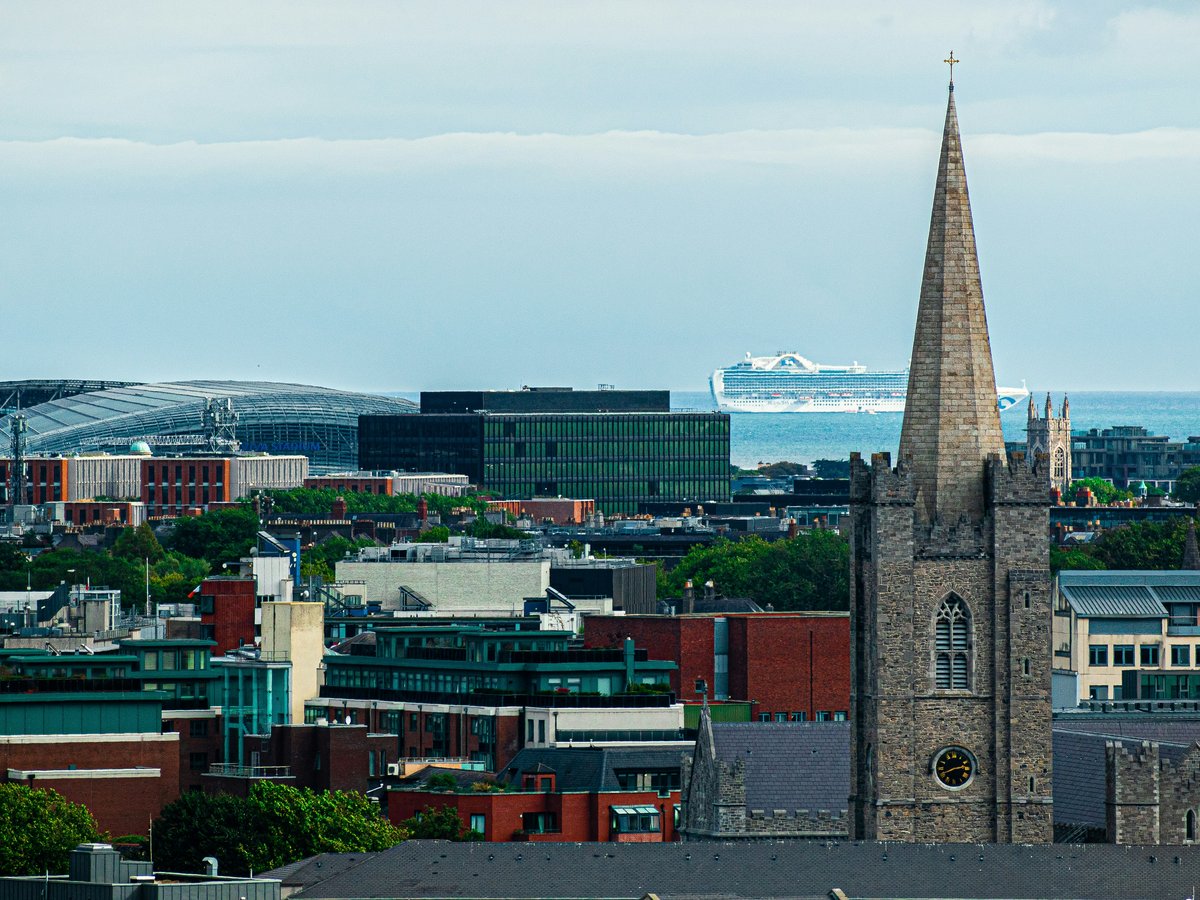
Dublin has a way of giving you a full day without ever reaching for your wallet. The city's national museums and galleries charge nothing at the door — not on special days, not with a student card, just nothing, ever. That policy runs deep here, rooted in the idea that Irish culture belongs to everyone passing through. You'll find Georgian streetscapes that reward slow walking, parks where Victorian-era gardens sit half-forgotten behind busier attractions, and a coastline reachable by commuter rail that most visitors never bother with. The pubs will get your money eventually, sure. But the hours between breakfast and that first pint? Those can cost you absolutely nothing, and they might end up being the part of Dublin you remember most clearly — the light on the Liffey at midmorning, the particular quiet of a museum gallery in winter, the salt wind off Howth Head.
Free attractions
-
National Gallery of Ireland
Always free. The permanent collection runs from Caravaggio's The Taking of Christ through Jack B. Yeats and a strong Dutch Golden Age wing. The Millennium Wing tends to host temporary exhibitions, and while a few special shows carry a charge, the main galleries never do. Quietest on weekday mornings — you can stand alone with the Vermeer. The café is reasonably priced too, if you need a warm-up between rooms.
Merrion SquareMuseum -
Chester Beatty
Always free. Tucked into the grounds of Dublin Castle, this collection of manuscripts, prints, and rare books from across Asia, the Middle East, and Europe is probably the finest small museum in the country. The Islamic collection alone — Qurans from the ninth century onward, illuminated in gold and lapis — justifies an hour. Two floors, manageable in ninety minutes, though the rooftop garden is worth lingering on if the weather cooperates.
Dame StreetMuseum -
National Museum of Ireland — Archaeology
Always free. The Kildare Street building holds Iron Age gold that's frankly startling — torcs, lunulae, and dress fasteners in quantities you don't expect outside a major capital. The Kingship and Sacrifice exhibition, with its bog bodies preserved in tannin-dark peat, is genuinely unsettling and genuinely worth seeing. The building itself is Victorian grandeur: rotunda, mosaic floors, natural light pouring through the dome.
Kildare StreetMuseum -
National Museum of Ireland — Decorative Arts & History at Collins Barracks
Always free. The old military barracks on the north side houses everything from period furniture to the 1916 Rising exhibition. Less visited than the Kildare Street branch, which means more room to breathe. The Soldiers & Chiefs military history exhibition is thorough without being jingoistic. The courtyard alone, massive and stone-flagged, is a good place to sit with coffee from the café.
Arbour HillMuseum -
Irish Museum of Modern Art (IMMA)
Always free for the permanent collection and most temporary exhibitions. The Royal Hospital Kilmainham building dates to the 1680s and the formal gardens behind it feel like they belong to a different century — which they do. IMMA's programming leans contemporary and conceptual; the quality varies show to show, but the setting never disappoints. The grounds alone are worth the walk from Heuston Station.
KilmainhamMuseum -
Dublin City Gallery The Hugh Lane
Always free. Sitting on Parnell Square North, this gallery holds the Francis Bacon reconstructed studio — his entire London workspace, transplanted to Dublin with every paint tube, slashed canvas, and ceiling-high drift of reference material exactly where he left it. The permanent collection is strong on Irish Impressionists. Sean Scully's work gets a dedicated room. Sunday lunchtime concerts run most weeks, also free.
Parnell SquareGallery -
St Stephen's Green
Always free, open year-round from dawn to dusk. Nine acres right in the city center, laid out in the Victorian style with a central lake, bandstand, and that particular sheltered feeling you get from mature trees in an enclosed park. Lunch hour on a warm day fills every bench. The garden for the visually impaired, with its scented plants and textured paths, is a thoughtful touch you don't see in many city parks.
City CentrePark -
Phoenix Park
Always free and open around the clock. At roughly 1,750 acres, it's one of the largest enclosed urban parks in Europe — large enough that you can walk for twenty minutes and hear nothing but wood pigeons. The fallow deer herd has been here since the 1660s. Áras an Úachtaráin, the President's residence, runs free guided tours on Saturdays (first come, first served from the Phoenix Park Visitor Centre). The Papal Cross and the Magazine Fort are both accessible on foot. Mind you, it's a genuine trek from the main gate to the far end — bring decent shoes.
Parkgate StreetPark -
Iveagh Gardens
Always free. These gardens sit behind the National Concert Hall, and Dubliners treat them as a sort of secret — which is less and less true each year, but they still feel quieter than St Stephen's Green two hundred metres away. Cascade fountain, a rustic grotto, rosarium, maze hedging. The sunken lawn fills up on summer lunchtimes. Enter from Clonmel Street; the Harcourt Street entrance tends to be locked outside event season.
Harcourt StreetPark -
Killiney Hill Park
Always free. A short DART ride south to Killiney station, then a fifteen-minute uphill walk, and you're looking out over Dublin Bay, Bray Head, and on clear days the Wicklow Mountains stacking up to the south. The obelisk at the top dates to 1742. The views have drawn comparisons to the Bay of Naples, which is generous but not completely delusional on the right afternoon. The path through the woods smells of pine resin and damp earth.
KillineyViewpoint -
Glasnevin Cemetery
The grounds are always free to walk. This is where the major figures of Irish history are buried — Michael Collins, Éamon de Valera, Charles Stewart Parnell, Countess Markievicz. Daniel O'Connell's round tower monument dominates the skyline. You can wander the Victorian headstones and Celtic crosses for hours. Note that the guided tours and museum carry a charge, but self-guided walking through the cemetery itself costs nothing.
GlasnevinCemetery / Heritage Site -
Marsh's Library
Free admission, though donations are welcomed. Ireland's oldest public library, built in 1701, still has the original dark oak bookcases and the wire cages where readers were once locked in with rare volumes to prevent theft. The smell of old leather and dust is thick. Genuinely atmospheric in a way that no reconstruction could manage. Open Monday, Wednesday through Friday, and Saturday mornings — check hours before visiting, as they're limited.
St Patrick's CloseLibrary / Heritage Site
Free activities
-
Howth Cliff Walk
The loop trail from Howth village around the headland is probably the single best free activity in greater Dublin. Roughly six kilometres depending on which route you take — the full loop runs past the Baily Lighthouse and back through heather-covered slopes above the sea. On a clear day you'll see all the way to the Mountains of Mourne to the north. Seabirds wheel below you. The gorse smells like coconut in spring. Take the DART to Howth — about thirty minutes from Connolly Station — and you're at the trailhead within five minutes of stepping off the train. The path is well maintained but uneven in spots; trainers are fine in dry weather, but after rain you'll want something with grip.
HowthWalking Route -
Sandymount Strand
A long, flat expanse of sand that stretches out improbably far at low tide — the kind of beach where you walk for ten minutes toward the water and it keeps retreating. Famously the setting for the Proteus episode in Joyce's Ulysses, and on a grey Dublin morning with the tide out and the wet sand reflecting cloud, you can see exactly what he was getting at. Poolbeg Lighthouse and its red-painted twin chimneys sit on the horizon. Not a swimming beach in any comfortable sense — the water is shallow and the currents at the channel mouth need respect — but for a walk with the city skyline behind you and the open bay ahead, it's hard to beat. The DART stops at Sandymount or Sydney Parade.
SandymountBeach / Walking -
Temple Bar Food Market
Every Saturday from around 10am to about 4:30pm in Meeting House Square. Browsing is free, obviously, and the stalls tend toward artisan cheese, baked goods, organic produce, and hot food from various cuisines. The quality is genuinely good — this isn't a tourist-trap market, or at least it hasn't fully become one yet. You'll likely catch a busker or two. The square itself is sheltered enough to be tolerable in light rain.
Temple BarMarket -
Grand Canal Walk
The towpath running along the Grand Canal from Portobello through Rathmines and out toward Ringsend makes for an easy, flat walk with a different character from Dublin's Georgian streets. Narrow boats, canal locks, overhanging trees in summer, and a particular stillness to the water that muffles the city noise. Patrick Kavanagh's bronze bench sculpture sits on the bank near Baggot Street Bridge — a good halfway point if you're walking from Portobello to Grand Canal Dock. The tech-company end at Grand Canal Dock is all glass and steel, a jarring contrast to the 18th-century stonework upstream.
Portobello to Grand Canal DockWalking Route -
Trinity College Campus
The grounds of Trinity College are free to walk through — the cobblestoned Front Square, the cricket pitch, the playing fields stretching back toward Pearse Street. The Campanile, the Rubrics (the oldest surviving building, red-brick, 1700), and the general atmosphere of students crossing between lectures on flagstones worn smooth by three centuries of feet. Worth noting: the Book of Kells and Old Library are ticketed separately and not cheap. But the campus itself, as a public space to wander, costs nothing.
College GreenWalking / Architecture -
Dollymount Strand and Bull Island
North Bull Island is a UNESCO Biosphere Reserve sitting in Dublin Bay, accessible by a wooden bridge from Clontarf. Dollymount Strand runs the length of it — a wide, sandy beach popular with kitesurfers when the wind is right, dog walkers the rest of the time. The dune system behind the beach supports a surprising range of plant and bird life for something so close to a capital city. The interpretive centre has free exhibits on the island's ecology. On a winter morning with the tide going out and the light low over the bay, the scale of the sky here is something else entirely.
ClontarfBeach / Nature Reserve -
Dublin Street Art Trail
Smithfield, Portobello, and stretches of the Liberties have accumulated a genuine outdoor gallery over the past decade. Large-scale murals by artists like Maser, Aches, and Solus cover gable walls — some commissioned, some evolved organically. The Tivoli car park on Francis Street and the laneways around Fade Street tend to have the densest concentration. No formal trail map exists that stays current for long, since pieces appear and disappear, but a slow walk through these neighborhoods with your eyes up will find plenty. Smithfield's larger walls have some of the most striking work.
Smithfield / LibertiesPublic Art / Walking -
Merrion Square Park
Free to enter and worth a loop for the art hung on the railings each Sunday by local artists — an outdoor gallery tradition that goes back decades. The Oscar Wilde statue reclines on a boulder in the northwest corner, painted in three types of stone. The Georgian doorways surrounding the square, each painted a different colour, are as much a part of the experience as the park itself. Bring a book; the benches along the inner paths get afternoon sun.
Merrion SquarePark / Art
Free events
-
Culture Night (Oíche Chultúir)
Annually, one Friday in SeptemberOne Friday in September — the exact date shifts each year — when museums, galleries, churches, studios, and cultural institutions across Dublin open their doors for free evening events. Places that are normally paid waive admission. Places that are normally closed open up. Theatre companies run short performances on the street. The energy is infectious. The National Museum branches, IMMA, the Chester Beatty, and dozens of smaller venues all participate. Arrive early for popular venues; some operate on a first-come basis and queues form quickly.
Citywide -
St Patrick's Festival
Annually, mid-March (around March 17)The parade on March 17th is the centrepiece, free to watch from anywhere along the route from Parnell Square down through O'Connell Street and past Trinity to St Patrick's Cathedral. The festival itself runs several days either side, with free events in Merrion Square, the Custom House Quarter, and Temple Bar — concerts, funfairs, ceili dances, food markets. The atmosphere on the streets is unguarded and slightly chaotic. Dress warm; March in Dublin is still winter pretending to be spring.
City centre parade route and various venues -
Bloomsday
Annually, June 16June 16th marks the day Leopold Bloom walked Dublin in Ulysses, and a scattering of free readings, re-enactments, and walking events trace his route. The James Joyce Centre on North Great George's Street is the hub, though events pop up at Sweny's Pharmacy on Lincoln Place (still open, still selling lemon soap) and Davy Byrne's pub on Duke Street. Not everything is free — some guided walks and dinners carry a charge — but the street readings, costume promenades, and general literary atmosphere cost nothing to soak in.
Various locations along the Ulysses route -
Sunday Lunchtime Concerts at the Hugh Lane Gallery
Most Sundays, 12pm (during gallery season)Most Sundays during the gallery's season, a free concert runs at noon in the sculpture hall. Chamber music, solo recitals, contemporary compositions — the programming rotates and the quality is consistently strong. The acoustics in that room, with its high ceilings and stone, give even quiet pieces a particular resonance. Seats fill up, so arriving fifteen minutes early is wise. Check the gallery's website for the current schedule, as summer and holiday weeks sometimes skip.
Dublin City Gallery The Hugh Lane, Parnell Square North -
Free Lunchtime Concerts at the National Concert Hall
Select Tuesdays and Fridays, typically 1:05pm (academic year)The NCH runs a series of free lunchtime performances, typically on Tuesdays and Fridays during the academic year. Young professional musicians, conservatory students, and occasionally established performers play forty-five-minute sets. The main auditorium has excellent acoustics — you're hearing these players in a proper concert hall, not a makeshift stage. The schedule varies, so checking the NCH events page before going is worth the two minutes.
National Concert Hall, Earlsfort Terrace -
TradFest Temple Bar
Annually, late January (several days)A winter festival in late January that fills Temple Bar's venues — pubs, churches, civic buildings — with traditional Irish music, song, and dance. Several of the outdoor events and some of the smaller pub sessions are free, though the marquee concerts are ticketed. The atmosphere of trad music spilling out of doorways along the cobblestoned streets in January, when Dublin is cold and dark and unapologetically itself, has a character that summer festivals can't replicate. Check the programme — the free events are clearly marked.
Temple Bar and surrounding venues -
First Fridays at Selected Galleries
First Friday of each month, eveningSeveral Dublin galleries open late on the first Friday of each month, with free admission to new exhibitions. The Project Arts Centre in Temple Bar, the RHA Gallery on Ely Place, and smaller spaces around Francis Street and Capel Street tend to participate. The specific lineup shifts — galleries join and drop out — so a quick search for 'First Friday Dublin galleries' before heading out is the practical move. It's a good way to see new work in spaces you might otherwise walk past.
Various galleries citywide
What Used to Be Free (and No Longer Is)
Worth flagging a couple of changes that trip people up. Dublin Castle's State Apartments now charge admission for the guided tour — the exterior courtyards are still free to wander, and the Chester Beatty inside the grounds remains free, but the apartments themselves are ticketed. The Book of Kells exhibition at Trinity College has been paid entry for years and the price has gone up steadily; it's currently around seventeen euro for adults. Kilmainham Gaol, one of the most visited sites in the city, charges for its guided tour and needs advance booking in busy months. None of these are unreasonable charges, but they sometimes appear on outdated free-things lists, so it's worth knowing before you plan your day around them.
Seasonal Considerations
Dublin's free offerings shift with the seasons, and honestly the city rewards visiting outside of summer in ways that might surprise you. The parks — Phoenix Park especially — take on a different quality in autumn when the deer are rutting and the chestnut leaves are going copper. Winter brings shorter days but also the Christmas markets at the Custom House and sometimes the Docklands, where browsing is free even if the mulled wine isn't. Spring is when the gardens at Iveagh and St Stephen's Green are at their most hopeful, daffodils coming through before the trees have leafed out fully. Summer, obviously, is when the outdoor events stack up and the long evenings make a canal walk or a Howth cliff trail feel almost Mediterranean — a stretch, but the light at nine in the evening is genuinely beautiful. Rain is a factor in every season. It tends to come in short bursts rather than all-day downpours, so carrying a light jacket and being willing to duck into a free museum for an hour is the practical approach.
Getting Around Dublin Without Paying
The city centre is compact enough that most of the free attractions sit within walking distance of each other. From the Chester Beatty at Dublin Castle to the National Gallery on Merrion Square is roughly fifteen minutes on foot. From there to the Hugh Lane on Parnell Square is another twenty. Collins Barracks and IMMA are further out to the west, but still walkable from the centre in thirty-odd minutes if you don't mind the exercise. For Howth, Killiney, Sandymount, and Dollymount, the DART is the practical option — not free, but cheap enough that a few euro covers a return trip. There's no free public transport scheme currently operating in Dublin, though Leap Card fares are capped daily, which helps if you're making multiple trips. The free attractions cluster naturally into walkable loops: a Southside museum day (Chester Beatty → National Gallery → Natural History Museum → Iveagh Gardens) barely requires crossing a main road.
Dublin's Free Churches and Architectural Spaces
Several of Dublin's churches are free to enter and worth visiting as architecture alone. Christ Church Cathedral and St Patrick's Cathedral both charge admission now, which is fair enough given their upkeep costs, but the smaller churches often get overlooked. St Audoen's Church on High Street — the medieval one, not the larger Catholic church beside it — is a Heritage Ireland site with free admission during summer opening hours. Whitefriar Street Carmelite Church on Aungier Street is always free and holds the relics of St Valentine, which draws a surprising number of visitors in February. St Michan's Church in Smithfield has free access to the nave, though the famous mummified remains in the crypt require a paid tour. The Chapel Royal inside the grounds of Dublin Castle is free when open. For sheer atmosphere, the smaller neighborhood churches — St Mary's in Haddington Road, St Andrew's on Westland Row — offer that particular hush of old stone and candle wax that the busier cathedrals have largely lost to tourism.
FAQ
Are Dublin's national museums really completely free?
Yes. The National Museum of Ireland (all branches — Archaeology on Kildare Street, Decorative Arts and History at Collins Barracks, Natural History on Merrion Street, and Country Life in Castlebar), the National Gallery of Ireland, IMMA, the Chester Beatty, and the Hugh Lane Gallery are all permanently free. No special card needed, no restricted days. Some host occasional paid special exhibitions, but the permanent collections and most temporary shows are free. This has been the policy for years and there's no indication it's changing.
Is the Book of Kells free to see?
No. The Book of Kells exhibition and Old Library at Trinity College charge admission — currently around seventeen euro for adults, with student and family rates available. It's a common misconception because Trinity's campus grounds are free to walk through, but the exhibition itself is ticketed and often sells out, so advance booking is strongly recommended, particularly from May through September. The queues on walk-up mornings can stretch well past the front gate.
What free things can I do in Dublin when it rains?
Quite a lot, actually. The national museums and galleries are the obvious starting point — the National Gallery alone can absorb two or three hours comfortably. The Chester Beatty at Dublin Castle is another excellent wet-weather option. Marsh's Library on St Patrick's Close is small but atmospheric. The Natural History Museum on Merrion Street, sometimes called the Dead Zoo, hasn't changed much since the Victorian era and has a certain morbid charm on a grey afternoon. Several bookshops — Hodges Figgis on Dawson Street, The Winding Stair on the quays — are worth browsing for an hour even if you're not buying. The trick is accepting that rain is part of the Dublin experience rather than something to work around; the city looks its best through a slight drizzle, if you're willing to grant it that.
Can I visit Phoenix Park and see the deer for free?
Completely free, always open, no gates or tickets. The fallow deer roam the park freely and you'll likely spot them grazing on the Fifteen Acres (which is actually about two hundred acres — the name is one of those Dublin things). They're wild animals, so keep a respectful distance, particularly during the autumn rutting season when the males can be territorial. The Phoenix Park Visitor Centre has free exhibits, and the free Saturday tours of Áras an Úachtaráin, the President's residence, depart from there on a first-come-first-served basis — arrive by mid-morning to be safe.
Are there free walking tours in Dublin?
Several companies operate on a tip-based model, where the tour itself is free and you pay what you feel it was worth at the end. These tend to depart from locations around College Green or City Hall and cover the main historical sites — GPO, Trinity, Temple Bar, Dublin Castle. The quality depends entirely on the guide you get. They're a decent introduction if you're new to the city, though on busy summer days the groups can swell past thirty people, which makes hearing the guide difficult. Alternatively, self-guided walks cost nothing at all — the 1916 Rising trail, the Georgian Dublin loop, and the Literary Dublin route are all well documented with free downloadable maps from the city tourism office.
Is Howth Cliff Walk suitable for beginners and is it really free?
Totally free — no entry fee, no parking charge at the village, no permit needed. The trail difficulty depends on which loop you choose. The lower cliff path is well maintained with clear footing and manageable for most fitness levels, including older children. The upper bog road is more exposed and can be muddy after rain. The full loop takes roughly two to three hours at a comfortable pace with stops for photos. Wear shoes with some grip — the rocks near the summit get slippery — and bring a layer even in summer, because the wind off the Irish Sea at the exposed headland sections is noticeably cooler than in the village below. The DART runs frequently from Connolly and Tara Street stations; the journey takes about thirty minutes.
Last verified by automated review (v1.7.2) on June 1, 2026. What is automated review?