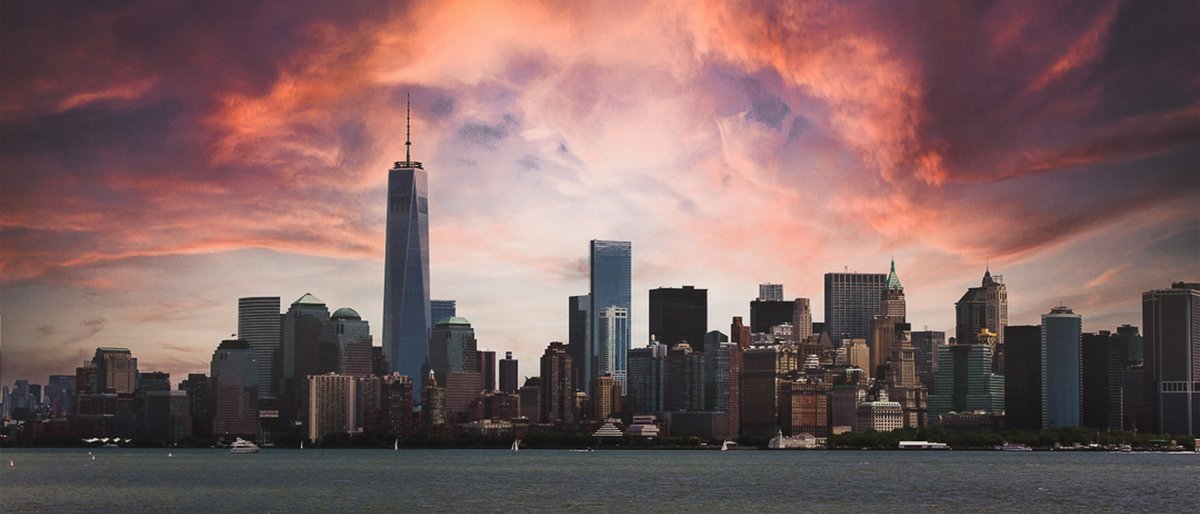
New York has this reputation as a wallet-destroyer, and honestly, it can be. But here's the thing — the city's public infrastructure is staggeringly generous if you know where to look. The parks system alone covers over 30,000 acres. The public library network is one of the finest on the planet. Several excellent museums are either permanently free or operate on a pay-what-you-wish basis. Street art, live music in the subway, farmers markets, waterfront promenades, ferry rides with skyline views that cost the same as a bus swipe — it all adds up to a city that arguably offers more at zero cost than most places do at full price. The catch is that nobody hands you a map to all of it. You have to piece it together yourself, which is part of the fun. Walk enough blocks in any direction and something worth stopping for will find you. That said, having a plan helps, if your time is limited. So here's what's actually worth your hours when your budget is exactly nothing.
Free attractions
-
Central Park
Over 840 acres of green space stretching from 59th to 110th Street. The Ramble feels like actual woodland somehow planted in the middle of Manhattan. Bethesda Fountain, Bow Bridge, the Conservatory Garden on the north end — all free, all open dawn to 1 AM. The Shakespeare Garden smells different every season, and the Great Lawn on a warm evening has this particular golden light that makes the surrounding skyline look unreal.
Upper ManhattanPark -
The High Line
A 1.45-mile elevated park built on a disused freight rail line running along the west side from Gansevoort Street to 34th Street. The plantings shift with the seasons — wild grasses and coneflowers in summer, bare branches with city views in winter. There are built-in seating areas that frame the street below like a theater. It gets crowded midday on weekends, so early morning is when it actually feels peaceful.
Chelsea / Hudson YardsPark -
Brooklyn Bridge
Walking across it is still one of the great free experiences in any city. Start from the Brooklyn side if you can — the Manhattan skyline develops ahead of you, and you're walking with the slope rather than against it. The wooden plank walkway has this particular hollow sound underfoot. Takes maybe 30 minutes at a slow pace, and the light at sunset turns the cables into something close to sculpture.
Lower Manhattan / DUMBOLandmark -
National Museum of the American Indian
Part of the Smithsonian system, housed in the gorgeous old Alexander Hamilton U.S. Custom House at Bowling Green. Permanently free, no tickets needed. The building itself — a Beaux-Arts landmark with murals and rotunda — would be worth visiting even without the collections inside. Tends to be less crowded than the big-name museums uptown, which makes the experience more contemplative.
Financial DistrictMuseum -
The Bronx Museum of the Arts
Permanently free admission. Focuses on contemporary art with strong ties to the Bronx community and Latin American artists. The building sits right on the Grand Concourse, which itself is worth a walk — the art deco apartment buildings along that boulevard are spectacular and largely overlooked by visitors.
South BronxMuseum -
Staten Island Ferry
A free 25-minute ride across New York Harbor with views of the Statue of Liberty, Ellis Island, Governors Island, and the lower Manhattan skyline. Runs 24/7, every 15-30 minutes depending on the time. The return trip at dusk, watching the city lights come on across the water, is one of the best free views on the East Coast. No ticket, no reservation — just walk on.
Whitehall Terminal / St. GeorgeViewpoint -
Prospect Park
Frederick Law Olmsted considered this his masterpiece over Central Park, and you can see why. The Long Meadow stretches for nearly a mile — the largest unbroken meadow in any NYC park. There's a boathouse, a ravine with a waterfall, and the Lefferts Historic House. Saturday mornings at the Grand Army Plaza entrance have the city's best farmers market operating just outside the gates.
Park Slope, BrooklynPark -
DUMBO Waterfront
The view of the Manhattan Bridge framed through the Washington Street canyon has become well-known for good reason, but the whole waterfront stretch from Brooklyn Bridge Park through Main Street Park is worth a slow wander. Pebble Beach sits right under the Brooklyn Bridge — you can hear the traffic humming on the deck above while looking across at the Financial District. The old warehouse architecture along Water Street has a weight and texture that feels distinctly different from Manhattan.
DUMBO, BrooklynViewpoint -
The Vessel at Hudson Yards
Technically called Vessel, this honeycomb-like structure of interconnected staircases is free to visit with a timed reservation. You climb 154 flights of stairs with views out over the Hudson River and the rail yards. It's polarizing architecture — some people find it impressive, others find it gaudy. Worth forming your own opinion. The surrounding public plaza is open without any reservation.
Hudson YardsLandmark -
Green-Wood Cemetery
A 478-acre National Historic Landmark that predates Central Park and actually inspired its creation. The rolling hills, glacial ponds, and mature trees make it feel like countryside. Notable burials include Leonard Bernstein, Jean-Michel Basquiat, and Boss Tweed. The Gothic Revival entrance gate alone is worth the trip to Sunset Park.
Sunset Park, BrooklynPark -
Roosevelt Island
Take the aerial tram from 59th Street — it costs a MetroCard swipe, same as the bus — and you're floating over the East River with a panoramic view of Midtown. The island itself has the Four Freedoms Park at the southern tip, designed by Louis Kahn, which is spare and moving. The cherry trees along the main promenade bloom in April. It feels oddly quiet for something so close to Manhattan.
Roosevelt IslandPark -
St. Patrick's Cathedral
Open daily, free to enter. The scale of the interior is staggering — the vaulted ceiling rises over 100 feet, and the stained glass windows filter light in ways that shift dramatically depending on the time of day and weather. Even if you have no religious inclination, the craftsmanship is worth seeing. Step in from the noise of Fifth Avenue and the hush is immediate.
MidtownLandmark
Free activities
-
Walking the Brooklyn Waterfront Greenway
A continuous path that currently runs along much of Brooklyn's waterfront, from Greenpoint down through Williamsburg, DUMBO, Red Hook, and beyond. You pass through completely different neighborhoods every twenty minutes — the smell of Polish bakeries in Greenpoint gives way to the coffee roasters of Williamsburg, then the industrial grit of the Navy Yard. Bring water; shade is sparse in spots.
Brooklyn WaterfrontWalking Route -
Chelsea Gallery District
Roughly between 19th and 28th Streets west of Tenth Avenue, you'll find one of the densest concentrations of contemporary art galleries in the world. Nearly all are free to enter. Gagosian, David Zwirner, Pace, Hauser & Wirth — these are major institutions showing museum-quality work. Thursday evenings tend to have openings with free wine, if you're into that sort of thing. The quality of what you can see here for nothing rivals paid museums.
ChelseaArt -
Smorgasburg
A massive open-air food market operating Saturdays at Williamsburg and Sundays at Prospect Park during warmer months. Free to enter and browse, though you'll likely want to eat. Still, walking through and taking in the smells — smoked brisket, freshly rolled pasta, Thai iced tea — is an experience in itself. The Williamsburg location sits right on the East River with Manhattan views.
Williamsburg / Prospect ParkMarket -
Grand Central Terminal
Not just a train station. The main concourse ceiling is painted with a zodiac mural — backwards, which locals love to point out. The whispering gallery outside the Oyster Bar lets you have a conversation with someone standing diagonally across the arched corridor by speaking into the corner. The Beaux-Arts architecture has this warm, honeyed stone quality that photographs can't capture. Free to wander anytime.
Midtown EastLandmark -
Bushwick Street Art
The blocks around Jefferson Street and Troutman Street are covered in large-scale murals that rotate and evolve. The Bushwick Collective has organized much of this, turning warehouse walls into an outdoor gallery. The work ranges from abstract pieces to hyper-realistic portraits. The neighborhood around it has a particular energy — raw, creative, still a bit rough at the edges. Go during daylight for the best light on the murals.
Bushwick, BrooklynArt -
Coney Island Boardwalk
The boardwalk itself is free, and the beach is free. The ocean breeze, the sound of the wooden boards under your feet, the faded carnival atmosphere — it has a particular melancholy beauty, in the shoulder seasons. The Parachute Jump still is a landmark even though it hasn't operated since 1964. Nathan's Famous is right there if you want a hot dog, but just sitting on the beach watching the Atlantic costs nothing.
Coney Island, BrooklynBeach -
The Oculus at World Trade Center
Santiago Calatrava's transportation hub looks like a ribcage made of white steel and glass. The interior fills with natural light in a way that feels almost ecclesiastical. It's technically a transit hub and shopping center, but architecturally it is a public space worth visiting for the structure alone. The annual Tribute in Light can be viewed from the surrounding plaza each September.
Financial DistrictArchitecture -
Union Square Greenmarket
Operating Monday, Wednesday, Friday, and Saturday year-round. Farmers from the Hudson Valley and beyond sell seasonal produce, baked goods, cider, honey, and flowers. The smell of fresh apple cider in autumn is something you remember. Even if you're not buying, the market gives you a tangible sense of what's growing within a few hours of the city. The square itself is good for people-watching.
Union SquareMarket -
Rockaway Beach
The largest urban beach in the country, stretching for miles along the Rockaways peninsula in Queens. The surf is real — people actually surf here, which still surprises visitors. The boardwalk was rebuilt after Hurricane Sandy and now has a string of taco stands and beer gardens in summer. Getting there involves a long subway ride, but the A train runs directly. The beach itself is completely free.
Far Rockaway, QueensBeach
Free events
-
SummerStage in Central Park
June through October, multiple nights per weekThe city's flagship free outdoor performing arts festival, running roughly June through October in Central Park's Rumsey Playfield. The lineup mixes genres — hip-hop, Latin jazz, indie rock, world music, dance performances. Some headliner shows are ticketed, but a significant portion of the programming is completely free. The sound bounces off the trees in a way that studio recordings can't replicate. Arrive early for popular acts; the lawn fills up.
Rumsey Playfield, Central Park -
Shakespeare in the Park
Summer season, typically June through AugustThe Public Theater has been staging free Shakespeare productions in Central Park's Delacorte Theater since 1962. The catch is getting tickets — they're distributed via a lottery system, both in-person and digital. The in-person line at the theater starts forming hours before distribution. The productions are consistently high quality, often featuring recognizable actors. Performing under open sky with Belvedere Castle as backdrop gives the plays a particular atmosphere.
Delacorte Theater, Central Park -
First Fridays at the Brooklyn Museum
First Saturday of each month, 5 PM to 11 PMOn the first Saturday of each month — confusingly still called Target First Saturdays — the Brooklyn Museum opens its doors for free from 5 to 11 PM with live music, film screenings, and special programming. The museum's permanent collection includes Egyptian art, period rooms, and a strong contemporary wing. The evening atmosphere is more social than a typical museum visit — people come to hang out, not just look at art.
Brooklyn Museum, Prospect Heights -
Movies in the Parks
Summer months, various evenings across boroughsNYC Parks screens free outdoor movies across all five boroughs throughout summer. You bring a blanket, claim a patch of grass, and watch films projected on inflatable screens as the sky darkens. The programming tends toward crowd-pleasers — recent years have included everything from Coco to The Princess Bride. The communal experience of watching a movie outdoors with hundreds of strangers has a warmth that theaters can't match.
Various parks citywide -
New York Philharmonic Concerts in the Parks
June, select eveningsThe Philharmonic performs free concerts in parks across the city each summer, typically in June. Central Park's Great Lawn is the signature venue — picnic blankets spread across the grass, the orchestra lit up against the darkening treeline. The sound carries surprisingly well outdoors. These concerts often end with fireworks, which adds a layer of spectacle that a concert hall can't offer.
Central Park Great Lawn and other parks -
Open House New York
One weekend in October annuallyOne weekend each October, hundreds of buildings across the city open their doors for free tours — places you can't normally access. Private residences, mechanical rooms, rooftops, historic theaters, infrastructure facilities like water treatment plants. The program changes each year. Some sites require advance registration, others are first-come. It satisfies a curiosity about what's behind all those closed doors.
Sites across all five boroughs -
Gallery Openings in Chelsea and the Lower East Side
Thursday evenings (Chelsea), various evenings (Lower East Side)Thursday evenings in Chelsea and scattered nights on the Lower East Side see gallery openings that are free and open to anyone who walks in. New exhibitions typically launch with a reception — wine, conversation, sometimes the artist is present. You don't need an invitation for most of these. The Lower East Side galleries tend to be scrappier and more experimental; Chelsea runs more polished and institutional. Both are worth exploring.
Chelsea gallery district and Lower East Side galleries -
Celebrate Brooklyn! Festival
June through August, select eveningsA long-running free performing arts festival at the Prospect Park Bandshell, generally running June through August. The lineup covers music, film, and dance — past performers have included acts spanning Afrobeat, classical, indie, and hip-hop. A suggested donation is requested at the gate, but it's optional. The Bandshell sits in a natural bowl that catches sound nicely. Bring something to sit on.
Prospect Park Bandshell, Brooklyn
Museums That Are Pay-What-You-Wish (Not Technically Free, But Close)
A few of New York's biggest museums operate on a suggested admission model, which means you can legally pay a dollar — or nothing — and walk right in. The Metropolitan Museum of Art shifted to requiring paid admission for out-of-state visitors in 2018, but New York State residents still pay what they wish. The American Museum of Natural History operates on suggested admission for all visitors, though they've gotten more aggressive about presenting the full price at the desk. The Brooklyn Museum is suggested admission as well, and tends to be more relaxed about it. Worth noting that the Museum of Modern Art is free every Friday evening from 4 to 8 PM — the galleries get packed, but the collection is extraordinary and the price is right. The Whitney Museum of American Art offers pay-what-you-wish on Friday evenings too. These windows exist. They just require a bit of planning around your schedule.
Free Ferry Rides and Waterfront Access
Beyond the Staten Island Ferry, the NYC Ferry system isn't free — but the East River Ferry terminals along the Brooklyn and Queens waterfronts are public spaces worth visiting regardless. Governors Island, accessible by free ferry on weekend mornings, is a car-free park with old military buildings, hammock groves, and views of the harbor from every angle. The island has hills built from construction fill that give you an elevated perspective on the Statue of Liberty and lower Manhattan. The Brooklyn Bridge Park piers are free and have kayaking in summer — the Downtown Boathouse at Pier 26 in Tribeca offers free kayaking sessions on weekends and weekday evenings during warm months. You're paddling on the Hudson River with the city rising on both sides. It's surreal and it costs nothing.
Free Walking Routes Worth Planning Around
The city is best understood on foot, and certain routes pull together neighborhoods in ways that a subway ride can't. One route worth trying: start at Washington Square Park in Greenwich Village, walk south through SoHo on West Broadway — the cast-iron architecture and cobblestone side streets have a particular texture — then cut through Chinatown on Mott Street where the air smells like roast duck and sesame, continue to City Hall Park and across the Brooklyn Bridge. That's maybe three hours at a wandering pace and it threads through five distinct neighborhoods. Another: walk the length of the High Line, then continue south along the Hudson River Greenway all the way to Battery Park. The Greenway is flat, paved, runs right along the water, and on a clear day you can see all the way to the Verrazzano Bridge. In upper Manhattan, the Cloisters sits in Fort Tryon Park overlooking the Hudson — the park grounds are free even if you skip the museum, and the gardens have a medieval quiet that feels impossible this close to the George Washington Bridge.
Neighborhood-Specific Free Finds That Locals Know
Every borough has its own free pleasures that don't make the usual lists. In Queens, Socrates Sculpture Park in Long Island City is an outdoor museum of large-scale contemporary sculpture right on the East River — free always, with Manhattan framed behind the artwork. Flushing Meadows-Corona Park still has the Unisphere from the 1964 World's Fair, which is massive up close in a way photos don't convey. In the Bronx, the New York Botanical Garden is free on Wednesday mornings and all day Saturday — the old-growth forest in the Thain Family Forest is the largest remaining tract of original New York woodland. Harlem's Strivers' Row on 138th and 139th Streets is a block of beautifully preserved brownstones with rear service alleys that feel like stepping into the 1890s. On the Lower East Side, the Tenement Museum building exterior and the surrounding streets tell a story about immigration that's visible in the architecture and the layered signage on old buildings. You don't need to pay for the tour to absorb that history — just walk slowly and look up.
FAQ
Are the major museums in New York actually free?
It depends on the museum and your residency. The Met is pay-what-you-wish for New York State residents but charges a set admission for others. The American Museum of Natural History is technically suggested admission for everyone, though they present the full price prominently. Several smaller museums — the National Museum of the American Indian, the Bronx Museum of the Arts, and the Museum at FIT — are always free for all visitors. MoMA and the Whitney have free Friday evening hours. The trick is knowing which ones have which policy, because it changes more often than you might expect.
Is Central Park safe to visit at night?
Central Park is generally considered safe in the southern and central sections during evening hours, along well-lit paths and near attractions like Bethesda Fountain or the Boathouse. The park officially closes at 1 AM. That said, it's a massive park and some northern sections get very dark and empty after sunset. Stick to main paths, go with company if possible, and trust your instincts about isolated spots. The park has its own precinct of NYPD officers and emergency call boxes along major paths.
What is the best free viewpoint in New York City?
The Staten Island Ferry gives you a sweeping harbor view for nothing — Statue of Liberty, Ellis Island, the full lower Manhattan skyline. For a different perspective, the rooftop bar at the Met (which you can access with your museum entry, including pay-what-you-wish) looks out over Central Park toward Midtown. The Brooklyn Heights Promenade has a postcard view of lower Manhattan and the Brooklyn Bridge from an elevated walkway. The Cloisters grounds in Fort Tryon Park look north over the Hudson toward the Palisades. Each viewpoint tells a different story about the city's geography. There's no single best one — it depends on what you want to see.
Can you visit the Statue of Liberty for free?
You can see the Statue of Liberty from many free vantage points — the Staten Island Ferry passes close by, and Battery Park, Brooklyn Bridge Park, and Liberty State Park in New Jersey all offer clear views. However, actually setting foot on Liberty Island requires a ferry ticket, which currently runs around $24 for adults. Pedestal and crown access require additional reservations and sell out weeks in advance. The free views from the harbor and surrounding parks are good, and many locals would tell you they're sufficient.
How do I get free tickets to Shakespeare in the Park?
The Public Theater distributes free tickets through a digital lottery and limited in-person distribution. The digital lottery opens on the TodayTix app — you enter for a chance at tickets, and winners are notified by mid-afternoon on show days. For in-person distribution, a line forms at the Delacorte Theater in Central Park, typically starting in the early afternoon, with tickets handed out at 6 PM for that evening's performance. The competition is real, for productions with well-known actors. Weeknight performances tend to have slightly better odds than weekends.
What free things can you do in New York City when it rains?
Rainy days are when the free museum options shine. The National Museum of the American Indian downtown, the Museum at FIT in Chelsea, and the various Smithsonian-affiliated spaces are all free rain or shine. Grand Central Terminal is a destination in itself — the food hall downstairs, the whispering gallery, the zodiac ceiling. The main branch of the New York Public Library on 42nd Street has a magnificent reading room that's open to anyone, and they mount rotating exhibitions in the hallways. Chelsea galleries are all indoors and free. The Oculus at the World Trade Center is a vast covered space. And honestly, walking through Chinatown or the East Village in the rain, ducking into shops and noodle houses for warmth, is its own kind of experience — the neon reflects off wet pavement in a way that feels very specifically like New York.
Last verified by automated review (v1.7.1) on May 26, 2026. What is automated review?