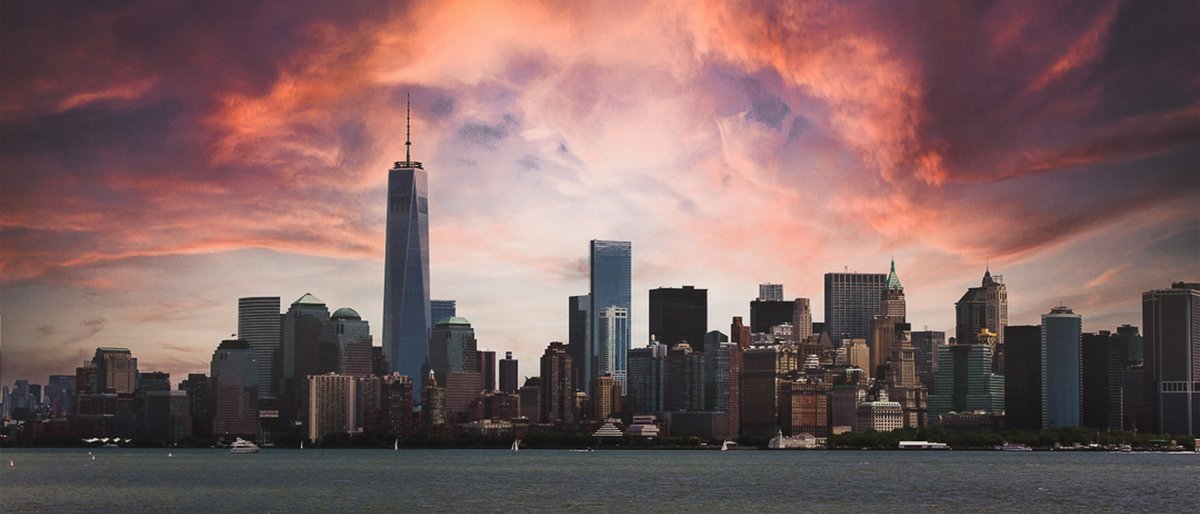
New York is a city that runs on a grid: mostly. Manhattan's numbered streets climb north from Houston, avenues run north-south, and Broadway cuts diagonally across everything because it was a trail before anyone thought to plan a city. That diagonal slash is what creates some of the most recognizable intersections: Times Square, Madison Square, Herald Square. Below 14th Street the grid dissolves into older, tangled streets that follow forgotten property lines and creek beds. The East and West Village, SoHo, Tribeca: they all sit in this irregular southern section where getting lost is half the point.
Brooklyn sprawls east across the river, connected by a handful of bridges and a web of subway lines. Queens stretches even further east and is arguably the most ethnically varied urban area on the planet. The Bronx sits north of Manhattan, and Staten Island floats in the harbor, connected by a free ferry that's honestly one of the best deals in the city.
Here's the thing about New York neighborhoods: they can shift in character within a few blocks. You'll walk from a quiet tree-lined street into a commercial strip loud with delivery trucks and sidewalk vendors in the span of a single avenue. That density is the whole experience. Each neighborhood has developed its own gravitational pull: its own restaurants, its own pace, its own sound at night. Where you stay shapes what version of New York you'll encounter, more so than in most cities.
Neighborhoods
-
Lower Manhattan & Tribeca
The southern tip of the island has a split personality. The Financial District is all glass towers and narrow colonial-era streets: during weekdays it hums with finance workers, on weekends it goes quiet in a way that feels almost eerie for New York. Tribeca, just north, is where the money went residential. Cobblestone streets, converted warehouse lofts, very little foot traffic compared to Midtown. The architecture shifts from century-old commercial buildings to sleek glass condos within a few blocks. At night the restaurants fill up but the sidewalks stay calm. You can hear your footsteps here, which is unusual for Manhattan.
- Best for
- Couples looking for a quieter base with serious dining options, architecture enthusiasts, anyone who wants to be near the 9/11 Memorial and ferry terminals
- Key streets
- Greenwich Street between Chambers and Canal is Tribeca's spine: lined with restaurants and boutiques tucked into old industrial facades. Stone Street in the Financial District is a narrow pedestrian alley with outdoor seating that fills up after market close. West Street along the Hudson has a continuous waterfront path running north.
-
SoHo & NoLita
SoHo was artists and factories. Now it's flagship retail and cast-iron architecture that photographs well. The streets are wide for downtown Manhattan, cobblestoned in places, and perpetually crowded on weekends with shoppers moving between brand stores. That said, look up: the cast-iron facades along Broadway and Greene Street are some of the finest commercial architecture in the country. NoLita, just east, is smaller and still has some of the independent shop energy that SoHo lost. Narrow streets, Italian delis holding on next to newer wine bars, a few bakeries that have been there for decades.
- Best for
- Shoppers, fashion-oriented visitors, anyone who wants a central location that's walkable to most of downtown
- Key streets
- Greene Street and Mercer Street between Houston and Canal have the best preserved cast-iron buildings. Prince Street in NoLita has a tight cluster of independent shops and the famous Prince Street Pizza: the square pepperoni slices are thick, greasy, and worth the line. Elizabeth Street between Houston and Spring is NoLita's quiet core.
-
West Village & Greenwich Village
The West Village is where the grid breaks. Streets curve, intersect at odd angles, and sometimes a street crosses itself. The townhouses are mostly Federal and Greek Revival style, well maintained, with window boxes and stoops that people sit on. It smells like restaurant kitchens in the evening (Italian, French, Japanese) all within a few blocks of each other. The pace slows down here compared to the rest of Manhattan. People walk their dogs at 10pm. Jazz still drifts out of basement clubs on weeknights. Greenwich Village, slightly east and centered on Washington Square Park, has more of a university presence thanks to NYU. The park itself is a whole ecosystem: chess players, buskers, students, tourists, the occasional film crew.
- Best for
- First-time visitors who want a walkable, human-scale version of New York. Couples. Anyone who values food and nightlife over sightseeing checklists.
- Key streets
- Bleecker Street west of Seventh Avenue has concentrated food: Murray's Cheese, Faicco's pork store, a handful of restaurants that have outlasted every trend. Christopher Street still has historical significance for LGBTQ+ history. Commerce Street is a curved, quiet block that feels almost European. MacDougal Street near Bleecker has the old folk-music and comedy club legacy: Café Wha?, Comedy Cellar.
-
Chelsea & Meatpacking District
Chelsea runs along the west side of Manhattan roughly from 14th to 34th Street. It's defined by its gallery scene: over 200 galleries clustered between Tenth and Eleventh Avenues in the twenties, most of them free to enter. The High Line, the elevated park built on old rail tracks, threads through Chelsea and the Meatpacking District and has reshaped both neighborhoods. The Meatpacking District at Chelsea's southern edge was a meatpacking zone until the early 2000s. A few of the old cold storage buildings remain, now housing designer boutiques and restaurants. At night, on weekends, the cobblestone streets flood with people going to bars and clubs. It gets loud.
- Best for
- Art lovers, nightlife seekers, LGBTQ+ travelers: Chelsea has long been one of New York's primary gayborhoods
- Key streets
- Tenth Avenue between 19th and 27th for the gallery district. The High Line runs from Gansevoort Street up to 34th: enter at any staircase along the route. Ninth Avenue has a solid stretch of restaurants, between 15th and 23rd. West 14th Street in the Meatpacking District concentrates the nightlife.
-
Midtown
Midtown is the part of New York most people picture before they arrive: Times Square, the Empire State Building, Rockefeller Center, Grand Central Terminal. It's also the most exhausting part of the city to spend time in. The sidewalks are shoulder-width packed during business hours. The noise level is constant: jackhammers, horns, street performers, tour guides with megaphones. The buildings create wind tunnels that funnel cold air in winter and trap heat in summer. That said, there's a reason it's the center of gravity. The theater district sits here, the major transit hubs are here, and some of the city's most recognizable architecture: the Chrysler Building's Art Deco crown, the Beaux-Arts grandeur of the New York Public Library: is in Midtown. It's just not where you want to spend your quiet hours.
- Best for
- Theatergoers, business travelers, first-timers who want proximity to major landmarks and don't mind crowds
- Key streets
- Broadway between 42nd and 53rd for the Theater District. Fifth Avenue from 42nd to 59th for flagship stores and St. Patrick's Cathedral. Park Avenue around Grand Central has some of the city's most imposing commercial architecture. West 46th Street (Restaurant Row) has pre-theater dining options, though quality varies.
-
Upper West Side
The Upper West Side runs along Central Park's western edge up to about 110th Street, with Riverside Park along its western flank. It has a lived-in, family-oriented quality. Brownstones and prewar apartment buildings line the side streets, many with ornate facades that have been there since the 1890s. The sidewalks are wide, the trees are mature, and the pace is noticeably slower than anything below 42nd Street. There's a strong cultural anchor with Lincoln Center and the American Museum of Natural History. The food scene leans toward established neighborhood institutions rather than trendy openings: Zabar's deli has been there since 1934 and still draws lines on weekends. It smells like roasted coffee and fresh bread inside, every single time.
- Best for
- Families with kids, museum lovers, anyone wanting a residential neighborhood feel with easy access to Central Park
- Key streets
- Broadway from 72nd to 86th is the commercial backbone: Zabar's, Fairway, bookshops, casual restaurants. Columbus Avenue has a quieter restaurant row between 68th and 82nd. Amsterdam Avenue between 79th and 86th has neighborhood bars and brunch spots. Riverside Drive offers views of the Hudson and some of the finest apartment architecture in the city.
-
Upper East Side
The Upper East Side has a reputation for old money and formality, and parts of it (Park Avenue and Fifth Avenue above 60th) live up to that. Doorman buildings, quiet lobbies, women walking small dogs in structured outfits. But the neighborhood is wider than that reputation suggests. Lexington and Third Avenues have busy commercial strips with diners, bodegas, and dive bars. The side streets in the 70s and 80s are lined with townhouses and low-rise buildings that catch good light in the afternoon. Museum Mile along Fifth Avenue (the Met, the Guggenheim, the Frick) is reason enough to spend a day here. The food scene has loosened up in recent years, though it still trends more toward established restaurants than experimental ones.
- Best for
- Museum-focused visitors, travelers who prefer a quieter, more polished atmosphere, anyone staying for an extended trip who wants residential calm
- Key streets
- Madison Avenue from 60th to 86th for upscale shopping and galleries. Fifth Avenue along the park for Museum Mile. Second Avenue in the 80s (sometimes called the Upper East Side's actual neighborhood strip) has bars, restaurants, and a younger crowd on weekend nights. Lexington Avenue has good casual food between 70th and 85th.
-
Harlem
Harlem stretches across upper Manhattan above 110th Street, and it carries layers of history that run deep: the Harlem Renaissance, the Apollo Theater, the jazz clubs, the churches. The architecture is striking: wide boulevards lined with brownstones and limestone rowhouses, many restored and well kept. 125th Street is the main commercial artery, noisy and full of energy, with street vendors, chain stores, and local shops all competing for space. The restaurant scene has been evolving: you'll find traditional soul food spots alongside newer restaurants doing West African, Caribbean, and modern American menus. Sunday mornings the gospel choirs start up and you can hear them through church doors along Lenox Avenue. The neighborhood has been changing, with new development pushing in, but it still has a strong local identity.
- Best for
- Visitors interested in African-American history and culture, jazz and music lovers, travelers looking for authentic neighborhood character outside the tourist core
- Key streets
- 125th Street from river to river, but between Fifth and St. Nicholas: the Apollo Theater, street markets, and the core commercial district. Lenox Avenue (also called Malcolm X Boulevard) from 116th to 135th has restaurants, cafes, and historic churches. Strivers' Row on 138th and 139th between Frederick Douglass and Adam Clayton Powell Boulevards has some of the finest rowhouse architecture in the city. Sylvan Terrace, a hidden cobblestone street near the Morris-Jumel Mansion, feels like stepping into the 1880s.
-
Williamsburg, Brooklyn
Williamsburg sits just across the East River from Manhattan, reachable by the L train in about ten minutes from Union Square. It's been the poster child for Brooklyn gentrification for twenty years now, and at this point the transformation is complete: luxury towers along the waterfront, polished coffee shops, high-end vintage stores. That said, the south side still has pockets of the old Dominican and Hasidic neighborhoods, and you'll pass from a trendy brunch spot to a bodega with Spanish-language signage to a Hasidic dry goods store within three blocks. The food scene is probably the strongest in Brooklyn: everything from Michelin-recognized tasting menus to outstanding street-level pizza. Bedford Avenue is the main drag and it is crowded on weekends. The waterfront parks along Kent Avenue have direct skyline views of Manhattan that are hard to beat.
- Best for
- Younger travelers, food-focused visitors, anyone who wants a Brooklyn base with quick Manhattan access
- Key streets
- Bedford Avenue from North 12th to Metropolitan is the central corridor: restaurants, bars, shops, people-watching. Berry Street and Wythe Avenue have quieter options with less foot traffic. Grand Street near the bridge has some of the old-school Dominican spots still holding on. Kent Avenue along the waterfront has parks and the ferry terminal.
-
DUMBO & Brooklyn Heights
DUMBO (Down Under the Manhattan Bridge Overpass) is a compact neighborhood of converted warehouses wedged between the Manhattan and Brooklyn Bridges. The cobblestone streets and brick buildings frame views of the Manhattan skyline that you've probably already seen in photographs. Brooklyn Bridge Park stretches along the waterfront with playgrounds, lawns, and Jane's Carousel in a glass pavilion. It's polished and photogenic. Brooklyn Heights, immediately south, is one of the oldest residential neighborhoods in New York. Tree-lined streets, Federal and brownstone townhouses from the 1840s, and the Promenade: a walkway perched above the BQE with an unbroken view of lower Manhattan and the harbor. The neighborhood is quiet in a way that surprises people who've just crossed from Manhattan. You can hear birds. The air smells different near the water.
- Best for
- Families, couples seeking a romantic setting, photographers, anyone who wants Manhattan proximity with a calmer pace
- Key streets
- Washington Street in DUMBO for the famous bridge-framing view (it will be crowded: go early). Water Street and Front Street have the restaurants and shops. In Brooklyn Heights, Montague Street is the modest commercial strip. The Promenade runs along the bluff from Remsen to Cranberry streets. Atlantic Avenue at the neighborhood's southern edge has a mix of antique shops and Middle Eastern grocers that's been there for decades.
-
Astoria, Queens
Astoria sits in northwestern Queens, directly across the East River from Randalls Island, and it's one of those neighborhoods where the variety isn't performative: it's just how the place works. Greek immigrants built the neighborhood's identity in the mid-20th century, and that foundation is still visible in the tavernas and bakeries along Broadway and 30th Avenue. But walk a few blocks in any direction and you'll find Egyptian hookah lounges, Colombian bakeries, Bangladeshi curry houses, and Czech beer halls. The architecture is mostly low-rise: three- and four-story apartment buildings with fire escapes, some prewar, many postwar. Steinway Street is the main commercial strip and it's loud, busy, and packed with small shops. The neighborhood has a lived-in, unhurried feel despite being a quick N or W train ride from Midtown.
- Best for
- Food-focused travelers, budget-conscious visitors, anyone wanting an authentic New York neighborhood experience outside Manhattan
- Key streets
- 30th Avenue between 31st and Steinway is the social strip: bars, restaurants, coffee shops, and weekend foot traffic. Broadway has the Greek institutions: Taverna Kyclades, Loukoumi, the bakeries. Steinway Street south of Broadway has Middle Eastern and South Asian businesses concentrated together. Ditmars Boulevard at the northern end is quieter and residential with its own restaurant cluster.
-
Lower East Side & East Village
The Lower East Side and East Village sit next to each other below 14th Street, east of the Bowery, and they share a history of immigration, punk rock, and landlord neglect that's turned into a kind of scruffy charm. The East Village has a denser bar and restaurant scene: Second Avenue and St. Marks Place were the center of the punk and counterculture world in the 70s and 80s, and while the CBGBs era is long gone, the neighborhood retains an independent streak. Tompkins Square Park anchors the area and on warm evenings the benches fill up with a cross-section of everyone who lives nearby. The Lower East Side, south of Houston, was the heart of Jewish immigrant New York and still has remnants: Katz's Delicatessen, Russ & Daughters, the Tenement Museum. Newer cocktail bars and galleries have filled in around them. At night, the streets below Rivington get lively, with music leaking out of basement venues and small bars packed tight.
- Best for
- Nightlife seekers, history buffs, younger travelers, anyone who wants density and variety in a small walkable area
- Key streets
- St. Marks Place between Second and Third Avenues for the old East Village character: cheap eats, record shops, some tourist clutter. Avenue A along Tompkins Square Park for bars and restaurants. Orchard Street and Ludlow Street below Houston are the Lower East Side's nightlife core. Essex Street has the Essex Market, recently relocated to a new building, with food vendors spanning half a dozen cuisines.
FAQ
What's the best neighborhood in New York for a first-time visitor to stay?
The West Village or Greenwich Village tends to be the most rewarding base for a first visit. You're within walking distance of SoHo, Chelsea, and the East Village, the subway connections are decent from the A/C/E and 1/2/3 lines, and the neighborhood itself has enough restaurants, cafes, and street life that you won't feel like you're just sleeping there. Midtown puts you near the big sights but it's exhausting to return to after a long day: the West Village feels like coming home to a quieter block, which matters more than people expect.
Is it worth staying in Brooklyn instead of Manhattan?
It depends on what you're prioritizing. Williamsburg and DUMBO both have excellent food, waterfront parks, and Manhattan is a short train or ferry ride away. The tradeoff is that late-night returns from Manhattan can mean longer commutes, and if your itinerary is heavily focused on Midtown attractions, you'll spend a lot of time on the subway. For a second or third visit to New York, or if your interests lean more toward food, art, and neighborhood exploration, Brooklyn is a strong choice. For a first visit packed with classic sightseeing, Manhattan is more practical.
How do I get between neighborhoods in New York?
The subway is still the backbone: a single ride is currently $2.90 and covers the entire system. Most Manhattan neighborhoods are well connected by multiple lines. Brooklyn and Queens have good subway access along the main corridors, though cross-borough travel (say, Williamsburg to Astoria) can be slow. The NYC Ferry runs several routes connecting waterfront neighborhoods and costs the same as a subway ride, with better views. Walking is underrated: many Manhattan neighborhoods that seem far apart on a map are twenty or thirty minutes on foot, and you'll see more of the city that way. Taxis and rideshares work but traffic in Midtown can double your travel time during rush hours.
Which neighborhoods have the best food scenes in New York?
This is a city where every neighborhood has strong options, but a few stand out for concentration and variety. The West Village and East Village have some of the densest restaurant clusters in Manhattan: you can eat a different cuisine every night for a month. Williamsburg in Brooklyn has arguably caught up, for newer openings. Astoria in Queens is the best value-for-quality ratio in the city, with Greek, Middle Eastern, South Asian, and Latin American food all within walking distance. The Lower East Side has the old-school Jewish delis plus a wave of newer spots. Harlem's soul food and West African restaurants are worth the trip uptown. Honestly, the worst food neighborhoods are the most touristy parts of Midtown, even there you can find good meals, but you have to know where to look.
How safe are New York's neighborhoods for tourists?
New York is broadly safe for visitors, and the neighborhoods covered in this guide are all areas where tourists regularly stay and walk around. Standard city awareness applies: keep your phone in your pocket on the subway platform, don't leave bags unattended, stay aware of your surroundings late at night. Some areas feel quieter after dark than others: the Financial District empties out on weekends, certain blocks in the Lower East Side get rowdy late on weekends. The subway is generally fine at all hours, though service gets less frequent after midnight. Trust your instincts the same way you would in any large city.
When is the best time of year to visit New York?
Late September through mid-November is likely the sweet spot: the summer humidity breaks, the trees in Central Park turn, and the tourist crowds thin slightly after Labor Day. Spring (April to early June) is also strong, though the weather can be unpredictable and you might get a week of cold rain in May. Summer is hot and humid, with temperatures regularly above 90°F and the subway platforms feeling ten degrees warmer. Winter has its appeal (the holiday lights, fewer tourists, lower hotel prices) but January and February are cold and the wind between buildings makes it feel colder. Mind you, New York works at any time of year. The city doesn't have an off season so much as a less-comfortable season.
Last verified by automated review (v1.7.1) on . What is automated review?