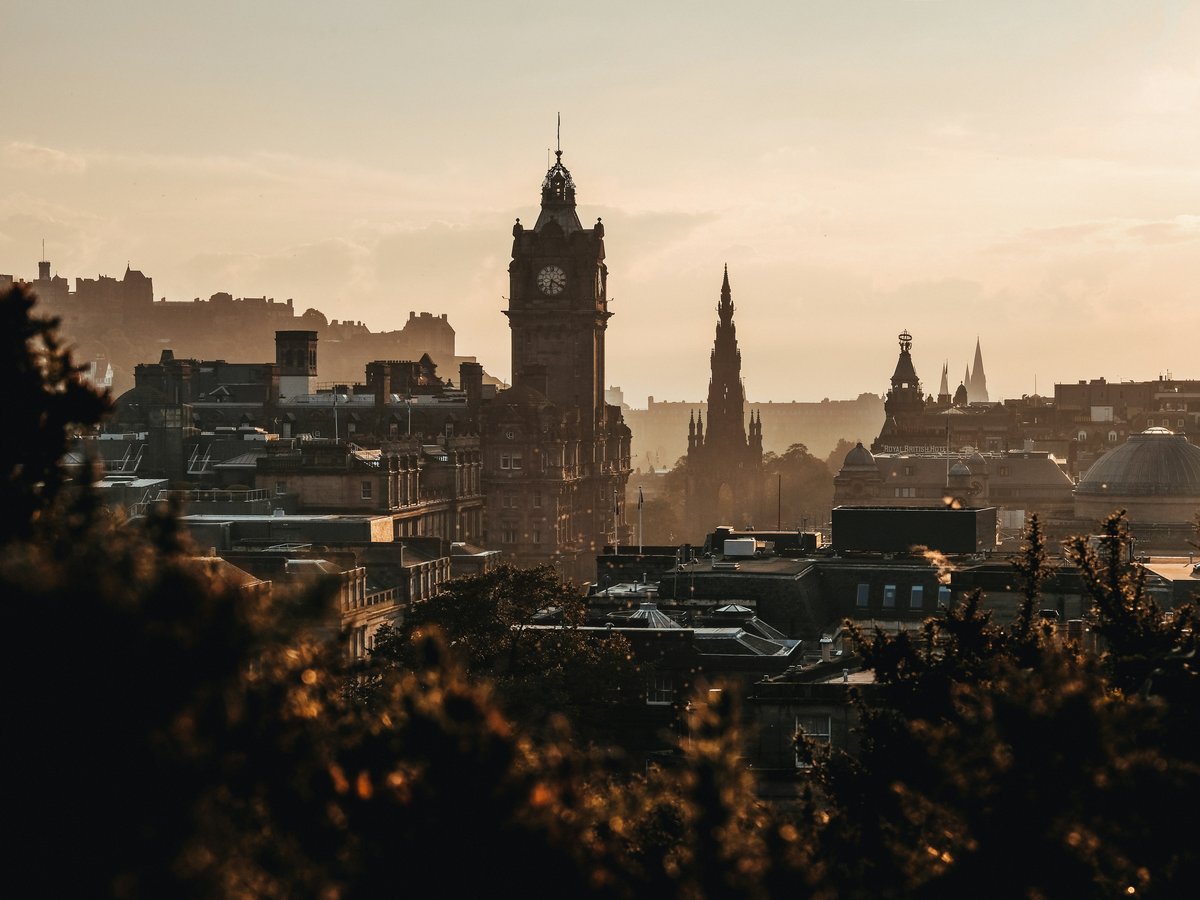
Edinburgh might be the only capital city in Europe where you could fill a solid week without reaching for your wallet and still feel like you'd barely scratched the surface. The national museums and galleries charge nothing at the door — not on special days, not with a trick, just permanently free. The landscape does half the work for you: extinct volcanoes, medieval closes, a coastline within the city limits. In August, the Fringe alone puts hundreds of free performances within walking distance of each other. And the rest of the year, the Old Town rewards wandering in a way that few cities can match — you'll turn a corner on some narrow close off the Royal Mile and catch a view across to Fife that stops you mid-step. The city has this quality where the free experiences often feel more genuine than the ticketed ones. Worth noting that even the paid attractions tend to sit alongside free alternatives that are, to be fair, just as compelling.
Free attractions
-
National Museum of Scotland
The big one on Chambers Street, and genuinely one of the best free museums in the UK. The Grand Gallery alone — this enormous Victorian hall flooded with natural light, whale skeletons suspended overhead — justifies a visit. Collections run from Scottish archaeology through natural history to science and technology. You could spend three hours here without trying. The rooftop terrace gives a panoramic view across the Old Town skyline toward the castle, and that's free too.
Old Townmuseum -
Scottish National Gallery
Sitting right on the Mound between the Old and New Towns, with a permanent collection that includes Raeburn, Ramsay, Botticelli, and a surprisingly strong group of Impressionists. The building itself has that hushed, wood-floored gallery atmosphere — cool even on warm days, with the faint smell of old varnish. Some temporary exhibitions carry a charge, but the main collection is always free. The connection between the two buildings through the Weston Link is worth walking just for the architecture.
New Towngallery -
Scottish National Gallery of Modern Art
Two buildings set in grounds that are sculptures in themselves — Charles Jencks' Landform out front is this undulating grass-and-water installation you can walk right across. Modern One holds the permanent collection: Picasso, Matisse, Hockney, Paolozzi. Modern Two sits across the road with more contemporary work. Both free. The walk here from Dean Village along the Water of Leith is half the experience.
Deangallery -
Arthur's Seat
An extinct volcano in the middle of a capital city. The climb takes roughly 45 minutes from Holyrood and it's steeper than it looks, particularly the final scramble — proper shoes help. On a clear day you can see across the Forth to the hills of Fife and west toward the Pentlands. Early morning tends to be quieter, and the light hitting the crags around sunrise is something else entirely. The whole of Holyrood Park surrounding it is free to roam — Salisbury Crags, St Margaret's Loch, the ruins of St Anthony's Chapel.
Holyroodviewpoint -
Calton Hill
Easier than Arthur's Seat and arguably a better viewpoint for photography. The unfinished National Monument — Edinburgh's answer to the Parthenon, started in 1826 and never completed — sits at the top alongside the Nelson Monument and the old City Observatory. Sunset from here is the cliché for good reason: the castle, the Old Town rooftops, and if you're lucky, the sky going pink over the Pentland Hills. Five-minute walk from the east end of Princes Street.
Caltonviewpoint -
Royal Botanic Garden Edinburgh
Seventy acres of gardens about a mile north of the city centre, and the outdoor grounds are free year-round. The rock garden alone is worth the walk — meticulously planted and beautiful in spring. Mature trees, a Chinese hillside garden, a memorial garden. The glasshouses currently carry a separate charge, but honestly the outdoor collections are so extensive you might not feel the need. There's a terrace near Inverleith House with a view back toward the castle skyline that catches most people off guard.
Inverleithpark -
Greyfriars Kirkyard
One of Edinburgh's oldest burial grounds, free to walk through at any time. The elaborate 17th-century monuments have a certain weathered grandeur — lichen-covered skulls, hourglasses, crossbones carved in sandstone. This is where the Covenanters were imprisoned, where Greyfriars Bobby kept his famous vigil, and where J.K. Rowling apparently found some of her character names on the headstones. Atmospheric is underselling it, particularly on a grey afternoon when the haar rolls in.
Old Townlandmark -
Scottish National Portrait Gallery
On Queen Street in the New Town — the building alone is worth seeing, a red sandstone Gothic revival with a processional frieze running around the entrance hall depicting figures from Scottish history. Inside, it's portraits from Mary Queen of Scots through Robert Burns to contemporary Scots. Always free. Tends to be quieter than the National Museum, which is a point in its favour on busy summer days.
New Towngallery -
Museum of Edinburgh
Tucked into Huntly House on the Canongate stretch of the Royal Mile. Small, free, and easy to miss, which means it's rarely crowded. Local history from medieval times through the present — the original National Covenant from 1638 is held here, along with Edinburgh silver and glass collections. The building itself is a 16th-century townhouse with creaking timber floors and low ceilings that smell faintly of old wood.
Old Townmuseum -
The People's Story Museum
Directly across the road from the Museum of Edinburgh, housed in the Canongate Tolbooth — that distinctive building with the clock tower jutting out over the pavement. Tells the story of ordinary Edinburgh folk from the 18th century onward through reconstructed rooms, sounds, and even smells. The prison cell recreation and the 1940s kitchen are surprisingly affecting. Free, always.
Old Townmuseum -
Princes Street Gardens
Running the length of Princes Street in a valley where the Nor Loch once sat, these gardens split into east and west sections beneath the castle rock. The west gardens have the Ross Fountain, the floral clock (planted fresh each year), and views straight up to the castle walls. In summer the grass fills with people, and there's often live music drifting from the Ross Bandstand. The east gardens are quieter, shaded, and connect through to the Scottish National Gallery. Free to enter, always open.
City Centrepark
Free activities
-
Walking the Royal Mile
The spine of the Old Town, running downhill from the Castle Esplanade to the Palace of Holyroodhouse. But the real Royal Mile isn't the main drag — it's the closes. Advocate's Close, Riddle's Court, Lady Stair's Close, Dunbar's Close Garden (a tiny hidden 17th-century garden that most tourists walk right past). Each narrow passage opens onto something different: a courtyard, a view, a tucked-away pub garden, a sheer drop to the Cowgate below. You could walk the full mile in twenty minutes. Or you could spend a whole afternoon just ducking into side passages.
Old Townwalking route -
Water of Leith Walkway
A footpath that follows the river from the southwestern suburbs all the way to Leith — about twelve miles end to end, though most people walk sections. The stretch from Stockbridge through Dean Village to the Gallery of Modern Art is the standout: you drop below street level into this wooded river valley where the traffic noise just disappears. The sound of the weir at Dean Village, stone mill buildings reflected in the water, kingfishers if you're patient and quiet. In autumn the colours along the gorge section are striking.
Multiplewalking route -
Portobello Beach
Edinburgh has a beach, and it's a proper sandy one. Portobello sits about three miles east of the centre — reachable by bus in twenty minutes from Princes Street. The promenade stretches for about two miles, and the sand is genuinely good, wide at low tide. The water is the Firth of Forth, so it's bracing to say the least — even in July you might want to think twice about going past your knees. The prom has a pleasant old-seaside-town feel: independent shops, ice cream places, the Art Deco Portobello Swim Centre facade. Worth the trip on a clear day.
Portobellobeach -
Stockbridge Market
Every Sunday morning in the Stockbridge neighbourhood, along the banks of the Water of Leith. Browsing is free, obviously — the stalls carry street food, baked goods, local produce, vintage finds, and crafts. The smell of fresh coffee and whatever's currently on the griddle tends to hit you before you see the stalls. It's a neighbourhood affair as much as a market: locals with dogs, buskers, the whole gentle Sunday rhythm. Runs from about 10am to 5pm, year-round.
Stockbridgemarket -
Street Art in Leith
Leith has quietly accumulated a notable collection of murals and street art over the past several years, particularly around the Shore area and the side streets off Leith Walk. The work ranges from large-scale building murals — some commissioned through local arts organisations — to smaller paste-ups and stencil work. No formal trail exists yet, which is half the charm; you just wander and notice them. The Leith Dockers Club mural on Constitution Street and the various pieces around Coburg Street are currently some of the more striking ones.
Leithpublic art -
The Meadows
A large flat park south of the Old Town, lined with mature cherry trees that put on a genuinely spectacular show in late April and early May — the Cherry Blossom Walk along the Jawbone Arch side draws half the city when the trees peak. The rest of the year it's where Edinburgh runs, plays football, has barbecues in summer, and walks dogs in the rain. The views toward Arthur's Seat from the eastern end are open and uncluttered. Free, obviously, and connected directly to Bruntsfield Links — another open green space where people have been playing golf since the 17th century.
Southsidepark -
Dean Village Walk
From the west end of Princes Street, it's a ten-minute walk to the top of Bell's Brae, and then you drop down into Dean Village — this improbably quiet former milling village tucked into the Water of Leith gorge. Stone cottages, the sound of the river, a converted grain warehouse with carved millstones set into the walls. It genuinely feels like you've stepped out of the city entirely. From here you can walk along the river to Stockbridge in one direction or to the Modern Art galleries in the other. One of those places that catches first-time visitors completely by surprise.
Deanwalking route
Free events
-
Edinburgh Festival Fringe — Free Shows
Daily throughout AugustDuring August, the Fringe puts on thousands of shows, and a significant portion are completely free through the PBH Free Fringe and Laughing Horse Free Festival programmes. Comedy, theatre, music, spoken word — performed in pubs, church halls, converted spaces across the city. Quality varies wildly, which is part of the appeal. You'll see something brilliant and something baffling in the same afternoon. The atmosphere on the Royal Mile during Fringe season is its own free spectacle: street performers, flyering actors, the general creative chaos of a city that temporarily triples in population.
Venues across the city -
Edinburgh Art Festival
Late July through AugustRunning alongside the Fringe in August, the Edinburgh Art Festival programmes exhibitions across the city's galleries and public spaces, and the vast majority are free to attend. It tends to get overshadowed by the Fringe's noise, but if you're interested in visual art, this is one of the stronger free visual arts festivals in the UK. Exhibitions in the national galleries, independent spaces, and site-specific installations that change year to year.
Galleries and public spaces citywide -
Edinburgh Doors Open Day
One weekend in late SeptemberPart of the national Doors Open Days programme, typically held over a late September weekend. Buildings that are normally closed to the public — private houses, offices, industrial sites, architectural landmarks — open their doors for free. The lineup changes each year, but past editions have included everything from the Crown Office to brewery tours to private New Town interiors. Tends to book up fast for the popular sites, so check the programme early.
Various locations across Edinburgh -
Ceilidh Dancing at the Princes Street Gardens Bandstand
Select dates in summer (June–August)During the summer months, free ceilidh dancing sessions appear in the Ross Bandstand area of Princes Street Gardens. A caller walks you through the steps — Strip the Willow, the Dashing White Sergeant, the Gay Gordons — and you dance with strangers on the grass beneath the castle. Even watching from the hillside is good entertainment. Check the council events listings closer to summer, as scheduling shifts year to year.
Ross Bandstand, Princes Street Gardens -
Scottish Storytelling Centre Events
Throughout the year, varies by programmeThe Scottish Storytelling Centre on the Royal Mile runs a programme of free events throughout the year — storytelling sessions, spoken word nights, occasional music. The building is the John Knox House complex, which has its own crooked-timbered charm. The Netherbow Theatre space inside hosts regular free lunchtime events that draw a loyal local crowd. Check their monthly programme; not everything is free, but a good number of events carry no charge.
Scottish Storytelling Centre, 43–45 High Street -
Edinburgh Hogmanay Street Party and Torchlight Procession
December 30–31Worth noting that while the main Hogmanay concert in Princes Street Gardens is ticketed, the torchlight procession on December 30th has historically been free to watch from various vantage points along the route. Thousands of people carrying flaming torches winding from the Royal Mile down to Holyrood Park — the smell of burning paraffin, the pipes playing, firelight reflecting off the old stone. The midnight fireworks on the 31st are also visible from elevated free viewpoints like Calton Hill, though expect crowds.
Royal Mile, Calton Hill, Holyrood Park
Free Walking Routes That Locals Actually Use
The tourist trail covers the Royal Mile and maybe a loop through the New Town. That's fine, but the walks that Edinburgh people actually do on their weekends tend to be different. The Corstorphine Hill walk starts from the suburb of the same name and takes you up through mature woodland to a viewpoint that rivals Arthur's Seat — on a clear day you can see Ben Lomond. Considerably quieter, too. Blackford Hill, south of the Meadows, has the Royal Observatory at its summit and panoramic views north across the whole city. The path up is gentle enough for a pushchair. For something longer, the old railway path network connects surprising distances. The Innocent Railway path runs from Holyrood Park through to the south side, following the route of Scotland's first passenger railway. Flat, paved, and tucked below street level — good for cycling too. The path from Roseburn to Crammond along the old railway line takes you all the way to the coast, ending at Crammond Island (accessible at low tide across a causeway, though check the tide tables seriously — people do get caught out). The Radical Road along the base of Salisbury Crags is currently closed for rockfall repairs and has been for some time now. Worth checking the status before planning a walk there, as there's no official reopening date at the moment.
Seasonal Timing for Free Edinburgh
Edinburgh has two distinct gears: August and everything else. In August, the Festival Fringe, Art Festival, Book Festival, and International Festival all overlap, and the city transforms. The streets fill with performers, the population swells, and free events happen constantly — but so does the crowding. If you're coming specifically for free entertainment, August is unbeatable. If you want to actually see Edinburgh itself without fighting through crowds on the Royal Mile, consider late September through November. Spring has its moments. Late April brings the cherry blossoms on the Meadows — genuinely spectacular, and you'll see the whole neighbourhood out with cameras. The Botanic Garden is at its best from May through June. Summer evenings in Edinburgh are unusually long this far north: in late June, it doesn't get properly dark until after 11pm, which means you can walk Calton Hill at sunset at a civilised hour and still have the glow lingering. Winter is darker — sunrise around 8:45am in December, sunset before 3:30pm — but the city has a particular atmosphere when the haar rolls in off the Forth and the castle looms through the mist. The Christmas market in Princes Street Gardens is free to browse, though the rides and most food stalls obviously cost money. The view of the lit-up city from the top of Calton Hill on a December evening might be the best free thing Edinburgh offers all year.
What Used to Be Free but Now Charges Admission
Worth being upfront about this, since outdated information causes real frustration. St Giles' Cathedral on the Royal Mile introduced a visitor entry charge — currently around £12 for adults. Locals and those attending services still enter free, but casual visitors now pay. This changed in 2023 and caught a lot of people off guard, since it had been free for years. Edinburgh Castle has never been free for general entry in modern times, but it's worth mentioning because some visitors arrive expecting it to be. It's run by Historic Environment Scotland and currently costs around £19.50 for adults. The Castle Esplanade — the flat area outside the entrance — is free and offers views that are honestly nearly as good as what you'd see from inside. The Palace of Holyroodhouse charges admission as a royal residence. The grounds of Holyrood Park surrounding it, including the ruins of Holyrood Abbey visible through the gate, are free. The Scottish Parliament next door offers free guided tours — a worthwhile alternative if the palace is beyond budget. The Royal Botanic Garden's outdoor grounds remain free, but the glasshouse experience now carries a charge. It's a recent-ish addition. The outdoor gardens are extensive enough that this shouldn't feel like a significant loss unless you're particularly interested in tropical and arid plant collections.
FAQ
Are Edinburgh's national museums really completely free?
Yes — the National Museum of Scotland, Scottish National Gallery, Scottish National Gallery of Modern Art, and Scottish National Portrait Gallery are all permanently free for their main collections. This isn't a promotional offer or limited-time thing; it's been the policy for years and seems firmly established. Some temporary or special exhibitions within these museums may carry a separate charge, but the permanent collections are always free. No booking required for general entry, though the National Museum of Scotland can get busy in summer and during the Festival — arriving before 11am tends to avoid the worst of it.
Is Arthur's Seat safe to climb without hiking experience?
The main path from Holyrood is well-trodden and manageable for most reasonably fit people in decent footwear — trainers with grip at minimum, though proper walking shoes are better. The final section involves some scrambling over rock, which can be slippery when wet. Wind at the top can be surprisingly strong even on calm days at street level. Allow about 45 minutes up and 30 minutes down. The path from the Dunsapie Loch car park side is a bit gentler if you want a less steep approach. In winter or when there's ice, the summit section becomes genuinely hazardous — locals treat it as a proper hill in those conditions, not a park walk.
When is the best time to visit Edinburgh for free events?
August is the clear answer if free events are your priority. The Fringe alone offers hundreds of free performances daily, and when you add the Art Festival and the various street performances that happen organically, you could fill every waking hour without paying for entertainment. The trade-off is that Edinburgh in August is crowded and accommodation prices roughly double. Outside August, free events are sparser but still present — look at the Scottish Storytelling Centre programme, the various gallery openings in New Town and Leith, and the regular ceilidh sessions in summer. Doors Open Day in September is a strong single-weekend option.
Can you get to Portobello Beach by public transport?
Easily. Lothian Buses routes 26 and 45 run frequently from the city centre to Portobello — about 20 minutes from Princes Street depending on traffic. The bus drops you within a two-minute walk of the promenade. You can also cycle there along the dedicated path from Meadowbank, which is flat and takes about 25 minutes from the Old Town. On a warm day you might find half of Edinburgh had the same idea, so the prom and beach get busy, but the stretch is long enough that you can generally find space.
Are there free guided tours available in Edinburgh?
The Scottish Parliament offers free guided tours on sitting and non-sitting days — booking ahead is recommended as spaces fill up. Some of the national galleries run free guided tours of their collections at set times; check the National Galleries of Scotland website for current schedules. During the Festival in August, various organisations run free walking tours, though these typically operate on a tips-appreciated model — technically free but with a social expectation of payment. The city council and Edinburgh World Heritage also occasionally run free heritage walks, particularly during Doors Open Day in September. For self-guided walks, the Edinburgh World Heritage website has downloadable routes that cover the Old and New Towns.
Is Edinburgh's New Town worth exploring on foot even though it's mostly residential?
The New Town is one of the finest pieces of Georgian urban planning in existence — the whole area is a UNESCO World Heritage Site along with the Old Town. Walking the grid of streets between Queen Street Gardens and Princes Street, you'll notice the consistent proportions, the fanlights above the doors, the iron railings, the way the crescents curve. Charlotte Square is likely the most architecturally complete Georgian square in Scotland. Stockbridge, at the northern edge, has independent shops, cafes, and the Sunday market. The contrast with the medieval Old Town is part of what makes Edinburgh's layout distinctive — two very different cities pressed against each other with the valley of Princes Street Gardens between them.
Last verified by automated review (v1.7.2) on June 2, 2026. What is automated review?