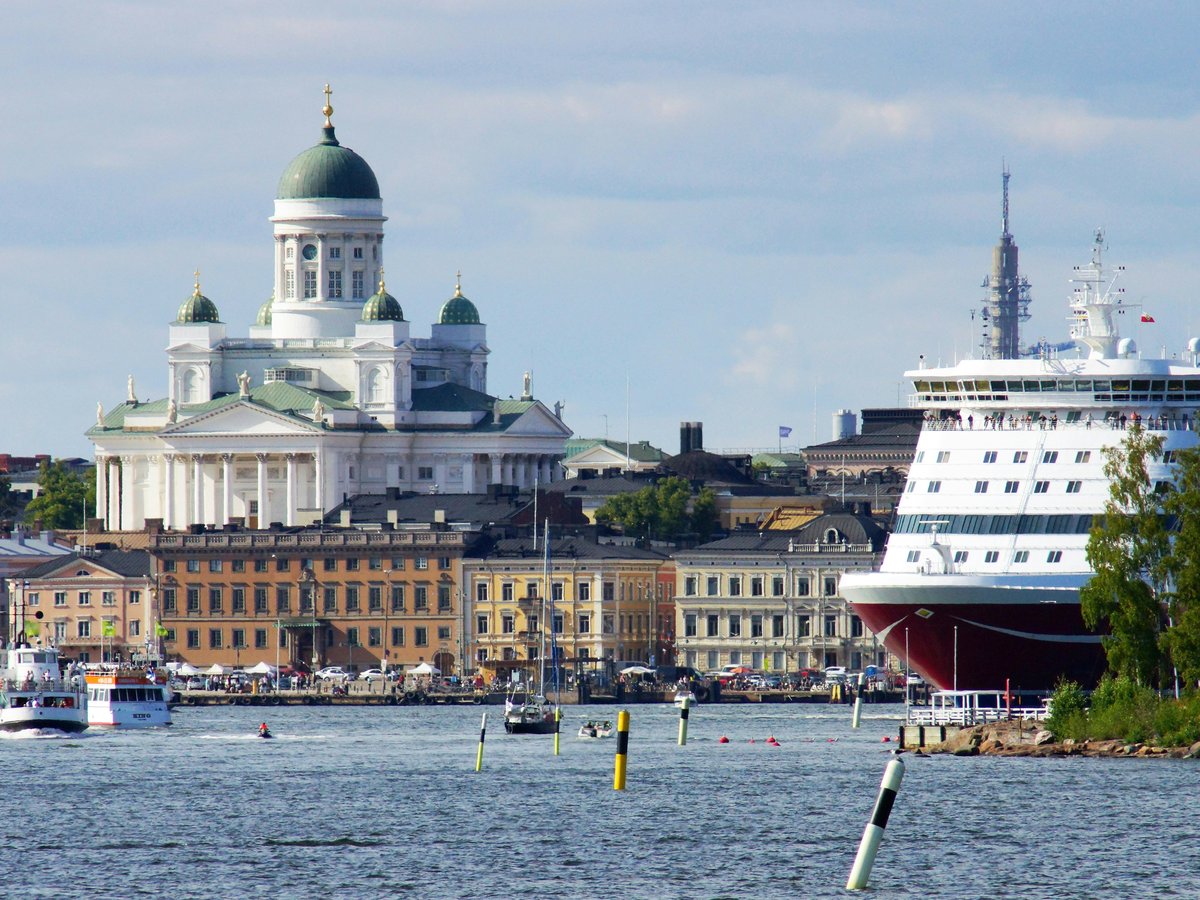
Helsinki sits on a granite peninsula that juts into the Gulf of Finland, with over 130 kilometers of coastline and roughly 300 islands scattered across its municipal waters. The city feels surprisingly wild for a capital of 670,000 people. Birch and pine forests push right up against apartment blocks in neighborhoods like Lauttasaari and Vuosaari, and you can paddle a sea kayak past the Market Square on Kauppatori without leaving city limits. The outdoor season runs from late April through October for most activities, though Finns tend to treat winter as its own sport. Ice swimmers chip holes in the frozen bay at Sompasauna as early as November. Cross-country ski tracks appear in Keskuspuisto by December, sometimes earlier. The midnight sun never quite reaches Helsinki at 60 degrees north, but mid-June nights stay bright enough to read a map outdoors at 11pm. That extended daylight changes everything about summer hiking and paddling. You get 19 hours of usable light in June, which means a full day on the trail without headlamps. Worth noting, the Finnish concept of Everyman's Rights, or jokamiehenoikeus, lets you walk, ski, cycle, and pick berries on almost any land, public or private, as long as you don't damage the property. That single legal principle shapes how Helsinki residents interact with nature more than any park system could.
Outdoor activities
-
Road cycling on the Baana corridor and western Helsinki coast
The Baana is a sunken cycling highway built in a former railway cutting that runs 1.3 kilometers through central Helsinki, connecting Töölönlahti to Ruoholahti. From there, the coastal path continues west toward Lauttasaari and Espoo along a flat, paved route that follows the shoreline for about 15 kilometers one way. The surface is smooth asphalt with separated pedestrian lanes on most sections. You'll ride past the Hietalahti flea market, through the Jätkäsaari container port district, and over the Lauttasaari bridge where the wind off the Baltic tends to hit hardest. Bike rentals from Helsinki City Bikes cost around 35 euros for a full season or 5 euros per day, with roughly 3,500 bikes at 350 stations across the city as of 2024.
- Difficulty
- Easy
- Duration
- 2-4 hours for a round trip to Espoo border
- Best season
- May through September
-
Fat biking on frozen sea ice
When the Gulf of Finland freezes solid, typically by late January in a good cold year, fat biking on the sea ice between Kaivopuisto and Suomenlinna becomes possible. The 4-inch tires grip well on packed snow and bare ice, and the route covers roughly 4 kilometers each way. You need to check ice conditions through the Finnish Meteorological Institute before heading out. Some winters the ice never gets thick enough, particularly in recent mild years. Rental fat bikes are available from shops in Kallio and Punavuori for around 40 to 60 euros per day. The sensation is strange and specific. Flat white in every direction, the city skyline behind you, wind-scoured ice creaking faintly underfoot.
- Difficulty
- Moderate, requires balance on uneven ice
- Duration
- 2-3 hours
- Best season
- January through March, ice conditions permitting
-
Cross-country skiing in Keskuspuisto
Helsinki's Central Park, Keskuspuisto, stretches about 10 kilometers from Töölönlahti bay north to the Paloheinä district, where the city maintains groomed classic and skate ski tracks totaling roughly 200 kilometers across the greater Helsinki area. Paloheinä is the hub, with a ski lodge, rental equipment at around 20 euros for a half day, and illuminated tracks for the dark winter afternoons. Snow conditions tend to be reliable from December through early March, though recent winters have shortened that window. The terrain is rolling forest with gentle climbs and fast descents. Temperatures regularly drop to minus 15 Celsius in January, so layering matters. The tracks wind through spruce forest dense enough to block most wind, and the silence in there on a Tuesday afternoon is remarkable.
- Difficulty
- Easy to moderate depending on track choice
- Duration
- 1-4 hours
- Best season
- December through March
-
Bouldering at Punavuori and Lauttasaari outdoor walls
Helsinki has a small but active outdoor bouldering scene, with problems scattered across granite outcrops in Lauttasaari and the shoreline rocks near Café Ursula in Kaivopuisto. The rock is typically smooth Helsinki granite, which gets slippery when wet. Most problems range from V0 to V5, with a few harder lines on the Lauttasaari shore boulders. The Kiipeilyareena gym in Salmisaari offers indoor walls for rainy days at around 18 euros per session. Outdoor bouldering is free under Everyman's Rights, though you'll want a crash pad on the harder problems. The granite warms in the June sun and holds heat into the evening. Best conditions tend to be dry days in May through September.
- Difficulty
- Easy to hard depending on problem grade
- Duration
- 1-3 hours
- Best season
- May through September
-
Trail running in Sipoonkorpi National Park
Sipoonkorpi sits about 25 kilometers east of Helsinki center, reachable by bus 731 to Hindsby in roughly 50 minutes. The park covers 19 square kilometers of old-growth forest, boggy lowlands, and rocky ridgeline trails. The main loop from the Kalkkiruukki entrance runs about 12 kilometers over rooty, rocky terrain with some boggy sections that stay wet into June. Trail markings use the standard Finnish blaze system, orange on trees. The ground underfoot shifts between granite slabs, soft pine needle paths, and boardwalks over the wettest bogs. Elevation changes are modest by mountain standards, maybe 40 meters at most, but the technical footing makes it feel harder. Mosquitoes peak in late June and July here. Bring repellent.
- Difficulty
- Moderate to challenging, technical terrain
- Duration
- 2-3 hours for the 12km loop at a running pace
- Best season
- May through October
Day hikes
-
Nuuksio National Park, Haukkalampi loop
Nuuksio is the closest national park to Helsinki, roughly 35 kilometers northwest, and reachable by bus 245A from Espoo Center in about 40 minutes. The Haukkalampi loop trail starts from the main nature center, Haltia, and winds through classic southern Finnish forest. Pine ridges, mossy boulder fields, and small lakes with dark, tannin-stained water. The trail is well-marked with blue blazes and includes some rocky sections with mild elevation changes, maybe 30 to 50 meters up and down. You'll cross boardwalks over bogs where cotton grass waves in early summer. The Haltia nature center has a café, lockers, and good trail maps. On weekends in July, the parking lot fills by 10am.
- Difficulty
- Easy to moderate, some rocky footing
- Duration
- 3-4 hours for the roughly 8-kilometer loop
- Best season
- May through October, though snowshoe hiking works in winter
-
Sipoonkorpi National Park, Kalkkiruukki to Byabäcken loop
The eastern option for a Helsinki day hike, Sipoonkorpi is wilder and quieter than Nuuksio. Bus 731 from Itäkeskus reaches the Hindsby area in about 50 minutes. From the Kalkkiruukki trailhead, a loop through old-growth spruce forest and over granite ridges covers roughly 12 kilometers. The trail is technical in places, with exposed roots, wet rock, and sections where the blazes require attention. A stream crossing near Byabäcken can get ankle-deep after rain. Fewer visitors than Nuuksio, particularly on weekdays. Mosquito pressure in June and July is serious here. This is real forest, not park forest. Dead trees lean at angles, woodpeckers hammer somewhere overhead, and the canopy blocks most wind.
- Difficulty
- Moderate to challenging, uneven and wet terrain
- Duration
- 4-5 hours at a walking pace
- Best season
- Late April through October
-
Lammassaari and Vanhankaupunginlahti nature trail
This one sits within Helsinki city limits, starting near the Arabia neighborhood about 6 kilometers northeast of the center. Tram 6 or 8 drops you at the Arabia stop. A wooden boardwalk extends about 1.5 kilometers across the Vanhankaupunginlahti bay marshes to Lammassaari island, which has a 2-kilometer loop through meadows and reed beds. The area is one of Finland's most important urban bird habitats, with over 200 species recorded. Spring migration in May brings warblers, waders, and raptors. Bird observation towers along the route have interpretive signs. The boardwalk gets slippery in rain. Flat throughout, no elevation to speak of. You'll hear reed warblers chattering from every direction in late May.
- Difficulty
- Easy, flat boardwalks and gravel paths
- Duration
- 1.5-2 hours for the full out-and-back with island loop
- Best season
- April through October, peak birding in May
-
Pirttimäki outdoor recreation area loop
About 30 kilometers west of Helsinki in Espoo, Pirttimäki is a forested area with lean-to shelters, fire pits, and marked trails ranging from 3 to 10 kilometers. The longer loop passes through pine forest, past small ponds, and over low rocky hills. The trail surface is mostly soft forest floor with some root-covered sections. Less crowded than Nuuksio, partly because public transit access is limited. Driving takes about 35 minutes from central Helsinki. There's a free lean-to shelter with a fireplace and firewood at the main trailhead, which makes it a good option for a winter day hike with a campfire lunch. Snow can linger in the forest here into late April.
- Difficulty
- Easy to moderate
- Duration
- 2-4 hours depending on trail choice
- Best season
- Year-round, with snow hiking from December through March
Water activities
-
Sea kayaking in the Helsinki archipelago
Paddling from Seurasaari or Rajasaari through the inner archipelago toward Pihlajasaari and Suomenlinna is one of the best ways to experience Helsinki's coastline. The water in the inner harbor is sheltered, but conditions can change quickly once you pass the breakwater. Wind from the southwest builds chop in the outer passages. Several outfitters rent kayaks near the Hietaranta beach area for around 30 to 50 euros per half day, and guided tours run from roughly 60 euros per person. The water temperature reaches a swimmable 18 to 20 degrees Celsius by mid-July. Early morning paddles in June, with the low sun bouncing off Suomenlinna's granite walls, are genuinely memorable. Wear a PFD. The water is cold enough to cause trouble even in summer if you capsize.
- Difficulty
- Moderate, requires basic paddling experience for open water
- Duration
- 2-5 hours depending on route
- Best season
- June through September
-
Swimming at Pihlajasaari island
Pihlajasaari is a pair of small islands about 1.5 kilometers south of Merisatama, reached by a water bus that runs every 15 to 30 minutes in summer for about 7 euros round trip. The western island has a sandy beach on its southern shore, a clothing-optional section on the east side, and a small café. Water temperature typically reaches 17 to 20 degrees Celsius between mid-June and late August. The sandy bottom drops off gradually. On hot July weekends, the island gets crowded by early afternoon, so morning visits tend to be calmer. Pine trees line the interior paths, and the smell of warm pine resin mixes with salt water on the south-facing beaches. The last ferry back is usually around 9pm in July.
- Difficulty
- Easy
- Duration
- Half day
- Best season
- Mid-June through August
-
Winter ice swimming at Sompasauna or Allas Sea Pool
Ice swimming is a Helsinki institution, not a tourist novelty. Sompasauna in the Kalasatama district is a free, volunteer-maintained sauna and ice swimming spot that operates year-round. You warm up in the wood-fired sauna, then walk down the dock and lower yourself into a hole cut in the ice. The water temperature hovers near 0 to 2 degrees Celsius from December through March. Allas Sea Pool near Market Square is the more polished option, with a heated pool, a cold seawater pool, and saunas, at around 16 euros per visit. The shock of the cold water lasts about 10 seconds. After that, a strange warmth spreads through your skin. Most people manage 30 seconds to 2 minutes on their first attempt.
- Difficulty
- Easy physically, mentally intense for beginners
- Duration
- 1-2 hours including sauna time
- Best season
- November through March for ice swimming, Allas Sea Pool is year-round
-
Stand-up paddleboarding on Töölönlahti bay
Töölönlahti is a calm, shallow bay in central Helsinki that works well for beginner SUP sessions. Rental boards are available from operators near the Finlandia Hall waterfront in summer for around 25 to 35 euros per hour. The bay is roughly 800 meters long and largely sheltered from wind, though afternoon gusts can pick up. Water depth is mostly under 2 meters. You paddle past the reed beds, where ducks and grebes nest, with the Oodi library and Music Centre as your backdrop. The bay connects to the open sea at its southern end, but sticking to the inner bay keeps conditions predictable. Water temperature is comfortable for falling in by July. Boards fill up fast on sunny Saturday afternoons.
- Difficulty
- Easy in the sheltered bay
- Duration
- 1-2 hours
- Best season
- June through August
-
Canoeing on the Vantaanjoki river
The Vantaanjoki river enters Helsinki from the north, flowing through forested sections of Keskuspuisto before reaching the sea at Vanhankaupunginlahti. The stretch from Pitkäkoski rapids downstream to the bay covers about 5 kilometers and is mostly flat water with mild current. Canoe and kayak rentals are available upstream near the Haltiala area in summer. The river passes through surprisingly dense forest for an urban waterway. Kingfishers have been spotted along the Pitkäkoski section, and salmon run the river in autumn. The Pitkäkoski rapids themselves are a grade 1 to 2 section, runnable by experienced paddlers but usually portaged by beginners. Water levels drop in late summer, exposing rocks in the shallower sections.
- Difficulty
- Easy on flat sections, moderate at Pitkäkoski rapids
- Duration
- 2-3 hours
- Best season
- May through September
Parks & gardens
-
Keskuspuisto (Central Park)
FreeA 10-kilometer strip of forest that runs north from Töölönlahti bay to the Vantaa border, covering about 1,000 hectares. It feels more like genuine woodland than a manicured park. Spruce, birch, and pine dominate, with rocky outcrops and small streams. The southern end near Töölö has more foot traffic and groomed paths. The Haltiala farm area in the northern section has free-range cows in summer and a café selling local produce. The whole corridor is popular with joggers, dog walkers, and commuter cyclists.
Highlights: Haltiala farm and its organic café, the Pitkäkoski rapids on the Vantaanjoki river at the northern tip, Paloheinä ski lodge and illuminated winter trails
-
Kaivopuisto
FreeHelsinki's oldest park, established in the 1830s, slopes down from the Ullanlinna neighborhood to the southern waterfront. The hilltop observatory offers a wide view across the harbor toward Suomenlinna and the outer islands. On May 1st, Vappu, this park fills with roughly 30,000 people for the traditional picnic and sparkling wine celebration. The rest of the year, it's a good spot for a morning run along the shoreline path. The grass smells of salt air and old linden trees in July. Café Ursula sits at the water's edge near the park's southeastern corner, serving coffee and pastries since 1952.
Highlights: Ursa Observatory, Café Ursula on the waterfront, Vappu celebrations on May 1st, granite shoreline boulders popular with climbers
-
Seurasaari Open-Air Museum Island
FreeA wooded island connected to the Meilahti neighborhood by a pedestrian bridge, about 3 kilometers west of the city center. The outer paths circle the island in roughly 45 minutes through mixed birch and pine forest. Squirrels here are notoriously bold. They'll approach within arm's reach, likely because generations of visitors have fed them. The open-air museum charges around 10 euros for adults in summer and displays 87 traditional Finnish buildings relocated from across the country, but walking the island's forest paths is free year-round. Midsummer bonfires, kokko, light up the western shore on Juhannus eve in late June.
Highlights: Free forest walking paths, Midsummer bonfire tradition in late June, 87 relocated Finnish buildings in the museum section, tame squirrels on the footpaths
-
Töölönlahti Bay Park
FreeThe green corridor around Töölönlahti bay connects Finlandia Hall, the Helsinki Music Centre, and the Oodi central library in a roughly 2-kilometer waterside loop. The bay itself is shallow and partly artificial, with reed beds along the eastern shore where you might spot great crested grebes and tufted ducks nesting in spring. The path surface is paved and flat. In winter the bay freezes, and locals cross it on foot between Alppila and Töölö. The Linnanmäki amusement park towers are visible to the north. A busy park for Helsinki standards, but the birdwatching from the eastern boardwalks is surprisingly good for a downtown location.
Highlights: Birdwatching boardwalks on the eastern shore, the Oodi library terrace overlooking the bay, reed bed nesting areas for grebes and ducks, winter ice crossing route
-
Alppiruusupuisto (Rhododendron Park) and Haaga
FreeTucked into the Haaga neighborhood about 7 kilometers north of the center, this small park holds Finland's largest collection of rhododendrons and azaleas, roughly 3,000 plants. Peak bloom happens in the first two weeks of June, when the colors are intense. Pinks, purples, and whites against a birch forest backdrop. The park covers about 7 hectares and connects to the larger Keskuspuisto trail network, so you can walk in from the south along forest paths. Free entry, no fencing. The scent during bloom week is thick and sweet, strong enough to notice from the path before you see the flowers.
Highlights: Peak rhododendron bloom in early June with roughly 3,000 plants, connection to Keskuspuisto trail network, free entry year-round
-
Vallisaari Island
Opened to the public in 2016 after decades as a restricted military area, Vallisaari sits in the harbor between Helsinki and Suomenlinna. The ferry from Market Square takes about 20 minutes and costs around 8 euros round trip through JT-Line. The island covers 0.9 square kilometers, with abandoned military fortifications slowly being reclaimed by forest. Bunkers and tunnels dot the trails. The vegetation has had 150 years of minimal human interference, which gives it a wilder character than most Helsinki islands. Rocky shoreline, thick ground cover, and mature trees that were already old when the military left. No permanent café or services, so bring water.
Highlights: Abandoned military bunkers and tunnels, 150 years of undisturbed vegetation growth, rocky shoreline swimming spots, 20-minute ferry from Market Square
Practical tips
- Layering for Helsinki weather
- Helsinki weather shifts fast. A sunny 20-degree Celsius morning in June can turn to 12 degrees with a sea wind by afternoon. Carry a wind-resistant shell even in summer. In winter, base layers of merino wool, a mid-layer fleece, and a windproof outer handle temperatures down to minus 20. Cotton is a poor choice year-round because it holds moisture. Finnish outdoor shops like Partioaitta on Annankatu or Scandinavian Outdoor on Pohjoisesplanadi stock technical layers suited to local conditions.
- Mosquito and tick protection
- Mosquitoes peak from mid-June through late July, particularly in forested areas like Sipoonkorpi and Nuuksio. DEET-based repellent or icaridin sprays from any Helsinki pharmacy work. Ticks carrying Lyme disease and TBE are present in southern Finland from April through October. Check your skin after hikes, especially around ankles, groin, and armpits. The TBE vaccine is available at travel clinics in Helsinki for about 50 euros per dose and requires 3 doses for full protection. Wear light-colored trousers tucked into socks when walking through tall grass.
- Drinking water on trails
- Helsinki tap water is exceptionally clean, sourced from Päijänne lake through a 120-kilometer tunnel. Fill bottles from any tap before heading out. On trails, carry at least 1 liter per person for half-day hikes. Nuuksio and Sipoonkorpi have no reliable potable water sources on the trails themselves, though Nuuksio's Haltia center has taps and a café. Stream water in Finnish forests is often visually clear but should still be filtered or treated, particularly downstream of beaver activity.
- Trail surface and footwear
- Finnish forest trails are typically a mix of exposed granite, tree roots, soft pine needle floor, and boardwalks over wet sections. Ankle-supporting hiking shoes with good grip handle most conditions. Waterproof boots are worth it for Sipoonkorpi, where boggy sections stay wet into early summer. In winter, studded ice grips, or nastakengät, attach to regular boots and are nearly essential on Helsinki's icy sidewalks and trails from November through March. Many Finns carry a pair in their bag from autumn onward. Available at any Prisma or Stockmann for under 20 euros.
- Daylight and sun protection
- Helsinki gets roughly 19 hours of daylight at midsummer and under 6 hours at the winter solstice. In summer, the sun angle is lower than at southern European latitudes, which tends to cause sunburn to catch people off guard. UV exposure on the water, particularly when kayaking, is higher than it feels at 60 degrees north. Wear SPF 30 or higher sunscreen and sunglasses from May through August. In winter, a headlamp is essential for any afternoon hike. Darkness falls before 4pm in December. The Petzl Actik or similar models available at local shops handle Finnish conditions well.
- Public transit to trailheads
- Helsinki's HSL transit system reaches most outdoor destinations. The day ticket covers zones ABC for about 13 euros and handles buses to Nuuksio (245A from Espoo Center) and Sipoonkorpi (731 from Itäkeskus). Water buses to islands like Pihlajasaari and Vallisaari operate separately and cost 7 to 8 euros round trip. The HSL app shows real-time schedules and accepts mobile payment. Weekend bus frequency to Nuuksio drops significantly outside summer, so check return times before starting your hike. Tram lines 6 and 8 reach the Lammassaari boardwalk area from the city center in about 20 minutes.
FAQ
Do I need permits or fees to hike in Finnish national parks near Helsinki?
No permits are needed for hiking in Nuuksio or Sipoonkorpi national parks. Entry is free, trails are open year-round, and camping at designated sites with lean-to shelters is also free. Fires are allowed only at marked fire pits, and the Metsähallitus agency posts wildfire warnings during dry summer periods when open fires may be temporarily banned. The Haltia nature center at Nuuksio charges admission to its exhibits, roughly 14 euros for adults, but trail access around it is free.
Is it safe to swim in the sea around Helsinki?
Generally yes, though the water is cold. The city monitors water quality at official swimming beaches like Hietaniemi, Pihlajasaari, and Uunisaari throughout summer, and results are posted at each beach. Blue-green algae, or cyanobacteria, blooms can appear in late July and August, particularly after warm, calm weather. The city publishes algae alerts through the Helsinki Environment Services website. Avoid swimming in visibly green or cloudy water near reed beds. Water temperature typically reaches 17 to 20 degrees Celsius between late June and mid-August. Outside official beaches, rocky shorelines can have sharp underwater surfaces, so water shoes help.
What outdoor activities are available in Helsinki during winter?
Winter in Helsinki runs from roughly November through March. Cross-country skiing at Paloheinä and across Keskuspuisto is the major activity, with groomed tracks usually available by mid-December. Ice skating on maintained rinks in Brahenkenttä and Jääpuisto is free. Ice swimming at Sompasauna costs nothing. Fat biking on frozen sea ice is possible in cold winters. Snowshoeing works in Nuuksio and Sipoonkorpi after sufficient snowfall. The city maintains about 200 kilometers of ski tracks across the metropolitan area, and conditions are posted daily on the Ulkoliikunta.fi website.
How do I get to Nuuksio National Park from Helsinki without a car?
Take the commuter train from Helsinki central station to Espoo Center, roughly 15 minutes, then bus 245A toward Siikajärvi, which stops at the Haltia nature center in about 40 minutes. The total journey takes approximately an hour. On weekdays the bus runs every 30 to 60 minutes, but weekend service is less frequent, particularly outside June through August. Check HSL.fi for current schedules. A day ticket covering zones ABC costs about 13 euros and covers the entire trip. Alternatively, a taxi from Espoo Center to Haltia costs around 30 to 40 euros.
Are there guided outdoor tours available in Helsinki?
Several local companies run guided outdoor experiences. Nature Tours Finland operates small-group hikes in Nuuksio with prices starting around 60 euros per person, including transport from central Helsinki. Kayak tours of the archipelago run from roughly 60 to 90 euros for a half-day guided paddle, available through operators near Hietaranta beach. In winter, guided ice swimming experiences at Sompasauna or Löyly sauna in Hernesaari start from about 50 euros. Helsinki City Bikes offers a self-guided option for cycling, though dedicated guided bike tours of the coastline are available through local operators for around 45 euros.
What should I pack for a summer day hike near Helsinki?
For a summer day hike in Nuuksio or Sipoonkorpi, bring at least 1.5 liters of water, a packed lunch, mosquito repellent with DEET or icaridin, SPF 30 sunscreen, a light wind shell, and hiking shoes with ankle support and grip for rocky terrain. A hat and sunglasses matter more than people expect at 60 degrees north. A small first aid kit with tick removal tweezers is practical. If you plan to use fire pits at lean-to shelters, matches or a lighter. Download offline maps through the Metsähallitus Excursionmap.fi app or the HSL app before heading out, as cell coverage in Sipoonkorpi can be patchy.
Outdoor experiences in Helsinki
 Free cancellation
 National Park Hike & Finnish Smoke Sauna Experience with Campfire Lunch
Outdoor experience: 6.5 hours, free cancellation.
via Viator Free cancellation
 Hiking tour in Nuuksio National Park with meal and snacks
Outdoor experience: 4.5 hours, free cancellation.
via Viator Free cancellation
 Magical Taiga Forest Hike with Lunch and Transportation
Outdoor experience: 7 hours, free cancellation.
via Viator Free cancellation
 Helsinki: Archipelago Exploration at Porkkalanniemi peninsula
Outdoor experience: free cancellation.
via ViatorLast verified by automated review (v1.7.2) on . What is automated review?