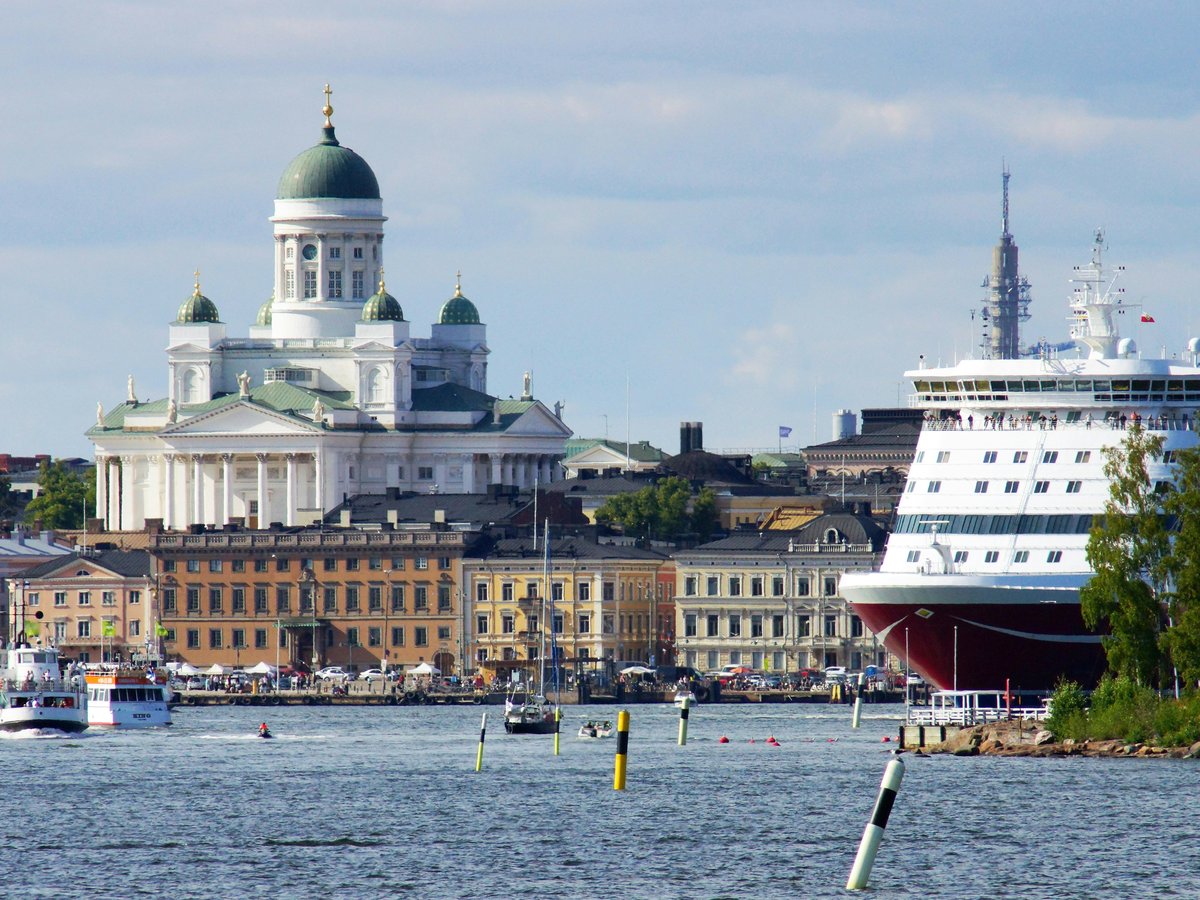
Helsinki is a compact city built on a peninsula that juts into the Baltic Sea, with most neighborhoods you'd want to explore sitting within a 3-kilometer radius of the central railway station. The tram network, particularly lines 2 and 3, threads through nearly every district worth visiting. Think of the city as a series of concentric arcs radiating north from the waterfront. The historic core clusters around Senate Square and the Esplanadi park. West of that sits the design-heavy Punavuori district, while east you'll find the Art Nouveau peninsula of Katajanokka. Head north past the Pitkäsilta bridge and you cross into Kallio, which has shifted from a working-class stronghold to Helsinki's late-night center over the past 15 years. Töölö wraps around the western shore of Töölönlahti bay, quieter and more residential. The whole thing is walkable in a way that still surprises people. From the Market Square to Kallio's Vaasankatu takes about 25 minutes on foot.
Neighborhoods
-
Kruununhaka
Helsinki's oldest residential district, with neoclassical facades lining cobbled streets that slope toward the harbor. Senate Square anchors the southern end, all white pillars and Carl Ludvig Engel's 1852 cathedral looming overhead. The pace here is slow. You'll hear church bells, seagulls, and the clatter of dishes from the university's student cafeteria on Aleksanterinkatu. Most buildings date from the 1820s to 1890s, and the grid plan still follows the 1812 city layout that Ehrenström drew up after the Russians took over.
- Best for
- First-time visitors and history-focused travelers who want to be close to the harbor and major sights without staying in a commercial hotel zone
- Key streets
- Aleksanterinkatu runs east-west as the main commercial street. Snellmaninkatu is quieter and passes the Bank of Finland and the House of the Estates. Meritullinkatu, closer to the water, has a stretch of small antique shops and the Burgher's House museum from 1818.
-
Katajanokka
A narrow peninsula east of the Market Square, almost entirely built during Helsinki's Art Nouveau period between 1900 and 1920. The residential blocks have turrets, carved granite facades, and ironwork balconies that feel closer to Riga or Tallinn than Scandinavian minimalism. It's quiet. The Uspenski Cathedral, a red-brick Orthodox church from 1868, sits on a rocky outcrop at the peninsula's western tip and is the largest Orthodox church in Western Europe. Viking Line and Tallink ferries dock along the southern shore, so you'll see rolling suitcases in the mornings, but by noon the streets empty out.
- Best for
- Architecture enthusiasts and couples looking for a residential feel within a 10-minute walk of the city center
- Key streets
- Luotsikatu has the densest cluster of Jugendstil buildings. Vyökatu is a single block long but worth the detour for its carved animal motifs on the facades. Kanavakatu runs along the harbor and leads to the Icebreaker fleet, which you can walk past year-round.
-
Punavuori
Punavuori is where Helsinki's design identity lives, south of Bulevardi between Fredrikinkatu and the waterfront. The streets here are lined with small-batch studios, vintage furniture shops, and independent fashion labels. The buildings tend to be 4 to 6 stories, late 19th century, with ground-floor retail that turns over slowly. This is not a fast-fashion district. On Iso Roobertinkatu the pace picks up after dark, with a run of bars that get noisy by 22:00 on Fridays. During the day it's calm, with the smell of roasting coffee drifting out of places like Good Life Coffee on Kolmas linja. The Design Museum sits at the district's eastern edge on Korkeavuorenkatu 23.
- Best for
- Design-minded travelers, independent shoppers, and anyone who wants walkable restaurants without the tourist markup of the Esplanadi area
- Key streets
- Fredrikinkatu between Bulevardi and Eerikinkatu is the main design corridor. Iso Roobertinkatu is the nightlife and restaurant spine. Uudenmaankatu has a cluster of record shops and smaller galleries.
-
Kallio
North of the Pitkäsilta bridge, Kallio spent most of the 20th century as Helsinki's working-class heart. The granite apartment blocks from the 1910s and 1920s are still standing, stacked tight on a hill that climbs toward the Kallio Church, a grey granite landmark from 1912 whose bells play a hymn at noon and 18:00 daily. The transformation started around 2005 to 2010. Old corner pubs now share the block with natural wine bars and specialty coffee roasters. Bear Park sits at the bottom of the hill near the bridge, and on warm evenings in June and July you'll find half the neighborhood gathered there with grocery-store beers and portable speakers. The noise level is real. If you want quiet after midnight, Kallio is not your district.
- Best for
- Budget-conscious travelers in their 20s and 30s, solo travelers wanting a social atmosphere, and anyone who prioritizes bars and live music over museums
- Key streets
- Vaasankatu is the main commercial street, dense with restaurants and bars between Helsinginkatu and Fleminginkatu. Hämeentie runs along the eastern edge and has the tramline plus a string of ethnic grocery stores and kebab shops. Torkkelinkatu, one block west of Vaasankatu, is residential and tree-lined.
-
Töölö
Töölö wraps around the western shore of Töölönlahti bay, a residential district of functionalist apartment blocks from the 1930s and 1940s with clean lines and pastel stucco facades. Sibelius Park and the Sibelius Monument, a cluster of welded steel pipes unveiled in 1967, sit at the neighborhood's northwestern corner. The Olympic Stadium from 1938 anchors the north. Töölö feels like a neighborhood that goes to bed early. The cafe scene is more traditional Finnish. Regatta, a tiny red wooden kiosk on the Töölönlahti waterfront, has been serving filter coffee and korvapuusti (cinnamon buns) since 1952. The whole bay freezes in January and February, and locals cross-country ski on it.
- Best for
- Families, repeat visitors who already know the center, and anyone who values quiet residential streets over nightlife
- Key streets
- Runeberginkatu is the main commercial artery, with a few bookshops and the old Töölö library. Museokatu runs north-south past the National Museum and connects to the Finlandia Hall. Töölönkatu parallels the bay and is a good walking route.
-
Ullanlinna and Eira
South of Punavuori, Ullanlinna and Eira occupy the southern tip of the Helsinki peninsula. This is the embassy district. Grand residential buildings from the 1900s to 1920s, some with private gardens, line streets that are notably wider than elsewhere in the city center. The Kaivopuisto park at the peninsula's tip has views across to Suomenlinna fortress. In winter the sea freezes here too, and you can sometimes walk out 200 meters onto the ice. The food scene is more upscale and subdued. Eira has a few small restaurants tucked into residential blocks. Café Carusel near Merisatama harbor serves fish soup for about 14 euros and has outdoor seating right on the quay.
- Best for
- Travelers with a higher budget who want residential calm, park access, and proximity to the waterfront without being in the tourist center
- Key streets
- Tehtaankatu has a run of antique shops and small galleries. Pietarinkatu connects Ullanlinna to the Esplanadi area. Merikatu curves along the southern shore past the old wooden villas of Eira, some dating to the 1910s.
-
Kamppi and Keskusta
This is Helsinki's commercial center, radiating out from the central railway station, an Eliel Saarinen-designed granite building from 1919 with those distinctive stone figures flanking the entrance. Kamppi proper sits west of Mannerheimintie, anchored by the Kamppi shopping center and the underground bus terminal. Stockmann, Finland's largest department store, occupies the block at the intersection of Aleksanterinkatu and Mannerheimintie. The Amos Rex art museum opened in 2018 beneath the Lasipalatsi building, its undulating skylights now a skateboarder hangout on the plaza above. The area is busier and louder than the rest of Helsinki. Tram bells, crosswalk signals, and the hum of the metro escalators at Rautatientori fill the soundscape.
- Best for
- Business travelers, first-timers who want maximum connectivity, and anyone arriving late or departing early from the airport via the ring rail link
- Key streets
- Mannerheimintie is the city's main north-south boulevard. Keskuskatu is pedestrianized and leads from the station toward the Esplanadi. Fredrikinkatu, heading south from Kamppi, transitions quickly from commercial to residential as it enters Punavuori.
-
Suomenlinna
Suomenlinna is a sea fortress spread across 6 islands connected by bridges, a 15-minute ferry ride from the Market Square. Construction began in 1748 under Swedish rule, and it's been a UNESCO World Heritage Site since 1991. About 800 people live here year-round in converted garrison buildings. The ferry runs every 20 minutes in summer and roughly every 40 minutes in winter. The islands smell like the sea, pine, and in summer, grilled sausage from the small cafes near the main quay. The King's Gate on the southern shore faces the open Baltic. Walking the full perimeter takes about 2 hours. Wind is a constant. Even in July, bring a layer.
- Best for
- Day-trippers, history enthusiasts, and families with older children who can handle uneven terrain and 2 to 3 hours of walking on rocky paths
- Key streets
- There are no real streets, but the main path from the ferry quay leads through Jetty Barracks courtyard, past the Suomenlinna Museum, and south toward the Church (originally a lighthouse, built in 1854). The Kuninkaanportti (King's Gate) path branches off toward the southern batteries.
-
Arabianranta and Toukola
Northeast of Kallio along the waterfront, Arabianranta grew up around the old Arabia ceramics factory, which operated on this site from 1874 to 2016. The neighborhood was redeveloped in the early 2000s as a mix of student housing, new residential blocks, and public art installations. Over 100 permanent artworks are embedded in buildings and walkways. The waterfront path here is one of the best in Helsinki for running or cycling, stretching about 3 kilometers north toward Vanhankaupunginlahti nature reserve. Toukola, the adjacent pocket neighborhood to the south, has older wooden houses from the early 1900s and a distinctly village-like feel despite being 4 kilometers from the city center.
- Best for
- Longer-stay visitors, students, and anyone who wants modern housing, waterfront access, and lower accommodation costs compared to the peninsula
- Key streets
- Hämeentie continues north through here as the main transit artery. Arabiankatu runs through the heart of the development. The waterfront promenade (Arabianrantatie) is car-free and passes the old factory building, now housing the Arabia art department of Aalto University.
FAQ
Which Helsinki neighborhood is best for a first visit?
Kruununhaka or Kamppi/Keskusta put you within walking distance of the main sights, the harbor, and the Esplanadi park. Kruununhaka is quieter and more residential. Kamppi is noisier but directly connected to the airport via the ring rail line, which takes about 30 minutes. If you only have 2 to 3 days, staying on the peninsula means you can walk to nearly everything.
Is Kallio safe for tourists at night?
Kallio is safe by any reasonable standard. The neighborhood's old reputation for roughness hasn't been accurate since about 2010. You might encounter loud groups outside bars on Vaasankatu after midnight on weekends, but violent crime against tourists is extremely rare in Helsinki overall. Finland's homicide rate sits around 1.6 per 100,000. The main practical concern is noise if your accommodation faces Vaasankatu or Hämeentie.
How does Helsinki's public transit work between neighborhoods?
Helsinki's tram network covers the peninsula and extends north to Kallio and Töölö. A single ticket costs 2.80 euros via the HSL app and is valid for 80 minutes across trams, buses, and the metro. The metro has 2 lines that are more useful for reaching eastern suburbs than for moving between central neighborhoods. Tram lines 2, 3, and 6 hit most visitor-relevant areas. From the airport, the ring rail (I and P trains) reaches the central station in about 30 minutes for 4.10 euros.
Where should I stay in Helsinki on a budget?
Kallio and Arabianranta offer the lowest accommodation costs within easy transit reach of the center. Hostel beds in Kallio run about 25 to 40 euros per night. Airbnb studios in Arabianranta average around 60 to 80 euros in summer 2025. Both neighborhoods have grocery stores (S-Market, K-Market) where cooking your own meals keeps daily food costs under 20 euros. The tram from Kallio to the center takes about 10 minutes.
What is the best time of year to visit Helsinki?
Late June through mid-August gives you 18 to 19 hours of daylight, outdoor terraces, and average highs around 20 to 22°C. The downside is higher accommodation prices and tourist density at Suomenlinna. September is quieter, still mild (12 to 15°C), and the trees along Töölönlahti bay turn color. December brings the Christmas markets on Senate Square and about 6 hours of daylight. January and February are genuinely cold, often dropping to minus 10 to minus 15°C, but the frozen sea and empty streets have their own appeal.
Can I get around Helsinki without speaking Finnish?
Yes. Finland has the highest English proficiency in continental Europe according to the 2023 EF English Proficiency Index, ranking 6th globally. Nearly all restaurant menus, transit signage, and museum materials are available in English. Staff at hotels, shops, and cafes in central Helsinki will switch to English without hesitation. Swedish is the second official language, and you'll see bilingual street signs throughout the city. Finnish is notoriously difficult, with 15 grammatical cases, so locals genuinely don't expect visitors to attempt it beyond kiitos (thank you).
Last verified by automated review (v1.7.2) on . What is automated review?