What's the food culture in Helsinki?
Helsinki's food culture centers on the lounas, a fixed-price weekday lunch eaten at 11am for 10-14 EUR, dark rye bread at every table, and wild Baltic fish prepared simply. The restaurant scene has grown around foraged Nordic ingredients, with Thursday pea soup still a weekly ritual across every cafeteria in the city.
Helsinki eats lunch at 11. Not 12, not 12:30. By 11:15 on a weekday, every lounas spot in Kallio and Kamppi fills with office workers eating a set menu, 10-14 EUR for soup, a main, bread, salad bar, and coffee. Dinner starts at 17 or 18, earlier than most European capitals. Miss the lounas window and you'll pay 25-30 EUR for the same food repackaged as an evening portion. Thursday is hernekeitto day, a tradition carried over from the Finnish military. Nearly every cafeteria in Helsinki serves thick yellow pea soup with grainy mustard on the side and pannukakku for dessert. You'll smell the peas simmering from the doorway of Ravintola Kappeli on the Esplanadi, where they've been ladled since 1867. A weekday lunch at Kappeli runs about 16 EUR, slightly above the Kallio average, but the dining room looks out toward the harbor.
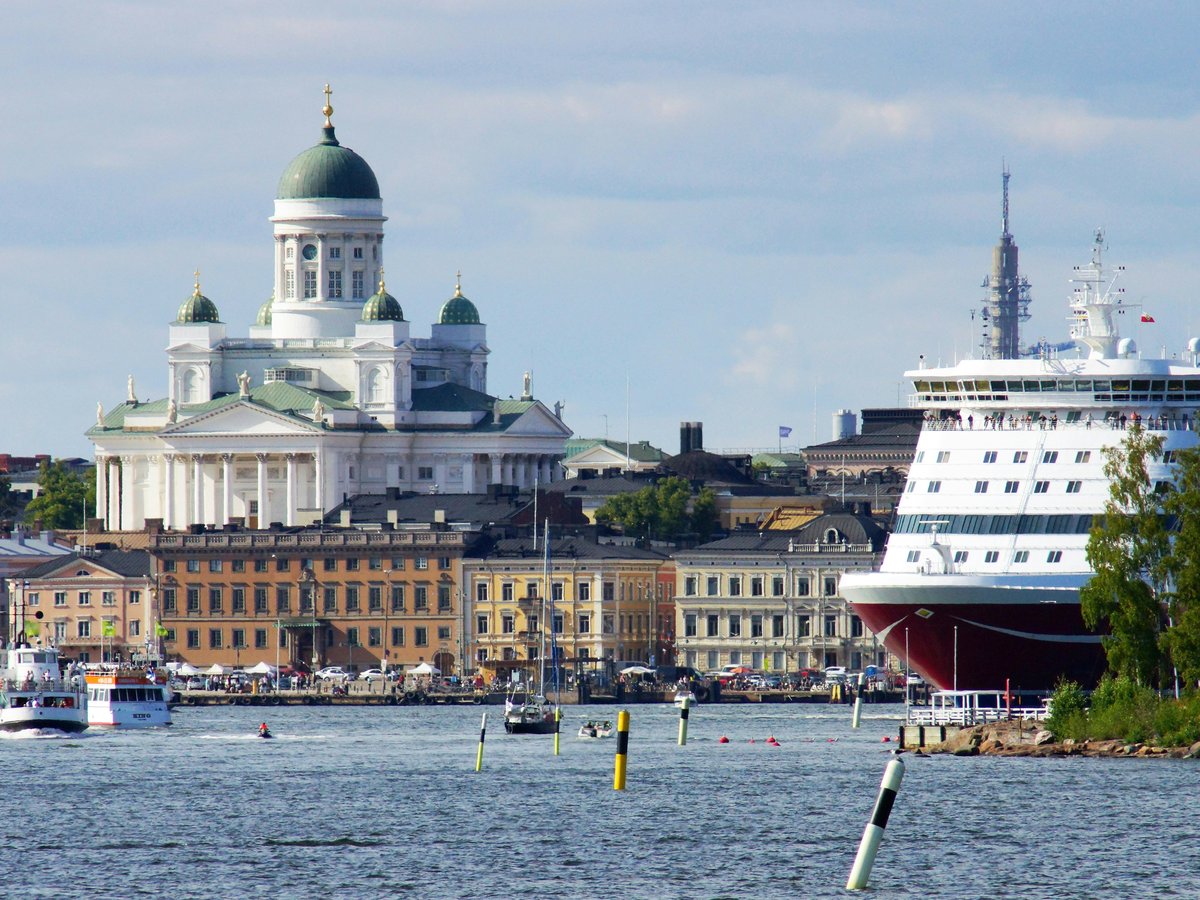
Vanha Kauppahalli at Eteläranta 1, the Old Market Hall, opened in 1889 and still operates as Helsinki's best single-stop food education. The salmon vendors inside slice gravlax so thin it's translucent, cold and briny, for around 5 EUR a portion. Hakaniemi Market Hall on the east side reopened after a multi-year renovation and runs warmer, less tourist-heavy than its waterfront counterpart. Ground-floor stalls sell Karelian pasties for 2-3 EUR, the rice porridge filling spilling from crimped rye shells still warm from the oven. Kauppatori, the outdoor harbor market, sells muikku from June through September. Small vendace, whole, fried crisp in butter, eaten from a paper cone by the water for 8-12 EUR. To be fair, Kauppatori also pushes reindeer sausage and salmon soup to tourists at marked-up prices, so stick to the muikku stalls with the longest wait.
Grön on Albertinkatu in the Design District serves a tasting menu for around 95 EUR, built on foraged herbs and Finnish-grown vegetables, in a room that seats maybe 30. Olo on Pohjoisesplanadi held a Michelin star for over a decade and runs 145-185 EUR for its full tasting. Both need reservations 3-5 days out, easily booked online. For something less expensive, Ravintola Sea Horse on Kapteeninkatu has served pan-fried Baltic herring with mashed potatoes since the 1930s for about 16 EUR. The 90-year-old dining room still has its original vinyl booths. Mind you, the reservation situation in Helsinki is easier than Copenhagen or Stockholm. Most restaurants accept online reservations through their own websites, and walk-ins work at lunch across central Helsinki.
Finland drinks more coffee per capita than any other country, roughly 12 kg per person per year. You feel that in Helsinki before you see the first menu. Kaffa Roastery in Punavuori pulls espresso from Finnish-roasted beans with a lighter profile than you might expect from Nordic roasters. Johan & Nyström on Kanavaranta does filter that runs clean and almost tea-like. Rye bread is the other Finnish constant. Dark, dense, slightly sour, it shows up on every Helsinki table from breakfast through dinner. Fazer, the confectionery company founded in 1891, runs a cafe on Kluuvikatu where you can buy their ruisleipä by the loaf and eat it with butter so thick it leaves fingerprints on the wax paper. And then there's salmiakki, the salt-ammonium-chloride licorice that Finns eat with honest commitment. Most visitors acquire the taste by the third piece or give up entirely. A 200g bag from any R-kioski costs under 3 EUR.
Menus in Helsinki appear in Finnish and English at nearly every restaurant in the center. A few older lunch spots in Sörnäinen and Vallila print Finnish-only menus, but pointing at the daily board gets the job done. Finnish Food Authority inspections cover every vendor, from the outdoor harbor market to the summer pop-ups along Hernesaari. For a full food day, start with coffee and a korvapuusti at Ekberg on Bulevardi, open since 1852, where the cinnamon rolls run 4 EUR and the cardamom hits before the sugar. Walk to the harbor market hall by 10 for salmon, eat lounas wherever the queue is at 11, then save the evening for Sea Horse or one of the Kallio wine bars on Fleminginkatu. Late-night eating is Helsinki's weak spot. After 22:00, your options narrow to kebab shops on Hämeentie and a handful of bars serving food past midnight.
Signature dishes
-
Karjalanpiirakka
Thin rye-crust pastry crimped by hand, filled with rice porridge, served warm with egg butter (munavoi). Sold at every market hall and bakery in Helsinki for 2-3 EUR. The crust should crack, not bend.
-
Lohikeitto
Salmon, potato, dill, and cream simmered in a light broth. A lunch staple across Helsinki's cafeterias for 8-12 EUR. The dill should be fresh, and the salmon chunks large enough to see the grain of the fish.
-
Graavilohi
Raw salmon cured in salt, sugar, and dill for 2-3 days, sliced thin and served cold on rye with mustard-dill sauce. Available at market halls across the city for 5-8 EUR a tasting portion.
-
Muikku
Tiny vendace from Finnish lakes, rolled in rye flour and fried whole in butter until crisp. Eaten head-to-tail from a paper cone at the harbor market's summer stalls, June through September.
-
Hernekeitto
Thick yellow split-pea soup served on Thursdays with grainy mustard and pannukakku (oven pancake) for dessert. A Finnish military tradition that crossed into civilian life. Still observed across Helsinki's cafeterias.
-
Korvapuusti
Finnish cinnamon rolls spiced heavily with cardamom, rolled larger than Swedish kanelbullar, with pearl sugar on top. A standard one costs 3-4 EUR at most Helsinki cafes. The cardamom should dominate, not the cinnamon.
-
Kalakukko
A Savonian specialty from Kuopio sold at Helsinki's market halls. Whole vendace or perch baked inside a sealed rye-bread crust for hours. The fish steams until paste-soft. Sliced like bread, eaten with butter.
-
Leipäjuusto
Oven-baked cheese with a squeaky texture, served warm with cloudberry jam. Originally from Ostrobothnia, now on dessert menus across Helsinki. The sweetness of the jam against the mild, rubbery cheese is the entire point.
Meal times
Lounas (set lunch) runs 11:00-12:30 on weekdays. Dinner reservations from 17:00. Kitchens close early by European standards, most finishing by 21:30. Weekend brunch 10-14 in Punavuori and Kallio.
Tipping
Tipping is not expected. Service is included in the bill. Rounding up by 1-2 EUR at restaurants is appreciated but optional. Card payment accepted everywhere, including market stalls.
Dietary notes
Vegetarian and vegan options appear on most Helsinki menus without asking. Finland's high celiac-diagnosis rate means gluten-free alternatives are taken seriously. Halal restaurants cluster along Hämeentie in Kallio and in Itäkeskus. Kosher dining is very limited, with no dedicated restaurant currently in the city.
Last verified by automated review (v1.7.2) on . What is automated review?