What cultural etiquette should I know for Helsinki?
Helsinki runs on quiet respect, not performance. Don't make small talk with strangers on the tram, don't skip queues at Alepa or S-Market, and never wear shoes inside a Finnish home. Tipping is not expected. Sauna is sacred. A firm handshake and direct eye contact at first meeting covers the greeting.
Finns prize personal space the way Italians prize conversation. On the Helsinki metro between Rautatientori and Hakaniemi, you'll notice passengers distribute themselves evenly across empty seats, leaving gaps between strangers. This isn't coldness. It's a deep cultural preference for not imposing. Don't initiate small talk in elevators, on trams, or in queues at the Stockmann food hall on Aleksanterinkatu. If a Finn looks uncomfortable when you chat them up at a bus stop on Mannerheimintie, that's the norm, not rudeness. The exception is bars. After a couple of Lapin Kulta pints at a pub around Vaasankatu in Kallio, Finns tend to open up considerably. The shift can be startling.
Sauna etiquette might be the single most important cultural code to learn before arriving in Helsinki. Finland has roughly 3.3 million saunas for 5.5 million people. At public saunas like Löyly in Hernesaari or Allas Sea Pool near Market Square, you'll sit on wooden benches in temperatures around 80-100°C. Nudity is standard in gender-separated sessions. Wearing a swimsuit in a traditional Finnish sauna is considered unhygienic, not modest. Sit on your towel, not the bare wood. When someone throws water on the kiuas (the stove stones), the burst of steam fills the room with a heavy, wet heat that catches in your throat. Don't flinch. That's the whole point. At mixed-gender public sessions, swimsuits are typically required, so check the posted rules at each venue.
Remove your shoes when entering a Finnish home. No exceptions, no asking "should I?" You'll see a pile at the door. Helsinki residents keep their apartments around 21-23°C even in winter, and outdoor shoes track in gravel, slush, and salt from streets like Aleksanterinkatu. Punctuality matters more than you might expect. Arriving 5 minutes late to a dinner in Töölö is noticed. Arriving 15 minutes late requires an apology. Queue-jumping at the Fazer Café on Kluuvikatu 3 or at an R-kioski will earn you sharp looks and possibly a direct correction. Finns at every HSL bus stop and Alepa checkout remember who was there first.
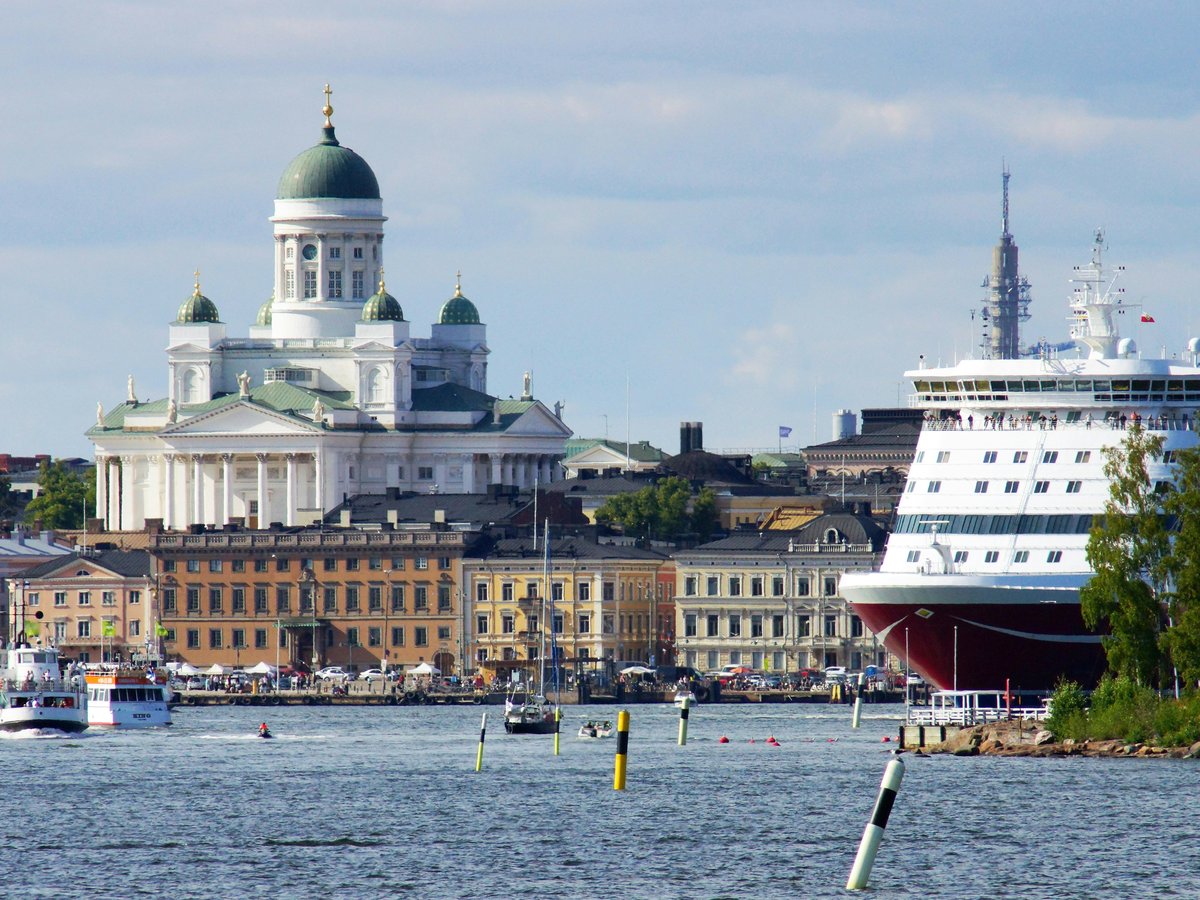
Helsinki has two cathedrals within 500 meters of each other near Senate Square. Helsinki Cathedral (Lutheran, from 1818) and Uspenski Cathedral (Orthodox, 1868) both welcome visitors, but Uspenski closes during services and photography is restricted near the iconostasis. At Temppeliaukio Church in Etu-Töölö, built in 1969, the smell of damp granite and the sound bouncing off the copper dome make it feel more like a concert hall than a place of worship. Still, keep your voice low and don't eat or drink inside. Finland is largely secular. About 64% of the population belonged to the Evangelical Lutheran Church as of 2023, down from 78% in 2010, but church spaces are treated with quiet respect regardless of personal belief.
Cultural norms
Finns greet with a firm handshake and direct eye contact. Small talk is minimal: silence in conversation is comfortable, not awkward, and filling pauses with chatter feels intrusive. First names come quickly, but wait for the other person to offer theirs. If invited to a Finnish home, remove your shoes at the door without being asked, and bring a gift like a bottle of wine rather than arriving empty-handed.
Dress is practical and understated. Jeans and layers work nearly everywhere, including restaurants. At Temppeliaukio Church or Uspenski Cathedral, bare shoulders draw no objection, but entering Helsinki Cathedral during a service in beachwear would be conspicuous. For the opera at the Finnish National Theatre, smart casual is the floor.
Tipping is not expected. Service charges are included in restaurant bills, and rounding up a taxi fare by a euro or two is generous by local standards. Card payment is universal: many cafés no longer accept cash at all.
The sauna is sacred social space. Declining an invitation can feel like a minor rejection, and wearing a swimsuit inside a private sauna is considered odd: a towel is the norm. Avoid referring to Finland as part of Scandinavia; Finns are Nordic, not Scandinavian, and the distinction matters. On the tram and metro, keep conversation low and give priority seating to the elderly.
Greetings
A firm handshake with direct eye contact covers most situations in Helsinki. First names are used quickly, even in business settings. Skip cheek-kissing entirely. 'Moi' works as a casual hello at shops in Kamppi or cafés on Fredrikinkatu. 'Hei' is slightly more formal. Don't hug unless you know the person well.
Don't do this
- Don't make loud phone calls on public transport, especially the metro between Kamppi and Sörnäinen.
- Never wear outdoor shoes inside a Finnish home.
- Don't skip queues at shops, R-kioskis, or the Fazer Café on Kluuvikatu.
- Avoid sitting next to a stranger on the tram or metro when other seats are open.
- Don't refuse a sauna invitation without a good reason. It's considered dismissive.
- Never throw water on the kiuas (sauna stove stones) without asking others in the room first.
- Don't brag or self-promote. Finns value understatement. The cultural concept of 'sisu' (quiet perseverance) runs deep.
- Avoid commenting on someone's income or apartment size. Both are considered private in Helsinki.
Tipping
Tipping is not expected in Helsinki. Service is included in restaurant prices. Rounding up a €47 dinner bill to €50 is generous. Taxi drivers don't expect tips. Hotel porters might get €2-3 per bag, but even that is uncommon.
Dress code
Helsinki is casual by Nordic standards. Jeans and a clean shirt work at most restaurants, including places like Ravintola Savoy. Cover shoulders and skip shorts at Helsinki Cathedral and Uspenski Cathedral during services. In winter, locals layer with merino wool from Marimekko or Halti, not cotton, which gets damp and cold fast.
Religious norms
Finland is largely secular, but church etiquette matters. Keep voices low inside Helsinki Cathedral (1818) and Uspenski Cathedral (1868). Remove hats in all churches. Don't photograph the iconostasis at Uspenski during services. At Temppeliaukio Church (1969), no food or drink. Sunday Lutheran services run about 45 minutes. Visitors are welcome but should sit in rear pews and not take communion unless invited by the pastor.
Last verified by automated review (v1.7.2) on . What is automated review?