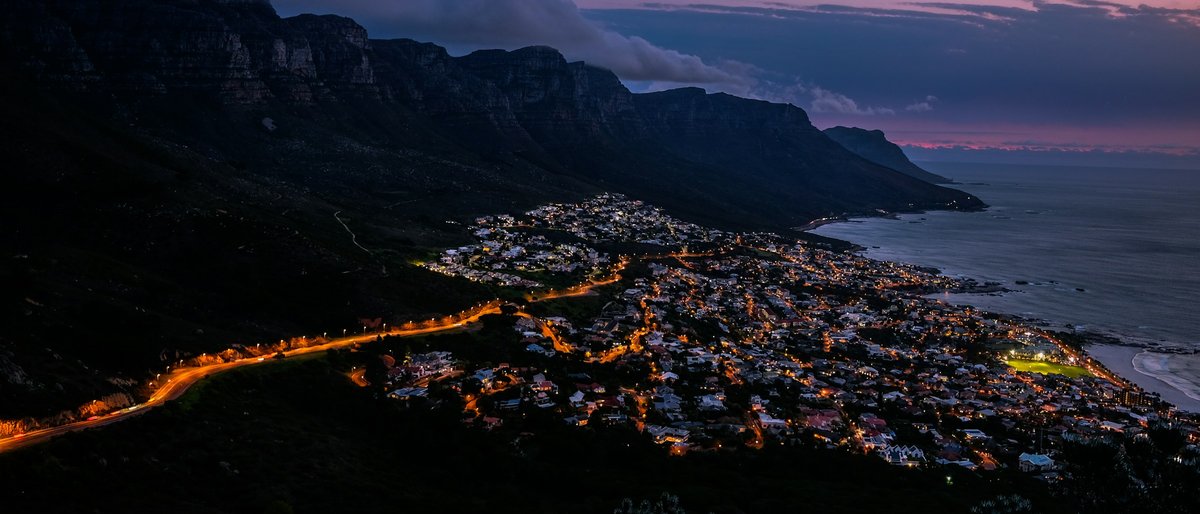
Cape Town is, in some ways, a city that was designed to be enjoyed for free. The mountain dominates everything — you can hike it without paying a cent, and on a clear day the views stretch past Robben Island to the curve of the horizon. The beaches cost nothing. The promenades cost nothing. The Bo-Kaap's painted houses are just there, waiting for you to wander past with a camera or without one. Mind you, this is also a city shaped by deep inequality, and that context matters when talking about what's accessible and to whom. But for visitors watching their rand, the ratio of extraordinary experiences to money spent is hard to beat anywhere on the continent. The outdoor life alone would fill a week. Add in free gallery nights, public markets you can browse without buying, and museums that waive entry fees on certain days, and you start to realize that budget constraints barely register against the sheer volume of things worth doing here. Cape Town's geography is its greatest asset — a peninsula wedged between two oceans with a flat-topped mountain in the middle — and geography, thankfully, is still free.
Free attractions
-
Table Mountain via Platteklip Gorge
The most direct route up Table Mountain takes roughly two hours and delivers you to the top without spending anything on the cable car. It's steep, relentless in places, and the last section feels like it goes on longer than it should. But the views from the top are the same ones cable car passengers pay R400 for. Bring more water than you think you need — the mountain has a way of dehydrating people who underestimate it. India Venster is a slightly more interesting route if you're comfortable with some light scrambling.
Table Mountain National ParkHiking / Viewpoint -
Lion's Head
The sunset hike up Lion's Head has become something of a Cape Town ritual, on full moon evenings when hundreds of people make the climb with headlamps. It's shorter than Table Mountain — about an hour to the summit — with a scramble section near the top involving chains and ladders. The 360-degree view from the peak takes in the Atlantic seaboard, the city bowl, and Table Mountain itself. On a calm evening, you can hear the muezzin call drifting up from the Bo-Kaap below.
Signal HillHiking / Viewpoint -
Company's Garden
This park has been here since the Dutch East India Company planted vegetables for passing ships in 1652. These days it's a shaded stretch of lawns, oak-lined paths, and a rose garden that runs from the top of Adderley Street toward the Mount Nelson Hotel. Squirrels are absurdly tame — they'll climb your leg for a peanut, which is either charming or unsettling depending on your relationship with rodents. The South African Museum, National Gallery, and Houses of Parliament all border the garden.
City CentrePark / Garden -
Signal Hill
You can drive or walk up to the top of Signal Hill for panoramic views of the city, the harbour, and Robben Island. It's where the Noon Gun has been fired every day except Sundays and public holidays since 1806. The gun goes off at noon precisely — it's loud enough to startle you even when you're expecting it. Sunset from here is popular but less crowded than Lion's Head, and there's no climbing involved.
Signal HillViewpoint -
Green Point Urban Park
Opened alongside the 2010 World Cup stadium, this park tends to get overlooked by visitors heading straight for the Waterfront. That's a shame, because the biodiversity garden is well done — a curated walk through fynbos, wetland, and succulent sections that represent the Western Cape's vegetation types. The outdoor gym equipment is free to use, the lawns are immaculate, and the park connects directly to the Sea Point Promenade.
Green PointPark / Garden -
Bo-Kaap
The painted houses of the Bo-Kaap — bright pinks, yellows, greens, blues — have become one of the most photographed streetscapes in Africa. The neighborhood sits on the slopes of Signal Hill and is historically home to Cape Town's Cape Malay community. Walking the steep cobbled streets of Wale and Chiappini is free and the colors shift beautifully in the late afternoon light. The Bo-Kaap Museum at 71 Wale Street charges a small fee, but the streets themselves are the real exhibition.
Bo-KaapNeighborhood / Heritage -
Rhodes Memorial
Perched on the eastern slopes of Devil's Peak, Rhodes Memorial looks out over the Cape Flats and the distant Hottentots Holland mountains. The monument itself is imperial and grandiose in a way that provokes strong feelings — the bronze lions, the columns, the sweeping staircase. Whatever your view of Cecil Rhodes, the location is spectacular and the surrounding trails through the pine plantation connect to Newlands Forest and beyond. Plenty of deer roam the grounds.
RondeboschMonument / Viewpoint -
Muizenberg Beach
The colourful Victorian bathing boxes at Muizenberg have their own postcard-perfect appeal, but the beach itself is the draw — a long, wide stretch of sand with relatively warm water by Cape Town standards. The surf break here is where many Capetonians first stood up on a board. The beach is free, though surfboard rental obviously isn't. The walk south along the coastal path toward St James is worth the effort for the tidal pool there.
MuizenbergBeach -
Clifton 4th Beach
The most sheltered of Clifton's four beaches, tucked between granite boulders that block the southeaster wind. The water is bracingly cold — Atlantic cold, the kind that makes your ankles ache — but on a still summer day there are few more beautiful stretches of sand anywhere. Getting down requires a steep staircase from Victoria Road. No facilities to speak of beyond the sand and the boulders and the turquoise water.
CliftonBeach -
Camps Bay Beach
Backed by the Twelve Apostles mountain range, Camps Bay beach has the kind of setting that looks retouched in photographs but isn't. The beach is free, the strip of restaurants and bars behind it is not. The water is the same icy Atlantic as Clifton. Worth noting — this beach gets absolutely packed on summer weekends and public holidays, and parking becomes a competitive sport. Weekday mornings are a different experience entirely.
Camps BayBeach -
Greenmarket Square
This cobbled square in the city centre has hosted a daily open-air market since 1696, making it one of the oldest public trading spaces in the country. Currently it runs as a craft market most weekdays, with vendors selling beadwork, textiles, carvings, and wire art. Browsing costs nothing, and the surrounding Art Deco and Cape Dutch architecture makes the square worth visiting even if you're not buying. The old Town House building on the square's edge dates to 1761.
City CentreMarket / Heritage -
Sea Point Promenade
This paved walkway stretches from the V&A Waterfront to Sea Point and beyond, hugging the rocky coastline the entire way. Joggers, dog walkers, families, and couples all share the path, and it might be the most democratic public space in the city. There are public art installations, outdoor exercise stations, a lighthouse, and the famous Sea Point Pavilion swimming pool nearby. The sunsets from here, with the ocean spray and the smell of salt, are routinely spectacular.
Sea PointWalking / Coastal
Free activities
-
Woodstock Street Art Walk
Woodstock's warehouses and building facades have become a rotating outdoor gallery. Artists from South Africa and abroad have painted large-scale murals along Albert Road, Victoria Road, and the surrounding streets. The art changes — walls get painted over, new pieces appear — so what you see depends on when you visit. The area is still transitioning, with working-class residents alongside design studios and craft breweries. Walking here on a weekday feels different from a curated gallery; it's rougher, more honest, and the art reflects that.
WoodstockStreet Art / Walking -
V&A Waterfront Promenade
The Waterfront is Cape Town's most visited destination, and while many of the shops and restaurants cater to tourist budgets, walking the harbour promenade costs nothing. You can watch seals hauling themselves onto the jetty, see fishing boats unloading their catch, and get close-up views of the Robinson Dry Dock — one of the oldest working docks in the southern hemisphere. The swing bridge opens periodically for boats, which is oddly satisfying to watch. Street performers are usually out on weekends.
V&A WaterfrontWalking / Harbour -
Newlands Forest Walk
A dense canopy of yellowwood and pine trees covers Newlands Forest on the eastern slopes of Table Mountain. The main paths are well maintained and shaded — on a hot day the temperature drops noticeably once you're under the trees. The contour path connects through to Kirstenbosch's upper boundary, and there are swimming spots in the streams after good rains, though the water is cold enough to make you gasp. Locals come here to walk dogs, trail run, and escape the wind.
NewlandsNature Walk -
Constantia Greenbelts
The oldest wine-producing region in the southern hemisphere has a network of greenbelts and walking paths that thread between the estates. You can walk through indigenous forest along the Alphen Trail or Constantia Greenbelts without paying a thing — the vineyards themselves obviously charge for tastings, but the surrounding green corridors are public. Bird life here is prolific, sunbirds and Cape robin-chats.
ConstantiaNature Walk -
Browse the Oranjezicht City Farm Market
Held at Granger Bay near the Waterfront on Saturday and Sunday mornings, this market brings together small-scale farmers, bakers, and food producers from the Western Cape. Entry is free; you'll pay for anything you eat, naturally, but the browsing and atmosphere cost nothing. The smell of fresh sourdough and roasting coffee hits you before you even get through the gate. It tends to draw a mix of Capetonians doing their weekly shop and visitors wandering between stalls.
Granger BayMarket -
Chapman's Peak Viewpoints
Chapman's Peak Drive itself has a toll for vehicles, but several viewpoints along the route are accessible by foot from Noordhoek or Hout Bay sides. The view from the top — Noordhoek's long white beach curving away below, the Sentinel standing guard over Hout Bay — is one of the most dramatic coastal panoramas you're likely to encounter. The light in the late afternoon turns the cliffs orange and copper. Walking the old road is also possible and free.
Hout Bay / NoordhoekViewpoint / Walking -
Explore the East City and Design District
The blocks around Harrington, Bree, and Roeland streets in the East City have quietly become Cape Town's creative hub. Galleries, architecture firms, and design studios cluster here, and many of the galleries — such as Whatiftheworld and blank projects — are free to enter during regular hours. The streetscape mixes Victorian warehouses with contemporary glass-fronted studios. First Thursdays bring this area to life, but it's worth visiting on any weekday.
East CityArt / Walking -
Sunset at Bloubergstrand
The classic postcard view of Table Mountain — the one you see on fridge magnets and wine labels — is taken from Bloubergstrand, across the bay. The beach itself is windy and wild, with kitesurfers dotting the water on most afternoons. But at sunset, when the mountain goes pink and then purple against the fading sky, you understand why people keep coming back to this exact spot with their cameras. It's currently still free to park along the beachfront, though that has been under discussion.
BloubergstrandBeach / Viewpoint
Free events
-
First Thursdays
First Thursday of every month, typically 5pm–9pmOn the first Thursday of every month, galleries, studios, and some shops across the CBD, Woodstock, and surrounding neighborhoods stay open until 9pm with free entry. It started in 2012 and has grown into one of the city's best-loved cultural events. The atmosphere is part gallery crawl, part street party — wine is usually available, and the sidewalks fill with people drifting between venues. The Church Street and Bree Street clusters tend to draw the biggest crowds. Some months are busier than others; summer First Thursdays can feel like half the city has turned out.
CBD, Woodstock, Salt River, and surrounds -
Kirstenbosch Summer Sunset Concerts
Select community event days, typically tied to public holidays (check Kirstenbosch calendar)While the concerts themselves have an entry fee, Kirstenbosch does occasionally host free community events and open days, around heritage celebrations. The regular Sunday sunset concerts during summer — roughly November through March — are a paid ticketed event but worth mentioning because people often assume they're free. To be fair, you can sometimes hear the music drifting over the garden walls from the adjacent Newlands Forest paths, which is its own kind of experience.
Kirstenbosch National Botanical Garden, Newlands -
Cape Town Carnival
Annually in March (exact date varies)Held annually in March, the Cape Town Carnival fills Green Point's Fan Walk and surrounding streets with floats, dancers, and performers. It's loosely inspired by the Cape Minstrel tradition but draws from a much wider range of communities and cultural influences. The street parade is free to watch from the pavements, and tens of thousands of people typically show up. The energy is loud, colourful, and distinctly Cape Town — drum lines, elaborate costumes, and the smell of boerewors rolls drifting from vendors on the sidelines.
Green Point Fan Walk and surrounding streets -
Open Book Festival
Annually in September (several days)Cape Town's literary festival runs for several days each September and includes a mix of paid and free events — panel discussions, readings, book launches, and conversations with authors. The free programme tends to be substantial, not just filler. Past editions have featured South African writers alongside international guests. Events are held at various venues around the city centre, with the Book Lounge and other independent spaces hosting fringe events.
Various venues, City Centre -
Noon Gun Firing
Daily at noon except Sundays and public holidaysEvery day except Sundays and public holidays, the Noon Gun on Signal Hill fires at exactly 12:00. It has been doing this since 1806, originally to allow ships in the harbour to calibrate their chronometers. You can walk up to the gun emplacement for free and watch the soldiers prepare and fire the cannon. The boom echoes across the city bowl. It's brief — the whole thing takes about thirty seconds — but there's something satisfying about a tradition that has survived two centuries of political change largely intact.
Signal Hill -
Free Walking Tours (tip-based)
Daily, usually morning departures (check operator schedules)Several operators run daily walking tours of the city centre, Bo-Kaap, and other neighborhoods on a tip-based model — the tour itself is free, and you pay what you feel it was worth at the end. These aren't technically free since you're expected to tip, but there's no upfront cost and nobody checks your wallet afterward. The quality varies by guide, but the better ones provide historical context and local perspective that you won't get from a guidebook. Cape Town Free Walking Tours is currently one of the more established operators.
Meeting points in City Centre, typically near Greenmarket Square -
Iziko Museums Free Days
Select public holidays and heritage events (check iziko.org.za for current schedule)Iziko, which manages a network of museums across Cape Town including the South African Museum, the National Gallery, the Slave Lodge, and the Castle of Good Hope, has periodically offered free entry days. These have historically included certain public holidays and heritage month events. The schedule tends to change year by year, so it's worth checking the Iziko website before planning around a free day. When they do run free entry, the South African Museum — with its whale hall and rock art collection — is the one to prioritize.
Various Iziko museums across Cape Town
Beaches worth knowing about
Cape Town's beaches split roughly into two categories: Atlantic side and False Bay side. The Atlantic beaches — Clifton, Camps Bay, Llandudno, Sandy Bay — have impressive settings and freezing water. We're talking 8-14°C most of the year. You'll see locals swimming in it, but they've had decades of acclimatization. The False Bay side — Muizenberg, St James, Kalk Bay, Fish Hoek — gets noticeably warmer water, sometimes reaching 20°C in late summer. That said, 'warm' is relative. All beaches are free. St James has a tidal pool that warms up nicely on sunny days and is sheltered from wind — the painted bathing boxes there are smaller and less famous than Muizenberg's but arguably prettier. Llandudno is clothing-optional at the far end, though this seems to be a somewhat fluid social convention rather than an official policy.
The wind factor
Nobody warns you properly about the southeaster. From roughly November through March, Cape Town gets hit by a strong southeasterly wind that locals call the Cape Doctor — supposedly because it blows pollution away, though that feels like generous spin when your beach towel is airborne. It can blow for days at a stretch, and it shapes where you should go on any given day. When the southeaster is howling, Clifton and Camps Bay are sheltered. When it's calm, the whole coast opens up. Check the wind forecast before committing to a beach day. This applies to hiking too — Lion's Head in 50km/h winds is a dangerous proposition, not a fun challenge.
Getting around for free (or nearly)
Cape Town is not a great city for free public transport — there isn't any. The MyCiTi bus network is affordable but not free, and it doesn't reach everywhere. That said, many of the free activities cluster in walkable zones. The City Centre, Company's Garden, Bo-Kaap, and East City are all within walking distance of each other. The Sea Point Promenade is a straight coastal walk from the Waterfront. For anything further — Muizenberg, Kirstenbosch, Chapman's Peak — you'll likely need wheels or a bus fare. Uber and Bolt operate in Cape Town and tend to be reasonably priced by international standards, though they're obviously not free. If you're staying in the city bowl, you can fill two or three full days on foot without any transport costs at all.
Safety and common sense
Cape Town requires the same street awareness as any major city, perhaps a bit more in certain areas. Stick to populated routes, when hiking — going up Table Mountain or Lion's Head in a group is strongly recommended over going solo, early or late in the day. The city centre is generally fine during daylight hours but quieter after dark. The Waterfront and Sea Point Promenade are well-patrolled. Woodstock is fine for daytime wandering along the main roads but avoid straying into unfamiliar side streets alone. Keep your phone out of sight on quieter streets. None of this should stop you from exploring — millions of people do it safely every year — but being aware of your surroundings is part of the deal here.
FAQ
Are Cape Town's beaches really free, or are there hidden costs?
Every beach in Cape Town is free to access. There are no entry fees, no beach charges, nothing. Some beaches have paid parking lots nearby, but you can usually find free street parking or walk in. The only beach-adjacent cost you might encounter is Boulders Beach in Simon's Town, which charges a SANParks conservation fee because it's a penguin colony within a national park. Every other beach — Clifton, Camps Bay, Muizenberg, Llandudno, all of them — is completely free.
Is it free to hike Table Mountain, or do you need to pay for the cable car?
Hiking up Table Mountain is free. You do not need a permit or ticket to walk any of the standard routes — Platteklip Gorge, India Venster, Skeleton Gorge from Kirstenbosch, or the Pipe Track. The cable car is a separate paid service that currently runs around R400 for a return trip. Many people hike up and take the cable car down, which means paying the one-way fare. But walking both directions costs nothing beyond the wear on your knees.
Which museums in Cape Town are free?
Cape Town doesn't currently have major museums that are permanently free for all visitors. However, Iziko museums — including the South African Museum, the National Gallery, and the Slave Lodge — offer free entry on certain public holidays and during heritage events. The schedule changes annually, so check iziko.org.za before your visit. The Zeitz MOCAA has offered free entry for holders of African passports on certain days. Many smaller galleries, in the East City and Woodstock, are always free to enter during business hours.
What is First Thursdays and how does it work?
First Thursdays is a monthly event on the first Thursday of each month where galleries, studios, and creative spaces across Cape Town's CBD and surrounding areas stay open late — typically from 5pm until 9pm — with free entry. You simply show up and walk between venues. Maps are usually available online and at participating venues. The Bree Street and Church Street clusters in the CBD tend to have the highest concentration of participating spaces. The atmosphere is social and relaxed, more street party than formal gallery opening. It runs year-round, though summer editions tend to draw bigger crowds.
Is the V&A Waterfront free to visit?
Walking around the V&A Waterfront is completely free. You can stroll the harbour, watch the seals, see the swing bridge operate, enjoy street performers, and browse shops without spending anything. The Waterfront itself is a commercial development — restaurants, shops, hotels — so spending money is easy if you choose to, but there's no entry fee and no obligation to buy anything. The Watershed craft market is free to browse, and the harbour views are some of the best in the city.
When is the best time of year for free outdoor activities in Cape Town?
Cape Town's outdoor season runs roughly from October through April, with December through February being peak summer. Days are long, rain is rare, and temperatures sit comfortably between 25-30°C most days. The catch is the southeaster wind, which blows frequently in summer and can make beach days and hikes unpleasant. March and April — late summer into autumn — are often the best months overall: the wind eases off, the water has had all summer to warm up, and the crowds thin out after the holiday season. Winter (June through August) brings rain and cooler temperatures around 12-18°C, but clear winter days happen regularly and can be spectacular for hiking.
Last verified by automated review (v1.7.1) on May 26, 2026. What is automated review?