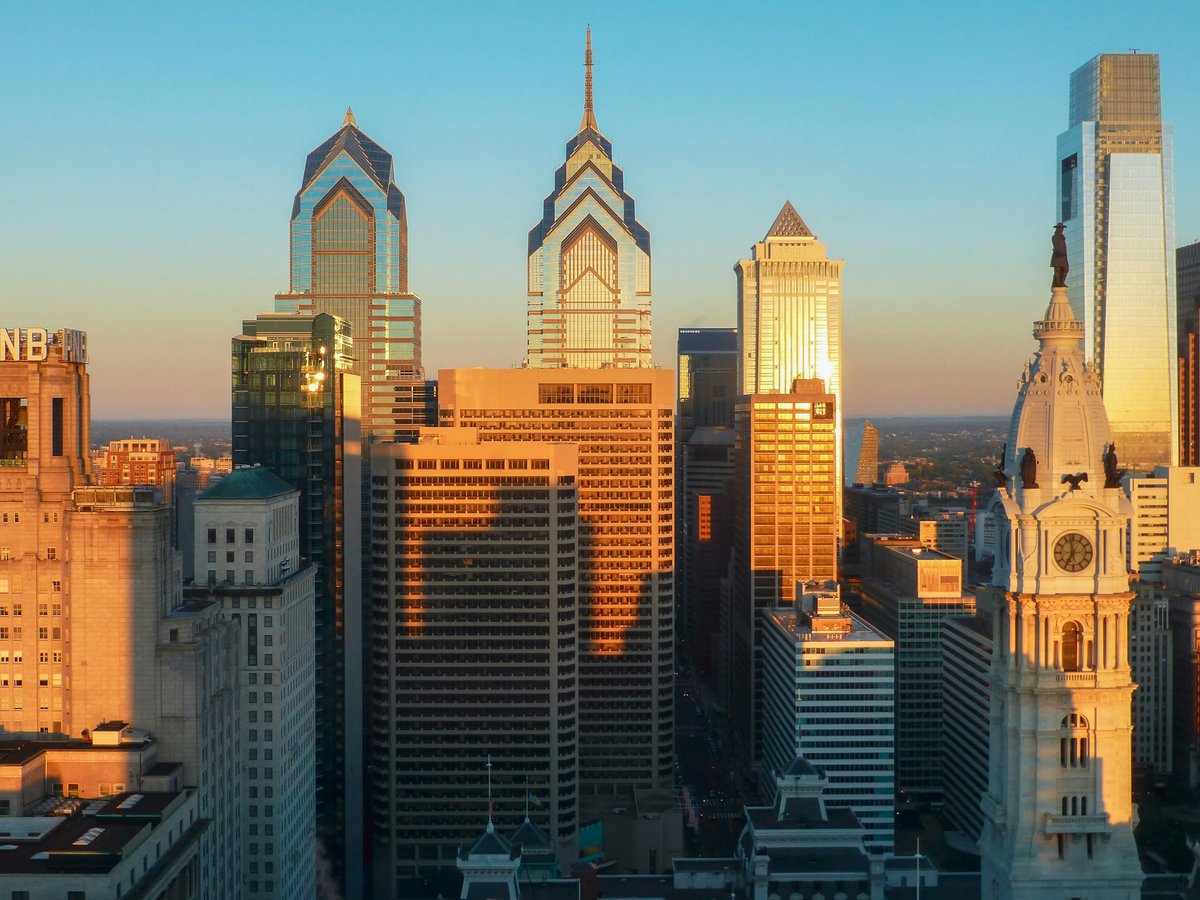
Philadelphia has always been a city where people make things. That reputation still holds. The garment industry that once powered blocks of factories in North Philadelphia left behind a culture of local makers, and you'll find that spirit in everything from independent leather goods workshops in Old City to printmakers selling letterpress posters in Fishtown. The Italian Market on 9th Street has operated continuously since the 1880s, which likely makes it the oldest open-air market in the country. Reading Terminal Market sits inside a restored 1893 train shed at 12th and Arch. Walnut Street between Broad and 21st still functions as the city's luxury corridor, though it tends to feel more approachable than, say, Michigan Avenue in Chicago or Fifth Avenue in New York. Pennsylvania charges no sales tax on clothing or shoes, which is a genuinely useful perk if you're planning to buy a winter coat or a pair of boots. Mind you, the city does add its own tax to most other retail purchases, currently at 8%. Philadelphia's shopping personality leans independent and neighborhood-specific. The big-box chains exist out in the suburbs along Roosevelt Boulevard or in King of Prussia, but within city limits, the interesting stuff tends to cluster along specific corridors where small owners have set up for decades.
Shopping districts
-
Walnut Street (Rittenhouse Row)
mid-range to luxuryThe stretch of Walnut Street from Broad Street west to about 21st Street runs along the northern edge of Rittenhouse Square. National brands like Anthropologie (which was founded in Wayne, PA, roughly 20 miles from here) sit next to smaller boutiques. The side streets, particularly 18th and Sansom, hold some of the better independent shops. Sansom Street between 17th and 18th has a cluster of consignment and vintage stores that pull a younger crowd. You might notice the foot traffic drops sharply west of 21st. The neighborhood skews well-dressed and professional during the week, more relaxed on weekends when families spread out across the park.
Best for: Fashion, accessories, national brands mixed with local boutiques
-
Old City (2nd to 5th Streets, Market to Race)
mid-rangeOld City's galleries and boutiques occupy the ground floors of 18th- and 19th-century brick buildings along 2nd and 3rd Streets. First Friday gallery walks still happen monthly, and that's when the neighborhood is at its most lively. Between openings, the shops lean toward handmade jewelry, contemporary art, design objects, and locally made leather goods. The Art Star boutique on North 3rd helped define this corridor's mix of art-meets-retail. Prices are moderate for what you get, though gallery pieces obviously vary. The cobblestone streets near Elfreth's Alley tend to draw tourists, but the shops a block or two west cater more to locals.
Best for: Art, handmade jewelry, design objects, gallery browsing
-
East Passyunk Avenue
mid-rangeThis diagonal avenue in South Philadelphia has turned into one of the city's strongest independent retail strips over the past 15 years or so. It runs from Broad Street southeast to Dickinson, with the densest stretch between Morris and Tasker. The shops here feel personal. Small-batch candle makers, vintage clothing, a well-curated record store. The restaurant scene along East Passyunk gets most of the press, but the retail side holds its own. The Singing Fountain at Tasker is the informal center. Foot traffic picks up on weekends, and the avenue hosts seasonal festivals that close the street to cars several times a year.
Best for: Independent boutiques, vintage finds, locally made gifts
-
Fabric Row (South 4th Street)
budget to mid-rangeA few blocks of South 4th Street between Bainbridge and Catherine still carry the name Fabric Row from the decades when textile shops lined both sides. The fabric stores have thinned out, though a handful remain and still draw quilters and home sewers from across the region. The block has shifted toward a mix of vintage shops, small galleries, and neighborhood cafes. It sits at the edge of Queen Village and feels residential in a way that Walnut Street does not. Worth a detour if you sew or want to browse without the pressure of a commercial strip.
Best for: Fabrics, textiles, vintage clothing, neighborhood browsing
-
Chestnut Hill
mid-range to upscaleChestnut Hill sits at the far northwest edge of the city, about 25 minutes by Regional Rail from Center City. Germantown Avenue through the business district has the feel of a small New England town. Independent bookstores, kitchen shops, clothing boutiques, and a handful of antique dealers line a walkable 8-block stretch. The holiday shopping season draws crowds from the surrounding suburbs. Parking can be tight on Saturdays. The neighborhood has an older, wealthier demographic, and the shops reflect that. Prices tend to run a bit higher than comparable stores in Center City.
Best for: Antiques, home goods, books, leisurely browsing in a village atmosphere
-
Fishtown and Northern Liberties
budget to mid-rangeFrankford Avenue between Girard and York is where a lot of the newer independent retail has landed. Screen printers, ceramicists, and small-batch makers set up shop in converted rowhouses and former industrial spaces. The neighborhood has changed rapidly since 2010. Some longtime residents feel the shift. That said, the retail here tends to be genuinely creative, and prices stay reasonable compared to Rittenhouse. Northern Liberties, the adjacent neighborhood to the south along 2nd Street, adds a few more boutiques and the Piazza at Schmidt's, a repurposed brewery complex with rotating pop-up shops.
Best for: Local makers, screen-printed goods, ceramics, creative gifts
-
Jewelers' Row (Sansom Street near 7th and 8th)
mixedSansom Street between 7th and 8th was once the oldest diamond district in the country, dating to 1851. The corridor has contracted over the years as some buildings were demolished or converted, but a cluster of independent jewelers still operates here. If you're looking for engagement rings, watch repair, or custom metalwork, this strip has more expertise per square foot than anywhere else in the city. Prices are competitive because the jewelers are selling to each other's walk-in traffic, not paying mall rents. The block feels more workmanlike than glamorous.
Best for: Jewelry, engagement rings, watch repair, custom metalwork
Markets
-
Reading Terminal Market
food and specialtyOpen since 1893 inside the old Reading Railroad train shed at 12th and Arch Streets. Around 80 vendors sell prepared food, produce, meat, cheese, baked goods, and specialty items. The Amish and Mennonite vendors from Lancaster County operate stands selling scrapple, shoofly pie, and whoopie pies. DiNic's roast pork sandwiches tend to draw the longest lines. Bassetts Ice Cream has been scooping here since 1861, which they claim makes them the oldest ice cream company in the country. The market gets crowded between 11:30 a.m. and 1:30 p.m. on weekdays. Saturday mornings are packed. Go early or after 2 p.m. if you want to see the produce stands without elbowing through a crowd.
Daily, typically 8 a.m. to 6 p.m. Some vendors close earlier; hours vary on Sundays and holidays.
-
Italian Market (9th Street)
food and produceThe stretch of 9th Street between Christian and Wharton in South Philadelphia has been an open-air market since the 1880s. The original Italian immigrant vendors have given way to a mix of Mexican, Vietnamese, and Italian businesses. You'll find butcher shops with whole hanging animals, spice vendors, produce stalls with competitive prices, and a few kitchen supply stores. The smell of roasting peppers and fresh mozzarella mixes with diesel exhaust from 9th Street traffic. Pat's and Geno's cheesesteak stands sit at the southern end near Passyunk Avenue. The market is rougher around the edges than Reading Terminal. Fewer tourists, lower prices, more neighborhood feel.
Most vendors open Tuesday through Sunday, roughly 9 a.m. to 5 p.m. Some close Mondays.
-
Philadelphia Flea Markets at Germantown and Cheltenham
fleaSeveral flea markets operate in the Cheltenham and Germantown areas on weekends, with vendors rotating between locations. Expect secondhand furniture, vintage clothing, vinyl records, old tools, and the kind of miscellaneous household goods that accumulate in Philadelphia's older rowhomes. Prices start low and negotiation is expected. The quality varies week to week. Regulars show up early for the best picks.
Weekends, typically Saturday and Sunday mornings through early afternoon. Seasonal.
-
Night Market Philadelphia
night and foodThe Food Trust, a Philadelphia nonprofit, has organized Night Market events since 2010 in rotating neighborhoods. They typically happen a few times per year at locations like Fishtown, West Philadelphia, and South Street. Dozens of food vendors set up outdoors for a single evening, usually from 6 to 10 p.m. The events draw thousands and lines form quickly at the popular stalls. The food skews toward the city's immigrant communities, which means Cambodian, Mexican, Ethiopian, and Vietnamese dishes alongside local breweries and bakeries. These are free to attend. You pay per dish.
A few events per year, typically spring through fall. Dates and locations announced by The Food Trust.
-
Philly Flea at the Piazza
artisan and fleaA curated flea market that sets up periodically at the Piazza at Schmidt's in Northern Liberties. The Piazza is a repurposed Schmidt's brewery complex. Vendors tend toward vintage clothing, handmade crafts, letterpress prints, and small-batch goods. The crowd skews younger than suburban flea markets. You might find locally made hot sauce, hand-bound journals, or salvaged architectural hardware from demolished rowhomes. Worth noting that this is more of a makers' market than a traditional flea.
Periodic events, often monthly during warmer months. Check local listings for exact dates.
-
Clark Park Farmers Market
farmersThis twice-weekly farmers market in the University City neighborhood operates year-round at 43rd and Baltimore. Saturday mornings are the bigger draw, with Lancaster County farms selling produce, eggs, and meat alongside local bakers. The Thursday market is smaller. Clark Park itself is a neighborhood gathering spot in West Philadelphia. The market has a loyal following among Penn students, hospital workers, and longtime West Philly residents. Prices reflect the quality, though they're reasonable compared to similar markets in New York or D.C.
Saturdays year-round, roughly 10 a.m. to 2 p.m. Thursdays seasonally.
Souvenirs worth bringing home
The most genuinely Philadelphia things to bring home tend to be edible. Tastykake butterscotch krimpets and peanut butter Kandy Kakes have been made in Philadelphia since 1914. They're sold in every convenience store for a few dollars a box. Herr's potato chips come from Nottingham, PA, about 60 miles south, and the company's regional flavors don't travel far beyond the mid-Atlantic. Goldenberg's Peanut Chews, another local candy, have been produced in the area since 1917. From Reading Terminal Market, a vacuum-sealed pack of scrapple or a shoofly pie from one of the Amish vendors travels reasonably well. For non-food items, look for Phillies or Eagles gear from the team stores rather than generic souvenir shops on Market Street. Liberty Bell magnets and Independence Hall snow globes are everywhere, but they're made in China. If you want something made in Philadelphia, look at the letterpress print shops in Fishtown and Old City, where you can pick up hand-printed posters featuring Philadelphia landmarks or neighborhood maps. South Philadelphia's fabric stores sometimes carry locally printed textiles. A bottle of Yards Brewing Company beer, brewed in Northern Liberties, or a bag of beans from La Colombe (founded in Rittenhouse in 1994) makes a solid, packable gift.
Practical tips
- Sales tax on clothing
- Pennsylvania does not charge sales tax on most clothing and footwear. This applies to everyday items like coats, shoes, jeans, and dresses. Formal wear, fur, and sporting equipment may be taxed. The exemption is automatic at the register. If you're coming from New York, where clothing tax applies on items over a certain threshold, this is a meaningful saving on bigger purchases.
- Bargaining norms
- Fixed prices are the norm in Philadelphia retail stores, boutiques, and chains. Do not try to negotiate at Reading Terminal Market food stalls or neighborhood shops. Bargaining is expected at flea markets and some antique dealers, where starting at 10 to 20 percent below the asking price is reasonable. Estate sales in the suburbs sometimes accept offers late in the day. At Jewelers' Row, asking about discounts for cash payment is common and not considered rude.
- Store hours
- Most Center City shops open between 10 and 11 a.m. and close by 6 or 7 p.m. Monday through Saturday. Sunday hours tend to be shorter, often noon to 5 p.m. Neighborhood corridors like East Passyunk and Fishtown may keep irregular hours, especially on Mondays and Tuesdays when some independent shops close entirely. Reading Terminal Market opens at 8 a.m. daily. Holiday hours vary, and many shops close for New Year's Day, Easter, Thanksgiving, and Christmas.
- Payment methods
- Credit and debit cards are accepted nearly everywhere in Philadelphia, including most market stalls at Reading Terminal. A few of the Italian Market vendors on 9th Street still prefer cash, especially the smaller produce stands. Flea market vendors are mixed. Some use mobile card readers, others are cash-only. Carrying at least 40 to 60 dollars in cash covers most situations at markets. Contactless payment via phone wallets works at most chain stores and many independents.
- Getting between shopping areas
- SEPTA's Broad Street Line connects City Hall to East Passyunk (Tasker-Morris station) in about 8 minutes. The Market-Frankford Line runs east-west, stopping near Old City (2nd Street station) and Fishtown (Girard station). Reading Terminal Market sits directly above Jefferson Station, a Regional Rail hub. Chestnut Hill is about 25 minutes on the Chestnut Hill East or West Regional Rail lines from Center City. Rideshare between Center City and South Philadelphia or Fishtown typically runs under 15 dollars. Walking between Rittenhouse, Old City, and the Italian Market is feasible if you have 30 to 40 minutes and decent shoes.
FAQ
Is Philadelphia cheaper for shopping than New York City?
Generally, yes. Rents are lower, which keeps prices down at independent shops. The no-tax-on-clothing policy saves 4 to 8 percent compared to New York depending on the item. Food at markets like Reading Terminal tends to cost 20 to 30 percent less than comparable quality at Chelsea Market or Smorgasburg. That said, luxury retail on Walnut Street prices similarly to comparable brands in Manhattan.
What are the best shopping areas within walking distance of each other?
Old City, the Italian Market on 9th Street, and Fabric Row on South 4th Street are all within a 20 to 30 minute walk of each other through Center City and South Philadelphia. Rittenhouse Row along Walnut Street is about a 15-minute walk west from Old City. Reading Terminal Market at 12th and Arch sits roughly between them. You could cover Old City, Reading Terminal, and Rittenhouse in a single afternoon if you stay focused.
When is the best time of year to shop in Philadelphia?
The holiday season from late November through December brings special events, extended hours, and seasonal markets. Chestnut Hill's Stag and Doe Night in early December is a local tradition. Reading Terminal Market gets festive but also very crowded. Spring and early fall offer the most comfortable weather for walking between outdoor markets and neighborhood shopping streets. The Night Market events from The Food Trust typically run between May and October.
Are Philadelphia outlet malls worth visiting?
Philadelphia Premium Outlets in Limerick is about 40 miles northwest and draws suburban shoppers looking for brand discounts. King of Prussia Mall, roughly 20 miles west on Route 76, is one of the largest malls in the country with over 400 stores. Both require a car or a long rideshare. If your time in Philadelphia is limited, the in-city shopping districts offer a more distinctive experience. The outlets serve a different purpose, more about volume discounts on national brands.
Where should I avoid buying souvenirs in Philadelphia?
The gift shops clustered along Market Street between Independence Hall and the Liberty Bell tend to sell mass-produced items at marked-up prices. The same keychains and shot glasses appear in every shop. For better quality and more authentically local goods, walk a few blocks north to Old City's boutiques or south to the Italian Market. Reading Terminal Market vendors sell packaged local food items that make better gifts than anything on the tourist strip.
Last verified by automated review (v1.7.2) on . What is automated review?