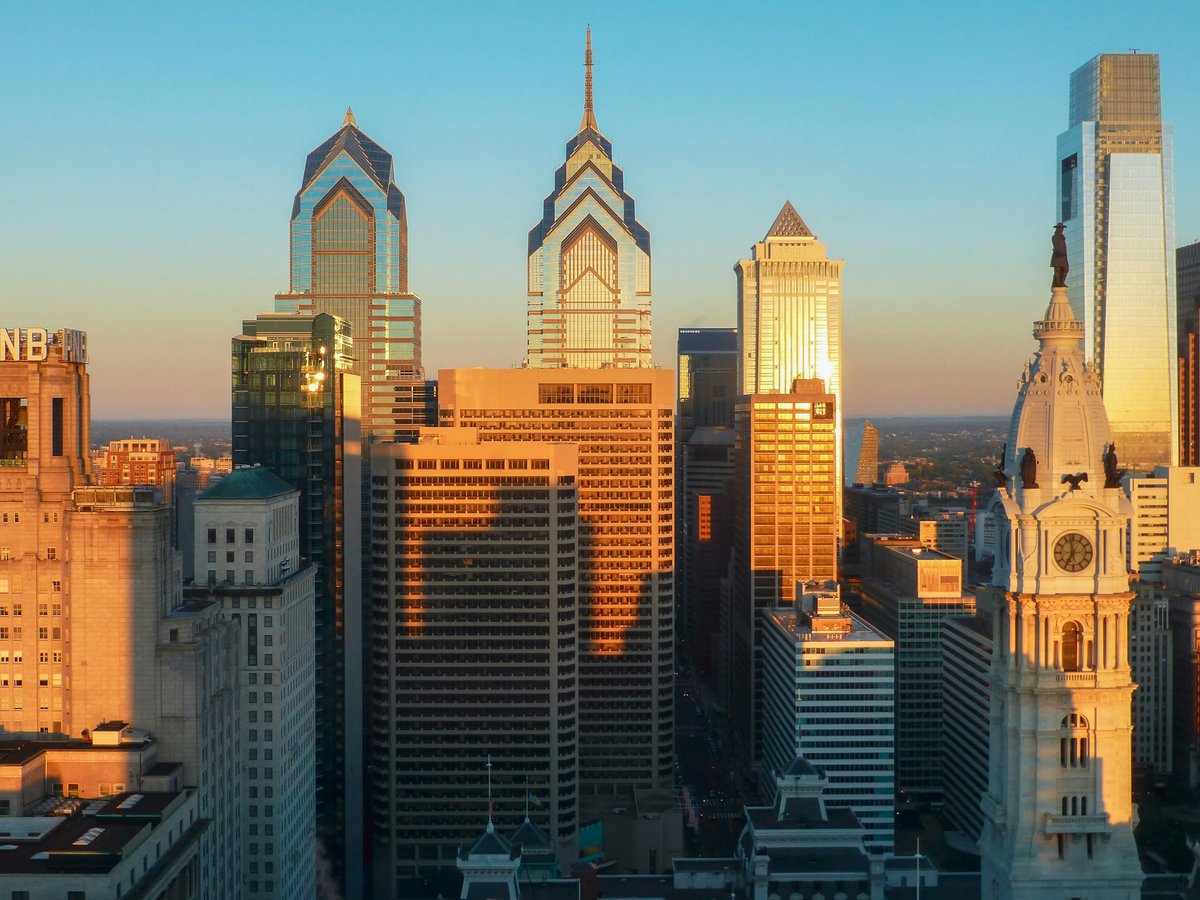
12 packing essentials every Philadelphia visitor brings in 2026
Broken-in walking shoes with textured soles rank first because Philadelphia's 18th-century cobblestones in Old City and the 72 stone steps at the Philadelphia Museum of Art punish stiff or slippery footwear within hours. The tie-breaker is versatility. Those same shoes handle SEPTA platform gaps, Reading Terminal Market's slick tile floors, and 15,000-step days through Fairmount Park.
Scoring here weighs three factors. How often does a Philadelphia visitor specifically need this item compared to any generic city trip? How much regret shows up in traveler posts when someone forgets it? And does the quality-to-cost ratio hold for a trip averaging 3 to 5 days? Shoes score highest because Philadelphia is a walking city with uneven terrain. The brick sidewalks along 2nd Street in Old City, the gravel paths through Fairmount Park's 2,050 acres, and the worn marble steps inside Independence Hall all test footwear differently. A $90 pair of trail-ready walking shoes outperforms a $300 jacket you might not unpack.
The most common mistake is packing for one version of Philadelphia's weather. The city sits in USDA hardiness zone 7b, which means January lows around 25°F and July highs that regularly hit 95°F with thick humidity. But even within a single April or October week, you might get 40°F mornings and 72°F afternoons. Travelers who fly into Philadelphia International Airport (PHL) in a hoodie and shorts for a May trip end up buying overpriced layers at the shops near Suburban Station. The second mistake is underestimating the walking. A typical day covers South Street to the Italian Market in Bella Vista, then north through Washington Square to Old City, then maybe west to University City for dinner near 40th Street. That's 5 to 8 miles on mixed surfaces.
That said, the walking-shoe pick is not right for everyone. If your Philadelphia trip centers on a conference at the Pennsylvania Convention Center and you'll mostly take SEPTA's Broad Street Line or the Market-Frankford Line between your hotel and a few restaurants in Center City, you can probably get by with a comfortable flat or a clean sneaker. Same if you're visiting in deep winter and plan to spend most of your time inside the Philadelphia Museum of Art, the Barnes Foundation on the Parkway, or the Mutter Museum on 22nd Street. In those cases, a warm waterproof boot might serve you better than a lightweight trail shoe. The list still holds, but shift the shoe pick toward something insulated.
Worth noting that Philadelphia's SEPTA system tends to run warm underground in summer and cold on elevated platforms in winter. The El, the Market-Frankford Line's elevated section through Kensington and Frankford, is exposed to wind. If you're riding it to Fishtown for dinner or out to the end of the line, a packable wind layer earns its luggage space. And anyone walking the Schuylkill River Trail from the Art Museum down to Bartram's Garden, roughly 4 miles one way, will want sunscreen and water no matter the season. Philadelphia's tap water, treated by the Baxter Water Treatment Plant, is safe and good. An insulated bottle saves $4 per refill at Center City convenience stores.
The full list
-
Broken-in walking shoes with textured soles
Old City's 18th-century cobblestones along Elfreth's Alley and 2nd Street will blister new shoes by noon. You also need grip for the 72 steps at the Art Museum and the gravel paths in Fairmount Park. Trail-ready shoes around $80 to $120 cover all of it.
Shop Broken-in walking shoes with textured soles -
Packable rain jacket
Philadelphia averages 47 inches of rain across roughly 117 days per year. Summer storms arrive fast, and if you're caught on the Benjamin Franklin Bridge walkway or at an outdoor table on East Passyunk Avenue, there's no quick shelter. A jacket that stuffs into its own pocket weighs under 10 oz.
Shop Packable rain jacket -
Layering mid-weight fleece or merino pullover
Philly's spring and fall temperature swings can reach 30°F in a single day. A morning walk through Rittenhouse Square at 45°F becomes a 75°F afternoon by the time you reach the Italian Market in Bella Vista. One mid-layer handles both without overpacking.
Shop Layering mid-weight fleece or merino pullover -
Compact travel umbrella
SEPTA station exits at Suburban Station and 30th Street Station drop you onto open sidewalks. Philadelphia's summer thunderstorms give about 10 minutes of warning. A compact umbrella under 12 inches fits a daypack side pocket and saves you a sprint to cover.
Shop Compact travel umbrella -
Reusable insulated water bottle (32 oz)
Philadelphia tap water is rated among the top municipal supplies in the Northeast. Summer humidity regularly pushes the heat index past 100°F in Center City. Refill stations sit throughout Fairmount Park and at most SEPTA hubs, so a 32 oz insulated bottle pays for itself by day two.
Shop Reusable insulated water bottle (32 oz) -
Portable battery pack (10,000 mAh minimum)
A full day from the Liberty Bell to the Schuylkill River Trail to dinner in Fishtown drains a phone by 4 PM, especially with SEPTA's transit app running. Outlets on SEPTA Regional Rail cars are hit or miss. A 10,000 mAh pack covers 2 to 3 full charges.
Shop Portable battery pack (10,000 mAh minimum) -
Crossbody anti-theft bag
Reading Terminal Market at lunchtime packs shoulder-to-shoulder. A crossbody keeps your wallet, phone, and SEPTA Key card accessible without setting a bag down between stalls. Also practical on crowded Market-Frankford Line cars during rush hour between 15th Street and Frankford.
Shop Crossbody anti-theft bag -
SPF 50 sunscreen (travel size)
The Schuylkill River Trail and Kelly Drive offer zero shade for long stretches. A summer afternoon at Citizens Bank Park for a Phillies game means 3 to 4 hours of direct sun in the upper deck. Philadelphia's UV index reaches 9 or 10 in July.
Shop SPF 50 sunscreen (travel size) -
Moisture-wicking shirts (2 to 3)
Philadelphia's July and August humidity regularly tops 80%. Walking from Penn's Landing on the Delaware waterfront west to University City soaks a cotton shirt through by 30th Street Station. Merino or synthetic wicking shirts dry faster and resist odor across multi-day wear.
Shop Moisture-wicking shirts (2 to 3) -
Packable lightweight down or synthetic puffer
November through March in Philadelphia means lows between 25°F and 40°F, with wind funneling down Broad Street from City Hall. A packable puffer under 14 oz layers under a rain shell and compresses to the size of a water bottle for spring or fall shoulder days.
Shop Packable lightweight down or synthetic puffer -
Polarized sunglasses
Late afternoon glare off the Delaware River at Penn's Landing and the Schuylkill makes west-facing walks uncomfortable without polarized lenses. Also useful against the bright marble reflections inside the 30th Street Station main hall and along the Parkway museum strip.
Shop Polarized sunglasses -
Wool or merino hiking socks (2 to 3 pairs)
A typical Philadelphia day covers 12,000 to 18,000 steps across brick, concrete, cobblestone, and trail gravel. Cotton socks blister by mid-afternoon in summer heat. Merino regulates temperature, wicks moisture, and holds up for 2-day wear between washes.
Shop Wool or merino hiking socks (2 to 3 pairs)
Last verified by automated review (v1.7.2) on . What is automated review?