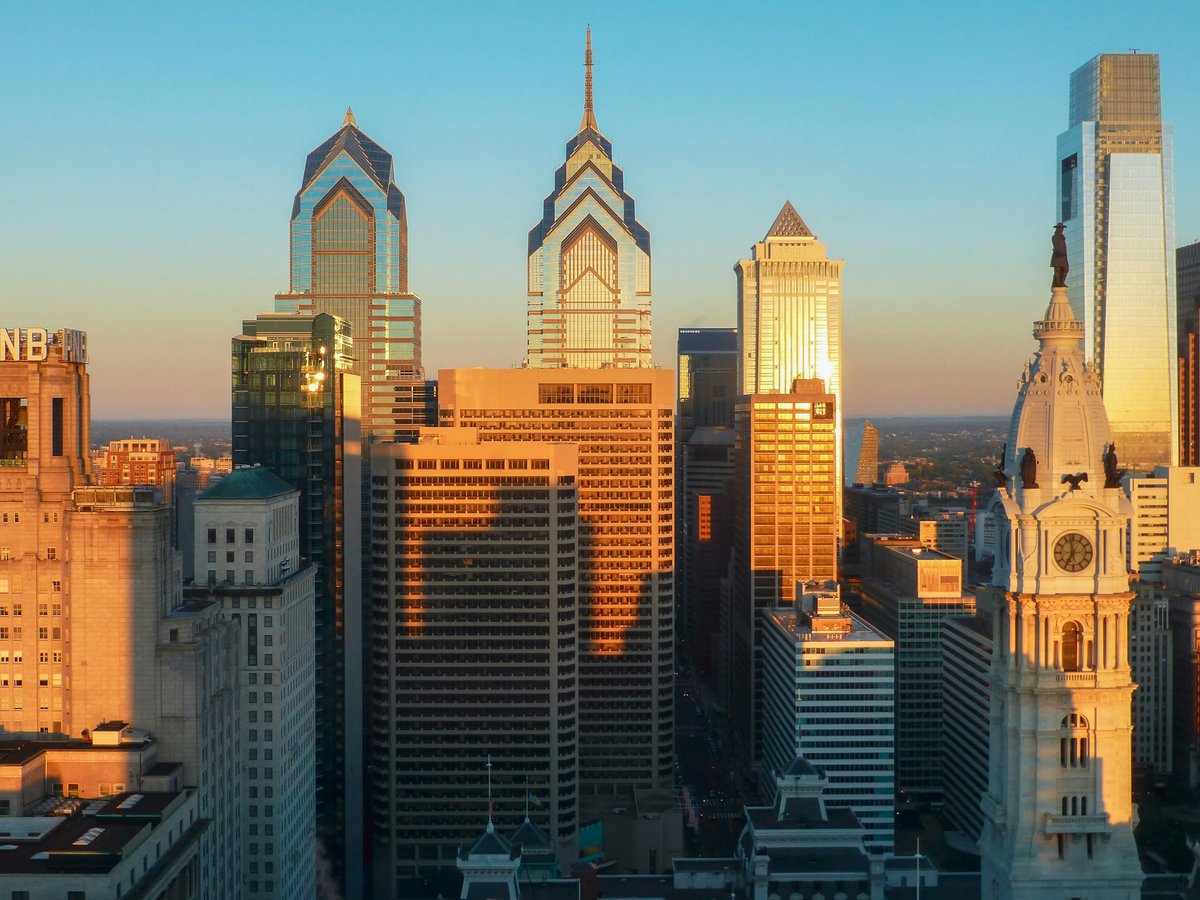
Philadelphia's grid plan dates to 1682, when William Penn laid out the original city between the Delaware and Schuylkill rivers. That core, now called Center City, still anchors everything. The numbered streets run north-south, starting at the Delaware and climbing westward. Broad Street cuts the city in half vertically. From Center City, neighborhoods fan out in every direction, each with its own architecture and food scene shaped by specific immigrant waves. The Italian Market on 9th Street has operated since 1884. Chinatown sits north of Market Street, three blocks from City Hall. West Philadelphia feels like a different city entirely, with its Victorian porches and university crowds. You can walk across Center City in about 40 minutes, and SEPTA's subway lines connect the major corridors, though most visitors find they stay within a surprisingly compact footprint. The Schuylkill River Trail links the western neighborhoods to the art museum area, and the Delaware River waterfront has been steadily filling in with parks and restaurants since the early 2010s.
Neighborhoods
-
Old City
Cobblestone streets and Federal-era brick rowhouses sit alongside converted loft galleries between Front Street and 4th Street. It's quieter than you'd expect during the day, with the hum of foot traffic picking up around 5 pm when the galleries on First Fridays draw crowds. The smell of fresh bread drifts out of Metropolitan Bakery on 3rd and Church. The architecture is almost absurdly well-preserved, low-rise 18th-century buildings pressed against each other like books on a shelf.
- Best for
- History-focused visitors and couples who want walkable restaurants and galleries without the noise of a nightlife district
- Key streets
- 2nd Street between Market and Chestnut for restaurants, 3rd Street for galleries, Elfreth's Alley (the oldest continuously inhabited residential street in the US, dating to 1702), and Race Street for easy access to the Ben Franklin Bridge pedestrian path
-
Rittenhouse Square
The 1683-era square anchors the most polished residential stretch in the city. Tall apartment buildings from the 1920s and 30s line the park, and the ground floors hold independent shops and white-tablecloth restaurants. On warm afternoons the park fills with office workers eating lunch on the benches, dogs off-leash on the south side, and someone usually playing guitar near the goat statue. The pace feels unhurried for a downtown neighborhood. Walnut Street carries the retail energy, while Pine and Spruce streets one and two blocks south are tree-lined and residential.
- Best for
- Visitors who want a walkable, upscale base with the best restaurant density in the city, particularly along 18th and 19th streets
- Key streets
- Walnut Street from Broad to 22nd for shopping and dining, 18th Street between Walnut and Spruce for smaller restaurants like Barbuzzo and Audrey Claire, and the 2000 block of Sansom Street, called Sansom Row, for a concentrated strip of bars
-
South Philadelphia
South Philly is row houses as far as you can see, the kind with marble stoops and aluminum awnings, satellite dishes bolted to brick facades. The Italian Market on 9th Street between Christian and Washington still operates as an open-air market, with produce spilling onto the sidewalk and the sharp tang of aged provolone hitting you before you reach the cheese shops. The neighborhood has shifted over decades. Mexican bakeries and Vietnamese sandwich shops now sit alongside the old Italian butchers. Passyunk Avenue runs diagonally through the grid and has become the city's strongest independent restaurant corridor, with spots like Bing Bing Dim Sum, Laurel, and Hardena.
- Best for
- Food-driven travelers willing to trade proximity to tourist sites for the densest and most interesting eating in the city
- Key streets
- East Passyunk Avenue from Broad Street to Tasker for restaurants, 9th Street between Christian and Washington for the Italian Market, and Moyamensing Avenue for the neighborhood's quieter residential feel
-
Fishtown
Ten years ago Fishtown was still working-class row homes and corner bars with wood-paneled walls. It has changed fast. The 2,500-seat Fillmore Philadelphia opened on Delaware Avenue in 2015, and Frankford Avenue filled with coffee roasters, record shops, and restaurants. The old and new coexist in a way that feels slightly tense. You'll see a 1940s taproom with $3 Lager next to a $16 cocktail bar. The architecture is dense Philadelphia rowhouse stock, two and three stories, with newer construction squeezed onto former lots. It's loud on weekend nights along Frankford Avenue.
- Best for
- Travelers in their 20s and 30s who want nightlife, live music at venues like Johnny Brenda's, and a walkable bar scene
- Key streets
- Frankford Avenue from Girard to York for the main commercial strip, Girard Avenue for the El train and La Colombe coffee, and Front Street for quieter residential blocks
-
University City
West of the Schuylkill, the University of Pennsylvania campus and Drexel University occupy most of the real estate between 30th and 43rd streets. The neighborhood has a distinctly campus-town pace during the academic year. Penn's campus is leafy, Gothic, and well-maintained. The surrounding blocks on Baltimore Avenue and further west into Cedar Park shift to Victorian twins and large porches with a more diverse, residential feel. Ethiopian restaurants cluster along Baltimore Avenue between 43rd and 50th, including Abyssinia at 229 S 45th Street.
- Best for
- Budget-conscious visitors, researchers visiting Penn or CHOP, and anyone who wants Ethiopian food or a quieter residential atmosphere
- Key streets
- Baltimore Avenue west of 43rd for Ethiopian and Eritrean restaurants, 40th Street between Walnut and Market for campus-adjacent cafes and shops, and Spruce Street from 34th to 38th for Penn's historic campus walk
-
Northern Liberties
Northern Liberties sits between Fishtown to the north and Old City to the south, centered on 2nd and 3rd streets above Spring Garden. It was one of the first neighborhoods to turn over in the early 2000s, and it now feels more settled than Fishtown. The Piazza at Schmidt's, a large open plaza surrounded by apartment buildings, was built inside the old Schmidt's brewery complex around 2009. The neighborhood has a mix of new condo construction and older rowhouses, with a calmer nighttime energy than its neighbor to the north.
- Best for
- Visitors who want a central location with restaurant access but a slightly less hectic feel than Fishtown or Center City
- Key streets
- 2nd Street between Poplar and Germantown Avenue for bars and restaurants, North 3rd Street for coffee shops and boutiques, and Liberty Walk, the pedestrian path through the Piazza
-
Fairmount and the Art Museum Area
Fairmount sits on the hill behind the Philadelphia Museum of Art, and the neighborhood has the feel of a small town pressed against a major cultural institution. The residential blocks along Green Street and Wallace Street are lined with brownstones and brick rowhouses from the 1860s and 70s. Eastern State Penitentiary, the 1829-era prison turned museum, sits on Fairmount Avenue at 22nd. The Schuylkill River Trail runs along the base of the hill and fills with runners and cyclists by 6:30 am. Kelly Drive, named for the Olympic rower Jack Kelly Sr., curves along Boathouse Row, where 15 rowing clubs have operated since the mid-1800s.
- Best for
- Runners, museum visitors, and travelers who prefer a quiet residential base within a 15-minute walk of Center City
- Key streets
- Fairmount Avenue between 20th and 27th for restaurants and coffee, the 2200 block of Green Street for the neighborhood's best rowhouse architecture, and Kelly Drive for a 4-mile riverside run or bike ride to Manayunk
-
Chinatown
Philadelphia's Chinatown is compact, roughly 5 blocks between 9th and 11th streets north of Arch. The Friendship Gate at 10th and Arch, built in 1984, marks the entrance. It's loud, dense, and smells like roast duck and scallion pancakes by mid-morning. The neighborhood has been fighting development pressure for decades. The convention center cut into its western edge in the 1990s, and a proposed arena at 10th and Market has been a source of tension since 2022. The restaurants are the draw. Sang Kee Peking Duck House has been at 238 N 9th Street since 1980. Nan Zhou Hand Drawn Noodle House on Race Street pulls noodles to order.
- Best for
- Food-focused visitors who want affordable meals and easy access to the convention center and Reading Terminal Market, which sits one block south at 12th and Arch
- Key streets
- 10th Street between Arch and Vine for the core restaurant strip, Race Street between 9th and 11th for noodle houses, and the 100 block of N 9th Street for Sang Kee and other longstanding spots
-
Manayunk
Manayunk sits 7 miles northwest of Center City along the Schuylkill, clinging to a steep hillside. Main Street runs parallel to the river and holds the neighborhood's bars, restaurants, and boutiques in a 6-block stretch. The side streets climb sharply uphill, and the rowhouses stacked on the slope give the area a vaguely San Francisco quality. The old textile mills along the canal towpath have been converted to apartments and climbing gyms. It's popular with young professionals and feels distinctly removed from the rest of Philadelphia. SEPTA's Manayunk/Norristown regional rail line connects to Center City in about 25 minutes.
- Best for
- Active travelers who want access to the towpath trail for cycling and running, with a self-contained restaurant and bar scene on Main Street
- Key streets
- Main Street between Levering and Shurs Lane for the commercial strip, the Manayunk Towpath along the canal for a flat 3-mile cycling or running trail, and Cresson Street for the hillside residential character
-
Graduate Hospital
Named for the now-demolished hospital at 19th and South, this neighborhood occupies the blocks south of South Street between Broad and the Schuylkill. It's residential and quiet, a grid of renovated rowhouses from the 1880s and 1890s with small front gardens. South Street's noise fades within a block. The restaurant scene on 15th Street between Ellsworth and Tasker has been growing steadily, with spots like Ambra and Her Place Supper Club. It feels like a neighborhood where people live, strollers on the sidewalk, neighbors talking on stoops.
- Best for
- Families and couples looking for a calm residential base with walking distance to Rittenhouse Square, about 10 minutes north, and South Street
- Key streets
- 15th Street between South and Tasker for newer restaurants, 22nd Street for coffee shops and boutiques, and Broad Street for the subway line north to Center City
FAQ
Where should I stay in Philadelphia for a first visit?
Rittenhouse Square puts you within walking distance of the most concentrated restaurant scene, and you can reach Old City and the historic sites on foot in about 25 minutes heading east on Walnut or Chestnut. It's the most practical base if you have 2 or 3 days. Hotels in the area tend to run $180 to $300 per night depending on season.
Is Philadelphia safe for walking around at night?
Center City, Rittenhouse, Old City, and Northern Liberties are generally comfortable for walking at night, with steady foot traffic into the late evening. Fishtown's Frankford Avenue stays busy on weekends until 1 or 2 am. Like most large US cities, Philadelphia has blocks that feel less comfortable after dark, particularly in areas away from commercial corridors. Stick to well-lit, populated streets and you'll likely be fine. The subway is functional but runs infrequently after 11 pm.
How do I get between neighborhoods without a car?
SEPTA's Broad Street Line runs north-south and the Market-Frankford Line runs east-west. Together they cover Center City, Old City, University City, Fishtown, and Northern Liberties. The Route 15 trolley runs along Girard Avenue. Rideshare tends to cost $8 to $15 between most neighborhoods. For Manayunk, the regional rail line from Suburban Station takes about 25 minutes. Biking is also practical, with Indego bike-share stations spread across Center City and surrounding areas at $4 per 30-minute ride.
Which neighborhood has the best food scene in Philadelphia?
It depends on what you're after. East Passyunk Avenue in South Philadelphia currently has the strongest independent restaurant corridor, with about 40 restaurants in a 10-block stretch. Rittenhouse has the most polished dining options. Chinatown wins on value, with full meals often under $12. Fishtown trends toward trendy openings. Reading Terminal Market at 12th and Arch is its own category, with over 80 vendors under one roof, open since 1893.
Where should I stay in Philadelphia on a budget?
University City has lower hotel rates than Center City, often $120 to $180 per night, and the 30th Street Station area connects quickly to downtown via the Market-Frankford Line or a 10-minute walk across the Walnut Street bridge. Hostels and budget options also cluster near the convention center in Chinatown. Airbnb rentals in South Philadelphia and Fishtown tend to run $80 to $140 per night and put you in more residential, food-rich neighborhoods.
How walkable is Philadelphia compared to other US cities?
Philadelphia is one of the most walkable cities in the US, comparable to Boston or parts of Manhattan. Center City measures roughly 2 miles east to west, and most of the tourist-relevant neighborhoods sit within a 3-mile radius of City Hall. The grid plan makes navigation straightforward. Numbered streets run north-south starting at the Delaware River, and named streets like Walnut, Chestnut, and Market run east-west. You can cover Old City, Chinatown, Rittenhouse, and the Art Museum area in a single day on foot if you're comfortable walking 5 to 7 miles.
Last verified by automated review (v1.7.2) on . What is automated review?