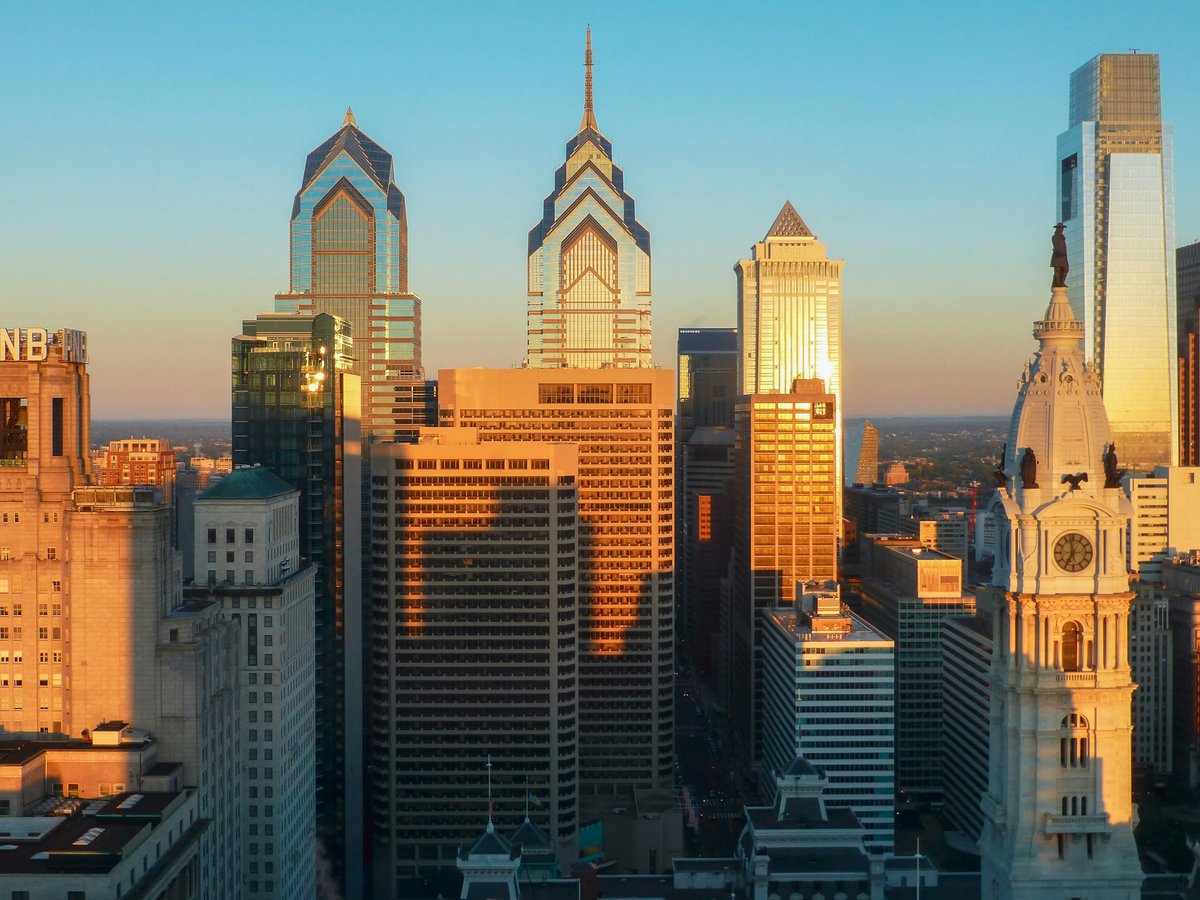
Philadelphia has a reputation for being a surprisingly affordable East Coast city, and that holds even at the zero-dollar price point. The National Park Service runs several free sites across Independence Mall, including the Liberty Bell Center and Independence Hall. The city's public art collection, with over 4,000 murals maintained by Mural Arts Philadelphia, might be the largest outdoor gallery in any American city. Fairmount Park stretches across more than 2,000 acres on both sides of the Schuylkill River, and the trail system along the river itself has grown into one of the better urban greenways in the country. Add to that a handful of always-free museums, weekly gallery nights in Old City, and a food-market culture where browsing costs nothing (eating is another story), and you have a city where a full day of serious sightseeing is genuinely possible on zero budget. Worth noting, Philadelphia's grid layout and relatively compact Center City make walking between most of these spots practical. You can cover Independence Mall to the Art Museum steps in about 40 minutes on foot along the Benjamin Franklin Parkway.
Free attractions
-
Liberty Bell Center
The bell sits in a glass-walled pavilion on Chestnut Street between 5th and 6th, with exhibits tracing its history from the Pennsylvania State House to the abolitionist movement. No ticket required, though you'll pass through a security screening. The line tends to move faster in the morning before 10 AM. Open daily year-round, currently 9 AM to 5 PM with extended summer hours.
Old CityHistoric site -
Independence Hall
The building where both the Declaration of Independence and the Constitution were debated and signed. Entry is free but requires a timed ticket from the National Park Service, which you can reserve online or pick up same-day at the Independence Visitor Center at 6th and Market. Tours run roughly every 15 to 20 minutes and last about 30 minutes. The Assembly Room still has the original rising-sun chair that George Washington sat in during the 1787 Constitutional Convention.
Old CityHistoric site -
Edgar Allan Poe National Historic Site
Poe lived at 532 North 7th Street from 1843 to 1844, the period when he wrote 'The Black Cat' and likely worked on parts of 'The Raven.' The National Park Service maintains the house and a small exhibit. It is always free. The brick rowhouse itself is spare and a little eerie, which feels appropriate. Open Friday through Sunday, with ranger-led tours available.
Spring GardenMuseum / Historic site -
Institute of Contemporary Art
The ICA at the University of Pennsylvania, on 36th and Sansom, has been free since it opened in 1963. The building itself, designed by Adèle Naudé Santos, is worth a look from the outside. Exhibitions rotate every few months and tend toward the conceptual and the provocative. Past shows have featured early career work by Andy Warhol and Laurie Anderson. A small but consistently interesting space.
University CityMuseum -
Rodin Museum
The Rodin Museum on the Benjamin Franklin Parkway houses over 150 bronzes and plasters by Auguste Rodin, the largest collection outside Paris. The building and garden were designed by Paul Philippe Cret in the 1920s. Admission operates on a pay-what-you-wish basis, so the effective cost is zero if you choose. The Gates of Hell and The Thinker are in the outdoor garden, which you can see without entering the building at all.
FairmountMuseum -
Elfreth's Alley
This narrow cobblestone lane between Front and 2nd Streets, north of Arch, has been continuously inhabited since the 1720s, making it one of the oldest residential streets in the United States. Walking the alley is free any time. The 32 rowhouses date from the early to mid-1700s. There is a small museum house at number 124 and 126 that charges admission, but the alley itself costs nothing and gives you a tangible sense of colonial-era Philadelphia's scale.
Old CityHistoric landmark -
Dream Garden Mosaic
Tiffany Studios created this 15-by-49-foot glass mosaic in 1916 based on a landscape painting by Maxfield Parrish. It sits in the lobby of the Curtis Center at 6th and Walnut Streets, and you can walk in during business hours to see it for free. The piece contains over 100,000 pieces of favrile glass. The light shifts across the surface depending on the time of day, so a morning visit looks noticeably different from an afternoon one.
Washington Square WestPublic art -
Philadelphia City Hall
The building at Broad and Market took 30 years to build, finishing in 1901. At 548 feet including the Alexander Milne Calder statue of William Penn on top, it was the tallest occupied building in the world until 1908. The interior courtyard is open to walk through during business hours, and the architectural detail on the exterior, with over 250 sculptures, is visible from the street. The observation deck beneath the Penn statue reopened in recent years and currently operates with a small fee for the elevator ride, so it no longer qualifies as free, but the building's ground-level public spaces still do.
Center CityLandmark -
Bartram's Garden
John Bartram established this botanical garden on the west bank of the Schuylkill in 1728, making it the oldest surviving botanical garden in North America. The 50-acre grounds are free and open daily. You'll find old-growth trees that Bartram planted himself, a tidal wetland, and a community farm. The historic stone house has separate tour hours and a small fee, but the gardens and river trail cost nothing. It tends to be quieter than Fairmount Park, especially on weekday mornings.
Southwest PhiladelphiaPark / Garden
Free activities
-
Mural Arts Philadelphia Self-Guided Walking Tour
Philadelphia has over 4,000 murals spread across the city, maintained by the Mural Arts program that started in 1984 as an anti-graffiti initiative. You can download a free map from muralarts.org and walk several curated routes. The South Broad Street corridor and the neighborhoods around Kensington and Fishtown have particularly dense concentrations. Pieces range from Keith Haring-influenced abstracts to photorealistic portraits spanning entire building facades. The Common Threads mural at Broad and Spring Garden is one of the larger installations at 7,800 square feet.
CitywideWalking tour -
Reading Terminal Market Browsing
The market at 12th and Arch has been operating since 1893 inside the former Reading Railroad train shed. Over 75 vendors sell produce, meat, cheese, baked goods, and prepared food. Walking the aisles is free, and the people-watching is part of the draw. Amish and Mennonite vendors from Lancaster County are present Wednesday through Saturday. The building's vaulted iron-and-glass ceiling is worth looking up at. Busiest on Saturday mornings. You'll smell the roast pork from DiNic's and the spices from the Middle Eastern stalls before you find them.
Center CityMarket -
Italian Market on 9th Street
The outdoor market along 9th Street between Wharton and Fitzwater has been running since the early 1900s, when Italian immigrants set up produce stands. It still operates as an open-air market most days, with vendors selling fruit, vegetables, cheese, and fresh pasta under metal awnings. Free to walk and browse. The character of the market has shifted over the decades, and you'll now find Mexican and Vietnamese shops alongside the Italian grocers. The block between Christian and Washington is the most active stretch.
South PhiladelphiaMarket -
Schuylkill River Trail
The paved trail runs along the Schuylkill River from Center City out past Manayunk, with about 30 miles of connected path currently complete. The stretch between the Art Museum and the Falls Bridge, roughly 3 miles one way, is the most popular section. You'll pass Boathouse Row, the rowing clubs' Victorian-era boathouses that light up at night with LED outlines. The trail gets crowded on weekend afternoons but stays manageable on weekday mornings. Good for walking, running, or cycling.
MultipleOutdoor activity -
Benjamin Franklin Bridge Pedestrian Walkway
The walkway on the south side of the Ben Franklin Bridge connects Camden, New Jersey, to Old City Philadelphia. The crossing is about 1.8 miles and takes roughly 35 minutes on foot. The views of the Philadelphia skyline and the Delaware River from mid-span are better than what you get from most paid observation decks. The pedestrian entrance on the Philadelphia side is at 5th and Race Streets. Open from 6 AM to roughly sunset, depending on the season. The wind picks up significantly in the middle, so bring a layer even on warm days.
Old CityWalking route -
South Street and Fabric Row Walk
South Street from Front to about 8th has been Philadelphia's countercultural commercial strip since the 1960s. Walking it costs nothing, and the storefront variety runs from vintage clothing to occult bookshops. The stretch of 4th Street below South, known as Fabric Row, still has a few of the old textile shops that gave it the name, though the block has increasingly shifted toward restaurants and boutiques. Philadelphia's Magic Gardens, the mosaic-covered outdoor installation by Isaiah Zagar at 1020 South Street, is visible from the sidewalk even though the interior requires a ticket.
South Street / Queen VillageWalking route
Free events
-
First Friday in Old City
First Friday of each month, eveningGalleries, studios, and some shops along 2nd and 3rd Streets between Market and Vine stay open late on the first Friday of each month. Over 40 venues typically participate, and most serve wine. The tradition has been running since the late 1990s and tends to peak in attendance during spring and fall. You'll notice the crowd thickens around 6 PM and thins after 9 PM. The work varies from established gallery shows to student exhibitions.
Old City, roughly 2nd and 3rd Streets between Market and Vine -
Wawa Welcome America Festival
Late June through July 4th, annuallyPhiladelphia's multi-day Fourth of July celebration runs for about two weeks in late June and early July, with a lineup of free events including outdoor concerts, movie screenings, and a block party on the Benjamin Franklin Parkway. The July 4th concert on the Parkway typically draws a major headliner and ends with fireworks over the Art Museum. The 2024 festival included free museum days at several institutions. Specific programming changes year to year, so check the schedule each June.
Benjamin Franklin Parkway and various locations -
Philadelphia Orchestra Free Summer Concerts
Select dates in summer, typically June through AugustThe Philadelphia Orchestra performs free outdoor concerts during the summer, typically at sites around the region. The Mann Center for the Performing Arts in Fairmount Park has historically hosted some of these. Check the orchestra's season calendar each spring, because locations and dates shift. The lawn seating at the Mann Center tends to be the free option, while pavilion seats are ticketed.
Mann Center for the Performing Arts and other venues -
Odunde Festival
Second Sunday in June, annuallyHeld annually on the second Sunday in June along 23rd Street in South Philadelphia, Odunde is one of the largest African American street festivals in the country. It started in 1975 and draws over 100,000 attendees for a day of music, dance, food vendors, and an opening ceremony at the Schuylkill River. Free to attend, though food and merchandise obviously cost money. The festival is named after a Yoruba New Year celebration.
23rd Street, South Philadelphia -
Spruce Street Harbor Park Seasonal Events
Late May through September, select evenings for eventsThe seasonal park along the Delaware River waterfront between Walnut and Spruce Streets opens from late spring through early fall. Hammocks, string lights, and floating gardens along the water are free to use. The park hosts occasional free live music and movie screenings on weekend evenings. Food and drink vendors are on-site but optional. The setup changes somewhat each season, but the hammocks and boardwalk have been consistent since 2014.
Delaware River waterfront at Spruce Street -
Free First Sundays at Select Museums
First Sunday of each monthSeveral Philadelphia museums offer free or pay-what-you-wish admission on the first Sunday of each month. The Philadelphia Museum of Art and the Barnes Foundation both participate. Programs and participating institutions can change year to year, so confirm before heading out. The Art Museum's first Sunday tends to get crowded by midday, so arriving when doors open is a practical move.
Philadelphia Museum of Art, Barnes Foundation, and others
Parks and Green Spaces Worth a Full Morning
Fairmount Park is the anchor. It covers more than 2,000 acres split between East and West Fairmount Park, and it holds everything from the Shofuso Japanese House and Garden (ticketed) to miles of wooded trails that see relatively few visitors. The Wissahickon Valley section, accessible from several trailheads including the one at Valley Green Road, feels surprisingly remote for a park inside city limits. Forbidden Drive, a 5.5-mile gravel path along the Wissahickon Creek, is flat enough for strollers and popular with trail runners. You might hear woodpeckers in the canopy above the creek, and the water runs fast enough after rain to drown out traffic noise entirely. FDR Park in South Philadelphia, near the sports stadiums, has a lake, walking trails, and open meadows. It underwent a major renovation plan starting around 2021, so portions of the park may still be in transition. Rittenhouse Square, at 18th and Walnut, is the most polished of Center City's five original squares that William Penn laid out in his 1682 grid. On warm afternoons, the benches fill up with a mix of office workers, dog walkers, and chess players. Washington Square, closer to Independence Mall, tends to be quieter and has the Tomb of the Unknown Revolutionary War Soldier at its center. Clark Park in West Philadelphia, at 43rd and Baltimore, hosts a Saturday farmers' market and has a bronze statue of Charles Dickens that is reportedly the only public Dickens statue in the world.
Philadelphia's Public Art Beyond the Murals
The murals get the attention, but Philadelphia has a deep bench of free public art scattered across the city. The LOVE sculpture by Robert Indiana sits in JFK Plaza at 15th and Arch. It was installed in 1976 for the Bicentennial and has been there since 1978 after a brief removal. A few blocks south, a matching AMOR sculpture by the same artist stands outside the Philadelphia Museum of Art on the Parkway. The Clothespin by Claes Oldenburg, a 45-foot-tall steel sculpture, is across from City Hall at 15th and Market. Along the Parkway itself, you'll find the Shakespeare Memorial near the Free Library and several large-scale works on the Oval, the traffic circle in front of the Art Museum. The steps of the Art Museum are free to climb. Yes, people still do the Rocky run. The statue of Rocky Balboa is at the base of the steps, to the right. In South Philadelphia, Isaiah Zagar's mosaic work covers building facades on several blocks around South Street, separate from the ticketed Magic Gardens interior. The Sculpture Garden at the Rodin Museum, mentioned above, is visible from the sidewalk on the Parkway and costs nothing to enter.
Neighborhoods Worth Walking for Free
Old City is the obvious starting point. The cluster of Independence Mall sites, Elfreth's Alley, Christ Church burial ground (you can peer through the fence to see Benjamin Franklin's grave without paying the small admission), and the gallery scene on 2nd and 3rd Streets make it dense with things to see on foot. Head south across Market to Society Hill, where the residential streets between 2nd and 5th are lined with Federal and Georgian rowhouses from the 1700s and 1800s. The quiet here is a contrast to the tourist foot traffic a few blocks north. Fishtown, north of Old City along Frankford Avenue, has shifted significantly since the mid-2000s. The corridor between Girard and Norris has coffee shops, breweries, and independent retail, and the street art on side streets is often worth a detour. University City in West Philadelphia puts you near the ICA, Clark Park, and the University of Pennsylvania's campus, which has some handsome Gothic Revival buildings and a free archaeology museum, the Penn Museum (though general admission is ticketed, the outdoor sculpture garden is free). Manayunk, out along the Schuylkill about 20 minutes by regional rail from Center City, has a towpath trail along the old canal that connects to the Schuylkill River Trail and a Main Street with enough shop windows to fill an hour of browsing.
FAQ
Is the Liberty Bell really free, or do I need a ticket?
The Liberty Bell Center is completely free. No ticket, no reservation. You walk through a security checkpoint, similar to an airport screening, and then enter the exhibit hall. During peak summer months, the line for security can stretch down the block, but it moves steadily. Arriving before 10 AM or after 3 PM helps. The center is on Chestnut Street between 5th and 6th, directly across from Independence Hall.
Which Philadelphia museums are free every day, not on special days?
The Institute of Contemporary Art at the University of Pennsylvania is always free, every day it is open. The Rodin Museum on the Benjamin Franklin Parkway operates on a pay-what-you-wish basis, so you can enter for any amount including zero. The Edgar Allan Poe National Historic Site at 532 North 7th Street is free and run by the National Park Service. The African American Museum in Philadelphia has had varying free-admission days, so check their current schedule directly. For the larger institutions like the Philadelphia Museum of Art and the Barnes Foundation, look for first Sunday of the month programs.
Are the Rocky Steps at the Philadelphia Museum of Art free to visit?
The steps themselves are free and open to the public at all times. The Rocky Balboa statue by A. Thomas Schomberg is at the base of the steps on the east side and is also free. You do not need a museum ticket to run the steps or take photos with the statue. The view from the top of the steps, looking down the Benjamin Franklin Parkway toward City Hall, is one of the better vantage points in the city. To enter the museum itself, you need a ticket, though first Sunday of the month is currently pay-what-you-wish.
What is the best free walking route in Philadelphia for a first-time visitor?
Start at Independence Hall at 5th and Chestnut, walk east to 2nd Street through Old City, detour north to Elfreth's Alley, then head south through Society Hill to South Street. Cross back west to Broad Street and walk north along the Avenue of the Arts to City Hall. From City Hall, follow the Benjamin Franklin Parkway northwest to the Art Museum. That route is roughly 4 miles and passes the Liberty Bell, colonial-era streets, the LOVE sculpture, the Rodin Museum garden, and the Art Museum steps. Budget around 3 hours if you stop to look at things, which you should.
Is Philadelphia safe for walking around on a zero budget?
Center City, Old City, Society Hill, Rittenhouse Square, University City, and the Benjamin Franklin Parkway corridor are all generally safe for walking during the day and into the evening. Like any large American city, some neighborhoods require more awareness, and conditions can change block by block. Stick to well-trafficked streets after dark. The Schuylkill River Trail and Wissahickon Valley trails are busy and feel safe during daylight hours but are not lit at night. SEPTA, the public transit system, can extend your range, with a single ride currently at $2.50 on the SEPTA Key card.
When is the best time of year to visit Philadelphia for free activities?
Late April through June and September through October tend to be the strongest months. The weather is comfortable for walking, the Odunde Festival falls in June, First Fridays draw larger crowds in spring and fall, and Spruce Street Harbor Park opens in late May. Summer can be hot and humid, with July temperatures regularly hitting 90°F, but the Wawa Welcome America festival around the 4th of July packs the calendar with free events. Winter is lean for outdoor activities, though First Fridays continue year-round and the museums' free days still apply. The cherry blossoms at Shofuso in Fairmount Park typically bloom in early to mid-April.
Last verified by automated review (v1.7.2) on . What is automated review?