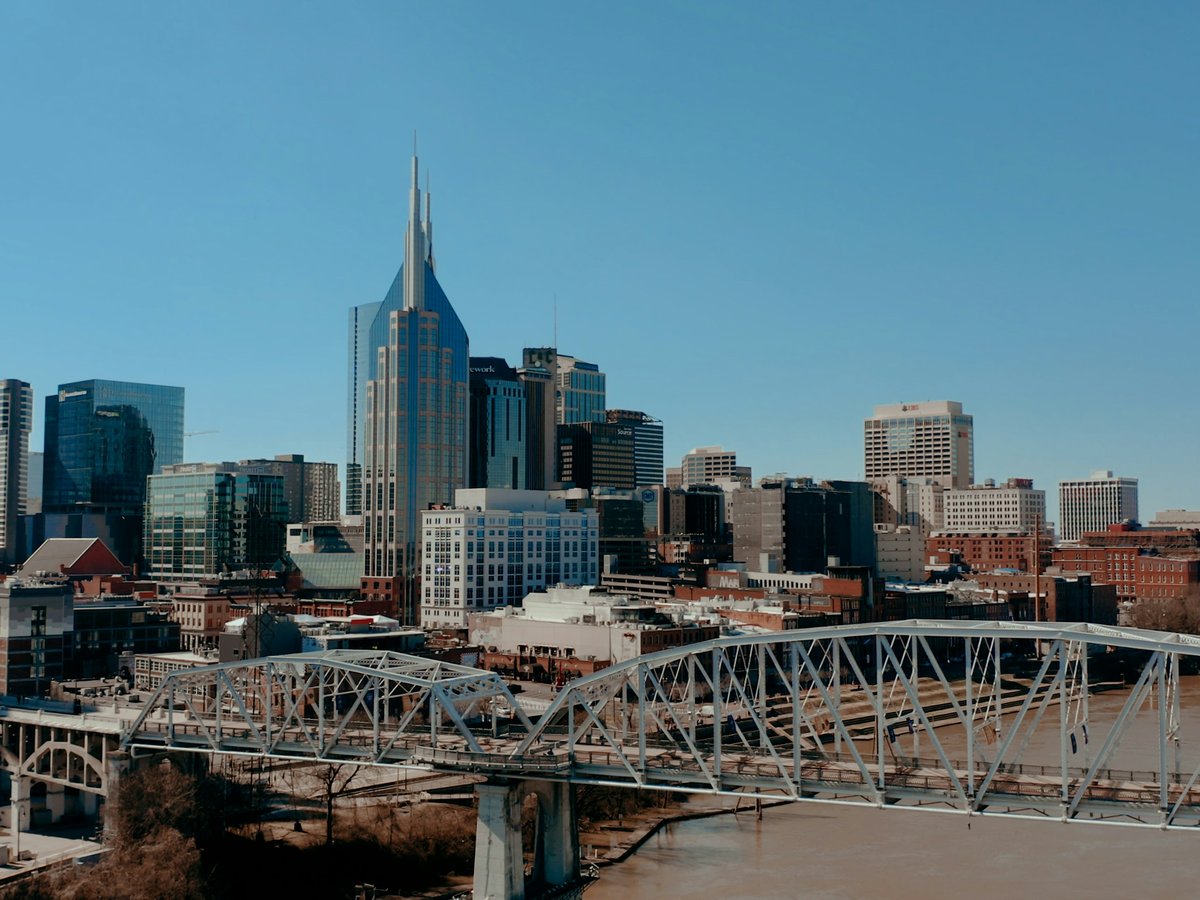
Nashville has a reputation as a town that runs on music, and that music still pours out of open doors along Lower Broadway for free. Most honky-tonks between 2nd and 5th Avenues have operated without cover charges since the 1960s. On any given Saturday night, you might hear 40 or 50 live bands within a 3-block stretch without paying a cent. Beyond the music, the city holds one of the stronger free-museum lineups in the Southeast. The Tennessee State Museum charges nothing. Centennial Park's 132 acres sit 2 miles west of downtown. The Cumberland River greenway system stretches over 20 miles. Nashville tends to get pigeonholed as a bachelorette-party destination, but the city rewards slow, curious visitors who walk its neighborhoods and listen to what spills out of every open window.
Free attractions
-
Tennessee State Museum
Permanent collection spanning 13,000 years of Tennessee history, from pre-Columbian artifacts through the Civil Rights era. The museum moved to its current 137,000-square-foot building on the Bicentennial Capitol Mall in 2018. Always free, no ticket needed. The exhibitions on Civil War-era Tennessee and the Reconstruction period are particularly strong. Worth noting, the temporary exhibition galleries are also free, which is unusual for a museum of this caliber.
Bicentennial Capitol MallMuseum -
Tennessee State Capitol
Completed in 1859, the Capitol sits on a hill overlooking downtown and offers free guided tours on weekdays. The architect, William Strickland, considered the building his masterpiece. He's buried in the northeast wall of the building, which is one of those facts that sounds made up but isn't. The grounds include the tombs of President James K. Polk and his wife, Sarah. From the upper terrace, you get one of the better views of the Nashville skyline.
Capitol HillHistoric Landmark -
Centennial Park
A 132-acre park about 2 miles west of Broadway that holds Nashville's full-scale replica of the Parthenon. The park itself is always free. The Parthenon exterior is free to view and photograph, though going inside to see the 42-foot Athena statue costs around $10 for adults. The park has a 1-mile walking loop, a sunken garden, a lake, and a dog park. On weekends between April and October, Musicians Corner hosts free concerts on the park's south lawn.
West EndPark -
Fort Negley
The largest inland stone fort built during the Civil War, constructed in 1862 largely by enslaved people and freedmen. The park and visitors center are free. The site sits on a hill south of downtown with clear views toward the city center. Interpretive trails wind through the remaining fortifications. The story told here is harder than the typical Nashville narrative. The exhibits on the contraband camps and forced labor don't soften the history.
South NashvilleHistoric Site / Museum -
Bicentennial Capitol Mall State Park
A 19-acre park that functions as an open-air museum of Tennessee history. The 200-foot granite map of the state is set into the ground. A 2,000-foot timeline wall runs the length of the park. The 95-bell carillon plays a Tennessee folk song every hour. The World War II Memorial and a pathway of county-by-county time capsules round out the site. Free at all times. The park sits directly below the Capitol and next to the Tennessee State Museum, so you can cover both in one morning.
GermantownState Park -
Percy Warner Park
Over 2,600 acres of forested hills about 9 miles southwest of downtown. The park has 12 miles of hiking trails, ranging from a paved 2.5-mile loop to steeper paths through old-growth forest. The main entrance off Belle Meade Boulevard leads to a limestone staircase built by the WPA in the 1930s. The Deep Well picnic area and the Steeplechase course, home to the Iroquois Steeplechase since 1941, are also within the park. Free and open dawn to dusk.
Belle MeadePark -
Shelby Bottoms Greenway
A 960-acre natural area along the Cumberland River with 5 miles of paved greenway and additional unpaved trails. The Shelby Bottoms Nature Center is free and has exhibits on the local ecosystem. The greenway connects to the larger Nashville greenway system via the Cumberland River Pedestrian Bridge, which links East Nashville to the downtown waterfront. Good birding here, especially in the wetland areas near the nature center.
East NashvilleGreenway / Nature Area -
Radnor Lake State Park
An 1,368-acre state natural area about 8 miles south of downtown. The lake and surrounding forest have 6 trails totaling about 7 miles. The park is a designated Class II Natural-Scientific State Natural Area, which means no bikes, no dogs, no swimming. It's one of the quieter spots close to Nashville. Bald eagles, great blue herons, and river otters have all been documented here. The park typically opens at 6 AM and closes at dark. Always free.
Oak HillState Park -
John Seigenthaler Pedestrian Bridge
A 3,150-foot pedestrian bridge spanning the Cumberland River between downtown and East Nashville. Originally built in 1909 for vehicle traffic, it was converted to pedestrian-only use in 1998. The bridge offers clear views of the downtown skyline, Nissan Stadium, and the river. It tends to be quieter during weekday mornings. At night the bridge is lit, and the skyline reflection on the water is one of Nashville's better free photo spots.
Downtown / East NashvilleLandmark / Viewpoint -
Nashville Public Library, Main Branch
The downtown library on Church Street, designed by Robert A.M. Stern, opened in 2001. Free to enter. The building itself is worth seeing for the architecture alone. The courtyard and reading rooms are open to the public. The Nashville Room on the second floor holds a notable collection of local history materials, photographs, and maps. Free Wi-Fi throughout. The library also hosts free lectures, film screenings, and author events on a regular basis.
DowntownLibrary / Cultural Center
Free activities
-
Lower Broadway Honky-Tonk Walk
A roughly 3-block stretch of Broadway between 2nd and 5th Avenues where live music plays from about 10 AM until well past midnight. Most venues, including Tootsie's Orchid Lounge, Robert's Western World, and The Stage, don't charge a cover. You'll hear country, rockabilly, blues, and the occasional Southern rock band. The quality varies, but on a good night at Robert's you might catch a set that rivals anything you'd pay $50 for elsewhere. Tips for the musicians are expected, mind you, but the entrance itself is free.
DowntownLive Music / Walking -
Nashville Farmers' Market
Open year-round at 900 Rosa L. Parks Boulevard, next to the Bicentennial Mall. The outdoor Farm Sheds operate daily with seasonal produce from Tennessee farms. The interior Market House has international food stalls, though the food costs money. Browsing the outdoor market on a Saturday morning is free and gives you a sense of what's actually growing in Middle Tennessee that week. The market has operated in some form since the 1800s.
GermantownMarket -
East Nashville Mural Walk
East Nashville, particularly along the Gallatin Avenue corridor and the Five Points area, has a concentration of street murals. The "I Believe in Nashville" mural became one of the city's most photographed spots, and a version appeared in East Nashville after the original on 12th Avenue South. The Basement East music venue's exterior mural was repainted after the March 2020 tornado that hit the neighborhood. You can walk from Five Points up Gallatin Avenue and see 15 to 20 murals in about an hour.
East NashvillePublic Art / Walking -
The Gulch Street Art Walk
The Gulch neighborhood, south of Broadway between 11th and 12th Avenues, has several well-known murals, including the Kelsey Montague "WhatLiftsYou" wings mural. The area also shows Nashville's post-2010 building boom in concentrated form. A walk through the Gulch takes 30 to 45 minutes. The neighborhood is compact enough to cover on foot without any trouble.
The GulchPublic Art / Walking -
Cumberland River Greenway Loop
Nashville's greenway system runs over 100 miles across the city, but the stretch along the Cumberland River between Shelby Bottoms and Riverfront Park is the most accessible segment. You can walk or run from Nissan Stadium through Cumberland Park, a free waterfront park with a climbing structure and splash pad for kids, and across the Seigenthaler Pedestrian Bridge, then loop back along the east bank. The full loop runs about 4 miles.
MultipleWalking / Cycling -
Printer's Alley
A narrow alley between 3rd and 4th Avenues, running between Church Street and Union Street. In the early 1900s, it was Nashville's printing district. By the 1940s it had become a nightlife strip. The alley still has a handful of clubs and bars today. The passage itself is free to walk through and has some historical character that Broadway has largely lost to renovation. The old neon signs and the narrow brick corridor give it a different feel from the wider tourist streets.
DowntownHistoric Walking
Free events
-
Musicians Corner
Saturdays, typically May through OctoberA free outdoor concert series on Centennial Park's south lawn. The lineup tends toward Americana, folk, and singer-songwriter acts, often featuring Nashville-based artists who play the Ryman or the Bluebird during the week. Food trucks line the park entrance, though the music itself costs nothing. Blankets and lawn chairs are the norm. The series has been running for over a decade and typically draws a few hundred to a couple thousand listeners per Saturday.
Centennial Park -
Live on the Green
Thursday evenings, typically August and SeptemberA free concert series held at Public Square Park in downtown Nashville. The acts tend to be larger names than Musicians Corner. Past lineups have included Moon Taxi, Judah & the Lion, and Drew Holcomb & the Neighbors. The event draws several thousand people on good-weather nights. Arrive early if you want a decent spot on the lawn, as the park fills up by 6 PM.
Public Square Park -
First Saturday Art Crawl
First Saturday of each month, 6 PM to 9 PMOn the first Saturday of each month, galleries in the downtown and Wedgewood-Houston neighborhoods open their doors for free evening viewings. The 5th Avenue of the Arts corridor downtown is the original hub, with galleries in the Arcade and surrounding buildings. Wedgewood-Houston, about 2 miles south, has become a second center with working artist studios and gallery spaces hosting openings. Most galleries serve wine. The crawl typically runs from 6 PM to 9 PM.
5th Avenue of the Arts / Wedgewood-Houston -
Nashville Shakespeare Festival
Late August through September (check annual schedule)A free full-length Shakespeare production held outdoors at Centennial Park, typically in late August or September. The festival has been running since 1988. Performances take place on a temporary stage near the Parthenon. Bring a blanket or a chair. The productions draw from Nashville's theater community, and the setting next to a full-scale Greek temple adds something you won't find at most outdoor Shakespeare festivals in the country.
Centennial Park -
Full Moon Pickin' Party
Monthly, Saturday nearest the full moon, typically April through OctoberA monthly bluegrass jam at the Warner Parks held on the Saturday closest to the full moon. The event features a main stage act followed by an open jam where anyone with an instrument can join in. It's been running since 1998 and draws a mix of serious pickers and casual listeners. The atmosphere tends to be more local than tourist. Bring a blanket and expect to hear banjo, mandolin, and fiddle well into the evening.
Warner Parks -
Tomato Art Fest
One Saturday in August (check annual schedule)An annual street festival in East Nashville's Five Points neighborhood, typically held on a Saturday in August. The festival started in 2004 and celebrates art, music, and tomatoes with a parade down Woodland Street, live music stages, and art installations. The festival is free to attend and tends to draw around 40,000 people over the course of the day. It's one of the more distinctly East Nashville events on the calendar.
Five Points, East Nashville
Free Live Music Beyond Broadway
Broadway gets the attention, but Nashville's free live music extends well past those 3 blocks. The Bluebird Cafe in Green Hills, made famous by the TV show "Nashville," doesn't charge a cover for its early shows, typically the 6 PM seatings, though reservations fill up fast and there's a minimum that'll run you $10 to $15 in drinks. Station Inn in the Gulch has been the city's main bluegrass venue since 1974. While evening shows typically have a cover, the occasional weeknight showcase has been free or donation-based. Over in East Nashville, several bars along Gallatin Avenue run free live music nights. The 5 Spot in East Nashville has held free Monday night dance parties for years. The thing about Nashville's music scene is that the line between "free" and "paid" shifts with the night of the week and the season. Check venue calendars the week you're visiting rather than relying on fixed schedules.
Free Views of the Nashville Skyline
Nashville's skyline is modest by major-city standards, but the Cumberland River gives it a clean backdrop. The Seigenthaler Pedestrian Bridge remains the most popular free viewpoint, especially around sunset when the AT&T Building, locally called the "Batman Building" for its twin spires, catches the last light. Love Circle, a small hilltop park on the west side near Vanderbilt University, offers a wide-angle view of downtown from an elevation of about 750 feet. The Capitol grounds on the north end of downtown provide an elevated perspective that most visitors miss entirely. From the east bank of the river, near the Korean Veterans Memorial Bridge, you get the reflected-skyline shot that appears on most Nashville postcards.
Getting Around Nashville for Free
Nashville's public transit is limited compared to cities like Chicago or Portland, but the downtown core is walkable if you're comfortable with distances of 1 to 2 miles between attractions. For getting between downtown, the Gulch, and Midtown, you're looking at about a 20-minute walk for each leg. The Cumberland River greenway system connects several major attractions on foot or by bike, though you'll need to rent or bring a bike for the longer stretches. Centennial Park is about a 30-minute walk from Broadway, or a short rideshare for around $8 to $10. Percy Warner Park and Radnor Lake require a car or rideshare to reach. To be fair, Nashville sprawls, and the free attractions are spread across a 15-mile radius. Plan to cluster your visits by neighborhood to keep walking distances manageable.
FAQ
Are Lower Broadway honky-tonks really free to enter?
Most Broadway honky-tonks, including Tootsie's Orchid Lounge, Robert's Western World, and The Stage, don't charge a cover. You can walk in, listen to a full set, and walk out. That said, tipping the band is the norm. Budget a few dollars for tips and at least one drink per venue, even if admission itself costs nothing.
Is the Parthenon in Centennial Park free?
The exterior of the Parthenon and the surrounding 132-acre park are always free. Going inside to see the 42-foot gilded Athena statue and the art gallery costs around $10 for adults and $8 for children and seniors. The park itself, including the walking paths, lake, and sunken garden, is free at all times.
What is the best free museum in Nashville?
The Tennessee State Museum on the Bicentennial Capitol Mall is the strongest free museum in Nashville and one of the better state history museums in the Southeast. It moved into a new 137,000-square-foot building in 2018 and covers Tennessee history from pre-Columbian peoples through the 20th century. Both permanent and temporary exhibitions are free. Fort Negley's visitors center is a smaller but worthwhile free option focused on the city's Civil War history.
When is the best time of year for free outdoor events in Nashville?
The free outdoor event season runs roughly from late April through October. Musicians Corner at Centennial Park starts in May, Live on the Green runs in August and September, and the Nashville Shakespeare Festival typically performs in late summer. Nashville summers are hot and humid, with July and August temperatures regularly reaching 90 to 95 degrees Fahrenheit. Late April through early June and September through mid-October tend to be more comfortable for spending a full day outside.
Can you spend a full day in Nashville without spending any money?
A full day is manageable if you plan around the free attractions that cluster near downtown. Start at the Bicentennial Capitol Mall and Tennessee State Museum in the morning, walk through the Farmers' Market, continue to the Capitol for the grounds and the view, then head down Broadway to listen to live music in the honky-tonks. Cross the Seigenthaler Pedestrian Bridge to East Nashville and back. That's a 5- to 6-hour walking day covering about 4 miles. You'll need to bring water and food, since the free options don't include meals.
Are there free guided tours available in Nashville?
The Tennessee State Capitol offers free guided tours on weekday mornings, typically starting at 9 AM. Fort Negley has self-guided interpretive trails with signage that functions as a thorough walking tour of the site's Civil War history. Several walking-tour companies offer tip-based tours of downtown and the Gulch where you pay what you think the tour was worth, though those aren't technically free. The Nashville Public Library's main branch on Church Street sometimes runs free local history events, though schedules vary by season.
Last verified by automated review (v1.7.2) on June 7, 2026. What is automated review?