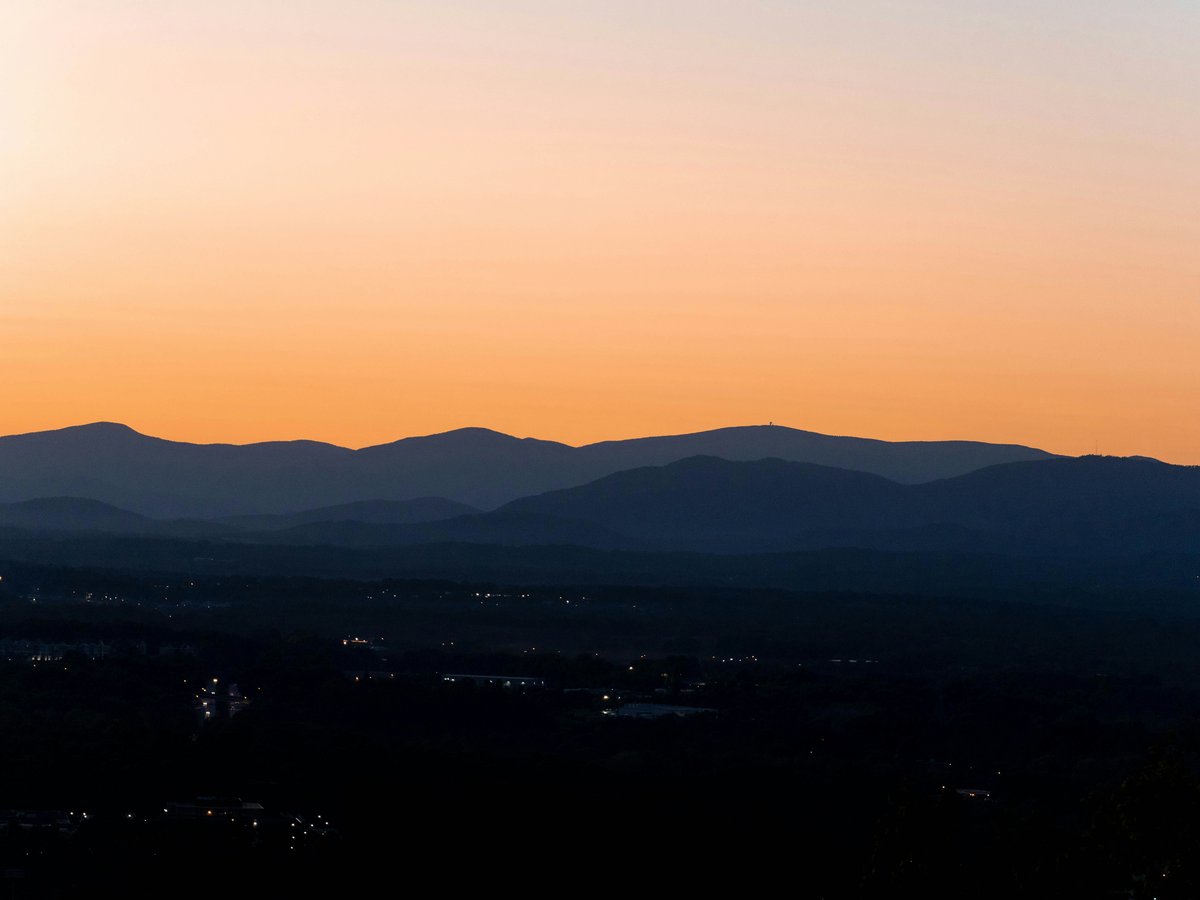
Lynchburg sits on a series of hills above the James River in central Virginia, roughly 180 miles southwest of Washington, D.C. The city's layout still follows its 18th-century logic. Seven hills rise from the riverbank, and the neighborhoods draped over them tend to have distinct personalities shaped by elevation, age, and proximity to the water. Downtown occupies the steepest terrain, dropping sharply toward the river basin. Rivermont stretches west along its namesake avenue toward Randolph College. Boonsboro sprawls further out where the hills flatten into suburban shopping corridors. Diamond Hill and Tinbridge Hill sit close to downtown but feel like separate small towns. The whole city is compact enough that you can drive from one end to the other in about 15 minutes, but the hills make walking between neighborhoods a genuine workout. Most visitors will orient themselves around two axes. Main Street runs east-west through downtown, and Rivermont Avenue extends southwest from there for roughly 3 miles. Everything else branches off those two spines.
Neighborhoods
-
Downtown
Lynchburg's downtown still has the bones of a 19th-century tobacco trading hub. The brick storefronts along Main Street between 8th and 12th Streets stand 3 and 4 stories tall, with iron facades and arched windows from the 1880s and 1890s. The Community Market at 12th and Main has operated since 1783, which likely makes it one of the oldest continuously running public markets in the country. The pace is slow on weekday mornings. You might hear church bells from Court Street Baptist echoing off the hillside. On Friday evenings in warmer months, foot traffic picks up around the restaurants on Commerce Street and lower Main.
- Best for
- First-time visitors, history-focused travelers, and anyone who wants walkable restaurants and coffee without needing a car
- Key streets
- Main Street between 8th and 12th Streets for shopping and food. Commerce Street for the newer restaurant row. Monument Terrace, the long stone staircase connecting Church Street to Main Street, is the city's civic gathering point. Jefferson Street drops down toward the river basin.
-
Rivermont
Rivermont Avenue runs about 3 miles from downtown toward Randolph College, and the houses along it tell the story of Lynchburg's old money. You'll find Queen Anne Victorians, Colonial Revivals, and a few Georgian brick mansions set back on deep lots with mature oaks and magnolias. The sidewalks are uneven in places, roots pushing through. It feels residential and quiet, with the occasional dog walker or jogger. Point of Honor, the Federal-period mansion at the avenue's downtown end, overlooks the river from a high bluff. The smell of boxwood hedges is constant in summer. Randolph College anchors the far end, and its campus opens onto the avenue with a row of academic buildings dating to the early 1900s.
- Best for
- Couples and architecture lovers who want a quiet residential base with a 10-minute drive to downtown. Runners will appreciate the Blackwater Creek Trail, accessible from Riverside Park near the avenue's midpoint.
- Key streets
- Rivermont Avenue itself is the whole show. The stretch between Langhorne Road and Bedford Avenue has the densest concentration of historic homes. Treasure Island Road leads down to Riverside Park and the creek trail.
-
Boonsboro
Boonsboro is where Lynchburg becomes suburban Virginia. Old Forest Road serves as the commercial spine, lined with strip malls, chain restaurants, and grocery stores. The residential streets behind them are quieter than you'd expect, with ranch houses and split-levels from the 1960s and 1970s on half-acre lots. It lacks the architectural interest of Rivermont or Downtown, but it has practical advantages. Most of the city's big-box retail is out here, and Centra Health's hospital campus sits at the eastern edge. The area around Boonsboro Road and Link Road has a cluster of locally owned restaurants that tend to be more affordable than downtown.
- Best for
- Families and budget-conscious travelers who want a car-accessible base with easy parking, chain hotel options, and proximity to groceries and everyday shopping
- Key streets
- Old Forest Road for errands and chain dining. Boonsboro Road between Linkhorne Drive and Link Road for the local restaurant cluster. Timberlake Road heads further south toward the newer commercial developments.
-
Diamond Hill
Diamond Hill is one of Lynchburg's historically Black neighborhoods, sitting on a steep hill just northeast of downtown. The streets are narrow, the lots small, and the houses are a mix of late-1800s workers' cottages and early-1900s bungalows. Some are meticulously kept, some are worn. The neighborhood has been here since before the Civil War, and its history is dense. The Anne Spencer House and Garden Museum on Pierce Street is a National Historic Landmark. Spencer was a Harlem Renaissance poet who tended this garden for decades, and the property still feels personal, not institutional. The hill gives views west over downtown and the river valley.
- Best for
- History travelers, especially those interested in African American heritage in the Upper South. Less suited for extended stays since lodging options are limited here.
- Key streets
- Pierce Street for the Anne Spencer House. Fifth Street historically served as the neighborhood's commercial corridor, though it has thinned considerably. The climb up from downtown on 12th Street gives you a feel for the topography.
-
Tinbridge Hill
Tinbridge Hill sits immediately south of downtown, separated from it by the railroad tracks and a steep grade change. The neighborhood is compact, maybe 6 or 7 blocks, with frame houses from the late 1800s packed tightly on sloping streets. It has a working-class history and still feels unhurried and residential, with front porches close to the sidewalk. The views north toward downtown's roofline are better than you'd guess. It tends to be quieter than Diamond Hill, with less foot traffic and no museums to draw visitors. The Lynchburg Foundry site at the bottom of the hill is a reminder that this was an industrial district well into the 20th century.
- Best for
- Visitors who prefer authentic residential neighborhoods and don't mind limited walkable dining. A good base for someone with a car who wants proximity to downtown without downtown prices.
- Key streets
- Cabell Street runs roughly through the center of the neighborhood. Polk Street and the streets connecting down to Concord Turnpike show the older architecture. The walk up to downtown takes about 10 minutes but the grade is steep.
-
College Hill and Lynchburg College Area
The University of Lynchburg, still called Lynchburg College by most locals, sits on a hilltop campus along Lakeside Drive. The surrounding neighborhood has the feel of a small college town grafted onto a residential district. Modest bungalows and duplexes from the 1940s and 1950s line the side streets, many rented by students. The pace picks up during the academic year, September through May, and goes very quiet in summer. Lakeside Drive itself is a pleasant walk, with the campus on one side and older homes on the other.
- Best for
- Parents visiting students, or budget travelers who don't mind a 10-minute drive to downtown. The neighborhood has a few casual food options within walking distance.
- Key streets
- Lakeside Drive for the campus edge. Simons Run leads to newer commercial development nearby. Perrymont Avenue connects back toward Boonsboro.
FAQ
Is Lynchburg walkable, or do I need a car?
Downtown is walkable for restaurants, the Community Market, and Monument Terrace, but Lynchburg's hills are steep and the neighborhoods spread across ridges. Getting from Rivermont to Boonsboro on foot would be a 45-minute hike with significant elevation change. A car is strongly recommended for anything beyond downtown exploring. Ride-hailing service exists but wait times can run 15 to 20 minutes outside peak hours.
Which neighborhood is best for a first visit to Lynchburg?
Downtown gives you the most to do on foot, the best restaurant density, and the easiest access to the city's main historic sites. The handful of boutique lodging options along Main Street and Church Street put you within walking distance of the Community Market, Monument Terrace, and the Academy Center of the Arts. Rivermont is a close second if you prefer a quieter residential setting and have a car.
Where should I eat if I only have one evening in Lynchburg?
The stretch of Commerce Street and lower Main Street downtown has the highest concentration of locally owned restaurants. The Shaker on Commerce Street tends to draw a loyal local crowd for dinner. Market at Main near the Community Market does upscale Southern cooking. For something more casual, Waterstone Pizza on Main Street serves wood-fired pies with local craft beer on tap. Reservations are a good idea on Friday and Saturday evenings, even at the casual spots.
How far is Lynchburg from the Blue Ridge Parkway?
The Blue Ridge Parkway's nearest access point at Otter Creek is roughly 20 miles east of downtown, about a 30-minute drive on Route 501. Peaks of Otter, one of the Parkway's most visited stops with a lake and lodge at mile marker 86, sits about 40 minutes from the city. Day trips to the Parkway are practical from any Lynchburg neighborhood.
Is Lynchburg safe for walking around at night?
Downtown around Main Street and Commerce Street feels safe in the evenings, with restaurant foot traffic keeping the sidewalks populated until 9 or 10 p.m. on weekends. Rivermont Avenue is quiet and residential after dark, well-lit near the college end. As with most mid-sized Southern cities, some blocks in less-trafficked neighborhoods feel isolated after dark, so standard awareness applies. Violent crime rates in Lynchburg have generally been below the national average for cities its size.
Last verified by automated review (v1.7.2) on . What is automated review?