Stay in Los Angeles in January
152 hotels in the Trip.com pool for Los Angeles, from US$39 a night.
Opens Trip.com on Fri 1 Jan to Sun 3 Jan 2027; change the dates there.
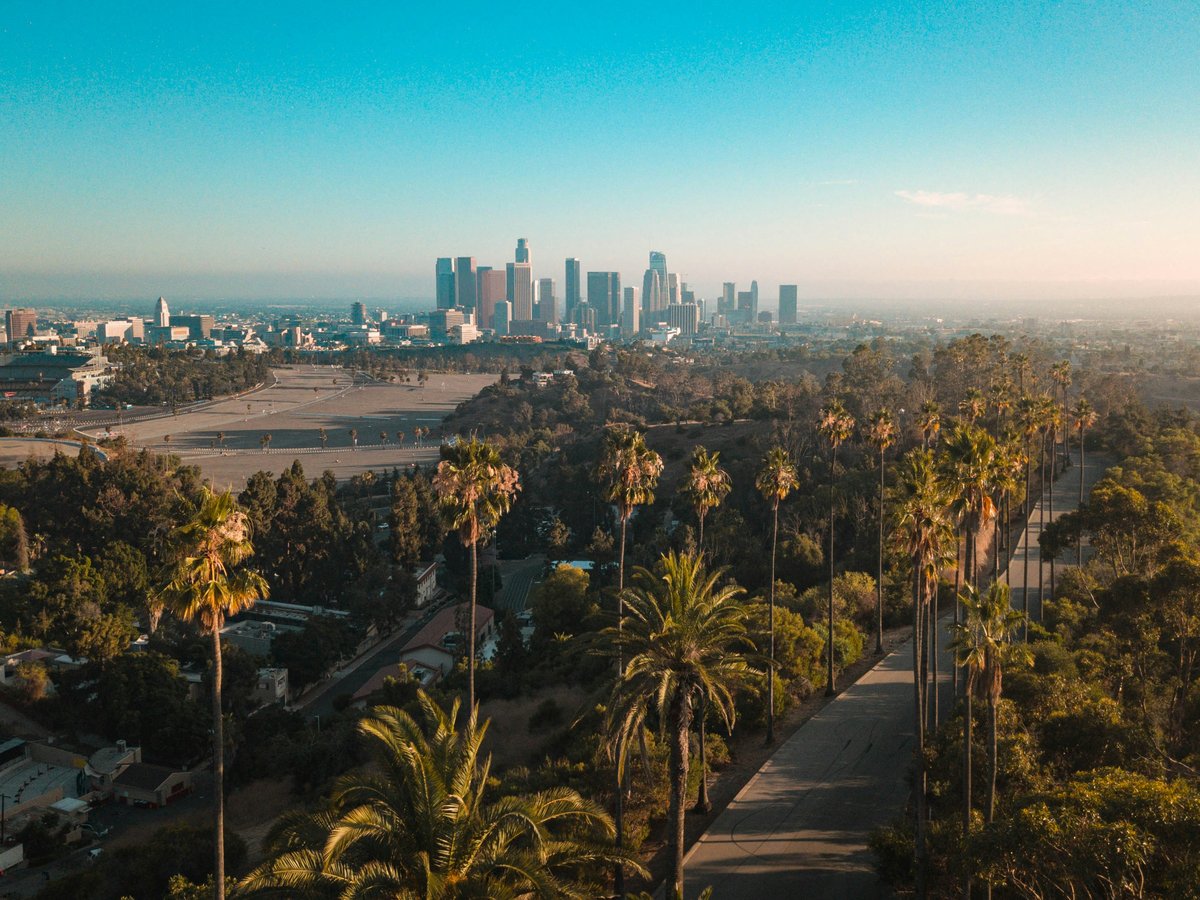
January in Los Angeles is the city's rainy season, and that single fact should shape how you plan the trip. Daytime highs sit around 18.6°C (65°F) with lows near 7.4°C (45°F), which feels genuinely cool by Southern California standards. The month typically brings about 85mm of rain across 5 or so days, often in multi-day clusters that can wash out outdoor plans for 2-3 consecutive days. Between those storms, the air over the LA Basin clears to a degree that summer visitors never experience. You might step outside in Silver Lake or Los Feliz on a post-rain morning and see snow-capped San Gabriel peaks in sharp detail from 40 miles away.
The month opens with the Rose Parade on January 1 in Pasadena, followed by the Rose Bowl Game at the 90,000-seat stadium that afternoon. After New Year's weekend, the city enters its quietest stretch. Hotel rates across Hollywood and Santa Monica typically drop 20-30% from December's holiday peak. Restaurants along Abbot Kinney Boulevard in Venice that needed reservations weeks out during the holidays might seat you same-day. Awards season picks up momentum through January, with SAG screenings and industry events running from Beverly Hills to the Downtown arts district.
When storms do arrive, LA's indoor side steps up. The Broad in Downtown offers free general admission to its contemporary collection, LACMA's galleries line Wilshire Boulevard, and the Getty Center in Brentwood commands hilltop views even through low clouds. Grand Central Market on Broadway has been feeding Angelenos since 1917. The smell of fresh tortillas from Villa Moreliana mixes with roasted coffee in its narrow aisles on a wet afternoon. Worth noting that LA remains primarily a car city, though Metro rail now connects Downtown to Hollywood, Pasadena, and Santa Monica. Budget 45-60 minutes for crosstown drives when it rains, roughly double what you'd expect on a dry day.
Why visit in January
- Wintertime temperatures that rarely dip below 7°C at night while cities like Chicago and New York sit well below freezing, making LA one of the warmest major US destinations for January travel.
- Hotel rates across Hollywood, Santa Monica, and Downtown drop 20-30% from December's holiday peak, and popular restaurants that needed weeks-ahead reservations in November often have same-day availability.
- Post-rain days deliver the clearest air quality of the year. The San Gabriel Mountains, Hollywood Sign, and even Catalina Island 40 miles offshore become visible from across the city.
- Awards season screenings, dineLA Restaurant Week, and the LA Art Show give the month a cultural density that the summer beach-tourism months don't offer.
- The Rose Parade on January 1 draws an estimated 700,000 spectators to Colorado Boulevard in Pasadena, one of America's longest-running New Year's traditions dating back to 1890.
Worth knowing
- January averages 85mm of rainfall across about 5 days, with storms often arriving in multi-day clusters that can eliminate 2-3 consecutive days of outdoor plans entirely.
- Beach weather is limited. The Pacific Ocean sits around 14°C (57°F), too cold for casual swimming, and the morning marine layer often keeps the coast overcast until noon.
- Evenings drop to around 7°C (45°F), which surprises visitors expecting year-round warmth. Outdoor dining, rooftop bars, and hillside hikes after sunset all need warm layers.
- Rain turns LA's freeway system into slow-moving gridlock. Rainy-day commutes on the 405 or the 10 can double normal drive times, and LA drivers are notoriously hesitant in wet conditions.
Best for
Think twice if
January is LA's cooler, wetter season. Expect mild but not warm days, genuinely cool nights, and periodic rain systems that arrive in multi-day clusters. The marine layer often keeps the coast overcast until late morning, but inland areas like Pasadena and the San Fernando Valley tend to clear earlier. Between storms, the washed-clean air creates the best visibility of the year across the LA Basin. Humidity sits around 61%, comfortable by most standards. Wind is generally light except during Santa Ana events, when dry gusts from the east can push temperatures up temporarily.
Seasonal caution
- Atmospheric river storms can deliver 50-100mm of rain in a single 24-hour period, causing localized flash flooding in low-lying areas and mudslides on hillsides near recent burn scars in Malibu, the Palisades, and Altadena. Check LA County Public Works alerts during heavy rain.
- Santa Ana wind events can bring dry, hot gusts of 80-130 km/h (50-80 mph) through mountain passes, creating extreme wildfire conditions even in midwinter. The January 2025 fires in Pacific Palisades and Altadena burned over 23,000 acres and demonstrated that winter does not eliminate fire risk in LA. Monitor AirNow.gov for air quality during wind events.
Year-round climate
Averages from the last 5 years.
| Month | Avg high (°C) | Avg low (°C) | Rainfall (mm) |
|---|---|---|---|
| Jan | 19 | 7 | 85 |
| Feb | 20 | 8 | 110 |
| Mar | 20 | 9 | 85 |
| Apr | 24 | 11 | 8 |
| May | 25 | 13 | 7 |
| Jun | 28 | 15 | 10 |
| Jul | 31 | 17 | 2 |
| Aug | 32 | 18 | 18 |
| Sep | 30 | 18 | 22 |
| Oct | 27 | 15 | 18 |
| Nov | 23 | 11 | 57 |
| Dec | 19 | 9 | 132 |
Holidays and festivals in January
Public holidays
- New Year's Day(New Year's Day)1 January 2027
- Martin Luther King, Jr. Day(Martin Luther King, Jr. Day)18 January 2027
Headline events
Tournament of Roses Parade (Rose Parade)
January 1 (moves to January 2 when New Year's Day falls on a Sunday)
One of America's oldest and most iconic parades. Elaborate floats covered entirely in flowers, seeds, and natural materials travel 5.5 miles along Colorado Boulevard in Pasadena, watched by an estimated 700,000 curbside spectators and millions on television. The Rose Bowl Game, a major college football event, follows that afternoon at the 90,000-seat Rose Bowl Stadium in Pasadena.
Best things to do in January
Gray whale watching from Long Beach or San Pedro
natureBetween late December and March, roughly 20,000 gray whales pass the Southern California coastline on their annual migration from Alaska to Baja California. Tour boats depart daily from Long Beach's Shoreline Village and the San Pedro waterfront. Trips typically run 2-3 hours and head toward the Palos Verdes Peninsula, where the whales pass close to shore. January and February tend to see the highest concentration of sightings.
Peak of the southbound gray whale migration, with the highest daily sighting rates of the year along the LA coastline.Booking tipWeekday morning departures tend to have smaller groups. Dress warmer than you think, the wind on the water drops the temperature by 5-8°C.
Hiking Griffith Park and Runyon Canyon
outdoorGriffith Park covers 4,310 acres above Los Feliz and offers trails from easy (the paved path to the Griffith Observatory) to strenuous (the 5.5-mile Mount Hollywood loop with 300m of elevation gain). Runyon Canyon in Hollywood is a shorter 3.2-mile loop that draws a steady crowd. January's cooler temperatures make midday hiking comfortable, and recent rain turns the normally brown hillsides bright green. On a clear post-storm day, you can see from the Hollywood Sign to the Pacific from the Observatory terrace.
Cooler temperatures around 18°C make midday hiking comfortable, and winter rain turns the brown hillsides visibly green for the only time of year.Visiting The Broad museum in Downtown
cultureThe Broad holds over 2,000 works of postwar and contemporary art, including pieces by Koons, Basquiat, and Warhol. General admission is free, though timed entry reservations fill up. The honeycomb-patterned exterior on Grand Avenue is worth a look on its own. On rainy January days, the gallery floors are noticeably less crowded than summer weekends.
Rainy days make indoor cultural options particularly appealing, and January's lower visitor numbers mean shorter waits for popular installations.Booking tipReserve free timed-entry tickets online at least 2 weeks ahead. Walk-up standby lines move faster on weekday afternoons.
Exploring the Getty Center
cultureThe Getty Center sits on a hilltop in Brentwood, reached by a tram from the parking structure. The galleries hold European paintings, photographs, and decorative arts, but the architecture and 110-acre grounds are the real draw. Robert Irwin's Central Garden changes with the seasons, and the travertine courtyards catch the low-angle January light in a way that summer's overhead sun doesn't replicate. On clear post-rain days, the views stretch from the Santa Monica Mountains to the Pacific.
January's low-angle winter light and post-rain clarity create the best conditions for the Getty's panoramic hilltop views and outdoor sculpture gardens.Booking tipParking requires a reservation. The tram ride up takes about 5 minutes and is free with your reservation.
dineLA Restaurant Week
foodLA's largest dining event runs for about two weeks in late January, with 300+ restaurants across the city offering prix-fixe lunch and dinner menus. Participating spots range from neighborhood bistros in Silver Lake to white-tablecloth restaurants in Beverly Hills. The prix-fixe format makes it easier to try places that might otherwise feel like a splurge.
dineLA typically falls in the last two weeks of January, offering the year's widest selection of prix-fixe dining deals.Booking tipThe most popular restaurants fill their dineLA reservations within the first few days of the announcement. Book as soon as the participant list goes live.
Browsing the LA Art Show at the Convention Center
cultureThe LA Art Show runs for 4-5 days in late January at the Los Angeles Convention Center in South Park. It's one of the largest art fairs on the West Coast, with over 100 galleries exhibiting contemporary, modern, and historic works. The opening night gala benefits St. Jude Children's Research Hospital and draws a mixed crowd of collectors and curious locals.
The show has been a fixture of late January in LA since 1996, coinciding with the start of gallery season across the city.Walking the Venice Canals and Abbot Kinney Boulevard
neighborhoodThe Venice Canal Historic District covers 3 blocks of narrow waterways lined with eclectic homes between Venice Boulevard and Washington Boulevard. The paths are quiet on January weekday mornings, and ducks and herons take over the canals in the cooler months. From there, it's a 10-minute walk north to Abbot Kinney Boulevard, where independent shops, cafes, and restaurants line a 1-mile stretch. On dry January days, the outdoor cafe seats along Abbot Kinney finally have open tables.
January's lower foot traffic means the normally crowded canal paths and Abbot Kinney shops are easier to enjoy at a relaxed pace.Touring a Hollywood studio
cultureWarner Bros. Studio in Burbank and Paramount Pictures on Melrose Avenue both run behind-the-scenes tours year-round. January is active production season, so you're more likely to see working sets and backlot activity than during the summer hiatus. Tours walk through soundstages, backlots, and prop warehouses. The Warner Bros. tour covers about 3 hours across 110 acres.
January falls during peak production season, increasing the chances of seeing active sets during studio lot tours.Booking tipBook at least a week ahead, especially for weekend slots. Weekday morning tours tend to see more production activity on the lots.
What to eat in January
In season: fruit
California navel and blood oranges
January sits at the peak of California's citrus season. Farmers markets carry over a dozen varieties from Ojai Valley and Riverside County groves, including Cara Cara navels, Satsuma mandarins, kumquats, and Meyer lemons. Blood oranges start appearing in mid-January and show up in cocktails and salads across the city, from Grand Central Market stalls to restaurant menus along Melrose Avenue.
On menus now
Pozole and birria
LA's Mexican restaurants and street vendors lean into hearty stews during the cooler months. The rich, chile-red broth of birria shows up at taquerias across Boyle Heights and East LA, while pozole appears on weekend menus in restaurants along Olvera Street and throughout the San Fernando Valley. The warmth of a bowl of birria on a rainy January afternoon in a steamy taqueria on Cesar Chavez Avenue is hard to beat.
In markets
Dungeness crab
The Pacific Dungeness crab season typically runs from November through January, and fishmongers at the Santa Monica Seafood Market and stalls in San Pedro's Ports O' Call carry fresh whole crabs through mid-month. You'll find Dungeness crab on specials at seafood restaurants in Redondo Beach and along the coast. The sweet, briny meat tends to be at its best in the cold-water months.
Winter farmers market greens
The Hollywood Farmers Market on Sundays and the Santa Monica Wednesday Market on Arizona Avenue carry peak-season kale, chard, broccoli rabe, and cauliflower from farms in Ventura and Oxnard. The cool-weather varieties have a sweetness that the heat-stressed summer crop can't match.
Regular events in January
dineLA Restaurant Week
Prix-fixe lunch and dinner menus at 300+ restaurants across the city, from casual eateries to high-end dining rooms. Runs for about two weeks.
Late January (dates vary by year)LA Art Show
One of the West Coast's largest art fairs, with 100+ galleries exhibiting contemporary, modern, and historic works at the LA Convention Center in South Park.
Late January, 4-5 daysMartin Luther King Jr. Day eventsFree
The annual Kingdom Day Parade runs along Martin Luther King Jr. Boulevard through South LA on the third Monday of January, drawing marching bands, floats, and community groups. Multiple free events and programs run across the city that weekend.
Third Monday of JanuaryGolden Globe Awards week
The Golden Globes ceremony typically falls in early-to-mid January at the Beverly Hilton in Beverly Hills. The surrounding week brings industry parties, screenings, and gifting suites across Beverly Hills and West Hollywood. You won't get into the ceremony itself, but the energy shifts the restaurant and nightlife scene noticeably.
Early to mid-JanuaryBest places this January
The Getty Center
museumFree-admission hilltop museum and garden complex in Brentwood with panoramic views from the Santa Monica Mountains to the Pacific. January's post-rain clarity makes the vista particularly sharp. Robert Irwin's Central Garden and the travertine architecture are worth the visit even if you skip the galleries.
BrentwoodGriffith Observatory
landmarkFree-admission observatory perched on the south slope of Mount Hollywood at 346m elevation. January's clear air means the views from the terrace stretch across the entire LA Basin. The planetarium runs shows throughout the day. The walk up from the Greek Theatre parking area takes about 30 minutes.
Los FelizGrand Central Market
foodOperating since 1917 on Broadway in Downtown LA, this indoor food hall holds about 40 vendors. Warm bowls of ramen at Ramen Hood, thick-cut pastrami at Wexler's Deli, and fresh pupusas at Sarita's Pupuseria make it a strong rainy-day lunch destination. The market runs from 8 AM to 9 PM daily.
DowntownHuntington Library, Art Museum, and Botanical Gardens
gardenA 120-acre estate in San Marino with 16 themed gardens, a rare book library, and art galleries. The Chinese Garden (Liu Fang Yuan) covers 12 acres and is one of the largest Chinese-style gardens outside China. January is a good time for the camellia collection, which typically peaks between late December and February.
San MarinoSanta Monica Pier and Third Street Promenade
landmarkThe 1909 pier juts 488m into the Pacific and holds a small amusement park with a solar-powered Ferris wheel. January brings smaller crowds and shorter waits. The Third Street Promenade, a 3-block pedestrian shopping street, sits 2 blocks inland and has more to offer on a rainy day than the exposed pier.
Santa MonicaThe Broad
museumDowntown contemporary art museum on Grand Avenue holding 2,000+ postwar works. Free general admission with timed-entry reservations. The Yayoi Kusama Infinity Mirror Rooms draw the longest lines, but the Basquiat and Lichtenstein collections on the third floor tend to be less crowded. January weekdays offer the quietest gallery floors.
DowntownDescanso Gardens
gardenA 150-acre garden in La Cañada Flintridge, about 20 minutes north of Downtown. The camellia forest holds over 600 varieties and blooms from December through March. January typically catches peak bloom. The oak woodland trails feel especially lush after winter rain, with ferns and moss coating the forest floor.
La Cañada FlintridgeOriginal Farmers Market at The Grove
foodOperating at the corner of 3rd and Fairfax since 1934, the open-air market holds about 100 vendors and restaurants under its signature clock tower. It's a solid rainy-day option since many of the stalls are covered. The adjacent Grove shopping center connects via a trolley.
Fairfax
Your packing checklist
Tick items off as you pack. Your progress saves in this browser.
All packed — have a great trip.
Insider tips
The morning after a rain system passes is the best time to photograph the city. Head to the Griffith Observatory terrace or Kenneth Hahn State Recreation Area's overlook by 8 AM for views of snow-capped San Gabriel peaks over a clean skyline. These conditions might last only a day before the haze rebuilds.
The Santa Monica Wednesday Farmers Market on Arizona Avenue is where many LA restaurant chefs shop. It's less tourist-heavy than the Sunday Hollywood market and tends to have a wider citrus selection in January, including hard-to-find varieties like Pixie tangerines and Buddha's hand citron.
Metro rail can save serious time on rainy days when the freeways lock up. The B Line runs from North Hollywood through Hollywood to Downtown, and the E Line connects Downtown to Santa Monica. A single ride costs a flat fare regardless of distance, and a day pass covers unlimited rides.
dineLA Restaurant Week reservations at the most popular spots fill within 48 hours of the participant list going live. Follow @daborndotcom on Instagram for early announcements and the full restaurant list, which typically drops 1-2 weeks before the event starts.
If the Rose Parade on January 1 is your main draw, the best free viewing spots along Colorado Boulevard in Pasadena fill up the night before. Locals camp out on the sidewalk starting around 6 PM on December 31. The post-parade float viewing at Sierra Madre and Washington Boulevards is less hectic and lets you see the floats up close.
Weekday afternoons at LACMA and the Getty are noticeably quieter than weekends, even in low-season January. If you're planning a museum day around a rainstorm, Tuesday through Thursday gives you the most space.
Avoid these mistakes
- Packing only summer clothes. January nights in LA regularly hit 7°C, and the marine layer keeps the coast cool until noon. Visitors from warm climates are consistently surprised by how cold the evenings feel.
- Not having an indoor backup plan for rainy days. Multi-day storm systems can eliminate 2-3 consecutive outdoor days. Without a list of museums, markets, and covered attractions ready, those days feel wasted.
- Underestimating January drive times. Rain slows LA freeways dramatically, and a 30-minute drive on the 101 or 405 can stretch to 90 minutes during a storm. Build extra time into any reservation-dependent plans on rainy days.
- Booking a beachfront hotel expecting beach weather. The Pacific sits around 14°C in January, and many coastal mornings stay overcast until noon. Staying in Downtown, Hollywood, or Pasadena puts you closer to January's real attractions, the museums, restaurants, and trails.
- Assuming LA has Uber-everywhere convenience for getting around. Rideshare wait times during rain can reach 20-30 minutes in neighborhoods outside the core, and surge pricing kicks in fast. The Metro rail covers many key destinations and runs on schedule regardless of weather.
Practical tips for January
Book your first 2-3 days of activities as indoor-friendly (museums, studio tours, food markets) so a rain system at the start of your trip doesn't upend your plans. Check the National Weather Service's 7-day forecast for Los Angeles County before packing. January storms are usually visible in the forecast 3-5 days out, so you can shuffle your itinerary accordingly. Restaurants participating in dineLA Restaurant Week often release their prix-fixe menus online a few days before the event. Review menus before booking to make sure the fixed menu appeals to you. For hiking after rain, give trails 24 hours to drain. Griffith Park and Runyon Canyon become slippery mud chutes during and immediately after storms, but firm up quickly in the dry air. The Metro day pass is worth it if you're hitting 3+ destinations along the rail lines, especially on rainy days when parking and traffic both become headaches.
FAQ
Is January a good time to visit Los Angeles?
January is a solid time if you're comfortable with some rain risk. You'll get lower hotel rates (typically 20-30% below December), smaller crowds at major attractions, and the clearest air of the year between storms. The tradeoff is that 2-3 days of your trip might be rainy. If you have indoor backup plans ready, the value and quieter city make up for the weather uncertainty.
How cold does Los Angeles get in January?
Daytime highs average around 18.6°C (65°F), which is comfortable in a light jacket. Nights drop to about 7.4°C (45°F), cold enough that you'll want a warm layer for evening dining or early morning activities. The coast tends to stay a few degrees warmer at night than inland valleys like Pasadena or Burbank, where frost is possible on the coldest mornings.
Can you swim at the beach in LA in January?
Not comfortably. The Pacific Ocean temperature sits around 14°C (57°F) in January, which is genuinely cold for swimming without a wetsuit. Surfers in full wetsuits are out year-round, and you'll see people walking the sand and watching sunsets, but casual beach swimming is off the table until water temperatures climb above 18°C in July.
Does it rain a lot in Los Angeles in January?
January averages about 85mm of rain, but it doesn't rain constantly. Storms tend to arrive in clusters of 2-3 wet days separated by stretches of clear, dry weather. You might get 5 rainy days in the month, sometimes less, sometimes more during an active El Niño year. The clear days between storms are genuinely spectacular, with washed-clean air and sharp mountain views.
What should I do in LA on a rainy day?
The Broad and LACMA in the Museum Row area are strong options, and both are on the same stretch of Wilshire Boulevard. Grand Central Market Downtown is a covered food hall operating since 1917 with about 40 vendors. The Getty Center's indoor galleries are extensive, and even the hilltop views through rain clouds have their own appeal. Studio tours at Warner Bros. in Burbank or Paramount on Melrose run rain or shine, and much of the tour is under cover.
Is the Rose Parade worth attending in person?
If you're in LA on January 1, it's a memorable experience. The 5.5-mile route along Colorado Boulevard in Pasadena draws about 700,000 spectators, and the detail on the flower-covered floats is hard to appreciate on television. That said, the best curbside spots require camping out the night before, and Pasadena hotel rates spike around New Year's. The post-parade float viewing area offers a less hectic way to see the floats up close.
Things to Do in Los Angeles in January
 Free cancellation
 Full-Day Iconic Sights of LA, Hollywood, Beverly Hills, Beaches and More
Day trip: 7.5 hours, free cancellation.
via Viator Free cancellation
 Hollywood, Beverly Hills & Celebrity Homes Tour by Open Air Bus
City tour: 2 hours, free cancellation.
via Viator Free cancellation
 Full-Day LA Tour: Santa Monica, Hollywood and Beverly Hills
Day trip: 7 hours, free cancellation.
via Viator Free cancellation
 Hollywood and Celebrity Homes Bus Tour
City tour: 2 hours, free cancellation.
via Viator Free cancellation
 Best of Los Angeles Guided City Tour with 4 Stops and Free Time
Day trip: 5.5 hours, free cancellation.
via Viator Free cancellation
 Hollywood Open Bus Tours
City tour: 2 hours, free cancellation.
via ViatorFind a flight to Los Angeles
Live fares to Los Angeles appear here once cookies are accepted.
Last verified by automated review (v1.7.2) on . What is automated review?