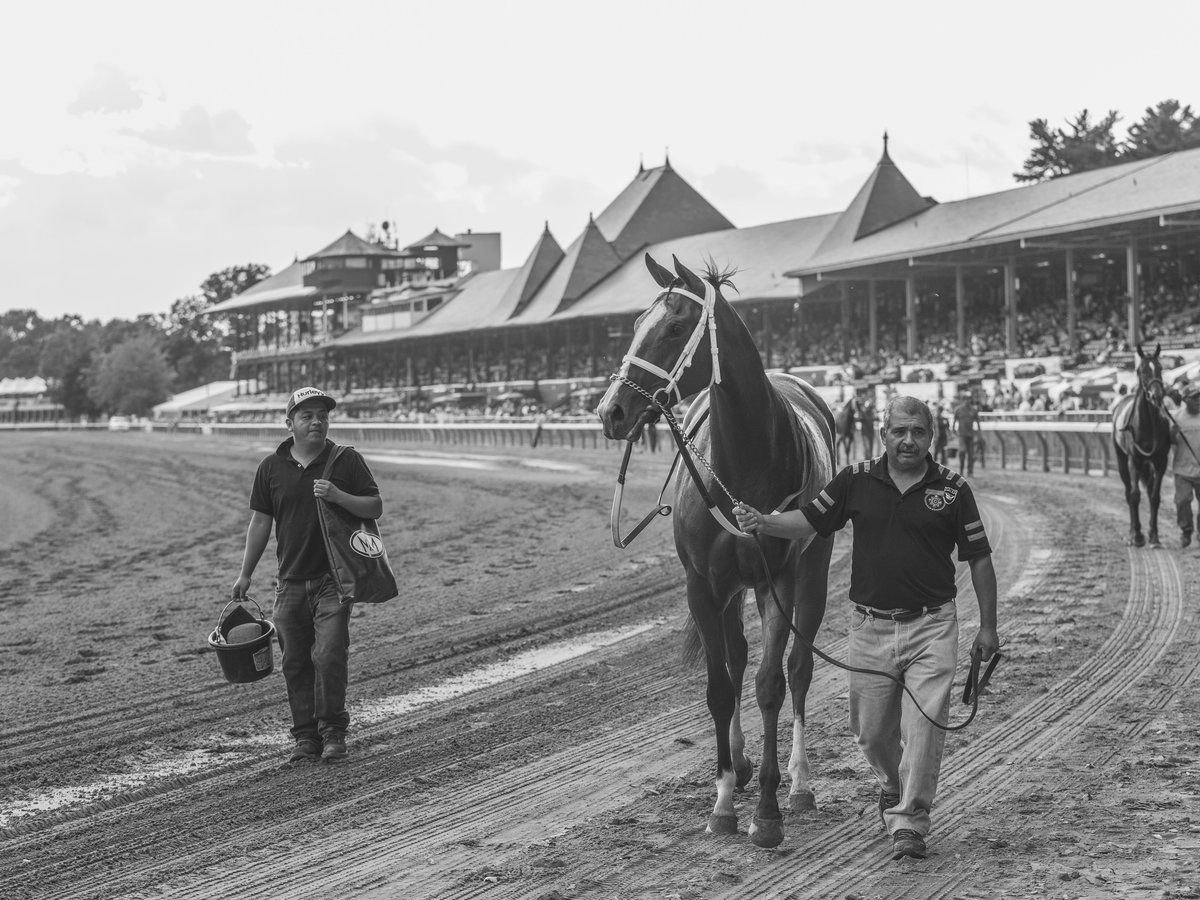
Saratoga Springs is a small city, roughly 4 miles end to end, built along a north-south spine. Broadway runs the length of it, and nearly everything visitors care about sits within a 15-minute walk of that single street. The city grew up around its mineral springs in the 1800s, and the layout still reflects that era. Congress Park anchors the southern end of the downtown commercial stretch, the Saratoga Race Course sits on the east side about a mile from Broadway, and the residential neighborhoods fan out in a loose grid on either side. During the 6-week racing meet from mid-July through Labor Day, the population roughly doubles, prices climb, and the whole east side hums with horse trailers and early-morning track traffic. The rest of the year, this is a quieter place. You might walk Broadway on a Tuesday in March and count more pigeons than people. That seasonal swing defines the city more than any single landmark.
Neighborhoods
-
Downtown Broadway
The 10-block commercial stretch of Broadway between the Adelphi Hotel and the northern bend past City Hall is where most of the foot traffic concentrates. Victorian-era brick storefronts, most 2 or 3 stories, line both sides. The sidewalks are wide enough that restaurants spill tables out in summer without blocking foot traffic. It gets loud on Friday and Saturday nights during racing season, when the bars along Caroline Street fill up and the crowd drifts north along Broadway past midnight. Off-season, it's quieter than you'd expect for a downtown.
- Best for
- First-time visitors, couples, anyone who wants to walk to dinner and bars without driving. The density of restaurants per block is unusual for a city this size.
- Key streets
- Broadway between Spring Street and Lake Avenue is the core. Caroline Street, running east off Broadway, is the nightlife block with Tin & Lint, 9 Maple Avenue (the jazz bar), and several others packed into 200 feet. Phila Street, one block west, has a few of the better restaurants including Sperry's, which has been there since 1932.
-
Congress Park and the Springs
The southern anchor of downtown. Congress Park is a 17-acre Victorian-era park designed by Frederick Law Olmsted's firm, with winding paths, a duck pond, and the Canfield Casino, which now houses the Saratoga History Museum. The Hathorn Spring pavilion sits at the park's northeast corner, dispensing free mineral water that smells strongly of sulfur. This part of town feels slower than Broadway proper. Older couples sit on benches near the Spirit of Life statue. The architecture around the park edges tends toward larger homes, many converted to B&Bs, with deep porches and mature trees lining Circular Street.
- Best for
- History-oriented visitors, anyone who wants a quieter base within walking distance of Broadway. The B&Bs along Circular Street and Union Avenue put you close to the park without the bar noise of Caroline Street.
- Key streets
- Circular Street curves around the eastern perimeter of the park and has several well-known inns. Union Avenue heads east from here toward the racetrack, lined with grand Victorian houses, many of which take boarders during the meet. Spring Street connects the park to Broadway's commercial core in about 3 blocks.
-
East Side and the Racetrack
The blocks east of Broadway between Union Avenue and Nelson Avenue are defined by the Saratoga Race Course, which opened in 1863 and is the oldest organized sporting venue in the country. During the meet, this neighborhood wakes up at 5:30 AM. You'll hear hooves on pavement as horses walk from the Oklahoma Training Track across Union Avenue. The smell of hay and manure drifts into the residential streets. The houses are modest, mostly wood-frame, and many homeowners rent rooms or entire houses during the season at 4 to 5 times the normal rate. The rest of the year, it's a quiet residential neighborhood where kids ride bikes in the street.
- Best for
- Horse racing fans, obviously. If you're coming for the meet, staying on the east side means you can walk to the track gates in 10 minutes. Families with kids who want to see horses up close will like the early-morning backstretch tours.
- Key streets
- Union Avenue is the grand approach to the track, lined with elms and large houses. Nelson Avenue runs along the track's north side. Wright Street and George Street are smaller residential streets where Airbnb and seasonal rentals concentrate. East Avenue connects to Saratoga Lake if you're driving.
-
Beekman Street Arts District
Beekman Street runs roughly east-west about 4 blocks north of Congress Park, and over the past 15 years it has picked up a cluster of galleries, studios, a few restaurants, and a community theater. It's still a work in progress. You'll find a pottery studio next to a barber shop next to an empty storefront. The architecture is humbler than Broadway, more working-class row buildings from the early 1900s. It feels like a neighborhood that's figuring itself out, which is part of the appeal. Saturday mornings during warmer months, the Saratoga Farmers' Market operates at High Rock Park, a short walk north.
- Best for
- Art-oriented travelers, people who prefer a quieter scene away from the tourist strip. The restaurants here tend to be newer and slightly more experimental than Broadway's established spots.
- Key streets
- Beekman Street itself between Broadway and Henry Street. Henry Street has a few studios and the Saratoga Arts building. High Rock Avenue runs north toward the farmers' market location and the old High Rock Spring pavilion.
-
West Side Residential
West of Broadway, the streets climb gently uphill toward Skidmore College. This is where much of Saratoga's year-round population lives. The houses range from small Victorians near Broadway to larger colonials and split-levels further west. It's a walking neighborhood. You'll see strollers, dog walkers, people heading to the YMCA on West Avenue. The noise from downtown fades within 2 blocks. During Skidmore's academic year (September through May), the western edge has a college-town feel, with students walking to campus along North Broadway.
- Best for
- Families, longer stays, visitors who want a residential feel with easy access to Broadway. Vacation rentals here tend to be full houses rather than single rooms, and they're noticeably cheaper than the east side during racing season.
- Key streets
- West Circular Street and Regent Street have some of the larger Victorian houses. Greenfield Avenue leads to neighborhoods with more mid-century homes. North Broadway past the Skidmore campus connects to Yaddo, the famous artists' retreat, though Yaddo's grounds are only partially open to visitors.
-
South Broadway
South of Congress Park, Broadway changes character. The commercial density drops off, and you enter a stretch of larger properties, some antique shops, and the approach to Saratoga Spa State Park. The buildings get further apart. The pace slows. The Spa State Park itself covers 2,300 acres and contains the Saratoga Performing Arts Center (SPAC), the Roosevelt Baths, a public pool, and several active mineral springs along the Geyser Creek trail. This area feels more like a small Hudson Valley town than a tourist district. In winter, cross-country skiers use the park trails.
- Best for
- Visitors focused on the springs, SPAC concerts, or outdoor activities. Families with young kids will find more open space here. The Gideon Putnam hotel inside the park is the only full-service option in this zone, and it operates year-round.
- Key streets
- South Broadway (Route 9) is the main road. Avenue of the Pines leads into Spa State Park and is one of the prettier drives in the area, with tall pines on both sides. Route 50 branches off toward Ballston Spa to the south.
FAQ
Where should I stay if I'm visiting during racing season in July and August?
The east side near the track puts you closest to the action, but expect to pay $300 to $500 per night for even modest Airbnbs during the meet. Downtown Broadway hotels like the Adelphi run $400 and up. For better value, look at the west side or South Broadway. You'll be a 10 to 15 minute drive from the track, but nightly rates drop by 30 to 40 percent. Book by April at the latest. Locals who rent their homes during the meet often list in February.
Is Saratoga Springs walkable, or do I need a car?
If you're staying on or near Broadway, you can walk to most restaurants, bars, and Congress Park without difficulty. The racetrack is about a mile east of Broadway, which is a manageable walk in good weather. Saratoga Spa State Park and SPAC are 2 miles south of downtown, and you'll likely want a car or rideshare to get there. Uber and Lyft operate in Saratoga but driver availability thins out after 11 PM, especially outside racing season. A car helps for day trips to Lake George, 25 miles north.
When is the best time to visit outside of racing season?
September and early October are arguably the best weeks. The racing crowds have left, restaurant reservations are easier, hotel prices drop, and the foliage along Broadway and in Spa State Park peaks in mid-October. The Saratoga Wine and Food Festival typically falls in late September. Winters are cold, often below 20 degrees Fahrenheit in January, and parts of downtown go quiet. Spring is unpredictable. May can still feel like winter some years.
What is the food scene like, and where should I eat?
Broadway has the highest concentration of restaurants, from Hattie's (Southern comfort food, a local institution since 1938 on Phila Street) to newer spots. Sperry's on Caroline Street is old-school American with white tablecloths and consistently good steaks. For breakfast, Country Corner Cafe on Ballston Avenue draws a line on weekends, but weekday mornings are calmer. The Indian and Thai options are limited compared to larger cities. During racing season, many restaurants add prix fixe menus and reservations fill days in advance.
Are the mineral springs worth visiting?
They're free and genuinely interesting if you approach them as geology rather than wellness. Each of the 21 public springs in the Saratoga area has a different mineral composition, and they taste noticeably different from each other. The High Rock Spring on High Rock Avenue was the first spring documented by European settlers in the 1760s. Congress Spring in Congress Park and the Hathorn Spring are the most accessible. Bring a reusable cup and expect flavors ranging from mildly salty to strongly sulfuric. The pamphlet from the visitor center maps all the active springs.
Last verified by automated review (v1.7.2) on . What is automated review?