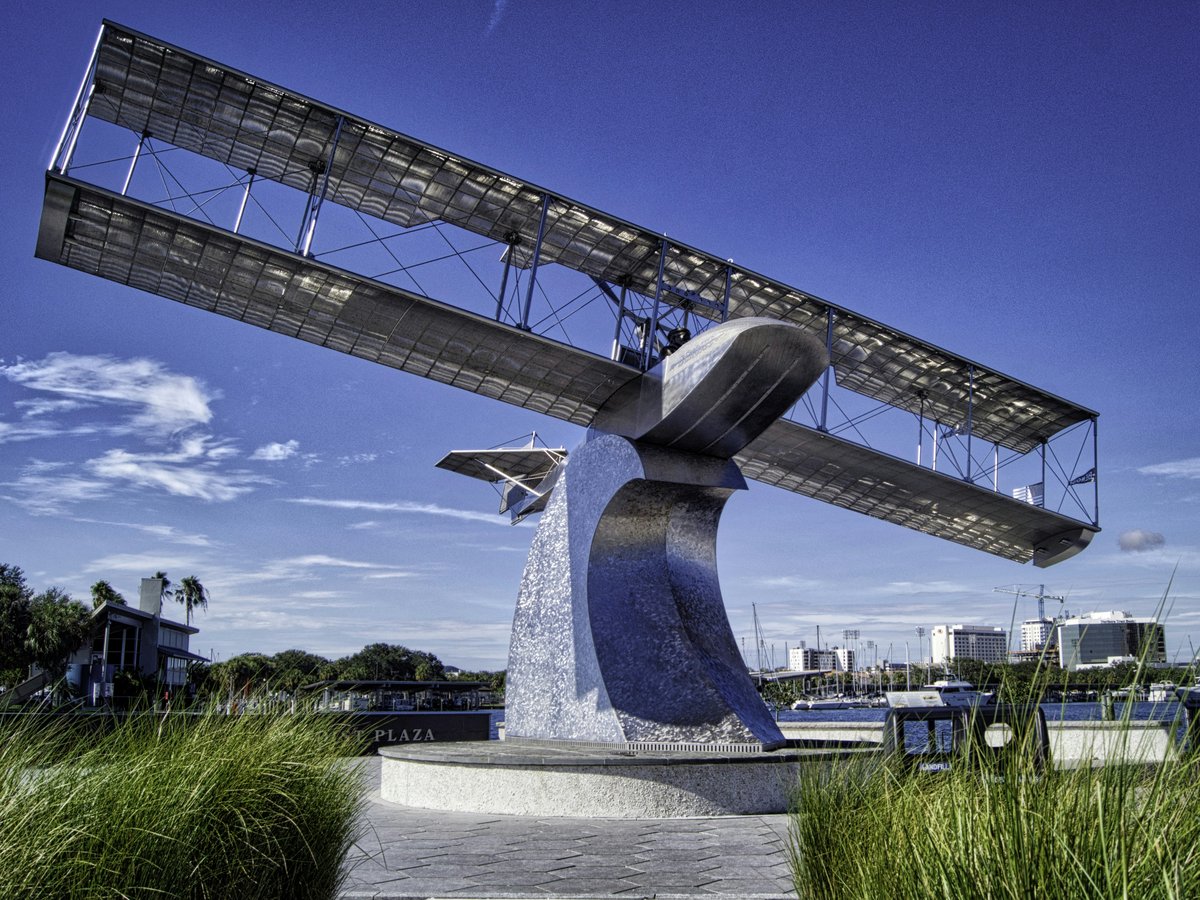
St. Petersburg sits on a peninsula between Tampa Bay to the east and Boca Ciega Bay to the west, with the Gulf of Mexico a short paddle beyond the barrier islands. The city held a Guinness record for 768 consecutive days of sunshine, which tells you something about the outdoor culture here. The terrain is flat, rarely rising above 40 feet, so this is not hiking country in the traditional sense. It is, however, one of the better paddling and cycling cities in Florida. Mangrove shorelines, tidal flats, and remnant coastal hammocks give the area more ecological texture than the condo skyline might suggest. Winter months from November through April tend to feel dry and mild, with highs around 75°F. Summers are hot, humid, and punctuated by afternoon thunderstorms that roll in off the Gulf around 3 or 4 PM with reliable predictability. Most locals shift outdoor activity to early morning during June through September. The water stays warm enough to swim year-round, rarely dropping below 65°F even in January.
Outdoor activities
-
Cycling the Fred Marquis Pinellas Trail
The Pinellas Trail runs about 47 miles from St. Petersburg north through Tarpon Springs, following a former CSX railroad corridor. The surface is paved asphalt the whole way, well-maintained and mostly flat. You can pick it up at several trailheads in St. Pete, including the one near Demens Landing downtown. The southern stretch passes through residential neighborhoods and some light industrial zones. North of Dunedin, the scenery opens up a bit with more tree canopy. Weekend mornings get busy with group riders, especially between Seminole and Clearwater. Bike rentals are available at several shops on Central Avenue.
- Difficulty
- Easy to moderate, depending on distance
- Duration
- 1 to 5 hours depending on how far you ride
- Best season
- October through April, when humidity drops and temperatures stay in the 60s to low 80s
-
Snorkeling at Egmont Key State Park
Egmont Key sits at the mouth of Tampa Bay, accessible only by boat or ferry from Fort De Soto Park. The water around the island tends to be clearer than mainland beaches, with visibility often reaching 10 to 15 feet on calm days. You'll find the ruins of Fort Dade, a Spanish-American War era brick fortification slowly being reclaimed by vegetation and shoreline erosion. The snorkeling is best off the northern tip where sea grass beds attract spotted eagle rays, horseshoe crabs, and the occasional manatee in cooler months. Ferry services typically run $25 to $30 round trip per adult. Mind you, there's no shade, no freshwater, and no facilities on the island beyond a few composting toilets. Bring everything you need.
- Difficulty
- Easy, though open-water boat crossing may be rough in wind
- Duration
- Half day including ferry transit
- Best season
- May through September for warmest water and best visibility, though summer storms can cancel ferry runs
-
Fishing Tampa Bay Flats
The shallow grass flats around St. Petersburg hold spotted seatrout, redfish, and snook in good numbers. Wading anglers work the flats off Weedon Island and around Coffeepot Bayou on incoming tides, typically in knee-deep water. You'll want a 7-weight fly rod or medium-light spinning gear with live shrimp or soft plastic jigs. A Florida saltwater fishing license costs $17 for residents, $47 for non-residents for a 7-day pass. The snook season closes from December through February and June through August, so check FWC regulations before you go. Early mornings on a falling tide have been the most productive pattern in my experience, especially around dock pilings and mangrove edges.
- Difficulty
- Moderate, requires some knowledge of tides and fish behavior
- Duration
- 3 to 6 hours
- Best season
- March through May and October through November for the best variety of species
-
Kiteboarding at Fort De Soto's North Beach
The shallow, sandy-bottomed water north of Fort De Soto Park draws kiteboarders when winter cold fronts push steady 15 to 25 knot winds through the area. The flat water and gradual depth make it a forgiving spot to learn compared to open Gulf beaches. Several schools in the area offer lessons starting around $200 for a 2 to 3 hour intro session. That said, summer winds tend to be lighter and less consistent, so the sport is largely a fall and winter pursuit here. The parking area near the North Beach boat ramp serves as the unofficial launch zone.
- Difficulty
- Moderate to difficult for beginners, significant learning curve
- Duration
- 2 to 4 hours per session
- Best season
- November through March, when cold fronts bring consistent wind
-
Road Cycling to Fort De Soto Park
The ride from downtown St. Petersburg south along Pinellas Bayway to Fort De Soto covers roughly 18 miles one way. The Bayway has a dedicated bike lane and the views across Boca Ciega Bay are wide open. Fort De Soto's internal loop adds about 7 miles of flat, shaded road through the park's five interconnected islands. You'll cross the toll plaza on the way in, though cyclists pass through free. The route is popular with local cycling clubs on Saturday mornings. Water and restrooms are available at the park's main beach area and the camp store.
- Difficulty
- Moderate, mostly flat but distance and sun exposure add up
- Duration
- 3 to 5 hours round trip at a recreational pace
- Best season
- October through April for comfortable temperatures
-
Birding at Boyd Hill Nature Preserve
Boyd Hill's 245 acres along Lake Maggiore hold a surprising concentration of habitats for a park inside city limits. Hardwood hammock, sand scrub, pine flatwoods, and a willow marsh all sit within a mile of each other. Great blue herons, roseate spoonbills, and bald eagles are regular residents. The park's raptor program houses non-releasable birds of prey, and guided bird walks run on weekend mornings. Admission is $3 for adults. The boardwalks through the marsh area are worth visiting at dawn, when wood storks and ibis roost in the cypress trees.
- Difficulty
- Easy, flat boardwalks and maintained trails
- Duration
- 1 to 3 hours
- Best season
- December through March, when migratory species are present and mosquito pressure drops
Day hikes
-
Boyd Hill Nature Preserve Trail System
The preserve holds about 6 miles of interconnected trails through pine flatwoods, scrubby flatwoods, sand scrub, hardwood hammock, willow marsh, and lake shore. The main loop covers roughly 3.5 miles. Surfaces alternate between packed sand, boardwalk, and mowed grass. Elevation change is negligible. You might see gopher tortoises, armadillos, and the occasional eastern diamondback rattlesnake in the scrub sections, so watch where you step. The willow marsh boardwalk floods periodically after heavy rain. Trail maps are available at the entrance station.
- Difficulty
- Easy, flat terrain on maintained paths
- Duration
- 1.5 to 3 hours for the full trail system
- Best season
- November through March, when it's cooler and drier with fewer mosquitoes
-
Weedon Island Preserve Boardwalk and Trails
The main boardwalk loop runs about 2 miles through dense mangrove forest above the tidal mud. A separate upland trail of about 1.5 miles winds through pine flatwoods and palm hammock. The observation tower at the end of the boardwalk climbs 45 feet and provides a wide view over Tampa Bay and the mangrove canopy. It's an easy walk, but the boardwalk sections can be slippery when wet, and there's no shade break on the tower climb. Fiddler crabs carpet the mud flats at low tide. Herons hunt from the boardwalk railings, seemingly unbothered by foot traffic.
- Difficulty
- Easy, boardwalk and packed sand paths with one tower climb
- Duration
- 1 to 2 hours
- Best season
- October through April for milder temperatures and active bird life
-
Fort De Soto Park Trail Loop
Fort De Soto Park covers 1,136 acres across five interconnected keys (islands) at the southern tip of Pinellas County, about 30 minutes south of downtown St. Pete. The paved multi-use trail runs roughly 7 miles through the park, passing mangrove edges, open beach, and the historic fort structure built in 1898 during the Spanish-American War. The fort's mortar batteries are open to walk through. A separate nature trail of about 1 mile loops through coastal scrub near the East Beach area. This is flat Florida walking, no elevation to speak of.
- Difficulty
- Easy, paved and flat throughout
- Duration
- 2 to 4 hours if combining the paved loop and nature trail
- Best season
- October through April, summer afternoons bring thunderstorms and intense heat
-
Brooker Creek Preserve Trails
Brooker Creek Preserve sits in the northern part of Pinellas County, about 40 minutes from downtown St. Petersburg. The preserve covers over 8,700 acres of pine flatwoods, cypress swamp, and freshwater marsh. The main hiking trail network offers roughly 5 miles of marked paths through habitat that feels genuinely wild for being inside a metro area of 3 million people. The trails are mostly packed earth and can flood after summer rains. You'll likely see deer, wild turkey, and red-shouldered hawks. The education center at the trailhead is free and has trail maps. Worth noting, the preserve limits daily visitors, so arrive before 10 AM on weekends.
- Difficulty
- Easy to moderate, flat but trail surfaces can be muddy or flooded after rain
- Duration
- 2 to 3 hours for the main loop
- Best season
- November through March, when water levels are lower and trails are drier
-
Honeymoon Island State Park Trails
Honeymoon Island sits off Dunedin, about 45 minutes north of downtown St. Pete. The Osprey Trail runs about 2.5 miles through virgin slash pine forest, one of the last remaining stands in Pinellas County. Some of those pines are estimated at over 100 years old. The trail is flat and sandy, winding through palmetto understory. In spring, the island's osprey nesting platforms are active and you can watch adults fishing in St. Joseph Sound. Park entry is $8 per vehicle. The beach on the Gulf side has decent shelling, particularly after winter storms push shells onto the north end.
- Difficulty
- Easy, flat sandy trail
- Duration
- 1 to 2 hours for the Osprey Trail, longer if combining with beach time
- Best season
- March through May for osprey nesting season, winter for cooler hiking
Water activities
-
Kayaking the Weedon Island Mangrove Tunnels
The paddling trails at Weedon Island wind through narrow mangrove tunnels where the canopy closes overhead and the water drops to inches at low tide. The marked trail runs about 4 miles round trip from the launch at the preserve's south end. Timing matters here. Paddle at mid to high incoming tide when the tunnels have enough water to float a kayak without scraping bottom. At dead low tide, you will get stuck. The tunnels open into wider tidal creeks where manatees sometimes feed in winter months. Mosquitoes can be fierce in the tunnels during summer. Several local outfitters rent kayaks for about $30 to $50 for a half day.
- Difficulty
- Easy to moderate, requires basic paddling skills and tide awareness
- Duration
- 2 to 3 hours
- Best season
- November through April for cooler weather and manageable mosquitoes
-
Paddleboarding on Boca Ciega Bay
The protected waters of Boca Ciega Bay on St. Pete's western side stay calmer than the open Gulf, making it a reliable spot for stand-up paddleboarding. Launch points at Clam Bayou Nature Preserve and along the Tierra Verde causeway give access to shallow grass flats where you'll see stingrays, mullet, and the occasional dolphin pod working through baitfish. Morning sessions before 10 AM tend to have the flattest water, before the sea breeze builds. Board rentals run about $25 to $40 per hour at shops along Gulf Boulevard in St. Pete Beach. The bay averages 3 to 6 feet deep in most areas, so you can step off and stand if you fall.
- Difficulty
- Easy in calm conditions, moderate when wind builds
- Duration
- 1 to 3 hours
- Best season
- Year-round, though summer mornings offer the warmest and calmest conditions
-
Swimming at Fort De Soto's North Beach
North Beach at Fort De Soto has been rated among the top beaches in the United States by TripAdvisor multiple years running, and the clear, shallow water explains why. The bottom is firm sand, the slope is gradual, and the water stays warm from April through November, typically 78°F to 86°F in peak summer. A sandbar about 100 yards offshore creates a natural wading pool effect. The beach faces west-northwest, so sunsets are direct and unobstructed. Lifeguards are on duty during peak season. The park charges no beach fee beyond the $5 per vehicle entrance.
- Difficulty
- Easy, gentle slope and calm water
- Duration
- As long as you like
- Best season
- April through October for the warmest water, though the beach is pleasant year-round
-
Kayaking to Shell Key Preserve
Shell Key is an undeveloped barrier island south of Pass-a-Grille, accessible only by boat or kayak. The paddle from the Tierra Verde boat ramp covers about 1.5 miles of open water across the pass, so this is not a beginner route. Currents at the pass can run strong during tide changes. Once on the island, you'll find nesting shorebird areas (roped off during spring and summer) and tidal pools on the bay side worth exploring. The Gulf-facing beach is quiet and often empty on weekdays. Bring everything, as there are no facilities on the island. The crossing is best attempted on a calm, incoming tide.
- Difficulty
- Moderate to difficult due to open-water crossing with tidal currents
- Duration
- 3 to 5 hours round trip including time on the island
- Best season
- October through May for calmer weather and smaller seas, avoid nesting closures March through August on parts of the island
-
Dolphin and Manatee Paddling at Coffeepot Bayou
Coffeepot Bayou is a shallow, sheltered inlet on the northeast side of St. Petersburg, surrounded by the Old Northeast neighborhood. The bayou connects to Tampa Bay through a narrow channel. Paddlers frequently spot bottlenose dolphins feeding in the bayou, and West Indian manatees move through from November to March when they seek warmer shallow water. The paddling is easy and flat, suitable for beginners. You can launch from a small public access point at the north end of the bayou. Keep 50 feet from manatees per federal guidelines. The houses along the shore have a certain old Florida charm, with docks, seawalls, and the occasional sailboat on a mooring.
- Difficulty
- Easy, protected flat water
- Duration
- 1 to 2 hours
- Best season
- November through March for manatee sightings, year-round for dolphins
Parks & gardens
-
Boyd Hill Nature Preserve
A 245-acre preserve on the western shore of Lake Maggiore, about 10 minutes south of downtown. The park holds 6 distinct ecological communities connected by roughly 6 miles of trails. It feels like genuine Florida scrub and hammock, not a manicured city park. The lake edge draws wading birds and the occasional alligator. Admission runs $3 for adults, $1.50 for kids ages 3 to 16.
Highlights: Lake Maggiore boardwalk, raptor aviary with resident bald eagle and red-tailed hawk, pioneer-era homestead exhibit, willow marsh overlook at sunrise
-
Sunken Gardens
One of the oldest roadside attractions in Florida, dating to 1903 when a plumber named George Turner Sr. drained a sinkhole lake and planted tropical plants in the exposed lakebed. The result sits about 10 feet below street level along 4th Street North. Over 50,000 tropical plants now fill the 4-acre space, including some of the oldest tropical plantings in the region. Admission is $12 for adults. The place gets warm in summer since the sunken layout traps humid air, so visit early.
Highlights: Japanese garden section, the original 1935 flamingo colony (still active with Chilean flamingos), cascading waterfall, butterfly garden, over 50,000 tropical plants in a below-grade sinkhole garden
-
Vinoy Park and North Shore Park
FreeThese two parks connect along the downtown waterfront on Tampa Bay, running from the Vinoy Renaissance hotel north to the swimming pool complex. Vinoy Park hosts weekend farmers markets and outdoor events. North Shore Park has a public Olympic-sized pool (heated in winter, $6 admission) plus a beach area that, to be fair, has more seagrass than sand in places. The waterfront promenade between them runs about 1.5 miles and looks east across the bay toward Apollo Beach and the Skyway Bridge.
Highlights: Tampa Bay waterfront promenade, North Shore Aquatic Complex with heated Olympic pool, weekend farmers market at Vinoy Park (Saturdays year-round), views of the Bob Graham Sunshine Skyway Bridge
-
Weedon Island Preserve
FreeA 3,190-acre preserve on the northeast edge of St. Petersburg, bordered by Tampa Bay and Riviera Bay. Mostly mangrove swamp and tidal flat, with upland areas of pine flatwoods and palm hammock. The cultural and natural history center at the entrance is free and worth 20 minutes for the archaeological exhibits on the Weedon Island people who lived here roughly 2,000 years ago. The preserve is quieter than Boyd Hill and feels more remote, though you're still within 15 minutes of downtown.
Highlights: 2-mile boardwalk loop through mangrove canopy, 45-foot observation tower overlooking Tampa Bay, free cultural center with pre-Columbian archaeological exhibits, excellent kayak launch site
-
Crescent Lake Park
FreeA neighborhood park in the Old Northeast area, built around Crescent Lake. It's where locals run, walk dogs, and play pickup soccer on the open field. The 0.75-mile loop around the lake is flat and paved, popular with joggers before work. Not the prettiest park in town, but it has a functional, lived-in quality. Old live oaks line parts of the path, and the Wednesday evening run club meets here.
Highlights: 0.75-mile paved loop around the lake, old-growth live oaks, community soccer fields, dog-friendly atmosphere, walking distance to restaurants on 4th Street North
-
Lassing Park
FreeA small waterfront park in the Old Southeast neighborhood on Tampa Bay. The park sits on a slight rise with open views east across the bay. It's quiet compared to the downtown waterfront parks, mostly used by neighborhood residents and kayakers launching from the small beach. The fishing pier extends into shallow grass flats where you might spot stingrays in the clear water during summer. Total chaos on July 4th, when the neighborhood packs in for fireworks. Peaceful the other 364 days.
Highlights: Fishing pier extending into Tampa Bay grass flats, kayak and paddleboard launch point, unobstructed sunrise views across Tampa Bay, shade pavilion and small playground
Practical tips
- Sun protection
- St. Petersburg averages 361 days of sunshine per year, and the subtropical UV index hits 10 or higher from April through September. Wear SPF 50 or higher, reapply every 90 minutes if sweating, and bring a wide-brim hat. Rash guards or UPF-rated shirts are worth it for paddling and water activities. Sunburn sneaks up faster on the water due to reflection. I've seen visitors lobster-red by noon after launching a kayak at 9 AM without reapplication.
- Hydration and heat
- Summer heat indices regularly exceed 100°F from June through September. Carry at least 1 liter of water per hour of activity during summer months. Freeze a second bottle the night before. Most parks have water fountains, but preserves like Shell Key and Egmont Key have none. Early symptoms of heat exhaustion include headache, nausea, and dizziness. Shift outdoor activity to before 10 AM or after 4 PM during summer.
- Afternoon thunderstorms
- From June through September, afternoon thunderstorms build almost daily between 2 PM and 5 PM. These are not gentle rain showers. They produce frequent lightning, and Florida leads the country in lightning deaths. If you're on the water, head to shore at the first sign of darkening clouds to the east or southeast. Weather radar apps like MyRadar are useful for tracking storm cells. Plan water activities for mornings and you'll rarely have problems.
- Mosquitoes and no-see-ums
- Mangrove areas like Weedon Island and the bayous can produce intense mosquito pressure, especially at dawn and dusk from May through October. DEET-based repellent (at least 25%) or picaridin works. Permethrin-treated clothing helps for longer hikes through scrub and marsh. No-see-ums (biting midges) are smaller and harder to notice until the welts appear. They're worst in still air near salt marshes. A headnet looks silly but saves your sanity on Weedon Island's boardwalk at dusk in August.
- Tide awareness for paddling
- Tides in Tampa Bay fluctuate about 2 to 3 feet, enough to turn a navigable mangrove tunnel into a mud crawl. Check NOAA tide charts for the St. Petersburg station before any kayak trip. The general rule is to enter mangrove tunnels on a rising tide and exit before it peaks and turns. Paddling against an outgoing tide in the passes between barrier islands is exhausting and potentially dangerous for intermediate paddlers.
- Trail surfaces and footwear
- Most trails in St. Pete are sand, packed earth, or boardwalk. After summer rains, trails at Boyd Hill, Brooker Creek, and Weedon Island's upland sections can hold standing water for days. Waterproof trail runners or sandals with good grip work better than heavy hiking boots in this terrain. For wading and flat fishing, neoprene booties or water shoes protect against oyster shells and stingray barbs. Shuffle your feet in shallow water to avoid stepping on a ray.
FAQ
What is the best time of year for outdoor activities in St. Petersburg?
October through April is the most comfortable window. Temperatures range from the low 60s to mid 80s°F, humidity drops noticeably, mosquito pressure eases, and afternoon thunderstorms become rare. December through February can occasionally see cold fronts dropping temperatures into the 40s for a day or two, but these pass quickly. The tradeoff is that this is also peak tourist season, so beaches at Fort De Soto and trails at popular preserves get busier on weekends.
Are there alligators in the parks and waterways around St. Petersburg?
Yes. Freshwater bodies like Lake Maggiore at Boyd Hill and the ponds at Brooker Creek Preserve hold resident alligators. They're generally not aggressive toward humans, but keep 15 feet of distance and never feed them. In brackish and saltwater areas like Weedon Island and Coffeepot Bayou, alligator sightings are less common but not unheard of. Dogs should be leashed near any freshwater edge, as alligators are more likely to approach dog-sized animals.
Do I need a car to reach the best outdoor spots from downtown St. Petersburg?
Boyd Hill is a 10-minute drive from downtown. Weedon Island is about 15 minutes northeast. Fort De Soto is 30 minutes south. Brooker Creek and Honeymoon Island are 40 to 45 minutes north. The Pinellas Trail is accessible by bike from downtown with no car needed. Ride-share works for Boyd Hill and Weedon Island but gets expensive to Fort De Soto. For the more remote preserves, a car is practical. There's no reliable public transit to most trailheads.
Is it safe to swim in Tampa Bay near St. Petersburg?
Generally yes, though water quality varies by location and recent rainfall. The city posts water quality advisories on its website after heavy rains, when stormwater runoff can elevate bacteria counts. Stick to the Gulf-side beaches at Fort De Soto and St. Pete Beach for the clearest, cleanest swimming. Bay-side swimming near downtown is possible at North Shore Beach but the bottom tends to be muckier with more sea grass. Stingrays are present in shallow water year-round, so do the stingray shuffle when wading.
What should I bring for a half-day kayaking trip at Weedon Island?
Bring at least 2 liters of water, sunscreen (SPF 50+), a hat with a chin strap, polarized sunglasses, insect repellent (DEET or picaridin), a dry bag for your phone and keys, and water shoes. A tide chart for the St. Petersburg NOAA station is non-negotiable. If renting from an outfitter, PFDs and paddles are included. Pack a snack. Cell service is spotty inside the mangrove tunnels, so download offline maps or the preserve trail map before you launch.
Are the parks and preserves around St. Petersburg free to visit?
Weedon Island Preserve is free, including the cultural center. Boyd Hill charges $3 for adults and $1.50 for children 3 to 16. Sunken Gardens costs $12 for adults. Fort De Soto Park charges $5 per vehicle. Honeymoon Island State Park charges $8 per vehicle. Brooker Creek Preserve is free. Downtown waterfront parks like Vinoy Park, North Shore Park, Lassing Park, and Crescent Lake Park are all free with no gates or fees.
Outdoor experiences in St. Petersburg
 Free cancellation
 Clear Kayak Tour of Shell Key Preserve and Tampa Bay Area
Outdoor experience: 2 hours, free cancellation.
via Viator Free cancellation
 Island Sunset and Skyway Light Show - 3hr Boat Cruise in St. Pete
Outdoor experience: 3 hours, free cancellation.
via Viator Free cancellation
 Shell Key Clear Kayak Sunset & Glow Tours
Outdoor experience: 1.5 hours, free cancellation.
via Viator Free cancellation
 Dolphin Watching/Eco Cruise, John's Pass, Madeira Bch, FL
Outdoor experience: 1.5 hours, free cancellation.
via Viator Free cancellation
 Three Hour Shelling Cruise to Shell Key Preserve from John's Pass
Outdoor experience: 3 hours, free cancellation.
via Viator Free cancellation
 Sharkeys Glass Bottom Fish Feeding LED Night Tour St. Pete Beach
Outdoor experience: 1.2 hours, free cancellation.
via Viator Free cancellation
 St. Pete Dolphin Watching and Shelling Adventure
Outdoor experience: 3 hours, free cancellation.
via Viator Free cancellation
 Pirate Adventure Cruise - John's Pass, Madeira Beach, FL
Outdoor experience: 1.5 hours, free cancellation.
via Viator Free cancellation
 4 Hour Egmont Key Island Tour With Dolphins & Snorkeling Included
Outdoor experience: 4 hours, free cancellation.
via Viator Free cancellation
 E-Bike Guided Tour Downtown St Pete: Sights & Murals
Outdoor experience: 2.5 hours, free cancellation.
via Viator Free cancellation
 Guided Kayak EcoTour of Beautiful Shell Key Preserve
Outdoor experience: 3 hours, free cancellation.
via Viator Free cancellation
 Shell Key Tour with Capt Yak
Outdoor experience: 3 hours, free cancellation.
via ViatorLast verified by automated review (v1.7.2) on . What is automated review?